
How Much Can a Greenhouse Add to Household Meals?
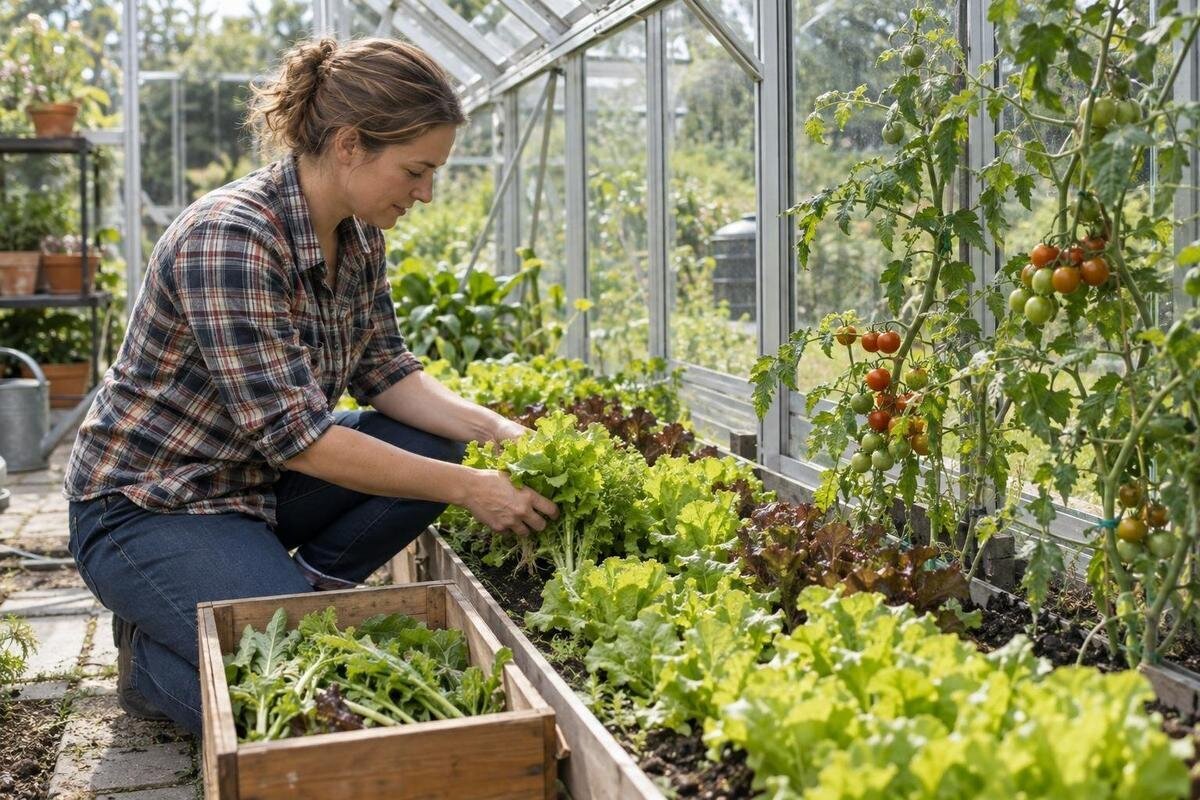
Greenhouse food planning
Whether a greenhouse adds a meaningful amount to household meals depends on what your household already eats, the time available to care for crops, and the growing conditions at your site. A useful estimate tracks produce that is actually harvested and used across the year, rather than promising a certain number of meals from a stated floor area.

What counts as a useful food contribution?
Before choosing crops, define what “more home-grown food” would look like at your table. It might mean herbs for several weeknight meals, salad leaves for two lunches each week, or tomatoes as a regular ingredient during their growing season. A target stated in meal occasions or portions you recognise is easier to test than “as much as possible”. Choose one main measure, such as the number of household meals that use greenhouse produce, and one supporting measure, such as portions eaten. If you want a seasonal contribution rather than something every week, make that part of the target too.
Keep this target separate from total food self-sufficiency. A greenhouse is best planned as a source of selected fresh ingredients, not an automatic replacement for the vegetables, fruit, staples or pantry goods a household buys. Nor is a crop a meal contribution just because it is growing or ready to pick. Set aside damaged, unwanted or surplus produce, then count what is eaten or intentionally stored for later use. Herbs or a small amount of greens may add a valued ingredient even if they make up little by weight. You can also note whether home-grown produce replaces a usual purchase or simply adds variety; both can be worthwhile, but they are different outcomes.
Which foods does your household already buy?
Review a few ordinary weeks of meal plans, shopping notes or receipts. Mark ingredients the household uses repeatedly, how many meals they appear in, which people enjoy them, and whether use changes by season. Distinguish regular purchases from ingredients bought for one special recipe; it is easy to grow a crop that looks appealing but does not fit routine cooking. Note what is frequently bought fresh, what sometimes goes to waste, and what you would happily eat more often. If possible, record typical quantities as well as frequency, so “often” is not doing all the work in your estimate. A crop used once a month may still matter, but it should be weighed against foods used at several meals.
Turn that audit into a short trial list of perhaps three to five crops, rather than planning for every favourite at once. One household might choose a frequently used herb, a leafy crop for lunches and a fruiting crop such as tomatoes or capsicums; another may have different priorities. Treat the number as an example, not a rule. Decide whether you will use each crop fresh, cooked or preserved, and who will harvest it. A crop with a clear place in familiar meals is more likely to be picked and eaten than one selected only because it is popular in growing guides.
Crop roles in everyday meals
Different crops contribute to meals in different patterns. Parsley, basil or spring onions may be used in modest amounts across several recipes, while leafy greens can supply repeated additions to lunches. Fruiting crops such as tomatoes, capsicums and cucumbers may take up more of a meal when they are available, but need room and attention over their growing period. Actual harvest timing and volume vary with the variety, conditions and care. Compare crops by the dishes they support, how often you would use them, and how you would handle a surplus, not by a promise of a standard yield. A small herb harvest can be useful without counting as a full portion of vegetables.
Match each crop to a specific use and write down the amount your household would welcome in a normal week; “enough leaves for two lunches” is more useful than a plant count. Check the crop’s mature size, support needs and harvest timing against the proposed layout, and avoid having every crop peak at once if you do not want to preserve or share extra. The Aluminium Classic Greenhouse catalogue lists floor-area options from 3.77 to 28.08 m². Use that range to compare the space your chosen crops need, allowing for their mature size and the room needed to tend them.
Measure harvest in portions your household recognises
Keep a simple harvest ledger from the first pick. Record the crop, date, amount harvested, amount used, amount set aside for storage, and anything spoiled or left over. Weighing is optional; a consistent household measure works, such as the usual bowl of leaves for lunch or the quantity of herbs used in a familiar recipe. Note whether that amount served one person or the whole household, and keep the unit consistent from week to week. If produce is preserved, record it separately and count it as a meal contribution when it is eventually used. If you already grow outdoors, record that harvest separately too, so you can see what the greenhouse actually adds.
Use the ledger to compare results with a clearly labelled target, not to predict a guaranteed yield. Suppose your household aims for two shared meals with home-grown greens each week. Over four weeks, that gives eight meal occasions; if the record shows greens used in six, the greenhouse met three-quarters of that target for that period. It did not provide three-quarters of the household’s food. When considering space, the Bloomcabin Prestige Greenhouse is listed in sizes from 3.77 to 28.08 m², but those area options are not a portion forecast. Repeat the calculation in different seasons to see whether the contribution is steady or concentrated in a few productive months.

The care time behind a regular harvest
The time record matters because a productive area can still be a poor fit if it needs attention when no one is available. Note the time spent checking plants, watering, tying or pruning, harvesting and clearing finished crops; include sowing, moving seedlings, washing produce and other jobs if they affect your routine. Keep regular tasks separate from occasional ones, and record busy periods as well as quieter weeks. Weather and growth stages can change the workload. If someone is often away, care is shared between household members, or you have a firm weekly time limit, account for that before choosing a larger crop mix. A weekly average alone can conceal demanding peak periods.
Agree on how much care time the household can sustain, then match the number and types of crops to it. Do not base the plan on one unusually enthusiastic week or assume someone else will fill a gap. More floor area can make a wider planting plan possible, but also leaves more area to inspect and may produce more than the household can use. The Spacious Greenhouse catalogue lists sizes from 47 to 70 m². Compare the proposed planting area with your available time, including busy periods when routine care and harvesting coincide. A partly planted structure may be a better fit than one kept full simply because space is available.
Seasonal gaps in New Zealand
Map when you buy a crop, when it is available from outdoor growing at your site, and when you would most value a home-grown alternative. New Zealand has varied climates and microclimates, so a planting calendar for another district may not suit your garden. Use local planting guidance and your own observations rather than relying on a northern-hemisphere calendar. A month-by-month note of purchases, outdoor harvests and greenhouse attempts can reveal gaps that a general calendar misses. An unheated greenhouse can change exposure to the weather, but it does not make light and temperature constant. Winter conditions may slow or interrupt some crops, while summer heat can bring different monitoring and watering demands.
Choose a seasonal gap that matters in your meals, then check whether the crop’s likely growing window and the greenhouse’s position line up with it. A Lean-to Greenhouse is listed in floor-area sizes from 3.69 to 14.34 m², but its name and listed area do not show the light, airflow or temperature at your site. Track shade from walls, fences and trees at different times of year, and ensure ordinary access makes ventilation and watering practical. Staggering sowings may spread some harvests, but use crop-specific local guidance; keep an outdoor crop or shopping option for periods when a greenhouse harvest is uncertain.
Floor area versus plantable area
A quoted floor area is not the same as plantable bed area. The footprint must also accommodate an entry, a route to reach crops and the growing system you choose. Benches, pots, raised beds and seedling space make different demands on the floor. Draw the interior to scale or mark it out on the ground; include the door area, paths and standing room for routine work. Place each crop at its mature size rather than the size of a new seedling, and make sure you can reach the middle of beds without stepping on growing areas. That sketch can reveal a crowding problem before it becomes difficult to fix.
The Limited Edition Aluminium Greenhouses catalogue offers floor-area options from 3.77 to 28.08 m². Use that range for an initial comparison only; it does not say how much room remains for crops after access or other uses, or how many plants will fit. Compare actual plans and dimensions on a like-for-like basis, including any internal features shown. If a listing does not give enough detail, obtain the plan before translating your household crop list into a footprint. Check that the option you are considering matches the layout you drew, rather than relying on the headline area alone.
Does a larger greenhouse mean more meals?
It is tempting to treat extra greenhouse area as extra meals, but floor space only makes a larger planting plan possible. Output still depends on crop choice, conditions, care and how much the household uses. If several plantings peak together, produce can pile up, be wasted or require preserving time and skills the household does not have. A deliberately limited growing area may serve meals better than a full structure that demands more time than you have. Leave room for a later planting or a change of plan rather than feeling obliged to plant every spare metre. Your meal target can also set a sensible limit on how much of one crop to grow.
Compare your planned beds and access routes with the available model sizes before settling on a greenhouse. The T-Model Orangery Greenhouse is listed from 16.52 to 30 m². Use that as a floor-area comparison, not as a forecast of how many people it will feed. Ask whether the household has a clear use for any extra planting space, and whether a smaller area already meets the meal target. Allow for the time needed to harvest, prepare or store a larger crop, not only the time spent tending plants. Your records can help distinguish space you would use regularly from space you might only need during a short seasonal peak.

Storage and access need room too
Storage, access and harvest handling deserve their own place on the plan. Trays, pots, ties, hand tools and a watering can may be useful nearby, but if they block a route to a bed, routine care becomes awkward. Mark where a person will stand to prune or harvest, where a basket can sit temporarily, and how produce will be carried to the kitchen. Think about how foliage will extend into paths as crops mature, not just how empty floor space looks at planting time. Consider where tools can be reached without shifting pots or equipment. Everyday work is easier to plan when it is shown alongside the plants.
If built-in storage is on your shortlist, confirm exactly how it affects the layout. The Limited Edition Aluminium Greenhouse with storage is listed in sizes from 5.52 to 28.08 m². Ask whether the listed area includes the storage zone, where that zone sits, and how much clear floor remains for growing and access in the chosen configuration. Do not treat the full footprint as plantable until you have seen the plan. A storage or work area may be useful, but it belongs in the calculation before beds are assigned, not added after your crop plan is complete.
Site conditions and interior layout
Assess the site and interior plan together. Notice where sun and shade fall at different times of day and across the year; nearby buildings, fences and mature trees can affect available light. Consider whether you can reach the greenhouse regularly, bring water and carry harvested produce back to the kitchen without awkward routes. Keep ventilation access and door clearance in the drawing, and think about who will tend the crops when others are away. Observe the site more than once rather than basing the plan on a single sunny visit. These checks affect what you can reasonably grow, not just where a structure can physically sit.
A model’s name does not show how its shape will work with your plot or where useful beds will fit. The Pyramid Greenhouse catalogue lists floor-area choices from 5.53 to 18.9 m². Use a dimensioned plan to mark the intended position, paths, crop heights and outdoor growing area before deciding what it can contribute. Treat the greenhouse and outdoor beds as complementary parts of the meal plan, then record which one supplies each ingredient. That makes it easier to see whether the structure fills a real seasonal gap rather than simply adding another area to manage.
Frequently asked questions
Can a greenhouse provide most of a household’s vegetables?
There is no reliable share that applies to every household. The result depends on the crops you choose, your site, the care available and how much produce you use. Track portions actually eaten over different seasons rather than extrapolating from one plentiful harvest.
How can I estimate its contribution to meals?
Choose a household-sized target, such as two meals a week with home-grown greens. Record the amount harvested and, separately, what is used or stored for later. Compare the number of meals featuring that produce with your target across several weeks and seasons.
Which crops should I prioritise?
Begin with ingredients your household already buys and enjoys, especially those used often. Herbs, leaves and fruiting crops can contribute in different ways, so match each one to a familiar meal and the time you have to care for it.
Will an unheated greenhouse grow food all year in New Zealand?
Not necessarily. Conditions vary by location and season, and an unheated greenhouse does not make light or temperature constant. Use local planting guidance, note when crops actually grow at your site, and plan for months when you will still rely on outdoor produce or shopping.
Does a bigger greenhouse mean a bigger harvest?
Extra floor area makes a larger planting plan possible, but does not guarantee more usable food. Crop choice, growing conditions, care time and household demand all matter. A space you can manage and harvest may contribute more reliably than one planted beyond your needs.
A greenhouse is most useful when its crops fit familiar meals and the household has time to care for and use them. Let the first season’s records show what grows, when harvests arrive and which ingredients reach the table. A steady contribution to the meals you value is a more practical measure of success than a full structure or an ambitious harvest target.
