
Overwintering Geraniums in a Greenhouse
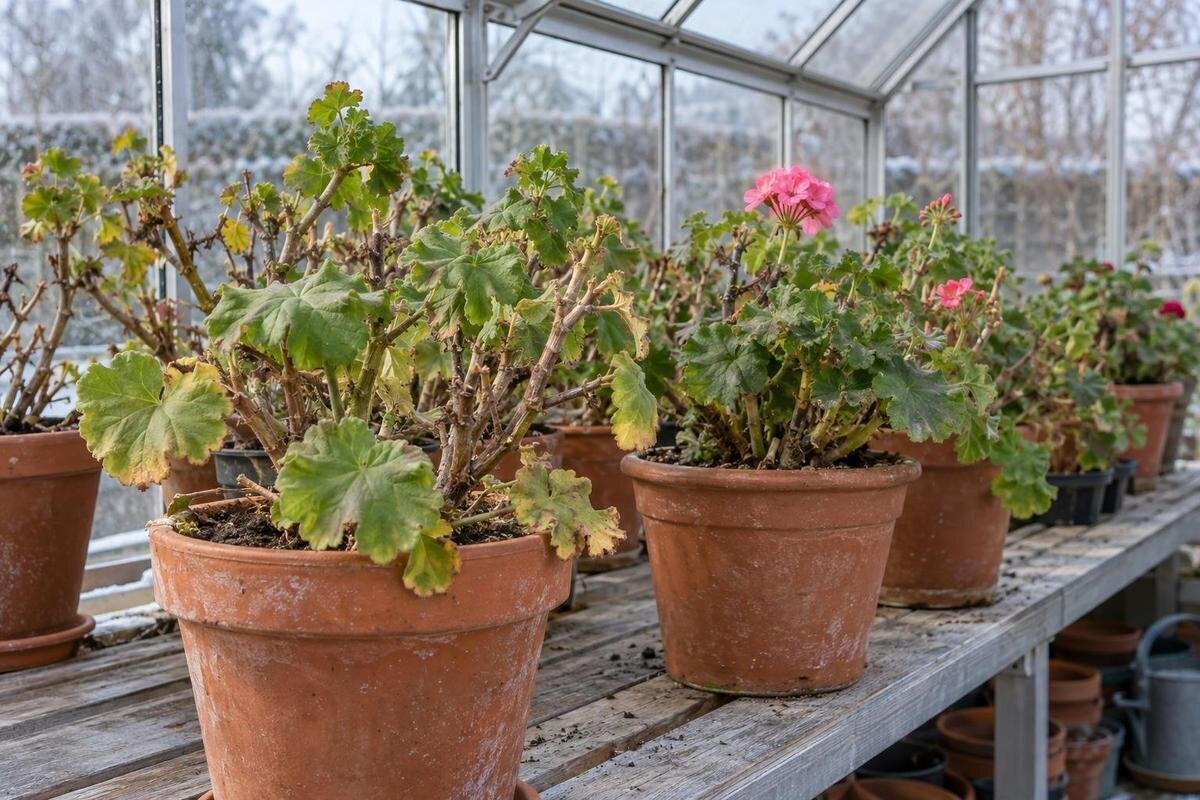
Geraniums under cover
Most plants sold as geraniums are pelargoniums, tender perennials that need protection from frost. A greenhouse can help, but it does not automatically stay frost-free, and plants kept in a cool rest need a different balance of light and water from those encouraged to keep growing. Decide which approach suits the cultivar and the winter conditions at plant level. That keeps the advice specific to the plant rather than treating every geranium as though it has the same needs.

Choosing a greenhouse for winter care 1
Identify the type of geranium
Most plants sold as bedding or pot “geraniums” are pelargoniums, rather than hardy plants in the genus Geranium. Common examples include zonal pelargoniums (Pelargonium × hortorum), ivy-leaved forms (P. peltatum), regal pelargoniums (P. × domesticum) and scented-leaved species. The distinction matters: many true geraniums are outdoor perennials, while familiar pelargoniums are generally frost-sensitive. A plant tag giving the species or cultivar is more useful than the common name alone. If it says only “geranium”, treat the plant cautiously as a pelargonium until identified; do not apply a hardy cranesbill’s outdoor care to a tender pot plant.
Look at leaf shape, growth habit and flower type, then use those clues alongside the label. Zonal forms are usually upright, ivy-leaved kinds often trail, and regal pelargoniums are commonly grown for their large flowers. These features can help narrow down an identification, but they do not confirm a cultivar’s cold tolerance. Scented-leaved pelargoniums include many different species, so one temperature figure is especially unlikely to suit them all. Keep the plant tag with the pot and note the name before moving plants into storage. If a species is unfamiliar, seek guidance for that name rather than relying on general advice for “geraniums”.
Choose a cool rest or active winter growth
Think of dormancy as a managed period of very slow growth, not a strict state that every pelargonium enters on cue. For a potted plant kept in a cool rest, remove flowers and damaged foliage, keep it frost-free, and reduce watering as growth slows. Some common zonal and ivy-leaved forms can be lifted and stored with very little foliage, but bare-root storage is a separate technique: roots can shrivel if too dry or rot if packed away damp. It is not a requirement for every collection. For a named or valuable cultivar, keeping it potted is usually easier to inspect and adjust.
Active winter care keeps plants leafy rather than putting them into storage. It suits plants you want to display, maintain as parent plants, or use for cuttings, provided you can give them enough light and a mild, frost-free position. Expect growth to slow in winter, and do not assume that keeping a plant warm will guarantee flowers. For a substantial collection, compare the floor area you genuinely need with the Spacious Greenhouse range, listed from 47 to 70 m². Plan the bench layout around the plants you will keep leafy and those resting in pots, allowing access to inspect and care for both groups.
Choosing a greenhouse for winter care 2
Winter temperatures for resting and actively growing plants
As a practical example, common zonal and ivy-leaved pelargoniums are often kept at about 5–10°C in a cool, frost-free place for winter storage. This is a working range, not a guaranteed safe minimum for every cultivar. For plants kept in active growth, a milder environment around 10–15°C, together with good light, is more workable. Regal pelargoniums and scented-leaved species can differ, so do not apply either range automatically to an unfamiliar plant. Frost can damage tender leaves and stems; prolonged cold in wet potting mix also increases the risk of loss. Use the plant label or cultivar-specific guidance when the name is known.
An unheated greenhouse is not automatically frost-free: it can cool substantially overnight, while winter sun can warm it during the day. Take the minimum reading where the pots sit, rather than assuming the roof or a sunny daytime reading represents conditions at plant level. The Classic aluminium greenhouse range is listed from 3.77 to 28.08 m², but floor area does not establish frost performance. When comparing structures, check their dimensions and available openings separately from any assumptions about temperature control. If keeping plants within a narrow temperature range is essential, ask a qualified greenhouse or heating professional to assess the site and suitable options.
Give actively growing plants enough winter light
For active winter growth, bright light is as important as mild conditions. Zonal and ivy-leaved pelargoniums in a dim, warm corner tend to make weak, stretched growth as they reach for light. Put leafy plants in the brightest appropriate position available, with room for air to move around them. Do not try to compensate for low light with extra water or feed; neither replaces light, and wet mix is particularly unhelpful in cool weather. Check whether nearby buildings, fences or trees shade the greenhouse during winter, when the sun follows a different path from its summer position.
A leafless plant stored by a suitable bare-root method has little need for light while it has no foliage, but a leafy potted pelargonium still needs a bright place. Not every plant described as dormant is leafless, so do not assume that a cool rest means darkness. The Lean-to Greenhouse range is listed from 3.69 to 14.34 m². When considering a lean-to, assess winter shade at the proposed site and decide where your leafy plants would sit. Check the position of nearby buildings and trees as well as access, rather than choosing an area option before considering the light available.

Choosing a greenhouse for winter care 3
Adjust watering to growth and potting mix
An actively growing pelargonium needs more water than a plant resting in cool conditions, but its potting mix should still drain freely. Check each pot rather than watering the whole collection to a calendar. When the surface has started to dry, feel further into the mix or lift the pot to judge whether it needs water; then water the root area and let excess drain away. Pot size, root mass, light and warmth all affect how quickly the mix dries. A large plant in a bright position may need attention sooner than a small, cool pot, even when they are side by side.
A potted plant in a cool rest uses less water. Let much of the mix dry before watering, and do not leave the pot standing in water or cold, saturated potting mix. A little water may be needed if the root ball becomes very dry, but avoid keeping it continually damp. Bare-root plants follow a different storage method, so do not apply the potted-plant routine to them. The Limited Edition Aluminium Greenhouses are listed from 3.77 to 28.08 m². Use the available floor area to plan access to individual pots, so you can check the mix and water only the plants that need it.
Check plants before moving them under cover
Inspect leaves, stems and the base of each plant before it joins the winter collection. Look for aphids, whitefly, mealybugs, damaged foliage and signs of rot; pests are easier to deal with before plants are crowded together. Remove fallen leaves and spent flowers, as they can remain damp and contribute to mould. Keep newly acquired or suspect plants apart from established stock while you observe them. Label each cultivar before moving pots, especially if different types will need different winter conditions. A quick inspection now can also help you decide which plants are worth preserving as parent stock or taking cuttings from.
Remove dead or soft growth, but do not cut every healthy plant back hard just because winter is coming. The amount of pruning depends on whether you are keeping a leafy specimen or following a storage method that calls for reduced growth. Use clean tools for trimming, and avoid repotting into a much larger, wet pot just before a cool period unless the plant needs it. If you are planning a separate holding area for new or recovering plants, the T-Model Orangery Greenhouse is listed from 16.52 to 30 m². Check the actual plan: the listed floor area does not guarantee a separate quarantine space.
Choosing a greenhouse for winter care 4
Use ventilation to manage damp conditions
Cool air and persistently damp foliage make a poor combination. Crowded leaves, spent flowers and wet potting mix can encourage grey mould, while some pelargoniums are also susceptible to rust. Give plants enough space for air to move around the leaves, remove dead material promptly and water the mix rather than routinely wetting the foliage. Condensation on the greenhouse or leaves is a useful sign to check the air movement and spacing. Do not leave pots packed tightly together simply because the collection has fewer active leaves in winter; the remaining foliage still needs room to dry.
Ventilation is a moisture-management tool, not a reason to expose tender plants to a cold draught or leave a door open overnight. On mild days, allow air exchange when conditions permit, then consider the temperature again as evening approaches. The Pyramid Greenhouse range is listed from 5.53 to 18.9 m², but a product name and floor-area figure do not show the position of vents or how air will move around your benches. Check drawings and available opening arrangements when comparing greenhouses, and do not assume a particular shape will prevent condensation or maintain a winter temperature.
Plan for plant height, access and usable space
Measure the plants you intend to keep, including the pots, and allow for their likely growth if they will remain active. Check that their height will fit the intended growing area and that you can reach the back of benches, water pots and remove damaged leaves without squeezing between them. Leave space around foliage rather than filling every spare corner; access is part of practical winter care. If a greenhouse includes storage, distinguish that area from the space available for plants. The Limited Edition Aluminium Greenhouse with Storage is listed from 5.52 to 28.08 m²; review its drawings to understand how its storage affects usable plant area and circulation.
The layout needs to suit your chosen winter routine as well as the size of the collection. For plants in a cool rest, allow access to inspect stems and check the potting mix without disturbing neighbouring pots. For plants kept actively growing, account for their height and leave room around leafy growth. Consider the ventilation configuration and whether winter shade affects the intended growing area before settling on bench positions. A larger footprint does not by itself mean a warmer winter environment. If your plan depends on controlled warmth, establish what the greenhouse and any suitable system can provide rather than assuming the glazing will hold a set temperature.

Choosing a greenhouse for winter care 5
Monitor conditions at the plants, not just outdoors
A simple routine helps you spot problems before they become obvious in the foliage. Check the coldest overnight temperature at plant level, look at the mix before watering, and note whether condensation is persisting. A minimum–maximum thermometer can show the difference between daytime warmth and the overnight low; keep it out of direct sun so its reading is not misleading. After a cold spell, check tender plants for damaged leaves and stems. After several bright days, check that active plants have not become too warm or dry. A few notes about readings and watering will help you adjust care to the greenhouse you actually have.
Conditions differ from one site to another, so do not rely on a single winter temperature for every New Zealand garden. Exposure, shelter, shade and the position of pots within the greenhouse all affect what the plants experience. The Prestige Greenhouse with a metal foundation is listed from 3.77 to 28.08 m²; those details help identify the range and its area options, but do not confirm its temperature performance or suitability for a particular site. Follow the manufacturer’s site guidance and seek qualified advice about foundation or temperature-control questions that depend on your location.
Restart growth and move plants outside gradually
As light and temperatures improve, look for new shoots before changing care. A resting plant may need more water once growth begins, but increase it in response to the plant and the potting mix rather than switching immediately to a summer routine. Move leafy plants into brighter conditions gradually, remove dead or damaged stems, and check whether roots have filled the pot. If repotting is needed, use a suitable free-draining mix and avoid keeping the plant wet while it establishes. Resume feeding only when the pelargonium is actively growing, following the fertiliser label rather than feeding a cool, inactive plant.
Wait until local frost risk has passed before returning tender pelargoniums outdoors. Acclimatise them gradually to brighter light, wind and changing temperatures instead of moving them straight from a sheltered greenhouse into full exposure. Bring vulnerable plants back under cover if conditions turn sharply colder. Healthy cuttings can provide a useful backup for a valued cultivar, but they need their own light and moisture checks while they establish. Whether you choose a cool rest or active winter growth, the useful measure of success is a healthy plant ready to resume growth—not a fixed date or a promise of winter flowers.
Frequently asked questions
Will an unheated greenhouse keep pelargoniums frost-free?
Not reliably. A greenhouse can shelter plants, but its overnight temperature may fall close to the outdoor temperature. Measure conditions where the pots sit. If the coldest readings are below the range your plants can tolerate, move them to a frost-free place or seek advice about suitable, professionally assessed temperature control.
Can I overwinter geraniums in a dark shed?
A cool, dark place may suit some leafless plants stored by a suitable bare-root method. It is not suitable for leafy potted pelargoniums, which need light to maintain their foliage. Check the needs of the named plant before choosing this approach.
How often should I water dormant geraniums?
There is no reliable fixed interval. Check the potting mix: a dormant potted plant needs much less water than one in active growth, and should not sit in cold, wet mix. Bare-root storage has different requirements from potted storage.
Can pelargoniums flower through winter?
Some may flower if kept actively growing with enough light and mild, frost-free conditions, but winter flowering is not assured. Short days and cool conditions can slow growth. If preserving the plant matters most, focus on keeping it healthy rather than forcing flowers.
Are hardy geraniums the same as pelargoniums?
No. Pelargoniums are the tender plants commonly sold as bedding or pot geraniums. Many plants in the genus Geranium are hardy garden perennials with different winter needs. Check the plant label before deciding how to store it.
Successful overwintering depends on matching the plant to the conditions you can provide. Identify the pelargonium, choose a cool rest or active growth, then keep an eye on temperature, light, water and airflow. If an unheated greenhouse cannot stay within the range your plant needs, another frost-free space may be the better place for it. A measured, plant-specific approach is more dependable than treating all geraniums alike.
