
Greenhouse Glass Cracking Again: Checks for an Installer
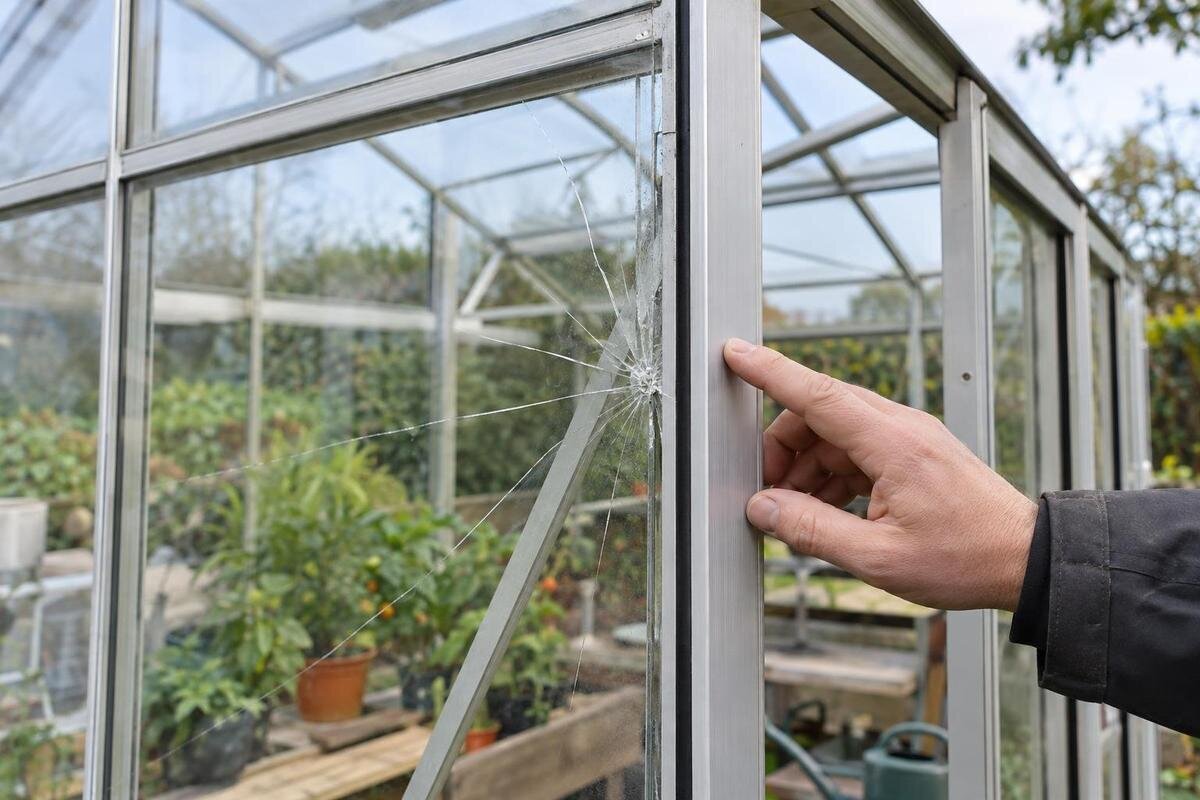
Greenhouse repair
Repeatedly replacing a cracked greenhouse pane without finding why it broke can treat the symptom while leaving the cause in place. A qualified installer should assess the glass and the structure around it: where the crack began, whether the frame or base has moved, how the pane is supported and retained, and whether impact or temperature-related stress could be involved. None of those clues proves a cause on its own. An incident record, the greenhouse’s exact model details and its manufacturer’s instructions give the installer a better basis for deciding what to inspect before another replacement.

Keep clear of broken glass
A pane that has cracked more than once needs careful assessment, but safety comes first. Keep people, children and pets away from the affected area, including the space directly below a broken roof pane and the route beside loose glazing. Don’t touch fragments, lean a ladder against the greenhouse, or try to lift a pane or retaining strip. Broken glass can shift or fall, and pressure on a damaged frame may make the situation less predictable. If any pane looks loose, or the frame appears to have moved, stay clear and arrange a prompt visit from a qualified installer. Make sure everyone who uses the greenhouse knows which area is off limits.
Don’t make a temporary repair that requires handling glass, reaching overhead or working at height. If the space cannot be kept clear, ask the installer what to do before anyone enters; don’t improvise a brace, wedge, tape or sealant arrangement. From a safe position, take a wide photo showing the greenhouse and another view of the affected side, if the damage is visible without approaching it. Safety takes priority over collecting evidence: if a photo would require entering the area or touching a fragment, leave it and describe what you can see. Don’t move items around loose fragments to reach the break.
Record when and where each pane failed
Record every break as a separate event. Note the date, approximate time, pane position (roof or side, face or bay), whether the pane was replaced previously, and how long it lasted. If a crack spread across the pane, note when you first saw it and whether it appeared all at once or was noticed later; don’t guess when it started. Include what you observed about weather, nearby activity or recent work, but separate observation from guesswork. If several panes have failed, mark their positions on a simple sketch and use the same labels each time. This helps distinguish one recurring location from damage moving around the structure.
Save the greenhouse’s product label, purchase record, manual and any previous part or installation paperwork. Note the full model name and variant rather than relying on appearance. The Classic product family appears under Aluminium Greenhouses, which may help you recognise the catalogue listing, but the installer will also need your unit’s year, configuration and glass specification. Give them clear photos of the label and records, if available, and say when the earlier replacement was fitted and by whom. Add any part reference from an invoice or packaging. If paperwork is missing, say so rather than estimating the model or pane dimensions.
Treat the crack pattern as a clue
Where the crack starts and what is visible around it may help an installer focus the inspection. A break near an edge can prompt a check of edge clearance, support and retaining pressure; a visible impact mark may point to a strike worth investigating. But cracks can spread, overlap and obscure their starting point, while fragments may hide evidence. Don’t handle a pane or try to read the fracture pattern from close range. Describe what was visible when you first noticed it and whether anyone saw an impact. A photo taken at the time may also show more than one taken after the glass has shifted.
Location matters as much as appearance. If the same pane or edge position repeatedly fails, the installer can check that opening for local fit, support or frame movement. If unrelated panes fail, a shared factor—such as general frame movement, an installation issue, impact or changing temperatures—may deserve attention. That is a route for investigation, not a conclusion. Mark the exact face and bay on your sketch; the Pyramid Greenhouse listing can help identify the model family, but you still need to show which pane has failed. Label front, left and right consistently, noting the position from which you are viewing the greenhouse.
Have the frame and base checked for movement
An installer should look at the frame as a connected assembly, not just the opening containing the broken glass. They can compare uprights, cross-members, corners and joints for changes in alignment, separation, bending or damage, then assess whether doors and vents still meet their frames normally. A door that has begun to catch, changed gaps, or adjoining panes that no longer sit evenly can be useful observations, but none establishes the cause. Don’t push or pull the frame to test it. The installer should compare what is present with the correct assembly information, because visual similarity between models does not confirm that their geometry or parts are the same.
Include the base and connection points in the inspection. Changes in ground support, loose-looking connections, movement after nearby excavation or a recently altered base may be relevant; the installer should determine whether the greenhouse has shifted and whether its support is consistent with the manufacturer’s instructions. Tell them about drainage work, resurfacing or other changes near the base, even if those jobs seemed unrelated. Don’t pull the frame square, tighten fixings, insert packers or add bracing yourself. For a unit identified as a Bloomcabin Prestige Greenhouse, the matching documentation provides the reference for assessing the existing base and connections, rather than assuming they are correct because the model name matches.

Check how the glass is supported and retained
Each pane needs to sit and be retained as the manufacturer specifies for that greenhouse. A repeat failure near a contact point can lead the installer to check whether a glazing bar, gasket, clip, retaining strip or support is missing, displaced, damaged or pressing unevenly. They can also look for a pane edge bearing directly on a frame member, a pinched corner, or a component that has shifted since the previous replacement. Which components apply varies by system, so this is not a do-it-yourself repair recipe; the exact model and its manual should guide the inspection. Ask them to consider the whole perimeter, not just the most obvious crack.
Ask how the installer will confirm that the replacement has the specified edge clearance, support and retention, rather than relying on a pane that merely seems to fit the opening. A pane that is incorrectly sized or retained can repeat the original problem, while a different glass type is not automatically an upgrade. If yours belongs to the Limited Edition Aluminium Greenhouse range, identify the variant so the installer can check the relevant glazing arrangement. Don’t use another model’s image, a neighbour’s pane or an approximate measurement to choose glass. The inspection should establish whether the existing support and retaining parts are suitable before another pane is fitted.
Consider temperature, impact and recent activity
Temperature-related stress is another possibility to discuss, particularly if breaks follow a repeatable change in exposure. Glass and the surrounding frame can respond differently as temperatures change; an installer may consider sunlight on one area, a sudden move between shade and sun, or a nearby heat source alongside the fit and support. Note whether shading, ventilation or a heater changed before the incident, where applicable, but don’t alter conditions to test a theory. Timing alone is not proof: a pane noticed cracked on a warm afternoon may have failed earlier or for another reason. Share the sequence of events, not a diagnosis.
Also mention nearby work or activity that could have produced an impact or vibration, such as moving equipment, maintenance or falling material, if you actually observed it. Don’t assume every unexplained crack is thermal or impact damage; the absence of a visible mark does not settle the question either. The installer can consider fracture evidence, frame condition and event history together, then explain which possibilities remain uncertain. For a T-Model Orangery Greenhouse, as for the other model families, a catalogue view can help you describe the affected side. It cannot establish what happened there; your observations of the incident remain the useful starting point.
Confirm the exact replacement specification
Before any pane is ordered, the installer should confirm the glass type and dimensions against the exact greenhouse model, opening and manufacturer’s parts information. The specification may include thickness, edge treatment, orientation and the correct retaining components, but don’t guess any of these from a broken piece or a rough measurement of the opening. A replacement can seem close in size and still be unsuitable for the specified system. Where a model has different versions or revisions, a family name alone may not settle the question. Ask for the exact part identifier and confirmation of where it is intended to fit.
An earlier replacement needs particular attention: tell the installer whether the current pane is original or was fitted later, and share its reference if known. For a Lean-to Greenhouse, the family listing helps identify the product, but it does not establish that a pane intended for another model is interchangeable. Ask the installer to compare the earlier replacement’s specification with the one required for the affected opening. If its reference is unknown, record that gap rather than treating the fitted pane as the correct template. Confirming the part before ordering helps avoid repeating a mismatch that may have gone unnoticed during the previous repair.
Review the installation and earlier repairs
Review both the original installation and every previous pane replacement. The installer should check whether the documented glazing method was followed, whether the specified retaining parts were used, whether a previous repair left a strip, clip or seal out of position, and whether the frame changed during other work. If the failure began after an adjustment, a move or building work, include the date and describe what changed. Keep the account factual: timing helps establish what to inspect, but it is not proof that a particular job caused the crack. Avoid taking anything apart to check the work yourself.
Ask the installer to distinguish what the earlier repair records show from what can now be observed. An invoice may identify the supplied pane without explaining how it was supported or retained, so both the paperwork and the current assembly matter. Include the full product variant: Limited Edition Aluminium Greenhouses with Storage is a distinct catalogue name, and a shorthand family label may leave the configuration unclear. Where records are incomplete, ask which aspects of the previous work can still be assessed and which remain uncertain. This keeps the review focused on the actual installation rather than assuming that either the original assembly or the later repair was correct.

When to compare repair with replacement
Once the likely cause has been assessed, ask whether another pane repair addresses it or whether the frame and its supports need a wider repair first. A single damaged pane with no related frame issue may lead to a different plan from recurring breaks across several bays, visible distortion, or parts the installer cannot confirm as compatible. These are reasons to compare options, not automatic grounds to replace the whole greenhouse. Ask what evidence supports the proposed scope of work and whether the manufacturer’s instructions allow the repair. A thicker or different pane is not a shortcut unless the documentation and installer confirm it is suitable for the structure.
If the installer advises that a full replacement is worth considering, treat that as a separate purchase decision. Compare the proposed model against the site, layout, access, intended use and documented requirements, not just the broken-pane problem. A product page such as the Spacious Greenhouse range is a starting point for comparing a complete greenhouse, not evidence that it will fit your existing base or resolve the cause of the cracking. Keep the repair diagnosis and replacement enquiry distinct, and ask for any necessary site assessment before committing. The underlying issue still needs to be understood when considering a replacement greenhouse.
What to document after the repair
Before work starts, agree on what will be checked and what the installer can report afterwards. The useful outcome is more than a pane fitted: it should state the confirmed glass or part reference, any frame or support issue found, any adjustments made by the approved method, and what remains uncertain. If no single cause can be confirmed, the installer can explain which checks ruled out obvious problems and what signs would warrant a return visit. Ask whether other panes in the same area need a visual check. Avoid asking for a promise that glass will never crack again; keep a clear record of the findings and repair.
After repair, keep access to the affected side clear and watch for visible changes from a safe position. Note a fresh crack, a pane shifting, a returning gap or a change in door or vent movement, and contact the installer before trying to adjust components. Don’t climb onto the roof or remove glazing bars to inspect the repair. Keep the incident log with the model and parts fitted, and add the repair date and any follow-up comments. A concise record makes a later inspection more useful than relying on memory. Recurrence deserves a fresh assessment even if the first visit left more than one possibility open.
Frequently asked questions
What can cause greenhouse glass to crack repeatedly?
Possible causes include pressure or poor support at the pane edge, movement in the frame or base, unsuitable glazing parts, an impact, or temperature-related stress. The pattern and timing can help direct an inspection, but they do not prove a cause. A qualified installer should assess the pane and the structure against the correct model documentation.
Can the crack pattern show what caused the break?
It can offer clues, such as where an installer should check for edge contact or a possible impact, but a crack may spread and obscure where it began. Don’t handle fragments or approach a damaged pane to inspect it. Share safe-distance photos and what you observed, then let the installer assess the evidence.
Should I replace the pane with thicker or stronger glass?
Not unless the manufacturer’s documentation and a qualified installer confirm that the proposed glass is suitable for the exact greenhouse and opening. A different pane may require different support or retaining parts. Ask the installer to confirm the specified glass and components rather than making a substitution to prevent another break.
What information should I give the installer?
Share the model and serial details, any manual or purchase records, the position of each failed pane, when each break was noticed, and details of previous replacements. Safe-distance photos and notes about observed weather, nearby activity or recent work may help. Separate what you saw from what you suspect caused the damage.
Can I measure the opening and order a replacement pane?
An opening measurement alone may not establish the correct glass or retaining parts. Ask the installer to confirm the specification and exact part reference against the greenhouse model and the manufacturer’s information. Don’t use a damaged pane, a rough measurement or a similar-looking greenhouse as the sole guide.
Repeated cracking is a reason to pause before fitting another pane, not to assume a single cause. The most useful inspection combines the break history with exact model documentation and a check of the frame, base, support, clearances and retaining parts. A clear record of what the installer found—and what remains uncertain—helps base the repair decision on evidence rather than another guess.
