
How Much Does It Cost to Heat a Greenhouse in New Zealand?
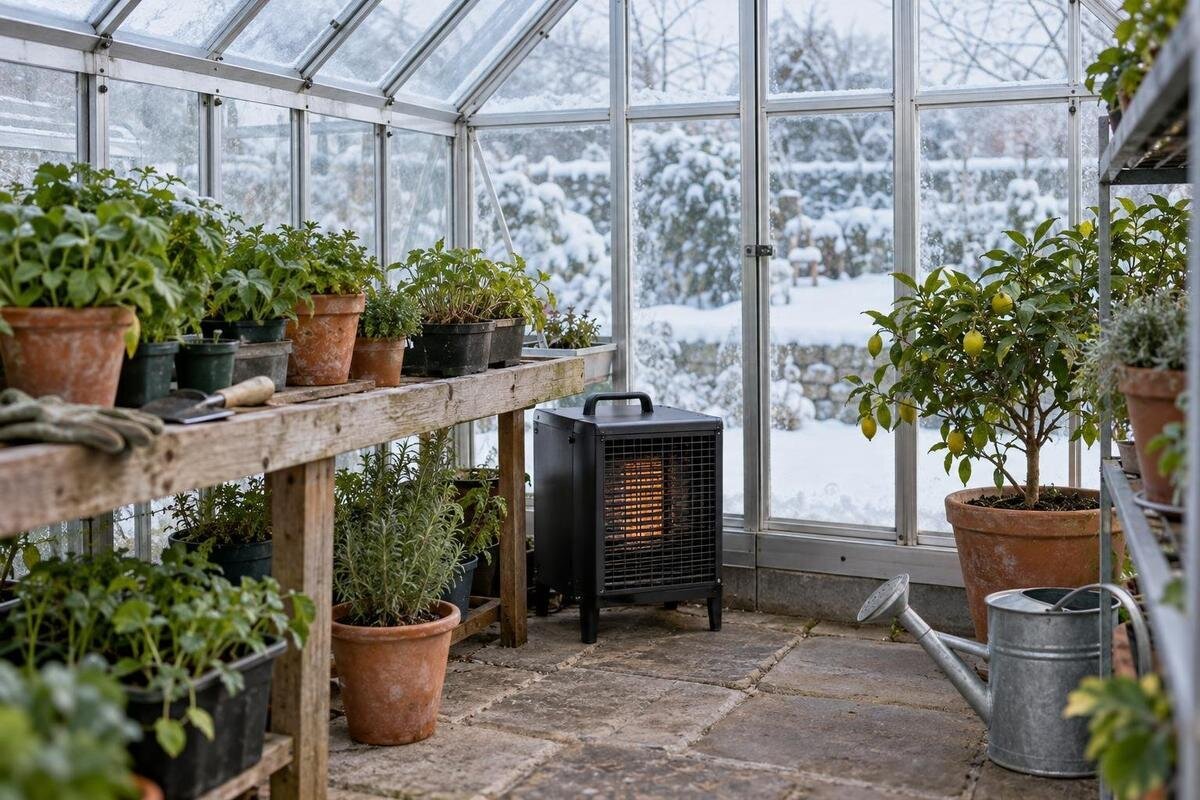
Greenhouse heating costs
Greenhouse heating costs in New Zealand are site-specific: a sheltered garden held just above a plant’s winter minimum can use far less electricity than an exposed greenhouse kept warmer through a cold spell. A useful estimate needs five inputs: the outdoor temperature during heating hours, the setpoint, a whole-greenhouse heat-loss assumption, the equivalent heating hours and the electricity rate you actually pay. The worked example below uses deliberately illustrative numbers, not an average tariff or a promised result. It is a budgeting model, not a heater-sizing calculation.

What drives a greenhouse heating bill?
An electric heater’s running cost follows the electricity it uses, not the greenhouse’s purchase price or its maximum output alone. Heat escapes and must be replaced; the heater’s operating pattern turns that demand into kilowatt-hours (kWh), and your power plan charges for each kWh. A colder outside temperature, a higher target or a longer heating period usually increases demand. Wind exposure, gaps, door use, ventilation and the covering matter too, so structures with the same floor area can use different amounts. A mild evening is not a proxy for a whole winter, and a period when heating is available does not mean the unit draws power at maximum continuously. Decide whether you need a figure for one night, a month or a season; those results are not interchangeable.
Floor area helps when selecting a greenhouse, but it is not a heat-loss rating: exposed roof and wall area, height, leakage and exact configuration also matter. The Bloomcabin Prestige Greenhouse with Metal Foundation is listed in sizes from 3.77 to 28.08 m²; that range cannot yield one heating cost. Estimate for the particular variant and setup, rather than applying a generic New Zealand price per square metre. Keep thermal demand separate from the electricity rate: two sites using the same kWh can still pay different amounts under different plans.
Use outdoor temperatures from the hours you heat
Use outside temperatures from the hours when heat is needed, not the daytime high or an annual average. Sun can reduce heater demand while it is out, whereas an overnight low may coincide with many hours of heating. Use observations from your site where available; otherwise, consult local hourly forecasts or weather records and note both the overnight low and how long colder conditions last. A town-wide figure is only a starting point because shelter, altitude, aspect and wind exposure can vary within an area. Keep daytime and overnight records distinct when comparing energy use. If you have only a daily low, treat it as a cold-case input rather than assuming that temperature lasts all night.
Make a typical-night case and a colder-night case. Keep the target and greenhouse assumption fixed, change the outside temperature and heating hours, then compare the results. A cold snap does not happen every night, while a monthly mean can hide long periods below the target; neither should be used uncritically as a per-night input. The Spacious Greenhouse is listed in sizes from 47 to 70 m², but whichever size you consider, pair the local temperature profile with the exact structure rather than a national climate average. If the winter budget matters, use more than one weather scenario and keep the assumptions visible.
Set a target for the plants you intend to keep
Choose the target from the plants you intend to keep, not from a generic recommendation that one winter temperature suits every greenhouse. Frost protection, overwintering dormant plants and maintaining active growth can call for different conditions; species and growth stage matter. Check dependable care guidance for each plant and decide which minimum you actually need to maintain. If several crops share the space, the most tender crop may determine the target unless you have genuinely separate zones. Heating an empty or hardier area to the same high target can add cost without serving the plants. Check that the temperature reading used by the control reflects the plants’ growing area, not just one warmer or colder spot.
In the arithmetic, the temperature gap is the setpoint minus the outdoor temperature. Raising the target by 1°C adds one degree to that gap for each interval when heat is needed; under the simple model, the extra energy is the heat-loss factor H multiplied by 1°C and the equivalent heating hours. The extra cost therefore depends on both the target and the weather, not on the thermostat setting alone. When considering the Aluminium Classic Greenhouse, listed in sizes from 3.77 to 28.08 m², establish your plant requirements separately from your choice of size. The temperature target follows the plants and the growing conditions you need to maintain.
Represent heat loss with an explicit assumption
Use H to represent the total heat escaping from the greenhouse for each degree of indoor–outdoor difference. In a simplified steady period, if H is expressed in kW of heat per °C, estimated heat demand is H multiplied by the temperature gap; multiplying that rate by equivalent full-load hours gives kWh of heat. This is a back-of-the-envelope energy model, not an engineered specification or a way to size a heater. It treats the gap as stable during that interval and does not capture every change in wind, sun, ventilation, stored heat or ground conditions. H should describe the whole greenhouse, not just one panel or wall.
Use a documented value only if it applies to the exact greenhouse, covering and operating conditions. If you do not have one, show H plainly as an assumption, or base a bill estimate on measured electricity from a representative cold period. Do not derive a precise coefficient from floor area, a catalogue image or a generic square-metre rule. The Lean-to Greenhouse is listed in sizes from 3.69 to 14.34 m², not with a heat-loss coefficient in the supplied size information. If a supplier provides a figure, ask what it covers, including ventilation, leakage and wind assumptions. If those details are unknown, keep the uncertainty visible.

Worked example: estimate one cold night
Here is a deliberately hypothetical night. Assume a whole-greenhouse heat-loss factor H of 0.16 kW/°C, a target of 10°C and an outside temperature of 4°C. The difference is 6°C, so the simplified model gives 0.16 × 6 = 0.96 kW of heat demand while that gap holds. At that rate, 10 equivalent full-load hours use 0.96 × 10 = 9.6 kWh of heat. For this arithmetic only, assume the electric heater’s input energy matches the modelled heat demand. The value of H is invented to show the calculation; it is not a claim about a particular greenhouse or heater.
At an assumed variable rate of NZ$0.30/kWh, 9.6 × $0.30 = NZ$2.88 for that night. If all 30 nights were identical, the arithmetic would be 288 kWh and NZ$86.40; actual winter use changes with temperature, run time, heater performance and rates. Here, 10 equivalent full-load hours means energy use equal to maintaining the modelled demand of 0.96 kW for 10 hours. It does not necessarily mean the heater runs continuously for 10 clock hours, because a thermostat may cycle it on and off. With the same H and hours but a 4°C gap, the estimate would be 6.4 kWh, or NZ$1.92 at the assumed rate. That comparison illustrates the arithmetic, not a recommended plant temperature. The rate, H and hours are placeholders, not New Zealand averages or a prediction.
Turn a night estimate into a monthly budget
Build a monthly estimate by adding calculations for different nights or time blocks rather than multiplying one unusually cold night by every day in the month. For each block, use the target, outside temperature, H and equivalent hours; total the resulting kWh for milder, ordinary and colder conditions separately. Where the temperature changes substantially overnight, divide the period into intervals and use the gap for each one. This remains an estimate, but it shows which assumptions produce the higher total and stops an average night being mistaken for a worst-case limit. Keep cold snaps visible rather than hiding them inside a single monthly mean.
Apply the variable usage rate on your current power bill to the relevant kWh. If your plan has different rates by time, use the rate for the hours when the heater operates and note any discount or condition that affects the price. Keep a daily fixed charge separate when estimating the extra cost caused by heating, because it is not energy consumed by the greenhouse. The Limited Edition Aluminium Greenhouse is listed in sizes from 3.77 to 28.08 m²; if you move between sizes, do not carry the same H forward without evidence. Check the plan rate again when you update the budget, as the rate used in an estimate can change.
Check electricity use, not just heater output
Do not assume a heater’s stated heating output is the same as electricity drawn from the supply. A rating may describe heat delivered or electrical input, and the distinction matters for a power bill. Actual use also depends on the operating setting and how long the heater cycles on; 10 hours below the thermostat target is not automatically 10 hours at maximum draw. A simple heat-output model is useful only when its assumptions match the heater. For a heat pump, use electrical input or consumption information for comparable outside conditions, rather than treating a heating-output figure as electricity consumed.
The strongest cost input is kWh recorded for the heater over representative colder and milder periods, paired with the outdoor conditions and setpoint at the time. If you estimate from rated input and hours instead, state both as assumptions and treat the result as approximate. The T-Model Orangery Greenhouse is listed in sizes from 16.52 to 30 m²; identifying the exact structure is useful, but its area range does not specify a heater’s energy draw. If you rely on a whole-house meter, remember it also records other household use. For questions about electrical supply or equipment compatibility, seek advice from a qualified professional rather than changing wiring or equipment yourself.
Account for ventilation and wind
Ventilation and air leakage are not the same thing. Intentional venting may be needed for plant conditions, while unintended gaps and repeated door opening can add heat loss. Wind can make leakage more consequential, and a vent left open during heating changes the effective H. Reducing uncontrolled losses may help a budget, but sealing every opening is not a sound universal instruction: follow guidance for the greenhouse and plants, and keep the required air exchange. Include how the greenhouse is actually used rather than assuming all openings stay closed through winter. A change in ventilation can change the estimate even if the setpoint stays the same.
Before counting an insulation or ventilation option as a saving, verify that it is documented for the exact model and applies to your intended use. A product image or name does not quantify airtightness or insulation. For example, the Pyramid Greenhouse is listed in sizes from 5.53 to 18.9 m²; that area helps define the size but says nothing about air exchange. If no measured saving is available, compare explicitly labelled H assumptions instead of promising a percentage reduction. This keeps the estimate honest when you are considering possible changes, without assuming that an option is available or suitable for a particular model.

Compare the area you heat, not just the floor area
Floor area alone is a weak basis for comparing two greenhouses because it does not describe the exposed roof and walls through which heat escapes. Roof and wall area, height, joints, covering, position and air movement all contribute to heat loss. Two designs with the same floor area may have different exposed surfaces; a larger volume may require more heat, but no fixed multiplier follows from floor area alone. A lean-to or wall greenhouse does not automatically receive useful warmth from the building beside it. Establish what the wall and site actually provide from the model information and conditions, rather than assuming the adjoining building will reduce the heating bill.
Define the heated zone as well as the greenhouse model: are you warming the whole interior, a bench area or a separately controlled space? Keep measurements and H tied to the same boundary. The Limited Edition Aluminium Greenhouse with Storage is listed in sizes from 5.52 to 28.08 m²; the area range and name do not show how the storage is separated or whether it shares the growing area’s temperature. Use the exact layout and intended heated area in a comparison, and do not count a separate unheated space as crop area. If two options differ in layout, check their drawings and any model-specific heat-loss information before transferring an estimate.
Update the estimate as winter conditions change
Make your winter budget a range rather than one confident figure. A lower-use case can use milder local nights and shorter heating periods; a higher-use case can use colder nights, a larger temperature gap or more hours. Keep the target, H, hours and rate visible beside each result so you can see what changed. If the greenhouse size, crop target, heater or ventilation pattern changes, update the relevant inputs instead of carrying the old cost forward. Avoid adding a fixed percentage for New Zealand weather unless you can justify it from local records.
After heating starts, compare estimated kWh with observed use for representative conditions and revise the model. If the result is higher than expected, check whether the outdoor temperature profile, target, time spent with doors or vents open, wind, heater cycling or electricity rate differed; a gap between estimate and bill does not by itself identify the cause. Record the assumption changes, not only the dollar total, and keep readings from contrasting weather periods distinct. That turns a first winter’s estimate into a more useful guide for the next, without treating one garden’s experience as a national benchmark.
Frequently asked questions
How do I estimate the cost of heating a greenhouse for one night?
For a rough estimate, multiply the whole-greenhouse heat-loss factor by the indoor–outdoor temperature gap and equivalent full-load hours to estimate kWh of heat. Multiply that energy by your electricity rate to estimate cost. The result depends on the quality of the heat-loss assumption and how the heater converts electricity into heat.
Is NZ$0.30 per kWh the current New Zealand electricity rate?
No. It is a placeholder used to demonstrate the calculation, not a quoted or typical rate. Use the variable usage rate on your current power bill or plan, and allow for different rates if your plan charges different prices at different times.
Should I use the average outdoor temperature for the month?
Not on its own. A monthly average can hide cold nights or long periods below your target. Use local overnight readings or group nights into milder, ordinary and colder conditions, then estimate each group separately.
Does a larger greenhouse always cost more to heat?
A larger heated space can need more heat, but floor area does not give a reliable cost multiplier. Exposed walls and roof, height, covering, air leakage, ventilation and the heated zone all affect heat loss. Compare the exact structures and use supported heat-loss information where available.
Can I use a heater’s rated kilowatts to work out my power bill?
Only if you know what the rating describes and how long the heater draws that electrical input. A heating-output figure is not automatically the same as electricity consumed, and thermostats can shorten operating time. Metered kWh is a better input when available.
There is no reliable cost attached to a greenhouse name alone. Use local overnight temperatures, a target suited to your plants, a documented or clearly labelled heat-loss assumption, and the usage rate on your power plan. Then compare the estimate with measured kWh and revise it when conditions or equipment change. The example’s NZ$2.88 night is not a quote or expectation; it shows how temperature gap, heating hours, heat loss and electricity price combine in a New Zealand greenhouse heating budget.
