
Planning Greenhouse Irrigation for a Fortnight Away
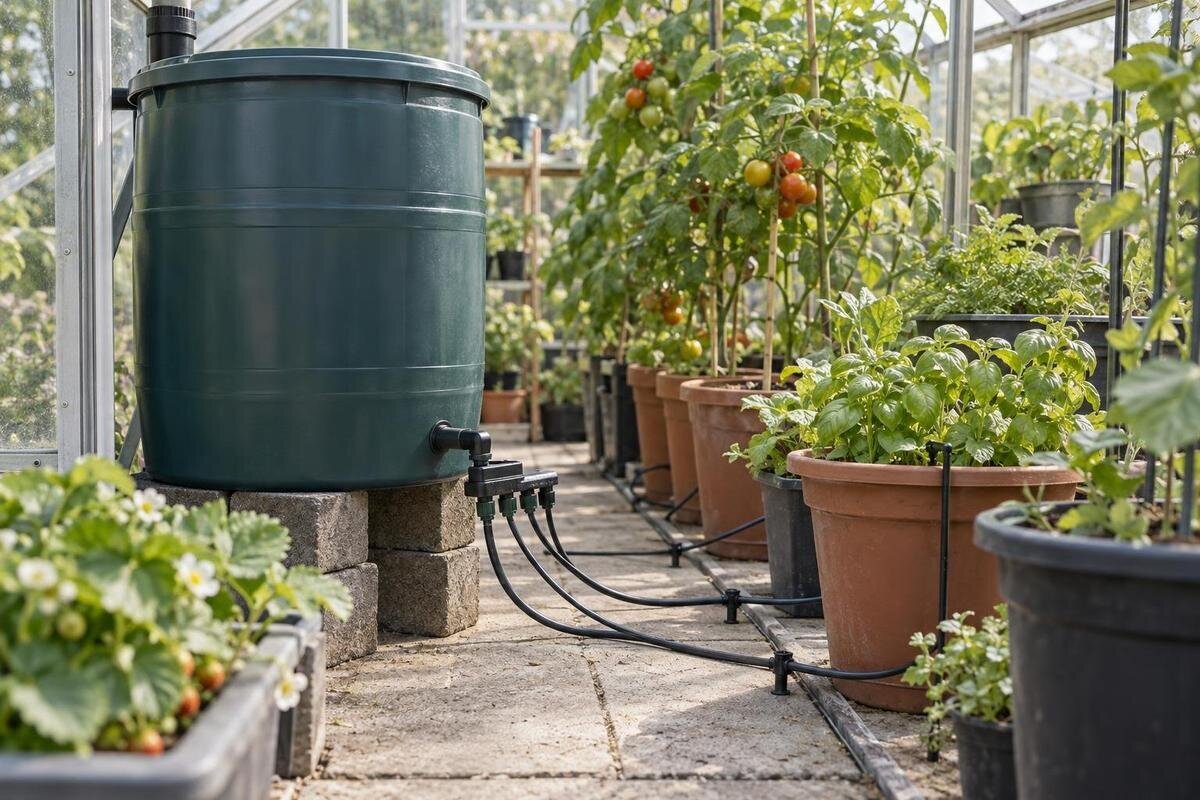
Greenhouse irrigation
A greenhouse watering system is only a holiday plan if it can keep working while you are away. For a fortnight, a timer alone is not enough: you need a realistic estimate of water use, a usable reserve, delivery to the root zones and a way to find out if something fails. Build the plan around the plants and equipment you actually have, then run it under observation before you leave. A trusted person who knows what to look for is still valuable; automation cannot inspect a blocked outlet or a suddenly dry pot.

01
Map the plants and areas the system must cover
Draw a quick map of the greenhouse and mark every area that depends on automatic watering: beds, pots, seed trays and hanging baskets. Note which plants are watered by hand instead, and whether recently planted crops or small containers dry at a different pace from established plants. This prevents you from estimating water for an empty bench while overlooking a group of pots that dries quickly. It also gives you a reference for checking whether the irrigation system covers the plants you intend to leave.
Mark outlets and watering groups on the map, then note exceptions that need a separate check, such as a newly planted pot or a tray you plan to move. If you are choosing a greenhouse as well as planning its irrigation, the T-Model Orangery Greenhouse is listed in sizes from 16.52 to 30 m². That describes the structure’s floor area, not how much of it will be planted or how many litres the crops will use. For a holiday estimate, the useful reference is the actual layout and the plants connected to each part of the system.
Measure daily use before setting a tank target
Run the watering routine you expect to use while you are away, and measure how much water it uses over several complete cycles. With a reservoir, fill it to a known usable level and record the amount that disappears or needs replacing. If the system is supplied directly from the mains, make sure your measurement captures the irrigation circuit rather than water used elsewhere. Check the growing medium after watering as well: the volume supplied does not by itself show how much water has reached the roots. Record the programme and conditions alongside each reading so you can interpret it later.
Use several days of readings rather than relying on one cycle, which may include an unusual top-up, a leak or a setting you have not yet corrected. Where possible, include conditions reasonably like those expected during the holiday, and give weight to the highest comparable use rather than a cool-day average. When planning the planting layout for a Pyramid Greenhouse, listed in sizes from 5.53 to 18.9 m², distinguish the overall floor area from the beds and containers you intend to water. Planting density matters to your estimate. Keep a measured daily figure in litres for the system, and separate figures for distinct watering groups if you can.
02
Calculate usable water for 14 days plus a buffer
Multiply a realistic daily use by 14, then add a reserve based on how much extra time you want the system to cover if your return is delayed or demand rises. For example, at 18 litres a day, 14 days requires 252 litres. A three-day buffer at the same rate adds 54 litres, giving 306 litres of usable water. These figures illustrate the calculation, not a recommended allowance for every greenhouse. Base your own estimate on measured use, the plants in place and the conditions you have observed.
Count only water the system can reliably draw, not the nominal size printed on a container. Allow for the level below which the intake stops working, any water reserved for another use, and any practical limit on how full the tank can be. Do not assume rainfall will replenish it unless you have tested that supply and included a dry-weather contingency. The Limited Edition Aluminium Greenhouses with Storage listing gives greenhouse sizes from 5.52 to 28.08 m²; those figures describe structure size, not water capacity. The product name does not specify a water-reservoir volume, so do not count it as part of your irrigation reserve.
Check the controller and water source together
Read the controller’s instructions and confirm the time, watering days, start time, run length and any manual override. Check that the clock is correct and that the holiday setting is active, not merely displayed on the screen. If the controller uses batteries or another power source, check its status as instructed by the manufacturer. Write down the tested programme so you can compare it with the settings before leaving. Avoid making a last-minute change to water every area for longer: that may waste the reserve or leave some plants too wet without fixing the group that actually needs attention.
Test the controller with the water source you will use, rather than assuming a programme that worked with one supply will behave identically with another. Compare the equipment’s operating requirements with your actual setup and consult the supplier or a qualified professional if you are unsure. If you are planning a new layout in a Bloomcabin Prestige Greenhouse, listed in sizes from 3.77 to 28.08 m², include accessible positions for the controller, valves and water supply in your plan. Check compatibility using the instructions for that equipment, separately from choosing the structure. Have fixed plumbing connections or electrical work assessed by a qualified professional rather than asking a visitor to modify them.

03
Test every outlet, line and connection
Run the complete system and inspect every watering area, including the far end of each line and any outlet partly hidden by foliage or a bench. If you use drippers, place matching containers under representative outlets for the same run time and compare what they collect. For other delivery types, inspect along the full line and check the soil where the plants’ roots are. Look for dry patches, unexpected pooling, a loose connection or water escaping onto the floor. Seeing water at one outlet is not evidence that the whole layout is working.
Check filters and fittings according to the equipment instructions, and look for a kinked, blocked or disconnected section. After cleaning or repairing anything, run another complete cycle and check the same areas again. In a larger structure, a spot check near the entrance is particularly easy to mistake for full coverage: the Spacious Greenhouse listing gives sizes from 47 to 70 m², but size alone says nothing about whether outlets reach every planted area. Use your map to tick off the actual plants and lines, and note any place that needs a person to inspect it during the holiday.
Watering schedules for beds and containers
A bed and a small pot may respond differently to the same watering cycle, even when they sit beside each other. Take account of container size, the plants’ current stage and the way each group has been drying between normal waterings. If your existing setup has separate controls, test each group on its own and measure its use. If it does not, do not assume that extending the whole programme is the right fix for one thirsty pot; decide whether that plant needs a separate, tested arrangement or a visit from your backup person.
Keep the routine familiar in the days before you go. Avoid moving many pots, changing the mix of planted areas or reconfiguring lines just before departure, because you will not have time to learn how the new layout behaves. If you are comparing the Aluminium Greenhouses range, which includes sizes from 3.77 to 28.08 m², sketch the beds and container groups you intend to accommodate in each layout. Decide which can share a schedule from your observations of the plants, rather than the size of the structure. Mark any exception clearly on the map, and include all groups supplied by the system in your water reserve calculation.
04
Make alerts clear and prove they reach you
If your equipment offers low-water, leak, power or controller alerts, check which conditions it can actually detect and what it cannot. A low-reservoir warning does not prove that an outlet is delivering water, and an alert system may need power or a working network connection. Confirm that the notification is directed to a phone or person you can reach while away. If there is no remote alert, a clear visual indicator and a planned in-person check can still help, but do not treat an untested alarm as part of the safety plan.
Test each available alert using the manufacturer’s test function or instructions, then confirm that the intended person receives and understands it. Do not assume an alert has worked just because a setting appears on a screen. Decide in advance what the recipient should do: contact you, ask the backup visitor to inspect the greenhouse, or call a qualified professional if the issue involves fixed plumbing or electrical equipment. The Lean-to Greenhouse listing identifies a greenhouse, not sensor integration or notification coverage; verify those details against the actual controller and alert equipment you use.
Give a backup visitor a simple inspection plan
Ask a trusted person to check the greenhouse at least once during the absence, with an earlier visit if practical so a problem can be found before the middle of the fortnight. Agree on the date, access and a way to contact you. Keep the request manageable: they do not need to learn the whole irrigation system, but should know which plants depend on it and how to recognise an empty tank, dry soil, a leak or a controller warning. Make clear that their visit supplements the automated plan; it is not a reason to leave the system untested.
Leave a short written note beside the controller or send it to the visitor in advance. Include the normal reservoir level, a simple map of the beds and outlets, what a normal display looks like, and your instructions for reporting an unexpected result. Mark any shut-off you know is safe to use, but do not ask them to dismantle fittings or alter fixed wiring. When planning a layout for one of the Limited Edition Aluminium Greenhouses, consider how a visitor will find and inspect the watering equipment as well as how you will tend the plants. Label the actual tank, controller and watering groups on site, and match those labels to the note so the visitor can follow it without guesswork.

05
Rehearse the holiday setup before you go
Allow enough time before departure to run the system in the exact mode you intend to leave on. Start with the planned reservoir level, activate the holiday programme and observe several complete cycles. Check the controller clock, whether each cycle starts when expected, what volume is used and whether water reaches the marked plant groups. Look at the growing medium after a cycle and again before the next one. This rehearsal helps expose a wrong setting or a leak that a brief manual test would miss, while there is still time to correct it.
After any change—such as cleaning an outlet, replacing a battery or altering the schedule—repeat the relevant test and confirm the full system still works. Test alerts during this rehearsal and ask your backup visitor to read the instructions so you know they are clear. Record the final tank level and the settings you have actually tested. Do not leave a manual override running by mistake, and do not make the first full run the night before travel. A rehearsal is useful only if the setup you leave behind matches the one you observed.
Plan for weather and faults the timer cannot predict
Conditions can change during a fortnight, and a schedule that was adequate in cooler weather may not supply enough water during a warm, bright spell. Use measured demand from reasonably comparable conditions where possible, and keep a reserve rather than relying on a precise forecast. Do not assume rain will reduce greenhouse watering needs or refill the tank. If your controller has a weather or moisture-based feature, include it in the plan only if the equipment supports it and you have tested how it behaves. A forecast can inform your judgement, but it is not a substitute for water already available.
Agree on a response for the main faults before leaving. If the tank level drops unexpectedly, the visitor should report the level and any visible leak; if water appears on the floor, they should tell you where it is; if the controller stops, they should describe its display or warning. These observations help you understand the problem without asking them to dismantle equipment. Decide who else they can contact if you are unavailable, and arrange qualified help for faults beyond the equipment’s instructions. The aim is not to guarantee that nothing can fail, but to make a failure visible and give the person on site a clear way to respond while there is still time to protect the plants.
Frequently asked questions
How much water should I leave for a fortnight away?
Measure the greenhouse’s actual daily use over several watering cycles, multiply a realistic daily figure by 14, then add a buffer in extra days. For example, at 18 litres a day, 14 days requires 252 litres; a three-day buffer adds 54 litres, for 306 litres of usable water. That is an illustration, not a universal allowance. Check the estimate against your plants, recent conditions and the amount your system can actually draw.
Can I rely on rain to refill the reservoir?
Treat rain as a possible top-up, not as guaranteed supply, unless you have tested the collection and storage arrangement and accounted for a dry spell. Rainfall can vary during the holiday, and a tank that starts full may not stay full if another outlet uses it. Base the core plan on water already available or on a supply you have tested to be dependable.
Is an irrigation timer enough on its own?
No. A timer can run the programme you set, but it cannot prove that water is reaching every plant. A blocked outlet, leak, empty reservoir, power problem or incorrect setting can leave the display looking normal while a crop dries out. Test the complete system, check alerts if available, and arrange a trusted person to inspect it.
How long before departure should I test the system?
Allow enough time to observe several complete watering cycles, check the water use and fix any faults before you go. The time needed depends on the layout and equipment, so avoid commissioning it on the morning of departure. If you change a setting, clean a filter or move an outlet, run and inspect the system again.
What should a backup visitor check?
Give them a short written plan: which areas rely on automatic watering, the normal tank level, what a healthy system looks and sounds like, and what to do if they find dry soil, standing water, a low reservoir or an alert. Ask them to contact you before changing settings or taking equipment apart, and give them a reliable way to reach you.
Treat the fortnight plan as a routine you have already tested: measured daily use, enough usable water for 14 days plus your chosen buffer, a complete watering cycle checked across the greenhouse, any available alerts tested, and a named person who can inspect the setup. Leave the system in the exact state you tested, with the reservoir level and instructions recorded. That combination cannot remove every risk, but it makes water use easier to judge and a fault more likely to be noticed in time.
