
What Makes Greenhouse Strawberries Grow Unevenly?
Greenhouse crop care
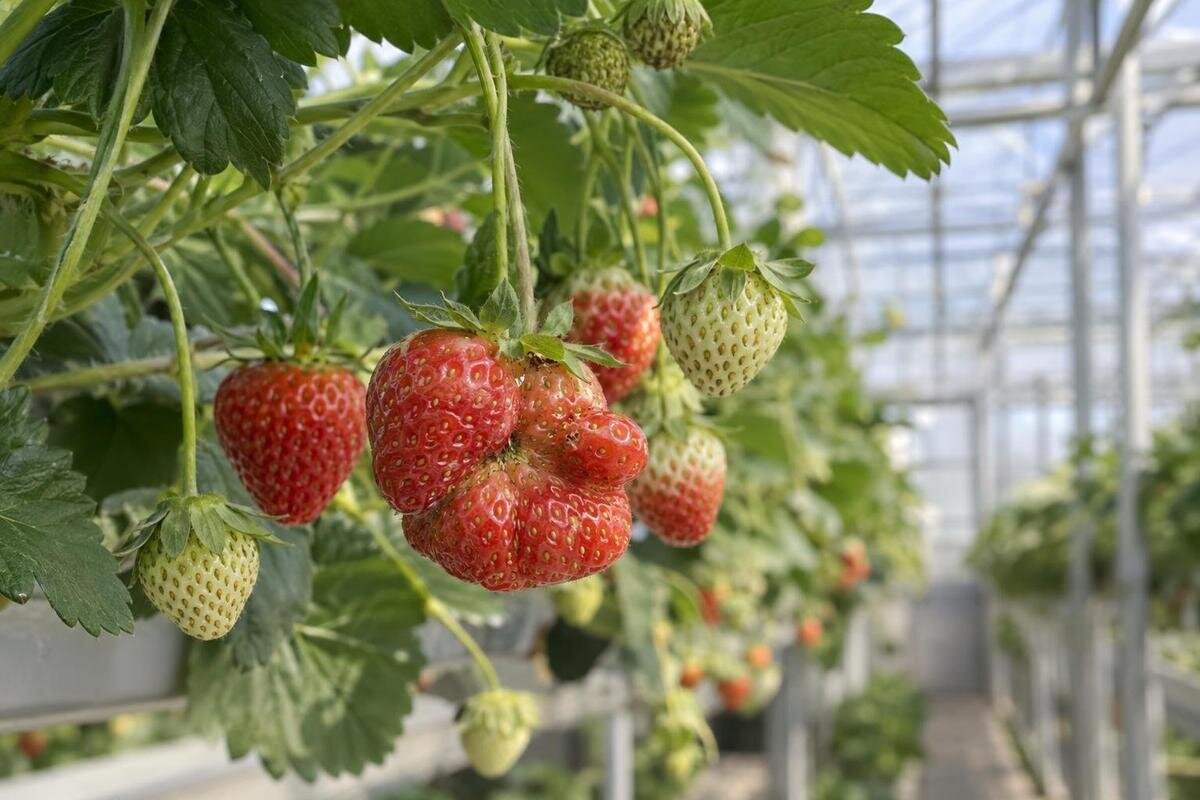
Uneven strawberries often point back to conditions around flowering, but fruit shape alone cannot identify the cause. The edible part grows from the flower’s receptacle, around many tiny seed-like achenes; uneven fertilisation can leave patches smaller than the rest. Frost, heat, root stress, insect damage and normal variation can produce similar results. The useful question is which parts failed to fill, whether their achenes developed, and what the flowers experienced while they were open.

What an uneven strawberry looks like
A strawberry that is unevenly filled may be lopsided, pinched at one end, irregularly lobed, or have a firm, shallow patch where the surrounding flesh has swollen. Describe the feature before naming a cause: note whether the tip, one side, or several scattered spots failed to develop, and whether the defect reaches from the surface towards the centre. A berry that is uniformly small is a different clue from a large one with a shallow gap. Compare fruit from the same variety and picking period, because normal differences in shape or size can otherwise make an ordinary berry look like an outlier.
Start with a group of berries, not the most unusual one. Record which plant and row produced each fruit, whether other berries from the same flower cluster look similar, and whether nearby leaves or flowers show damage. Take one close photo of the whole berry and another of the least-developed patch; include the same view of a normally formed berry for comparison. Keep the fruit at a similar stage of ripeness, since ripe and partly coloured berries are hard to compare fairly. Revisit the plant at later pickings. A photograph captures a pattern and timing, but cannot show exactly what happened inside the flower when pollen moved.
How pollination affects strawberry shape
Strawberries are aggregate accessory fruits. The edible part enlarges from the flower’s receptacle, while the tiny specks commonly called seeds are achenes, each linked to a separate flower part. After pollen reaches a stigma and fertilisation occurs, the developing achenes support growth in the surrounding receptacle. If some parts receive too little viable pollen, nearby tissue may stay small and the berry can develop unevenly. The more the underfilled patch lines up with poorly developed achenes, the more this explanation fits. Still, a similar result can follow flower injury or poor conditions during fertilisation, so it does not identify the original cause on its own.
Most cultivated strawberries are self-fertile, meaning pollen from the same flower can fertilise its parts; it still has to move from anthers to stigmas. In a greenhouse, insect visits, gentle flower movement and incidental contact can distribute pollen. Enclosure does not automatically leave flowers unpollinated, and seeing a bee or another visitor does not prove pollen reached every part. Note which flowers receive visits and whether the problem affects only flowers opening in one period. If insect access is a consideration when choosing a structure, compare the specified doors and vents on the T-Model Orangery Greenhouse product page with your proposed planting layout.
What the achenes can tell you
Look closely at the achenes around the entire berry, especially beside the area that has not filled. A cluster of small, shallow or poorly developed achenes near a hollow or pinched patch supports a pollination problem more than a uniformly small berry does. Compare the same feature across several fruits from one flowering period; one berry can be an anomaly. Check the shoulders as well as the tip. If the surface is rough, scuffed or locally scarred rather than simply under-expanded, consider physical or insect damage too. These signs narrow the possibilities, but cannot tell whether the original issue was pollen transfer, pollen viability or flower injury.
To connect fruit shape with flowering conditions, label flowers or clusters when they open and keep a record through to harvest. Note the flowering date, row position, variety and whether neighbouring fruit developed normally. Record when an underfilled patch first becomes visible, then check whether the same pattern appears in other fruit from that cluster. This gives your harvest photographs a useful timeline rather than leaving you to reconstruct events from memory. Marking each plant’s position helps reveal whether the problem follows one section or the whole crop. When planning access for regular observations, compare the dimensions on the Pyramid Greenhouse product page with the space needed to reach your proposed rows.
Check conditions while flowers are open
Pollination happens while the flower is open, so review conditions during that window rather than only at harvest. Note cold snaps or frost, unusually hot spells, persistently wet flowers, and whether pollinating insects were seen. Temperature at flower height can differ from a forecast or a reading outside the greenhouse, especially on a still, sunny day. If you have a thermometer, record readings near the crop rather than relying only on outdoor conditions. Write down when affected flowers opened and when they began to swell; this may link a batch to a particular period. These are clues to compare, not thresholds or proof of causation.
Air movement and insect access are part of the picture, but simply opening a greenhouse does not guarantee good pollination: weather, flower condition and insect activity still matter. Record whether doors or vents were open, whether air felt stagnant, and whether insects visited flowers. Also note any sudden cold or heat after you changed the openings, so you can compare those events with affected flower clusters. For a greenhouse with storage, include both growing and storage areas in your proposed layout. Check the opening and ventilation details for Limited Edition Aluminium Greenhouses with Storage before deciding where flowering plants would sit.

Look for plant stress as well as pollination
Plant stress may affect fruit through flowering and early enlargement, although it often causes smaller fruit or weaker plants rather than a distinctive lopsided shape. Check root-zone moisture across several days: repeated drying and saturation, waterlogging or damaged roots can restrict growth. Look for whether stress is isolated to one pot or bed, a dry edge, or one part of the structure; a spatial pattern can point towards irrigation or exposure. Compare new leaves and crowns with those of healthy plants nearby. If plants are otherwise vigorous and only one flowering period is affected, conditions around bloom deserve more attention than a change to the feeding programme.
Light and temperature matter as well. Deep shade may reduce vigour and overall fruit fill; excessive heat or cold during flowering can affect flower development and fertilisation. A nutrient imbalance is possible, but misshapen fruit alone is not a reliable sign of a particular deficiency. Don’t add fertiliser or trace elements by guesswork: check soil or growing-medium conditions and seek suitable advice if the pattern is widespread. If these observations lead you to consider a different structure, compare the published details of the Bloomcabin Prestige Greenhouse with the growing conditions you need to manage. Keep site exposure and irrigation in the assessment as well.
Separate flower damage from pollination failure
Frost injury often leaves clues in the flower itself. After a cold event, the centre of an affected flower may turn brown or black; later fruit from that flower can be malformed even if other flowers set normally. Compare flowers exposed at the same time with flowers that were still closed or better sheltered, and note whether the defect follows a particular cold night. Heat injury can be less visible after the fact, so a dated weather and greenhouse record is useful. If the flowers were not inspected then, the ripe berry may not separate frost damage from poor fertilisation. This is why the timing of an observation matters.
Inspect flowers, young fruit and leaves for other signs: chewed petals, small feeding marks, surface scarring, webbing, spots or grey mould suggest that a pest, disease or physical injury may be involved. Look beneath leaves and around flower clusters, but avoid treating a suspected pest from fruit shape alone. Damage often appears in the same affected patch or on neighbouring plant parts, while incomplete pollination may leave an underfilled berry without an obvious scar. When planning a larger growing area, allow access to inspect every row. The Spacious Greenhouse range is listed from 47 to 70 m²; use the selected model’s dimensions to plan beds and paths.
Allow for normal differences between berries
Normal variation can be mistaken for a crop problem. Cultivars differ in fruit shape, and a plant may produce different-sized berries from successive flowers: the earliest, strongest flowers often set larger fruit than later flowers on the same truss. Newly established, crowded or heavily fruiting plants may also produce smaller berries without each one having a pollination defect. Compare fruit within the same cultivar and flowering period rather than judging every berry against a single ideal shape. Note whether only the first berries are unusually large or irregular, or whether deformation repeats throughout the cluster. A few odd berries beside otherwise normal clusters call for a different response from repeated deformation along a row.
Check plant distribution before changing anything. If affected berries all come from one variety, one planting date or one section, that points towards a local or cultivar-related pattern; if they occur throughout the greenhouse at the same time, a shared flowering condition becomes more plausible. Dense foliage can shade blossoms and make inspection harder, while poor plant health can limit fruit growth, but neither explains a specific achene pattern by itself. For a new planting layout, compare the selected dimensions in the Aluminium Greenhouses range, listed from 3.77 to 28.08 m². Account for mature foliage and access between rows, rather than planning around small plants alone.
Test a pollination theory on a few flowers
A small comparison can test whether pollen transfer is worth improving. Mark several newly opened flowers on similar, healthy plants in the same cultivar. Leave some to normal conditions; on a matched group, gently brush pollen across the flower centre with a clean, soft brush, without rubbing or tearing its parts. Label each group and compare fruit as it develops, including the achene pattern and how evenly the receptacle grows. Avoid comparing flowers at different stages or in different locations, because the apparent effect could instead come from temperature, plant vigour or exposure. Keep the test small so normal fruiting is not disrupted.
Treat the result as one clue, not a conclusive experiment. Better-shaped fruit among brushed flowers makes pollen transfer worth investigating, but a small group can be affected by chance or different flower conditions. If both groups are equally distorted, look again at temperature, frost, root moisture, insects and damage rather than repeating the same brushing. Hand-pollination can be useful for a small diagnostic comparison; it is not necessary to brush every blossom by default. If you are considering a Lean-to Greenhouse, check its measurements against your proposed planting layout so you can assess whether each flower cluster would be within comfortable reach.

Make one evidence-based change at a time
Choose one change that matches the evidence and record it. If the pattern points towards poor insect access, observe flowering periods and consider how insects can reach open flowers when conditions allow; if visits are absent, a small hand-pollination comparison may show whether pollen movement matters. If heat or stagnant air coincides with bloom, monitor conditions at flower height and use available ventilation appropriately for the weather. If stress seems local to a bed, check moisture and root condition there first. Changing several things together can improve the crop but leave you unable to identify what made the difference.
Don’t use a blanket increase in watering, fertiliser or ventilation as a catch-all fix. Keep root-zone moisture reasonably consistent without leaving roots waterlogged, and base nutrient changes on a test or suitable advice. If a redesign includes replacing the structure, compare the published details of the Limited Edition Aluminium Greenhouses range with the constraint you have recorded. Be specific about what the replacement would change, such as the arrangement of beds or access to openings. This keeps crop diagnosis separate from a purchase decision and avoids expecting a new structure alone to correct pollination, plant health or damaged flowers.
When the pattern needs a closer diagnosis
Seek a closer diagnosis if the same deformation returns across several flowering periods, affects many plants, or appears with declining leaves, roots or flowers. Bring dated photographs of open flowers and developing fruit, notes on variety and row, and records of watering and greenhouse conditions to a local horticultural adviser, experienced nursery or plant diagnostic service. A sample plant may be more informative than a single ripe berry, but ask before transporting it so the adviser can tell you what to include. For broader planting, feeding or harvest questions, use a strawberry-growing guide; this diagnosis is focused on fruit shape.
Use the strongest evidence, not the neatest theory. Achenes that remain poorly developed beside underfilled patches make uneven fertilisation plausible; flower browning after a cold event, a repeated hot or wet flowering period, or a pattern tied to one location shifts attention towards stress. Scars, mould and feeding signs suggest other causes, while isolated odd berries may be normal variation. Several clues can overlap, and more than one factor can be operating at once. The practical aim is to identify what was different during flowering or early fruit growth, then reassess the next flowering period rather than overcorrecting from one harvest.
Frequently asked questions
Can a strawberry be misshapen even if it was pollinated?
Yes. Pollination may be uneven: some parts of a flower can be fertilised while others are not, leaving areas of the berry less developed. Frost, heat, injury and normal cultivar variation can also distort fruit. Compare the achenes and the conditions during flowering rather than relying on shape alone.
Do greenhouse strawberries need bees?
Not necessarily. Most commonly grown strawberries are self-fertile, but pollen still needs to move from the anthers to the stigmas. Bees and other insects can help distribute it. Not seeing a bee does not prove a flower went unpollinated; check the fruit pattern and conditions during bloom.
Do the seed-like dots show what caused the problem?
They can provide a clue. Poorly developed achenes beside an underfilled patch are consistent with incomplete fertilisation, but they do not prove why it happened. Flower injury or stressful conditions can affect development too, so compare several berries and check what the flowers experienced.
Should I add more fertiliser to fix uneven fruit?
Not without evidence of a nutrient problem. Misshapen fruit is not a specific sign of deficiency, and excess fertiliser can create other problems. Check the soil or growing medium and seek suitable advice before changing the feeding programme; fertiliser cannot reverse damage to a flower that has already set fruit.
Should I hand-pollinate every greenhouse flower?
Usually not. A small, labelled comparison can help test whether extra pollen movement makes a difference: gently brush a few open flowers and compare their fruit with similar untreated flowers. Keep conditions as similar as possible, and treat the result as a clue rather than proof.
Uneven greenhouse strawberries can offer clues to what happened while their flowers were open and the young fruit began to grow. Poorly developed achenes beside underfilled patches make incomplete fertilisation plausible; a cold- or heat-linked pattern, root stress or visible damage shifts the investigation. Compare several berries from the same flowering period, keep dated observations and change only what the evidence supports. One harvest can suggest a cause, while observations from the next flowering period can help you assess whether an adjustment made a difference.
