
Why Greenhouse Tomato Flowers Are Not Setting Fruit
Tomato crop troubleshooting
Tomato plants can carry plenty of open flowers and still produce few fruits. In a greenhouse, check the temperature around the flowers, whether pollen is dry and releasing, and whether the plant is under wider stress. Follow new trusses in a practical order: one dropped bloom or one hot afternoon is not enough to identify the cause.

Confirm whether fruit has failed to set
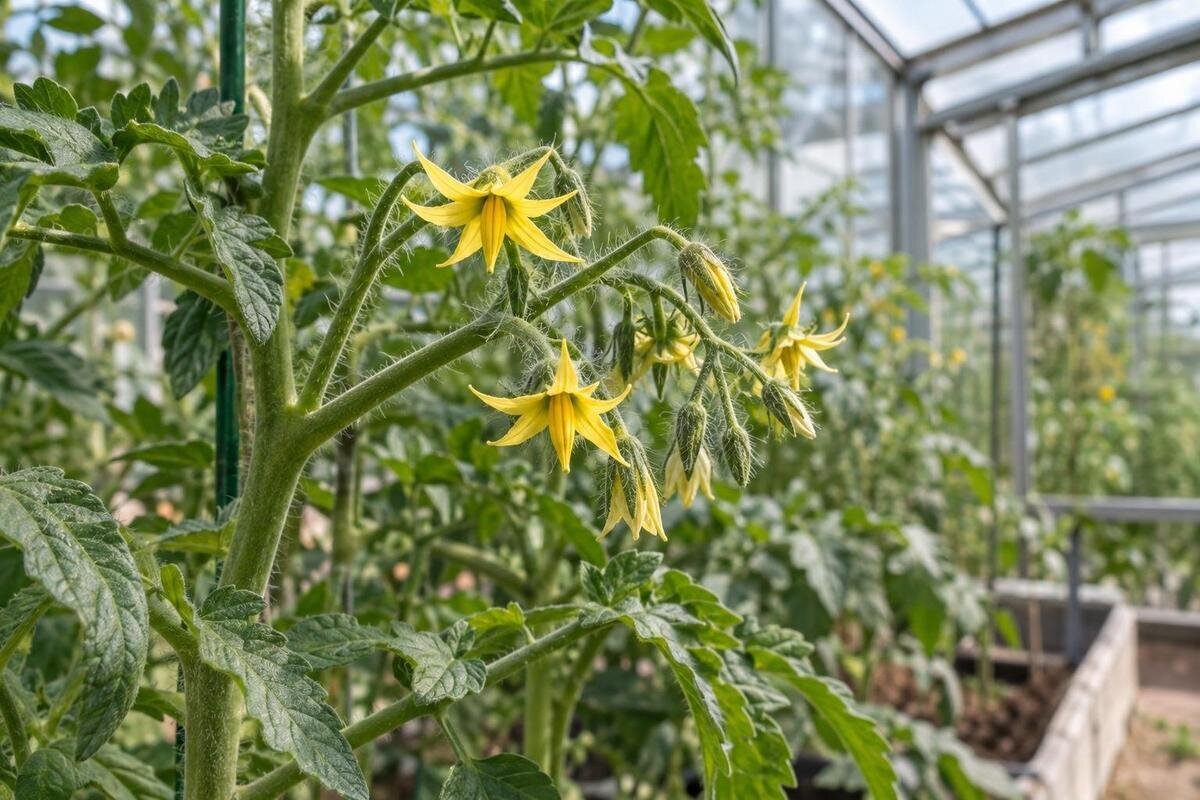
Start by checking what you mean by no fruit. Tomato flowers are usually self-fertile: each bloom has male and female parts, with pollen held in an anther cone around the stigma and an ovary at the base. When a flower sets, that ovary begins to swell into a small green fruit. Petals can curl, dry and fall as the young tomato develops, so petals on the soil do not prove that pollination failed. Look at each bloom from the side of the truss, not only from above, where the swelling can blend into the stem. A slight thickening just behind the sepals may be the first clue.
Poor set is more likely when the whole flower or its stalk yellows and drops while the ovary remains small, or when a swelling starts and then shrivels. Early fruit abortion can happen after pollination, so a flower that appeared to set may still be affected by later stress. Mark one or two trusses and note which flowers are open, which have lost petals and which show swelling. Check again over the following days rather than expecting an obvious tomato on the same afternoon a flower opens. A dated photo from the side can show small changes and help separate normal petal fall from a genuine lack of fruit.
Measure temperatures where the flowers are
Use a min–max thermometer or data logger near the height of open flower trusses, in shade and away from the roof, glazing, heaters and doors. Direct sun can warm an instrument faster than the surrounding air, while a doorway may be cooler than the centre of a dense crop. Record daytime highs and overnight lows for several days, alongside the dates when marked flowers open. Repeat readings in the same position so you can compare like with like. If you have several rows, take occasional readings at both ends rather than assuming one measurement represents every plant. Weather-app figures are useful context, but they do not describe the air around flowers inside your greenhouse.
Look for a repeated match between a temperature pattern and the flowers that fail to swell. A warm centre and a cooler edge, for example, may not expose every plant to the same conditions. Note whether flowers opened during a hot spell or a run of cold nights, and compare them with blooms opening at other times. Keep a simple sketch showing where each reading was taken so that a change of measuring position does not look like a change in conditions. For a future greenhouse comparison, the T-Model Orangery Greenhouse listing covers options from 16.52 to 30 m². Use the selected floor plan to identify possible crop and thermometer positions, then compare ventilation details separately. This keeps the choice tied to the temperature pattern you have observed rather than to size alone.
Compare readings with heat and cold spells
Tomato pollen and flower retention can be affected at both ends of the temperature range. As rough warning bands, repeated daytime highs above about 30–32°C and nights staying above roughly 21–24°C can reduce pollen performance for many cultivars. Cool conditions around 13°C or below may also interfere with fruit set. These are prompts to investigate, not universal cut-offs: cultivar, duration and the plant's overall condition all matter. A brief peak does not prove that heat caused the problem, and a comfortable reading at midday does not rule out a cold night.
Match the readings to the dates of newly opened flowers before changing the greenhouse routine. When heat is recurring, use available ventilation or suitable shading to limit the hottest part of the day, and keep recording temperatures to see whether conditions change. Write down when openings or shading were used alongside the readings; otherwise, it is difficult to compare one hot day with another. During a cold spell, avoid treating a single sunny afternoon as evidence that nights are also warm. If a structure change is part of a longer-term plan, the Pyramid Greenhouse listing spans 5.53 to 18.9 m². Compare the opening specifications of the option you are considering with the heat-management adjustments your current greenhouse needs.
Check whether pollen is moving
Tomato flowers usually do not need pollen from a second plant, but pollen must still move from the anther cone to the stigma. Outdoors, breeze and insect visits can shake a flower. In a very still greenhouse, pollen may remain in the cone, particularly if blossoms are damp. Look at fully open, healthy flowers during a dry part of the day. If foliage looks sound and several trusses have open flowers but no swelling, limited pollen movement is one reasonable possibility to test; it is not a diagnosis, because heat can also affect whether pollen is viable.
On a few newly opened flowers, gently vibrate the truss or its support once condensation has dried. Do not tug the stem or pull petals apart. Label the treated trusses and note the date, choosing untreated flowers at a similar stage for comparison. Look for swelling over the following days, rather than judging success from whether petals fall. A difference may suggest that movement was limiting, although temperature and flower condition still matter. Access is worth considering if you regularly inspect or gently vibrate flowers. The Limited Edition Aluminium Greenhouses with Storage listing identifies built-in storage and options from 5.52 to 28.08 m². When comparing layouts, trace the route between stored tools and the crop, including where you would stand to reach a truss without pulling it towards you. The listing does not establish that access for every planting arrangement.

Track fruit set across successive trusses
Once you can distinguish petal fall from the loss of a whole flower, compare groups of flowers that opened at similar times. A truss carrying several closed buds is not directly comparable with one whose flowers have already withered. Record the number of open flowers when you begin, then follow those particular blooms rather than including every new bud in the same count. Keep separate notes for flowers that drop before any swelling and young fruits that begin to enlarge but later shrivel. These outcomes describe different stages of the problem, even though they do not identify its cause. If you missed the opening date, mark it as unknown rather than guessing; the comparison will still be useful, but it should not be treated as a precise match with a particular hot or cold day.
Check lower and upper trusses separately; they flower at different times and may encounter different conditions. This makes it easier to tell whether poor set is limited to one flowering period or continues as the plant grows. Add the plant's position to your notes so that a problem on one side of the greenhouse is not mistaken for a problem affecting every plant. A sketch with numbered plants is enough; use the same numbers on your photos and records. The Bloomcabin Prestige Greenhouse listing covers options from 3.77 to 28.08 m². If comparing a future layout, use its selected dimensions to sketch where plants would stand and how you would view their trusses. Allow for inspection from the path rather than planning observations that require stepping into a planted bed.
Consider humidity and air movement
Temperature is not the only condition that affects pollen release. Very humid air can leave pollen sticky and less able to shed, while very dry conditions combined with heat can also impair pollen and flowers. Condensation on blossoms is a clue that the air has remained damp, but it does not prove humidity alone caused the failure. A small hygrometer can help show whether damp conditions persist, especially overnight or early in the day. Take readings at flower height and compare them with flower opening and fruit-set notes; one reading taken elsewhere in the greenhouse may not tell the whole story.
Where outside conditions allow, use the greenhouse's available openings to move air through the crop, and avoid keeping flowers wet. Air movement can assist pollen release, but the aim is not to expose plants to a strong, cold draught. Note which openings were in use when you recorded humidity, and whether condensation remained on flowers after nearby surfaces had dried. This gives you a more useful comparison than simply recording that the greenhouse was open. For larger growing spaces, the Spacious Greenhouse listing gives sizes from 47 to 70 m². Examine opening positions alongside the proposed rows and paths, with particular attention to the damp areas identified in your observations. Floor area alone does not describe airflow around the crop.
Assess light, canopy and nitrogen
Look for a pattern linked to shade or crowding. Plants tucked behind taller growth, close to a shaded side or under a dense canopy may receive less light and have weaker growth, which can make flowering and fruiting less reliable. Check the crop at different times of day rather than relying on one midday glance. If only one part of the greenhouse has poor set, compare its light, plant spacing and airflow with the area where flowers are developing normally. A localised pattern can point to the growing environment, although it does not rule out temperature or watering stress.
Notice whether the plant is producing unusually vigorous leafy growth. Too much nitrogen can favour leaves over balanced flowering and fruiting, but lush growth by itself does not prove that fertiliser is the cause of failed set. Compare the feeding history of affected and unaffected plants, including whether they received the same product and amount. Avoid removing large amounts of foliage while investigating; sudden heavy pruning adds another change and removes leaves that support the plant. When planning a future growing layout, the Aluminium Classic Greenhouse listing covers options from 3.77 to 28.08 m². Sketch the beds, paths and intended plant positions within the chosen size. Use your observations of crowded or shaded plants to decide which parts of the present arrangement need more room, rather than simply adding more planting space.
Review water supply and root conditions
Check moisture where the roots are, not just on the surface. A plant that repeatedly dries out or sits in saturated growing medium can be stressed and may drop flowers or young fruit. Pots, growing bags and garden beds dry at different rates, so compare plants in the same type of growing space. Look for other clues, such as wilting, leaf changes or a pattern that follows a particular bed or container. These signs are not specific to one cause, but they can show whether the problem extends beyond the flowers.
Aim for consistent moisture without keeping the root zone waterlogged; the right frequency depends on the weather, plant size and growing medium. Record which containers or beds needed water and which remained wet, rather than assuming every plant needs the same amount. Adding fertiliser is not a substitute for correcting a moisture problem, and extra nitrogen may encourage more leafy growth without resolving fruit set. If you suspect a nutrient issue, check the soil or growing medium before adding a product. The Lean-to Greenhouse listing covers options from 3.69 to 14.34 m². When considering that format, map the water supply and the route to each proposed bed or container. Include access to the openings so that watering equipment does not obstruct their use, and assess orientation against the actual site.

Inspect flower damage and compare plants
If only particular plants or trusses are affected, inspect buds and flowers closely as well as the leaves around them. Small insects, feeding marks or distorted buds can indicate damage that interferes with normal flowering, but appearance alone may not identify the pest. Look for whether the marks are confined to flower parts or occur across the plant. Leaf or stem problems can also weaken a crop and contribute to poor set. Take clear photos of affected flowers and nearby leaves; a close, dated image is more useful than relying on memory when symptoms change.
Compare varieties and flowering stages before deciding that the whole greenhouse has one problem. Cultivars can respond differently to temperature, and early flowers may fail during a period of stress even if later trusses set. Note whether a healthy plant of another variety is producing fruit under the same conditions, or whether poor set follows one plant across successive trusses. Keep variety labels visible in your photos so that comparisons remain clear as the plants grow. For future inspection access, the Limited Edition Aluminium Greenhouses listing spans 3.77 to 28.08 m². Look at the chosen configuration with mature plants in mind: identify where you could stand to examine buds and nearby leaves without pushing through another plant. Compare that arrangement with any places where inspection is difficult in your current crop.
Compare new flowers after one change
Avoid changing temperature management, watering, feeding and pollination all at once. If several things change together, you will not know which one helped, and a short-lived improvement may be hard to repeat. Use the clues gathered so far to choose the most likely factor: for example, compare readings with new flowers if heat is suspected, or try gentle vibration on a small sample if the greenhouse is still and blossoms are dry. Keep routine care otherwise steady while you observe the next flowers.
A simple record can include the plant or variety, truss, date flowers open, day and night temperatures, humidity if measured, and whether petals or the whole flower fell. Add notes about any change you made and whether new ovaries began to swell. Keep earlier flowers in the record, but assess the change mainly through flowers opening during the new routine; an old, failed bloom cannot show whether the adjustment helped. Use the same observation method before and after the change, and note weather differences that could complicate the comparison. Look for the same result across more than one truss rather than relying on one bloom. If the result is mixed, retain those notes rather than counting only the flowers that set. If fruit still fails to set and your records show no clear temperature or pollen issue, photos and measurements can help a local horticultural adviser assess what to investigate next.
Frequently asked questions
Do I need more than one tomato plant for pollination?
Usually not. Tomato flowers have both male and female parts and can set fruit using pollen from the same flower. Pollen still needs to be released and reach the stigma, so check for suitable conditions and flower movement rather than adding another plant.
Can I hand-pollinate greenhouse tomatoes?
You can try gently vibrating a dry, open flower truss or its support. Compare a few treated flowers with others on the same plant and look for swelling behind the petals over the following days. Rough shaking or pulling at flowers is unnecessary.
Can warm nights stop tomatoes setting fruit?
Repeated warm nights can contribute to poor fruit set, particularly when days are also hot. Record temperatures near the flowers, including overnight lows, and look for a pattern across several trusses; a single warm reading does not identify the cause.
Are falling petals a sign that pollination has failed?
Not by themselves. Petals often wither and fall after the ovary starts to develop. Check whether a small swelling remains behind the green sepals. If the whole flower drops without swelling, fruit set may have failed, but the appearance alone cannot show why.
Should I add fertiliser when tomato flowers drop?
Not automatically. Flower drop can relate to temperature, pollen release, moisture or other stress, and extra fertiliser will not correct those causes. Check the plant's growth and watering first; use a soil or growing-medium test if you suspect a nutrient issue.
The most useful first distinction is between petals falling normally and a flower or young ovary failing to develop. Then match marked trusses to measured day and night temperatures, check whether pollen can move, and look for moisture, light or plant-health stress. A pattern across successive flowers is more reliable than an impression from one empty truss—and helps avoid treating the wrong cause.
