
Greenhouse Tomato Leaf Curl: Stress Signs or Disease?
Greenhouse crop guide
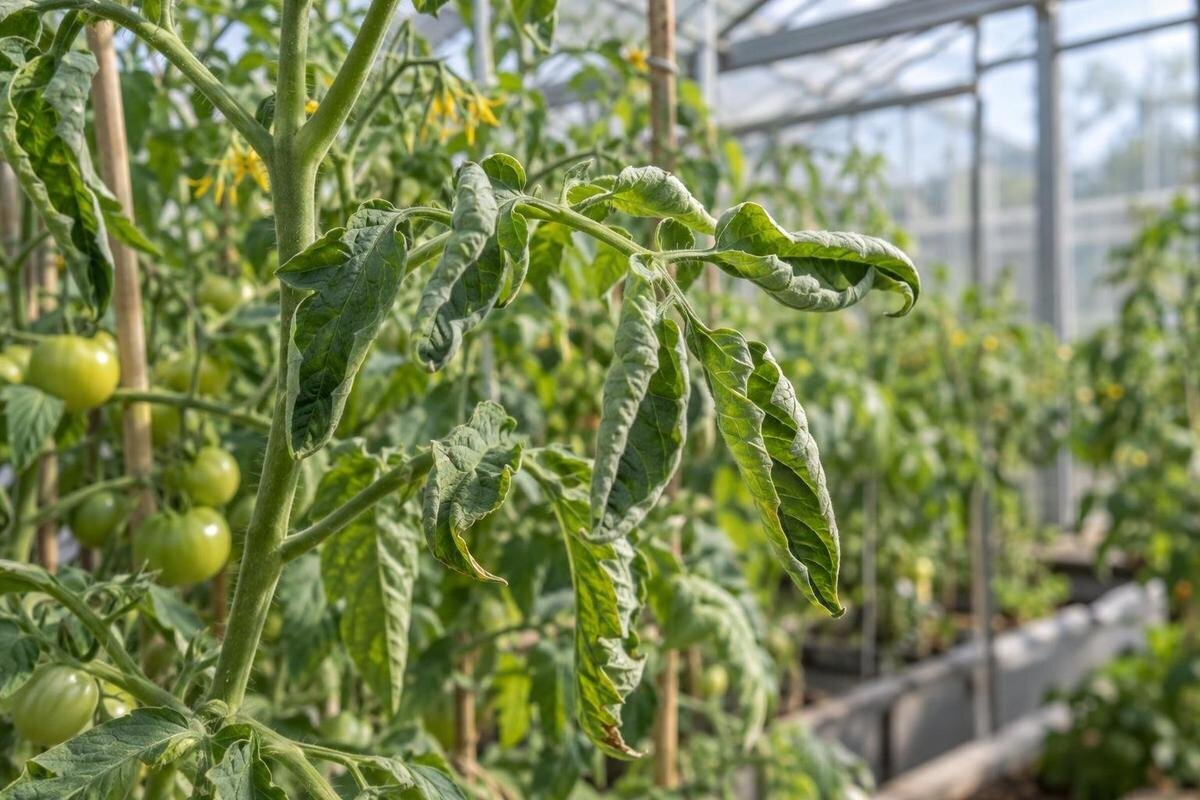
One curled tomato leaf rarely reveals whether the cause is heat, watering or infection. In a greenhouse, compare which leaves are affected, whether new growth is changing, and whether the leaf is only rolled or also mottled, yellow, spotted or twisted. A smooth roll on mature leaves after a hot spell can fit physiological stress; progressive distortion or unusual colour deserves closer attention. Photographs and a short growing record help, but appearance alone cannot confirm a disease.
Leaf curl is a symptom, not a diagnosis
Tomato leaf curl describes a change in shape; it does not name a particular disease. Leaves can roll upwards, cup downwards, pucker, twist or narrow, and those forms can follow environmental stress, root trouble, pests, weedkiller exposure, nutrient imbalance or infection. In a greenhouse, high temperatures and uneven root-zone moisture are common possibilities, but a sheltered setting does not rule out pests or disease. The same-looking curl can have different causes, so avoid deciding from one leaf or a single online photograph. Nor does curl alone show that the whole crop is failing. The direction of the roll helps describe it, but does not identify its cause on its own.
Start with comparisons. Is the affected leaf mature or newly opening? Is its colour still even green, or are there mottled light and dark areas, yellowing, spots or dead tissue? Are stems, growing tips or fruit changing too? Note whether one plant, one row or many plants are involved, and when the first symptom appeared. Compare a newly opened leaf with a mature one on the same plant, so old damage is not mistaken for fresh change. Plant age, variety and recent handling matter as well. An infection can begin subtly, while non-infectious stress can make leaves look badly distorted. Compare dated photos rather than attaching a disease name to the first curl.
How physiological leaf roll usually looks
A common non-infectious pattern is a gradual upward roll along the edges of older, lower leaves. The leaflets may fold inwards or form a tube; they often remain an even green and can feel firmer or thicker than usual. The newest leaves and growing point generally look normal, with no obvious mottling, spotting or stem distortion. This combination supports physiological leaf roll, especially if the plant otherwise looks vigorous. It is a clue, not a guarantee: some infections and other stressors can initially affect older foliage or produce mild symptoms. Judge the pattern across the plant, not the tightness of one curled leaflet.
Look at the plant's recent history as well as its shape. Curling may appear after hot conditions, a dry spell followed by heavy watering, root disturbance, transplanting or hard pruning. Restricted roots can add to stress, while some varieties naturally have more rolled-looking foliage than others. If pruning, transplanting or potting took place, note when; root disturbance may not show on leaves immediately. If the condition stabilises once the cause is corrected, new leaves can emerge normally even if older leaves stay curled. Do not judge recovery only by whether the original leaves flatten; the next growth and any fresh symptoms are more useful comparisons.
Heat, sunlight and greenhouse conditions
On a bright day, a closed greenhouse can become much warmer than the air outside. Curl that appears or becomes more obvious around the hottest part of the day, especially on exposed plants, can fit heat or strong-light stress. Check whether affected leaves face a sunny side or sit in a warmer part of the structure, and compare them with plants in a less exposed position. If the curl eases as the day cools, that supports—but does not prove—an environmental explanation. Compare morning and later-day appearance over more than one day. Disease does not always affect every plant evenly, and symptoms can persist after temperatures fall.
Use a thermometer positioned at crop height according to its instructions, and record readings alongside the time symptoms are seen; an outdoor weather reading is not a substitute for greenhouse conditions. Where the structure has designed vents or shading, operate them as intended and observe how plants respond instead of making several sudden changes at once. For future layout comparisons, the Bloomcabin Prestige Greenhouse listing shows sizes from 3.77 to 28.08 m². That range does not establish temperature control or vent placement, so check the product specifications before treating a greenhouse choice as a heat-management measure.
Check the root zone before changing how you water
Both dry roots and roots kept persistently too wet can leave a tomato unable to take up water normally; injured or cramped roots can make the problem worse. A dry surface alone is not enough to diagnose drought: check moisture below it and, for containers, in more than one place. For potted plants, look near the drainage holes as well as near the stem, since the medium can vary in moisture. Check for poor drainage, blocked outlets, a pot standing in water, recent root disturbance or plants competing in crowded beds. Compare affected plants with others in the same medium and container size before changing the whole greenhouse routine.
Keep moisture reasonably consistent for the crop and growing medium; avoid alternating a severe dry-out with a large drench, and do not add fertiliser simply because leaves curl. Extra feed can create another imbalance without fixing the cause. Avoid using leaf curl as a watering gauge on its own: check the growing medium and the plant's response. When planning a larger growing area, the Spacious Greenhouse catalogue lists options from 47 to 70 m². Those figures describe area, not watering needs or access to every bed; compare the actual dimensions with plant rows, paths and the water points you can reach. A layout record can help show whether one watering line is involved.

Distorted new growth needs closer attention
Changes at the growing tip deserve more attention than an isolated roll on older leaves. Watch for newly formed leaves that are small, narrow or strap-like, twisted, puckered or unevenly cupped, especially when the plant also shows light-and-dark green mottling, yellowing, unusual veins, bronzing, spots or stunted growth. Some viral diseases can produce combinations of distortion, colour change and poor growth, but their signs vary and overlap with nutrient problems, mites, weedkiller injury and other stresses. A single yellow patch does not distinguish infection from a nutrient or environmental problem. A photo cannot reliably identify the cause, and the phrase leaf curl is not proof of a particular virus.
Weedkiller exposure is another lookalike: tomatoes may develop cupped or twisted new growth after drift or contact, sometimes while older leaves remain less affected. Think about recent spraying nearby, wind direction, weed control and shared equipment, but do not assume exposure is the answer. Note what was applied and when, if known. For future greenhouse planning, the Aluminium Classic Greenhouse catalogue lists sizes from 3.77 to 28.08 m². Compare its dimensions with your proposed rows and inspection paths; the model name and floor area cannot explain distorted growth. Seek plant diagnosis if new leaves keep emerging abnormally.
Where the curl occurs matters
Map affected plants rather than relying on memory. Curl confined to a row near a sunny wall, door, heater, draught or particular watering line can point to a local exposure or irrigation difference. Plants of the same variety and age may respond similarly, so compare neighbours and the planting pattern before drawing conclusions. Several plants developing symptoms could share a condition, but an infectious problem can be patchy at first. A cluster does not prove an environmental cause, and a few affected plants do not prove contagion. Mark which plants develop fresh signs, which side of each plant is affected, and when the changes appear.
Inspect both leaf surfaces, growing tips and stems in good light. Look for insects, eggs, fine webbing, sticky deposits, cast skins, feeding marks or distinct lesions as well as curl. A hand lens can help reveal small pests, but not seeing them does not rule out disease. An insect on one leaf is not automatically the cause; some pests are incidental, and some insects can transmit disease without conspicuous feeding damage. For a wall-side growing area, the Lean-to Greenhouse listing gives a 3.69 to 14.34 m² range. Compare the proposed position, orientation and openings when planning the layout, rather than assuming how sunny or well ventilated it will be.
Photographs that help an adviser
Take a set of pictures rather than one close-up. Start with the whole plant so its size, posture and position can be seen, then photograph an affected leaf on the plant and a close view of both surfaces. Include the youngest growth, one apparently healthy plant nearby, and any marks on stems or fruit. One set might show older, green leaves rolled upwards with a normal growing tip; another might show newly narrowed, mottled growth. These are contrasting clues, not proof of a diagnosis. Use clear, even light and a similar camera angle for follow-up images. Keep the original files without filters that alter colour or the appearance of mottling.
Write the date and note the plant's position, variety if known, when curling first appeared, recent hot days, watering changes, pruning, feeding, sprays and any nearby plants affected. Include planting or repotting dates if you know them, and distinguish fresh symptoms from older leaves that remain rolled. A short record is more reliable than reconstructing events later. Access matters when planning a future growing space, too. The Limited Edition Aluminium Greenhouse catalogue spans 3.77 to 28.08 m²; compare the actual dimensions with your planting plan so you can reach plants for inspection and photograph the same growing tips over time.
What to do while the cause is uncertain
Do not try several remedies at once. First check root-zone moisture, greenhouse temperature and whether plants in one area share a common exposure. Correct an obvious issue gently and consistently, then watch the next leaves to emerge. Avoid heavy pruning, extra fertiliser, pesticides or drastic watering changes just to see what happens; those responses may cause new damage and make the original pattern harder to interpret. If only one plant is affected, mark it and note its condition before handling others. When an infectious problem is possible, avoid taking cuttings or moving plant material to other growing areas until you have advice. Ask before discarding a plant that may be useful for assessment.
Where the greenhouse has vents or shading designed to be operated, use them as intended and monitor conditions at plant height. Record when you make a change and what conditions were like, so you can compare later observations. Keep hands and tools clean between plants when a transmissible problem is possible, and follow product-label directions for any treatment. If reviewing a future layout, the T-Model Orangery Greenhouse is listed in sizes from 16.52 to 30 m². Check opening locations and access in the product specifications rather than judging airflow from floor area. Structural, electrical or heating changes need qualified advice, not trial-and-error adjustments.

When to seek expert diagnosis
Ask a horticultural adviser or plant diagnostic service to assess the plant if new growth remains distorted, symptoms spread, several plants develop unusual colour or lesions, growth stalls, or the cause is unclear after you have checked water and greenhouse conditions. Seek help sooner if you see an unfamiliar pest or marked damage to stems or fruit. A plant specialist can consider the whole plant, growing history and disease possibilities in context rather than relying on leaf shape alone. If several varieties or neighbouring crops are affected, include that information when you ask for help.
Before sending material to a diagnostic service, ask what it needs: a clear photo set, a fresh sample or details of growing conditions. Sampling and handling requirements differ, so follow its directions rather than sending plant material unannounced. Include the position of affected plants and any differences in exposure, watering or nearby openings. These observations also help if you later review the layout. The Pyramid Greenhouse listing gives a 5.53 to 18.9 m² range; compare its actual dimensions and openings with your crop layout. Keep that buying comparison separate from diagnosis: a different greenhouse is not a treatment for an unidentified plant problem.
Build a routine that makes changes easier to spot
Prevention means keeping a useful baseline, not eliminating every curl. Check plants regularly from the youngest leaves down, compare affected and unaffected rows, and note hot spells, watering, pruning and other changes. A consistent inspection routine can make it easier to notice progression before a whole row is involved. Water according to the crop, growing medium and conditions rather than a fixed calendar; maintain suitable drainage and avoid unnecessary pruning or feeding. A thermometer and dated photos can show whether symptoms followed a temperature or management change. Clear fallen plant material where appropriate, and inspect incoming plants before placing them beside an established crop; normal-looking foliage does not prove pests or disease are absent.
Make sure the layout lets you inspect leaf undersides and growing tips, and review ventilation, shading, doors and water access against the actual greenhouse specifications. Storage needs a separate check. The Limited Edition Aluminium Greenhouse with Storage listing gives sizes from 5.52 to 28.08 m² and identifies built-in storage, but does not establish whether it suits treatment products. Check the product details and follow the relevant treatment label's storage requirements. Keep your growing records accessible so you can compare each episode with earlier observations. If new growth becomes abnormal or symptoms spread, return to diagnosis rather than treating every episode as routine stress.
Frequently asked questions
Can heat alone make greenhouse tomato leaves curl?
Yes. Strong sunlight and a hot greenhouse can be consistent with temporary leaf roll, particularly if mature leaves stay green and the growing tip remains normal. Compare the timing with greenhouse temperatures and check whether new growth stays healthy. A hot spell does not rule out another cause.
Should I remove leaves that are curling?
Not for curl alone. A healthy rolled leaf can still function, and pruning it will not correct a water, root or temperature problem. Avoid using removal as a test. If infection is suspected or the plant is badly damaged, ask an adviser how to handle the plant material.
Does curled foliage mean I am overwatering?
No. Dry roots, a growing medium that stays too wet and root damage can all interfere with water uptake. Check moisture below the surface and look at drainage instead of watering solely because a leaf is curled. A plant in wet soil can still show stress.
Can I tell whether a tomato has a virus from a photo?
No. A photo can show leaf age, colour, pattern and progression, but virus-like distortion can overlap with weedkiller injury, pests, nutrient problems and environmental stress. Send whole-plant and close-up images to a diagnostic service, and follow its advice about samples.
How quickly should I ask for expert help?
Seek advice promptly if new growth is twisted or stunted, mottling or lesions appear, several plants are affected, or symptoms are spreading. For mild curl limited to older green leaves, record conditions and watch new growth; there is no single waiting period that suits every case.
The useful distinction is a pattern: uniform roll on older green leaves after a known stress is more consistent with physiological leaf roll, while abnormal new growth, colour changes, lesions or spread raise the need for diagnosis. Neither pattern proves a cause. Check the root zone, greenhouse temperatures and distribution, then record how the plant changes. Comparing new leaves with older leaves and neighbouring plants is more useful than treating curl alone as a disease—or assuming every curled leaf is harmless.
