
Split Greenhouse Tomatoes: Crack Patterns and Causes
Greenhouse tomato troubleshooting
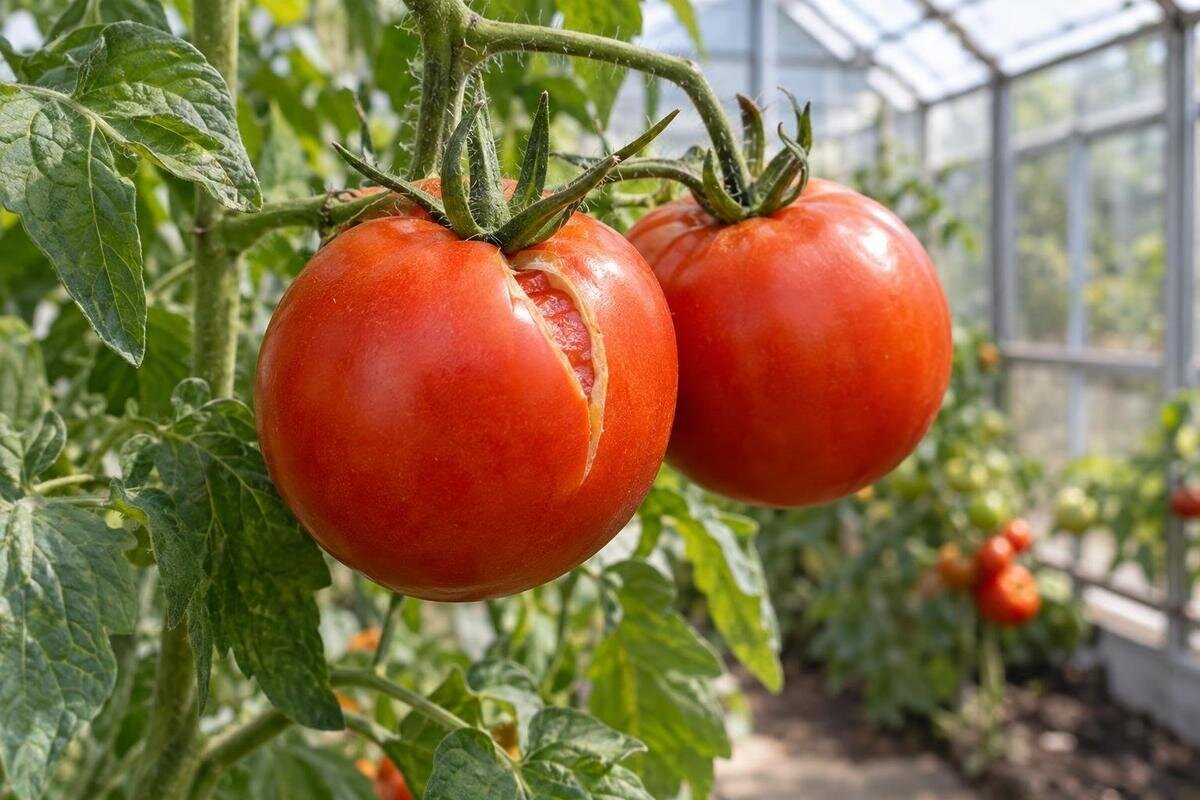
Tomatoes split when the fruit expands faster than its skin can stretch. In a greenhouse, a change in root-zone moisture is a common trigger: after soil dries, a sudden increase in available water can accelerate fruit growth. But the crack's shape cannot confirm that explanation on its own. Fruit maturity, variety, watering history and the position of affected plants all matter. Compare radial and circular cracks with recent soil conditions, then look for a pattern across the crop. That gives a better diagnosis than reacting to one damaged tomato with a heavy watering or an extra dose of fertiliser.

How tomato skin splits
A tomato fruit grows by taking up water through the plant, and its skin can stretch only so far at a given rate. If the fruit expands faster than the outer skin can accommodate, the skin splits. A crack may begin by the stem and run lengthways down the side, or form curved rings around the shoulder. A fruit can show one pattern or both. These are common ways cracking appears, not separate diagnoses. Greenhouse conditions influence how quickly a bed or container dries, but identifying the trigger means looking at recent fruit growth and moisture around the roots, rather than simply attributing the damage to growing under cover.
The event that strained the skin may have happened before you noticed the opening, so the latest watering is not automatically responsible. Fruit size, maturity and local growing conditions affect when a weak point gives way; the same change need not split every tomato. Once the skin has opened, it will not knit back together, even if watering becomes steady. Pick ripe split fruit promptly and inspect it, removing fruit that is softening or rotting rather than leaving it on the plant. Record new cracks separately from old ones so you can tell whether further damage is occurring after a change in care.
Sudden moisture changes are a common trigger
A common trigger is a relatively dry root zone followed by a sharp increase in available water. During a dry spell, fruit growth may slow; after a missed watering, a sudden change in routine or uneven irrigation, water uptake can rise quickly and the fruit may expand before its skin adjusts. In a greenhouse, rainfall is often excluded from most of the bed, but moisture is not automatically stable. Containers, bed edges and sheltered areas may dry at different rates. A shallow splash can dampen the surface without reaching the active roots evenly. The clue is a change in root-zone moisture, not simply a high total amount of water.
Check moisture below the surface, near the active roots, rather than judging by a dry-looking crust or a damp top layer. Look at more than one plant and note whether a bed or irrigation line is consistently drier. Pots may need closer observation than in-ground beds because their smaller soil volume can change moisture more quickly. If you are also planning a growing space, Limited Edition Aluminium Greenhouses are listed from 3.77 m² to 28.08 m². Mark beds and containers on the selected floor plan, including the places where you will check moisture. This makes individual root zones part of the plan rather than treating the whole growing area as one watering unit.
What radial and concentric cracks tell you
A radial crack usually runs lengthways from the stem end down the fruit. A concentric crack forms curved rings around the shoulder, often near the stem scar. You may see a single line, several rings or both. Record what you can see without assigning each shape a separate cause: both patterns can follow rapid fruit expansion, and variety, maturity and conditions influence which appears. Shallow, fine lines are also different in severity from a deep opening that exposes the flesh, so note depth as well as direction. A quick photo that includes the stem end can make later comparisons more reliable.
Where cracks appear can be more informative than whether they run lengthways or in rings. If fruit on one plant or one side of a bed is affected, compare moisture, variety and growing conditions there with nearby plants. If many plants crack after the same change in watering, a shared root-zone event is more plausible, though still not proven. When planning beds in a T-Model Orangery Greenhouse, listed from 16.52 m² to 30 m², consider how you will identify each row and its watering line. Clear bed labels let you record whether damage is confined to one area or occurs across several parts of the crop.
Fruit maturity and variety change the risk
Cracking is often noticed as fruit changes colour or becomes fully ripe, when it may be approaching its largest size. A green fruit can split too, so harvest stage is a clue rather than a rule. If you find a crack in a nearly ripe tomato, look back at the preceding watering and soil moisture rather than assuming ripeness itself caused it. Mature fruit can be more vulnerable to a rapid growth change; maturity does not explain why some fruit split and others did not. Check developing fruit as well as those ready to pick.
Varieties differ in their tendency to crack, and fruits on the same plant do not always mature at the same pace. Compare like with like: the same variety, a similar fruit stage and a similar position in the greenhouse. Note whether larger or earlier-ripening fruit are affected more often, but treat that as a pattern to check over several harvests, not proof of a single cause. For a new planting layout, the Pyramid Greenhouse range is listed from 5.53 m² to 18.9 m². Mark variety groups on the chosen floor plan and keep their labels visible as plants grow. Your records can then distinguish a variety-related pattern from damage concentrated in one bed position.

Watering history and affected plant positions
Reconstruct the few days before you first noticed a split. Write down when and how the bed was watered, whether a routine was missed, and whether an irrigation line seemed to deliver water unevenly. Record how the soil felt below the surface, as well as hot or sunny conditions that may have increased drying. Note the fruit stage and whether the change affected one bed or the whole greenhouse. The split may have formed before you saw it, so its discovery date is not necessarily the date the damage occurred. A dated note is more reliable than trying to remember a busy week.
Mark affected plants on a simple sketch, noting the row, bed edge or container, nearby openings and the watering line serving that area. Add the dates of new cracks to the same sketch so you can compare location and timing together. If you are reviewing space as well as care, Limited Edition Aluminium Greenhouses with Storage are listed from 5.52 m² to 28.08 m². Include the storage area and access routes when planning beds in the selected configuration. Leave a practical route to the plants you need to inspect; tomatoes splitting is a reason to examine how the growing space is used, not automatically a reason to replace the structure.
Greenhouse heat and humidity are supporting clues
Air conditions can contribute indirectly. On a hot, bright day, plants may use water faster and beds can dry more quickly; cooler or cloudy periods can change demand again. Ventilation affects greenhouse temperature and air movement, but changing a vent is not a substitute for checking soil moisture. High humidity or condensation may occur alongside cracking, yet either observation alone is weak evidence of the cause. Look for a repeated relationship between hot spells, root-zone drying and new splits rather than blaming humidity simply because the greenhouse feels damp.
If temperature seems relevant, keep a basic record in the greenhouse and compare it with moisture checks; one hot afternoon is not enough to explain all fruit damage. Note where the reading was taken so it relates to the tomatoes you are assessing. When considering a Bloomcabin Prestige Greenhouse, examine the ventilation information for the exact configuration and consider the proposed crop positions in relation to its openings. For an existing greenhouse, record shade and opening habits alongside temperature. These observations give you a way to compare conditions on days when new cracks appear with days when fruit remains intact.
Distinguish splitting from other fruit damage
A split is a break in the skin, often with flesh visible through the opening. Blossom-end rot usually looks like a dark, sunken or leathery patch at the flower end of the fruit, not a clean crack; it is a different problem and should not be diagnosed from a line-shaped split. A scar, rubbing or insect injury may also have an irregular edge. Check more than one fruit and look at the location and surface before deciding that every mark is the same issue. A photograph of the whole fruit and the damaged area can help you compare what you see.
If a fruit has a spreading soft area, mould or decay around the opening, remove it from the plant rather than leaving it among healthy fruit. A cracked tomato can develop secondary rotting, which may obscure the original pattern. If marks keep appearing alongside leaf, stem or fruit symptoms that do not fit simple cracking, seek advice from a local horticultural service. Avoid treating the crop for a disease or deficiency on the basis of one damaged tomato; first establish what the mark resembles and whether it recurs.
Keep root-zone moisture more consistent
To reduce future cracking, aim for steady root-zone moisture rather than alternating between dry soil and a large catch-up watering. Check soil at the depth where roots are active and water in a consistent way that reaches the bed evenly. If you use irrigation, check that each line or outlet delivers as expected; one plant may otherwise remain dry while another receives more. Avoid keeping soil saturated to prevent cracks. Good drainage still matters, and persistent waterlogging can damage roots rather than solve the underlying fluctuation. Adjust your routine to observed conditions instead of following a fixed calendar regardless of the weather.
Adjust how often you check to the growing medium and container size: a small pot can dry faster than a deep bed, and different areas may not need water on the same day. A suitable mulch can slow surface drying, but it does not replace checking beneath the surface. Recheck after a period of warmer weather, when drying may speed up. If you are planning a larger growing area, the Spacious Greenhouse is listed from 47 m² to 70 m². Identify several moisture-checking points across the proposed beds, including edges and separate groups of containers, rather than relying on one reading to represent the whole crop.

Assessing changes in developing fruit
Existing splits will remain visible, so judge a change by whether further cracks appear, not by whether damaged tomatoes heal. After removing ripe split fruit, note which developing tomatoes are still intact and their stage of ripeness. Use these as a reference when you inspect the crop again. Keep the watering routine steady while checking that water reaches the intended area and drains through it. If the soil is already wet, more water is unlikely to help; if it is dry below the surface, a quick surface splash may miss the active root zone. Compare fruit at similar stages rather than treating every tomato on the plant as equally vulnerable.
Change one part of the routine at a time where possible, and record the change alongside observations of developing fruit. If the same pattern returns, use your bed records to decide whether the problem remains localised or affects the wider crop before switching varieties or adding fertiliser. If those records also reveal awkward watering access, compare your current arrangement with a proposed bed map. The Aluminium Greenhouses range is listed from 3.77 m² to 28.08 m², offering different footprints to consider in that comparison. Keep any decision about the structure separate from your assessment of whether the change in crop care has reduced new cracking.
Greenhouse layout and access for moisture checks
Repeated cracking in one location deserves a closer look at the local setup. Compare the root zone near a wall, doorway, central path or container edge with the rest of the crop, and check whether water reaches it evenly. Conditions can vary within a greenhouse: a sunny edge may dry sooner, while a poorly drained spot can stay wet. If damage is limited to one row end or a particular group of pots, examine those positions before changing conditions throughout the growing area. Include access in that assessment. A bed that is difficult to reach may also be difficult to inspect consistently or water evenly.
If you are choosing a greenhouse or changing its layout, plan where beds, containers and watering points will sit before planting. Consider how you will reach the soil for moisture checks once the plants are larger, rather than assessing access only while beds are empty. The Lean-to Greenhouse is listed from 3.69 m² to 14.34 m²; use the selected footprint to compare possible bed and path arrangements. Keep access to watering points clear and allow for inspecting plants along the edges. A workable layout supports consistent observation and care, while your records of temperature, drainage and root-zone moisture remain the basis for investigating splits.
Frequently asked questions
Why did my tomatoes split after watering?
A dry root zone followed by a sudden increase in available water can make fruit expand quickly, putting strain on the skin. The watering may be a clue, but it is not proof: check how dry the soil was beforehand, whether water reached the roots evenly, and whether other plants show the same pattern.
Do radial and concentric cracks have different causes?
Radial cracks run lengthways from the stem end; concentric cracks form rings around the shoulder. Both can occur when fruit growth puts pressure on the skin. The pattern helps describe the damage, but neither shape identifies one specific cause.
Will a split tomato heal?
No. The skin will not close once it has split. Pick ripe cracked fruit promptly and inspect it, removing fruit that is softening or rotting. To assess whether a change helped, look at new fruit rather than expecting existing cracks to disappear.
Can greenhouse humidity cause tomatoes to split?
Humidity or condensation may occur at the same time as cracking, but neither observation alone establishes the cause. Check root-zone moisture and watering history as well. Greenhouse temperature and ventilation can affect how quickly plants and growing areas dry, so record them as context.
Should I add fertiliser or calcium to stop cracking?
A split by itself does not show that the plant has a nutrient deficiency. Before adding anything, check for a dry-to-wet change, uneven watering and other symptoms. Keeping root-zone moisture more consistent is a more relevant first check than applying fertiliser in response to one cracked fruit.
Crack direction and depth describe the damage, but they do not identify its cause on their own. Compare fruit maturity, variety and plant position with recent watering and moisture below the surface. A dry-to-wet swing is a common explanation; a repeated pattern across the crop helps you assess whether it fits your situation. After adjusting care, watch for new cracks on developing fruit at similar stages. The old splits will remain, so the useful measure is whether further damage becomes less frequent as root-zone moisture becomes more consistent.
