
Hard Green Shoulders in Greenhouse Tomatoes: Trait or Problem?
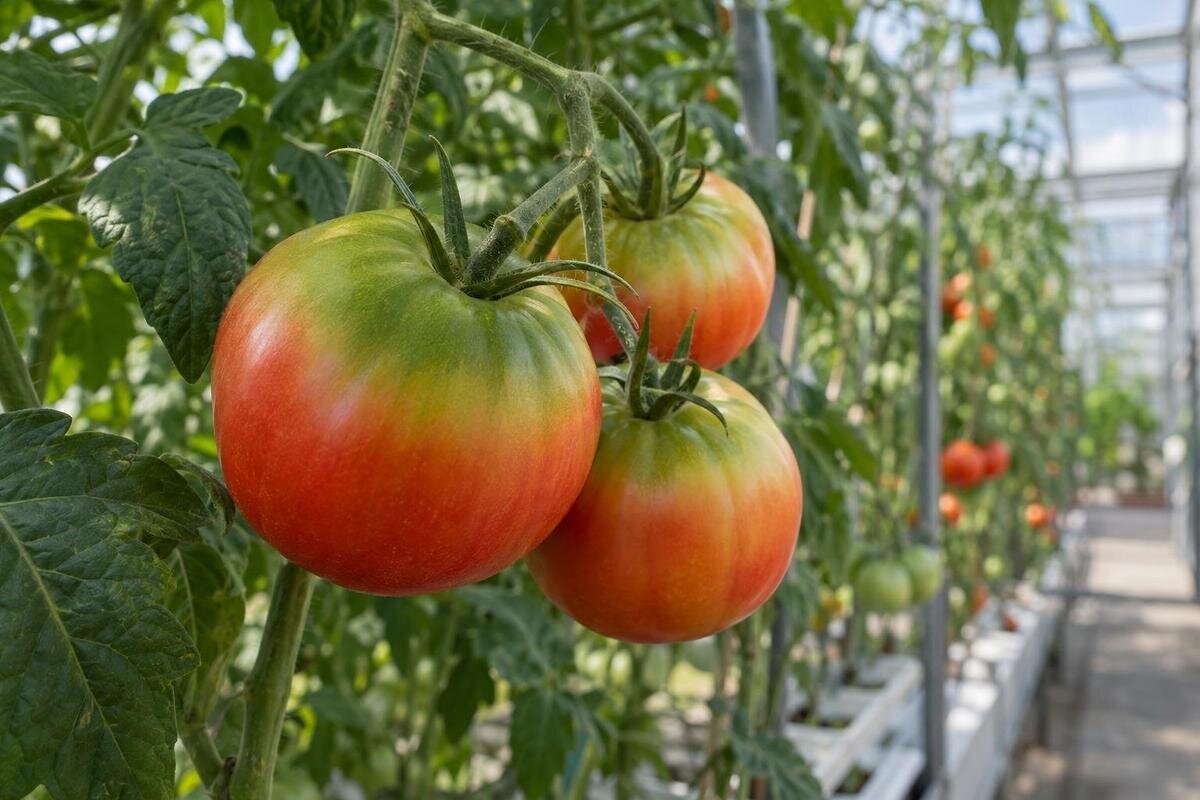
Greenhouse growing
Hard green shoulders on greenhouse tomatoes can look like a clear sign that something is wrong, especially when the rest of the fruit has turned red. They are not automatically a fertiliser problem. A cultivar may naturally keep green colour around the stem; hot conditions can slow colour development; and several ripening disorders can resemble one another. Compare labelled varieties, fruit position, the skin and a cut surface, then check what was happening in the greenhouse as the tomatoes ripened. A green patch alone cannot identify the cause, so avoid changing the feed or stripping foliage before you have more than one clue.

01
What a hard green shoulder looks like
The shoulder is the area around the stem scar at the top of a tomato. A green ring or cap there while the sides turn red is commonly called a green shoulder. It may cover a small circle, a broad band or one uneven patch, and can feel firmer than the coloured flesh. As a tomato ripens, chlorophyll breaks down and other pigments become visible; if that change is slower near the stem, the colour contrast remains. Begin by describing the shape, position and firmness of the area, and whether it changes over several days. Those observations are more useful than calling it a deficiency straight away.
Hardness alone does not identify the cause. The shoulder may simply be less ripe than the rest of the fruit, especially if it stays green while the sides soften and colour. A normal cultivar pattern, a period of excessive heat and other uneven-ripening problems can all produce a firm top. Check whether the skin is smooth and intact or whether the area is sunken, cracked, bleached, wet or mouldy; those signs call for a different assessment. Compare more than one tomato at a similar stage, preferably from the same plant and variety. Green shoulders describe colour distribution, not a particular disease, and one fruit cannot establish a greenhouse-wide problem.
Cultivar traits and normal ripe colour
Some cultivars keep green pigment around the stem after the rest of the fruit colours, while others ripen more evenly. There are also varieties that stay green-toned or ripen in stripes, so uniform red is not the standard for every tomato. Check the seed packet, plant label or supplier description and note the cultivar. If similarly sized fruit from one variety repeatedly show the same cap, while the foliage and fruit otherwise appear normal, a cultivar trait becomes more likely. That still does not exclude heat: an inherited tendency and growing conditions can affect the same fruit together.
Compare like with like. Fruit on different trusses may be at different stages or may have ripened during different weather. Look at several tomatoes of the same variety at a similar stage before comparing them with another cultivar. Keep plant labels visible so an apparent difference in growing conditions is not simply a difference between varieties. When planning space for a cultivar comparison, the Spacious Greenhouse listing gives an area range of 47–70 m². Use the proposed layout to work out where each variety would grow and how much space remains after allowing for paths, beds or benches.
02
Heat can delay red colour
Heat is an important environmental factor because very warm conditions can slow the formation of red lycopene in ripening tomatoes. Green pigment may then persist longer and the fruit may colour unevenly, especially during an extended hot spell. The temperature outside the greenhouse is not a reliable substitute for conditions around the crop: sunny air pockets and fruit surfaces can become warmer than a reading taken in shade. Look for timing as well as appearance. Did affected fruit begin to ripen during the warmest period, and are shoulders more pronounced in a consistently hot part of the greenhouse? One warm afternoon does not confirm the cause.
Compare the dates when affected fruit began to colour with any hot spell in your greenhouse records. Note whether later fruit on the same plants develops the same shoulders after conditions change; this is more informative than attributing every green cap to one warm afternoon. If you are also comparing growing-space options, the Limited Edition Aluminium Greenhouses with Storage listing covers 5.52–28.08 m². Separate the storage section from the growing area when examining the layout, and identify where the fruiting plants would stand. That keeps your comparison focused on the crop’s position rather than the overall footprint alone.
Check the fruit’s exposure to direct sun
Check whether the green area follows the stem or follows the sun. A cultivar-related shoulder usually wraps around the upper fruit; sunscald more often begins on a surface exposed to intense direct light, as a pale or whitish patch that can later turn tan and papery. The patterns are not interchangeable, although heat and sun exposure can overlap. Examine the stem end, the side facing the glazing and the shaded side. A photo of only the top can hide the difference. If the blemish is on one exposed side rather than around the stem, record it as a one-sided mark instead of grouping every pale area under green shoulders.
Heavy leaf removal can expose fruit that was previously shaded, so stripping foliage to make tomatoes ripen faster may create another problem. Note whether the affected fruit had leaf cover and whether that cover was recently removed. Compare nearby fruit that remained shaded, allowing for differences in variety and maturity. When assessing a new greenhouse position, mark the glazing, nearby shade and proposed tomato rows on the site plan. The Bloomcabin Prestige Greenhouse listing gives a range of 3.77–28.08 m²; use the dimensions of the option you are considering to place those rows accurately rather than relying on the product photograph.

03
What a cut fruit can tell you
Cut one representative tomato once it has reached the stage you are assessing. Slice lengthways through the stem scar so the shoulder and inner flesh are visible together. Note whether the green skin sits over otherwise coloured flesh, whether a firm pale band extends down from the stem, or whether hard white tissue runs deeper into the fruit. A firm, pale internal area is not the same observation as a green patch on the skin; broader white or blotchy tissue can indicate an uneven internal-ripening pattern. Several causes can look alike from the outside, so a cut surface adds evidence but does not identify a nutrient or temperature problem on its own.
Photograph the whole tomato from the stem end and the side, then photograph the cut face in even light. Include the cultivar name and date in the frame or record them separately; camera colour can shift with shadows, so avoid comparing photos taken under very different lighting. Also note cracks, sunken areas, softness, wetness or decay, as these change the question from simple colour development. If you ask a knowledgeable local grower or diagnostic service for help, a labelled set showing the outside, inside and plant is more useful than one close-up of a green patch.
Compare fruit across the greenhouse
Look for a pattern across the crop rather than treating each tomato separately. Record the cultivar, plant, truss, greenhouse position, date and ripening stage. If several cultivars develop similar shoulders in the same hot area, a shared environmental factor deserves attention. If one variety shows it in several locations while nearby varieties colour normally, cultivar difference is more plausible. If only one plant is affected, check that plant’s growth and root-zone history before assuming the whole greenhouse is too hot. These comparisons narrow the possibilities but do not rule one another out: a sensitive variety can be more affected by a condition that other plants tolerate.
A rough greenhouse map makes this comparison practical: mark the plants and affected trusses rather than relying on memory. Include shaded and sun-exposed areas, and distinguish an isolated affected plant from a cluster in one part of the house. Leave room on the map to add observations as more fruit ripens. If you are planning a different footprint, Aluminium Greenhouses are listed from 3.77 to 28.08 m². Draw the intended beds and paths within the chosen dimensions, including access to inspect fruit at the back of each row. Being able to reach those plants makes crop-wide comparisons more useful.
04
When nutrient balance is worth testing
Consider nutrients only after checking the variety, temperature and fruit pattern. Potassium supports tomato growth and fruit development, and inadequate availability can be associated with poor or uneven ripening. Too much nitrogen relative to other nutrients can also upset growth and balance. Neither makes a green shoulder a potassium test. Look for a repeated pattern across several tomatoes and any wider changes in leaves or growth, then review what has actually been applied and how the plants are being grown. A strong crop with one variety’s familiar green cap points to a different question from a crop with several types of abnormal fruit and broader plant changes.
Do not add potassium or a general tomato feed on the strength of one symptom. Nutrient availability and testing differ between soil, containers and managed growing systems; use a suitable soil or growing-media test and advice that fits your setup. Check pH and the fertiliser record if uneven ripening recurs, particularly before adding another product. Keep records for separately managed beds or containers distinct so you can compare what each affected plant received. When planning beds in a Lean-to Greenhouse, listed from 3.69 to 14.34 m², mark the intended growing system on the layout. This keeps nutrient planning tied to the beds or containers, rather than the structure’s overall area.
Check moisture and root-zone conditions
Watering is worth reviewing because roots take up nutrients through moisture in the root zone, but irregular watering is not a unique sign of green shoulders. Check whether the soil or growing medium swings between very dry and saturated, whether water reaches the same area each time, and whether drainage is working as intended. Compare affected plants with unaffected ones rather than watering more in response to colour alone. Moisture problems can complicate a nutrient diagnosis, while excess water can create other root stresses; neither conclusion follows just from a firm patch at the stem.
Record your usual watering pattern and any recent change in weather, plant size or fruit load. Keep moisture reasonably consistent for your growing system rather than making repeated large corrections; do not let one unusual tomato dictate an irrigation change. Check whether every container or bed receives attention, especially where foliage makes access awkward. If you are considering Limited Edition Aluminium Greenhouses, listed from 3.77 to 28.08 m², include watering access in the proposed layout. Mark where you would stand to reach each growing area and where the paths would run, alongside the bed and drainage arrangements you intend to use.

05
Measure the growing conditions before changing them
Measure the environment before changing ventilation or shade. Place a min–max thermometer at crop height, away from direct sun, the roof and a hot wall, then compare readings from another part of the growing area if the greenhouse seems uneven. A reading in the middle can miss a hot corner. Note whether doors and vents were in their normal positions, and record the weather and time alongside the temperatures. Do this across several ripening days: one snapshot cannot show whether hot conditions coincided with the colour change. Any airflow or shading adjustment should suit the greenhouse’s actual design and normal safe operation.
Use the readings to decide whether a ventilation or shading change addresses a pattern you have actually observed. Compare fruit from the affected position with fruit elsewhere, and avoid changing every environmental setting at once if there is no consistent heat pattern. When comparing a different greenhouse shape, the T-Model Orangery Greenhouse catalogue range is 16.52–30 m². Examine the published plan and ventilation specifications alongside your intended crop layout. Note the stated door and vent positions, then identify which plants would occupy each part of the growing area. This gives the structure comparison a practical basis without treating its name or size as evidence of temperature control.
Choose a response that matches the evidence
Match the response to the strongest evidence. If the shoulder appears consistently on a labelled variety, the fruit and plant are otherwise normal, and there is no clear heat pattern, keep a record and avoid unnecessary fertiliser or drastic pruning. If the issue follows a very hot period or one greenhouse zone, review measured temperature and fruit exposure before making a modest environmental adjustment. If cut fruit shows widespread pale internal tissue or the plants also have unusual leaf changes, check nutrient and root-zone records rather than guessing. Change one factor at a time and compare the next set of fruit so any effect is easier to judge.
Seek local horticultural diagnosis if the problem is spreading, affects several varieties, comes with deteriorating plants, or includes lesions, rot or unexplained internal damage. Share the cultivar, photos, dates, greenhouse readings, watering pattern and fertiliser history; if possible, keep a representative affected tomato for assessment. For a future season, retain this information as a baseline if you change the growing space. If your separate structure comparison includes the Pyramid Greenhouse, listed from 5.53 to 18.9 m², record the proposed crop positions and layout changes too. Comparing a later crop with that baseline is more informative than assuming a new structure resolved the original symptom.
Frequently asked questions
Are hard green shoulders always a potassium deficiency?
No. A cultivar may naturally retain green colour around the stem, and hot conditions can delay colour development. Nutrient imbalance is one possibility when uneven ripening is repeated or accompanied by other plant symptoms, but a green cap alone does not establish low potassium. Check the variety, fruit pattern and growing conditions before testing or feeding.
Why is the green area harder than the red part?
That patch may be less mature than the coloured flesh, so it can stay firmer as the rest softens. Some cultivar-related shoulders also remain dense when the fruit is ripe. Firmness is useful to note, but it is not proof of disease or a nutrient shortage; compare similar fruit and, if needed, inspect a cut surface.
Can I harvest a tomato with a green shoulder?
Judge the fruit by the usual ripe appearance for its cultivar, rather than waiting for the top to turn red if it normally stays green. A persistent green cap does not automatically mean the rest of the tomato is immature. If you are unsure, compare it with a sound, fully ripe fruit of the same variety.
Should I add fertiliser to fix the colour?
Not on this symptom alone. More fertiliser will not correct a natural cultivar trait or necessarily address heat, and unnecessary feeding can create a nutrient imbalance. Review the fertiliser record and root-zone conditions. If uneven ripening persists, use a suitable soil or growing-media test before changing nutrient inputs.
When should I ask someone to diagnose it?
Seek local horticultural advice if the problem is spreading, several cultivars are affected, plants are declining, or fruit has lesions, rot or unusual internal tissue. Share clear photos of the stem end, side and cut surface, along with the cultivar, dates, greenhouse readings, watering pattern and fertiliser history.
Treat a hard green shoulder as a clue about ripening, not a diagnosis. A consistent pattern on one variety, normal inner flesh and no wider plant symptoms make a cultivar trait more plausible; a link with hot weather or one greenhouse area points to conditions worth measuring. Keep labelled photos and a short record, then adjust only what the evidence supports. Comparing later fruit at a similar ripening stage helps you assess any change without unnecessary alterations to feeding or foliage.
