
How Much Weekly Time Should You Allow for a Greenhouse?
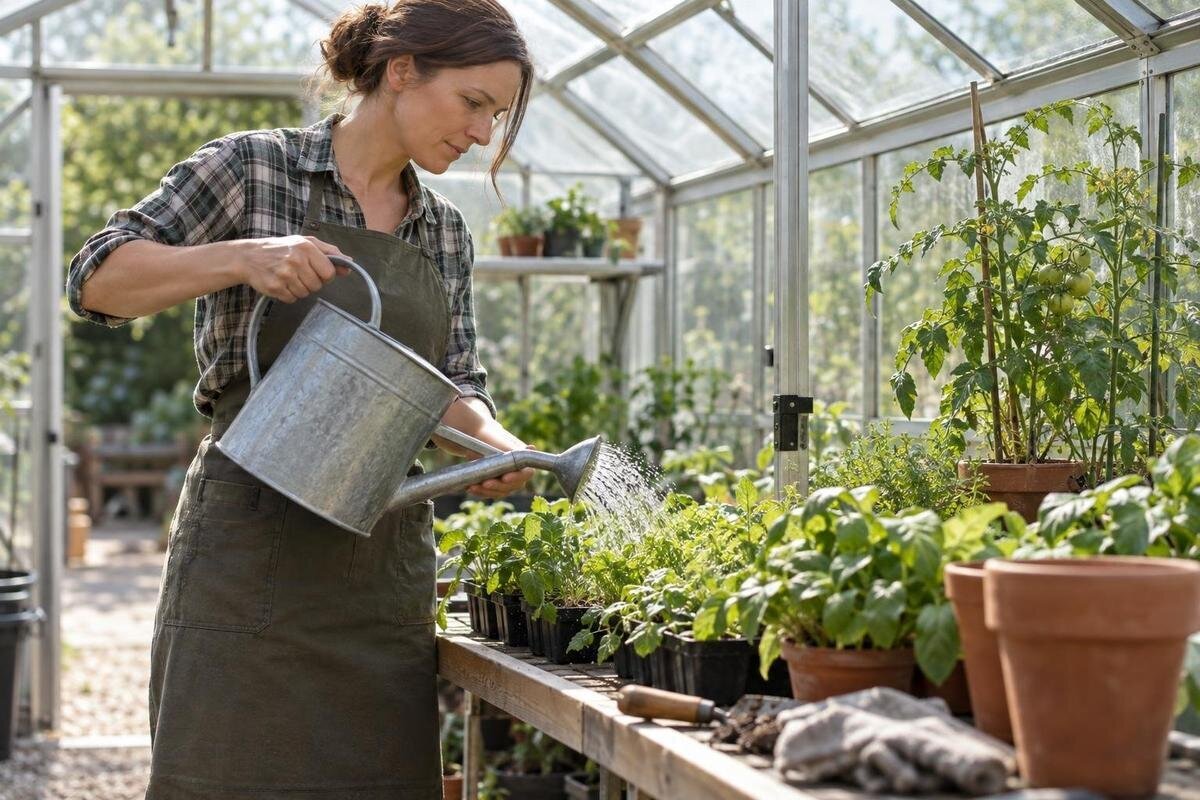
Greenhouse planning
A realistic weekly allowance for a greenhouse comes from the plants and tasks inside it, not from a standard number of hours. A few established plants need a different routine from trays of seedlings, fruiting crops and containers that need frequent attention. The work also shifts with the season, local weather, watering method and how easily you can reach each growing area. Use the example below as a transparent planning exercise, then replace its assumptions with your own timed jobs. It is not a customer story or a universal benchmark.

What counts as weekly greenhouse time?
A greenhouse does not come with a fixed weekly workload. Count the time you spend inside and any recurring preparation: checking plants, watering, opening or adjusting equipment by hand, sowing, potting on, tying, pruning, harvesting, removing spent material and keeping paths usable. A five-minute visit still uses time even when it produces no immediate job; include it if you expect to make that visit. If the greenhouse is away from the house, either count the walk or state that your estimate begins at the door. A short task can take longer once travel and set-up are included.
Separate recurring work from one-off tasks. Building benches, filling beds, setting up irrigation and doing a full seasonal clean can each require a substantial block of time, but spreading those hours across 52 weeks creates a misleading weekly average. Make two estimates: a usual week and a peak week, then note which tasks happen monthly or once per season. Define what your estimate includes—carrying tools, washing harvested produce or travel—and use that boundary consistently. If several people share the routine, assign jobs rather than assuming somebody will pick them up. This makes the estimate comparable with the time actually available.
Build the estimate from a crop list
Write down what you intend to grow before estimating minutes. For each bed, bench, pot group or seed tray, note the crop, number, stage, container and likely recurring jobs. Include the number of trays or individual pots, not just crop names; if you plan to raise seedlings as well as grow mature plants, record both. A tray of young seedlings may need a different pattern of attention from an established planting, while separate pots can take longer to water than a shared bed. Mixed crops add variety to the job list; grouping crops with similar routines can make rounds easier. Treat these as planning prompts, not fixed time rules.
Turn the list into actions: how often you expect to inspect, water, sow or transplant, train plants, harvest and remove old leaves. Give each action a realistic duration and frequency; when timing depends on conditions, write down the trigger as well as the estimate, rather than pretending every week is identical. The Classic aluminium greenhouse listing spans 3.77–28.08 m²; use the exact footprint you are considering as a space check, not a direct measure of weekly labour. More floor area may allow more planned crops, but an unplanted area does not automatically create plant-care work.
Turn tasks into a weekly time budget
For a transparent example, imagine one tray of seedlings, six fruiting plants and a small patch of salad leaves during an active growing spell. Suppose you allow five separate five-minute checks (25 minutes), four 15-minute watering rounds (60), two 20-minute harvests (40), one 30-minute session for tying, pruning and weeding, and 25 minutes for sowing or potting. That totals 180 minutes, or three hours. Every duration and frequency is an assumption chosen to show the arithmetic, not a recommended watering pattern or a survey result. If checking happens while you water, count the shared time once.
Add your own minutes for fetching equipment, preparation and putting items away if those are part of the routine. Record both the total hours and the number of visits: three hours split across several short rounds can feel different from one long session, even though the sum is unchanged. When considering the Lean-to greenhouse options, count the containers, route and tasks in your proposed arrangement. Put those jobs into the times you can actually be there, rather than relying on a weekly total alone. Round up if your estimate leaves no time for an unexpected job.
Allow for seasonal peaks and quieter weeks
Build the calendar around plant stage, not just the name of the season. In spring, a plan with seed trays and new plantings may include more sowing, potting on and observation. In summer, an actively planted greenhouse can shift time towards watering, ventilation checks, training and harvesting. Weather within a season also changes the work, so a warm, dry spell may need a different plan from a cooler or unsettled week. If you grow successive crops, include the transition: clearing one planting and setting up the next can create a concentrated block rather than a smooth weekly routine. Use local conditions and the actual crops rather than assuming every spring or summer week is alike.
Autumn may bring harvesting, removing finished crops and preparing areas for the next planting; plants kept growing through winter still need care appropriate to their stage and conditions. If the greenhouse is empty, crop tasks may fall, but cleaning and maintenance remain separate entries. When planning crops for a Limited Edition aluminium greenhouse, make an annual calendar instead of treating one busy summer week as representative of the whole year. Mark crop changes and seasonal jobs alongside the recurring routine. Keep a typical week and a peak week visible when deciding what time you can set aside.

Watering affects both hours and visit frequency
Watering is often the biggest variable in the weekly tally because it changes with crop stage, containers, growing medium, weather and how water reaches the plants. Hand-watering means allowing for the full round: carrying a can or moving a hose, reaching every pot, checking each zone, and putting equipment away. A compact bed may be quick to cover, while scattered pots can add walking and repeated handling. Count distinct watering zones and note how long it takes to move between them; switching between trays, beds and pots can make one nominal session several small jobs. Record the time for more than one kind of week, and note whether a session includes a plant check as well as water delivery.
An irrigation timer or other automatic system can shorten the water-delivery part of the job, but it does not confirm that water reached every intended area or that the current setting matches the crop plan. Include time to observe plants, check the system, respond to blockage or leakage, refill a source if applicable, and adjust as the season changes. If you are considering the T-Model Orangery Greenhouse, sketch your crop zones and water route for the selected configuration. Estimate the full watering round from that route, including the checks you will still carry out by hand.
Which greenhouse jobs can automation reduce?
Record automation as reducing a task, not removing all the work associated with it. A timer may handle a routine watering start; a suitable automatic vent opener or controller may reduce repeated manual adjustments if that equipment is separately available and correctly configured. You still need to check the plants, confirm that equipment is operating as intended, and change settings when crops or conditions change. A notification can prompt a visit, but an alert does not harvest produce or reveal every problem on a leaf. Automation shifts some time from operating equipment to supervising it; responsibility for the growing environment remains. Trial the set-up while you are available and time the supervision rounds too.
List each automated task beside its manual equivalent and record upkeep separately: initial set-up, periodic testing, cleaning or replacing components, and responding to a failed supply may all remain part of ownership. Think through what you would do if power, water or connectivity stopped, without assuming every system has a backup. The Pyramid Greenhouse page lists sizes from 5.53 to 18.9 m²; do not infer irrigation or climate-control equipment from the greenhouse name or area range. Check the exact configuration and decide which human checks remain before reducing your hours estimate. If electrical connections or other specialist work are involved, confirm requirements with a qualified professional.
Keep hands-on plant care in the estimate
Some jobs depend on seeing and handling the crop. You need to judge whether produce is ready to pick, find fruit or leaves hidden behind growth, tie or support plants where your plan requires it, remove spent material, replant gaps and notice pests or damage. How much time this takes depends on what you grow, how many plants there are and how densely they are arranged. A single 'inspection' should therefore be a counted task in the log, not an assumption that a camera or irrigation controller covers every care need. Harvesting also creates repeated jobs, so include the time to collect and carry produce out. If sorting or tidying supports after harvest is part of your routine, count that work as well.
Keep tools and harvesting containers where they can be reached without disrupting the growing area, and include fetching and putting them back if they live elsewhere. A catalogue option called the Limited Edition aluminium greenhouse with storage is listed in 5.52–28.08 m² sizes; the listing identifies storage as part of the option, but check the exact layout and capacity before assuming it will save trips. Convenient storage can change how a round is organised, yet it cannot remove the crop work itself. If the space is shared for other activities, include the extra time needed to clear or reset it before plant care.
How access and planting density affect your rounds
Room to move affects the duration of repeated rounds. Draw the route from the entrance to every crop group, water point, hand tool and place where harvested produce is set down; mark where you would need to turn, bend or move a pot to reach another. Keep practical access for the tasks you have listed rather than filling every surface with containers. If one side is difficult to inspect or harvest, the round can become slower and plants may be easier to overlook. Include the route for bringing seedlings, growing supplies or harvest containers in and out, if you expect to do so. A route that repeatedly crosses between distant zones can make the same number of plants take longer to service.
Use the exact model size and configuration when making that sketch, because a catalogue range can cover several different footprints. The Bloomcabin Prestige Greenhouse listing runs from 3.77 to 28.08 m². On the drawing for your chosen configuration, mark the proposed benches and equipment, then trace the routes needed for watering, inspecting and harvesting. If a configuration discussion is available, bring the crop list and watering method so the conversation covers the work you expect to do, not only the outer footprint.

Separate cleaning from weekly crop care
Routine cleaning and seasonal maintenance need their own allowances. During active growing, put away loose tools, remove plant debris when needed, keep paths clear and tidy reusable items according to the material and product guidance. A full clean after crops finish is a different block from a five-minute check; so are checking moving parts or replacing a worn item. Do not hide such jobs inside an inflated 'average week'. Record when they occur and keep annual work distinct from weekly crop care. Set reminders for jobs with a longer interval instead of treating them as weekly, and follow relevant product guidance for tasks that depend on materials or fitted parts.
If you compare a larger footprint, consider the surfaces and zones you will actually maintain rather than multiplying hours by square metres. For the 47–70 m² options on the Spacious Greenhouse page, base your tally on what will be planted, what equipment will be installed and which areas will need regular attention. Add major seasonal jobs as separate calendar entries. Check whether quieter periods leave enough time to complete them, and whether any coincide with harvesting or changing crops. This keeps occasional maintenance visible without making every week look equally busy.
Use a task log to refine your estimate
Keep a simple log for several weeks at different points in the growing year. Record the date, crop stage, task, minutes spent, how often you went in, and whether the time included set-up or travel. Note whether watering overlapped with inspection, and mark unusual jobs separately; otherwise an exceptional clean can distort the routine. You do not need a sophisticated tracker: a notebook or phone note is enough if the entries use the same categories. After a few weeks, compare planned minutes with actual time and see which jobs were consistently underestimated.
Use the result to revise the crop plan, not just the number on your calendar. If the busiest week is unrealistic, reduce the number of high-attention crops, simplify separate routines, or decide which manual task an appropriate automation system could genuinely shorten. Keep unallocated time for weather-driven changes, plant problems and seasonal transitions; an average week will not cover every peak. Compare a quiet-period log with an active-season one before settling on a year-round allowance. If you are consistently over time, identify whether watering, harvesting or moving between zones is the bottleneck; each points to a different adjustment. The figure then becomes a personal estimate you can test and update, rather than a generic rule for every greenhouse.
Frequently asked questions
How many hours a week does a greenhouse usually take?
There is no reliable universal figure because crops, containers, weather, layout and watering method all affect the work. The example in this guide totals three hours for a defined active-season plan, but every duration and frequency is an explicit assumption. Make your own task list and time a typical and a peak week before treating any number as yours.
Does a bigger greenhouse always take longer to maintain?
Not necessarily. An unplanted area does not add crop-care tasks, while a dense planting or many separate pots can add work. Use the footprint to plan routes and growing zones, then estimate time from the crops, containers and jobs you expect to manage.
Can automatic watering remove the need for plant checks?
No. It may reduce the time spent delivering water, but you still need to check plants and confirm the system is doing what you expect. Allow time to adjust and monitor it as crops and conditions change, and do not count overlapping inspection and watering time twice.
When is greenhouse work usually busiest?
It depends on what you grow and when it is actively growing. Seed trays can add sowing and potting jobs, while a greenhouse full of established crops may need more watering, training and harvesting. Weather can also change the routine within a season, so estimate a peak week as well as a usual one.
How can I check whether my time estimate is realistic?
Keep a simple log of tasks, minutes, visits and crop stage for several weeks at different points in the year. Record setup and travel consistently, and separate exceptional jobs from the usual routine. Compare the log with your plan and adjust the crop list or task allowance where you have repeatedly underestimated the work.
A useful weekly figure is the one that reflects your crop plan, your routine and the busy periods you are prepared to manage. Count hands-on care, checks, watering, harvesting and cleaning separately, then revise the estimate as the plants grow and the season changes. That gives you a practical allowance based on your own greenhouse work, rather than a number inferred from floor area alone.
