
Insulated or Single-Glazed Greenhouse: Plan for Winter
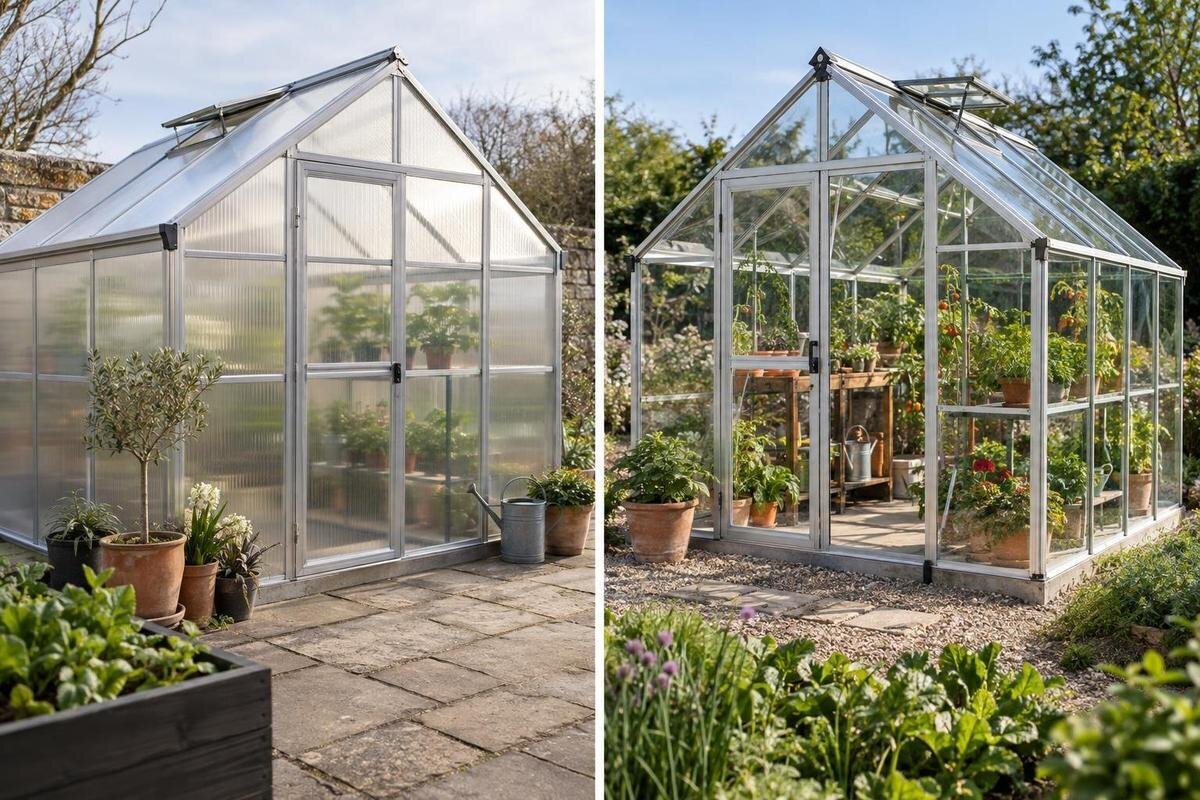
Greenhouse planning guide
Choosing between an insulated and single-glazed greenhouse is a decision about the winter conditions you need to manage, not just the number of glazing layers. Better insulation can slow heat loss, but it cannot guarantee a set temperature. The frame, seals, doors, vents, site and heating plan all matter. Begin with your crops and the way you intend to use the greenhouse, then compare complete, like-for-like specifications rather than relying on a headline label.

What will you use the greenhouse for in winter?
Winter use can mean very different things: keeping hardy plants out of rain and wind, holding dormant plants above a chosen minimum, raising seedlings early, or harvesting crops through the colder months. Those jobs make different demands on a greenhouse. A shelter used without heat does not need the same control as an actively heated growing space; choosing glazing before defining the job can leave you with a specification that still fails to provide the temperature or light your plants need. Write down what will be inside, whether plants will be in pots or beds, how much space they need and what the structure should do on a cold night, not just during a mild, sunny afternoon.
Also distinguish occasional overnight protection from maintaining a set range day after day. If plants are simply overwintering, tolerance for lower light and cooler conditions may matter more than rapid growth. If you want to propagate plants, grow fruiting crops or maintain active growth, both temperature and winter daylight can be limiting. Note how often you will visit the greenhouse, whether you can respond to a cold spell and whether heating is planned. Use crop-specific guidance to set a realistic target; there is no universal winter temperature for every greenhouse. A brief cold snap and several consecutive cold nights are different tests of the setup.
What do 'single-glazed' and 'insulated' mean?
In greenhouse descriptions, single-glazed usually means one layer of glazing between the growing space and outdoors. It may be horticultural glass or another material, so check what the selected model actually includes. The term describes the glazing build-up, not necessarily the number of individual panes across the whole structure. An insulated greenhouse generally uses a glazing or construction arrangement intended to reduce heat transfer, such as a multiwall panel or two glazing layers separated by a cavity. The word 'insulated' alone does not identify the material, thickness, edge treatment or measured performance. Ask whether the same build-up is used on the roof and sides, and request a section drawing of the actual panel.
A greenhouse panel is not automatically equivalent to a residential window. House-window specifications may describe a tested unit with its own frame and seals, while a greenhouse quote may describe only the panel; similar-sounding terms do not make the assemblies comparable. Greenhouse glazing also needs to be assessed for light transmission, ventilation, panel format and replacement, as well as heat retention. Request the exact panel build-up and any thermal-transmittance figure, including what was measured and under which conditions. A panel rating is not a rating for the complete greenhouse. If no whole-structure figure is available, compare the stated components without assigning a precise temperature advantage.
Compare the complete greenhouse envelope
Heat moves through more than the transparent panels. The frame, glazing bars, corners, base, door, roof vents, sliding joints and gaps where a panel meets a frame all affect heat loss and draughts. A well-insulating panel installed in a conductive frame or poorly fitted junction can perform differently from its rating on paper. Ask which parts are included in any insulation figure and whether it refers to glazing alone, a wall assembly or the whole building. Where the greenhouse meets the ground or an existing building, confirm whether that junction is included in the stated performance. Check that doors and vents match the quoted configuration too.
Request a dimensioned drawing for the exact size you are pricing. The Limited Edition Aluminium Greenhouses listing gives a size range from 3.77 m² to 28.08 m²; that information describes scale, not glazing or heat retention. On any model, match the roof and side glazing, frame, door and vent positions, base connection and supplied seals to the same drawing. Compare complete assemblies at a similar size and with equivalent openings before attributing a difference to insulation. If two structures have very different surface areas, volumes or opening arrangements, a headline glazing comparison may hide why their winter behaviour differs.
Why insulation cannot guarantee a winter temperature
Glazing designed to insulate better slows heat loss through that part of the envelope. This can make a heated greenhouse easier to keep within a desired range and may moderate rapid cooling, but it does not create warmth. After sunlight fades, heat stored inside can escape through the whole structure and can also be lost through ventilation or air leaks. A greenhouse can cool markedly overnight after a sunny afternoon; wind, exposure, cloud cover, size and construction all influence the result. The benefit is relative to a comparable structure under similar conditions, not a guaranteed overnight minimum for every greenhouse described as insulated.
Solar gain adds another variable: sun can warm an enclosed space quickly, then that heat can disappear after sunset. Soil, masonry or water may store some heat and release it later, buffering temperature changes without guaranteeing a minimum. The T-Model Orangery Greenhouse listing gives a size range from 16.52 m² to 30 m², but the model name and area alone cannot establish the heat demand or night temperature of a chosen version. If winter conditions must stay within a defined range, have heating demand assessed for the exact structure, site and intended use by an appropriately qualified professional. Include the effect of openings and planned ventilation; extra glazing is not a self-heating system.

Set crop-specific temperature targets
Plant choice should come before a greenhouse temperature target. Different crops tolerate cold differently, and a broad hardiness label may not describe the needs of young seedlings, recently potted plants or specimens kept actively growing. Make a crop list by growth stage, then use reliable horticultural guidance to identify minimum and preferred conditions, including both day and night. Distinguish survival from productive growth: a plant may remain alive at a temperature that slows growth, flowering or fruiting. The design should follow the most temperature-sensitive crop you genuinely intend to grow, not the best conditions you hope to see on a sunny day. Note which plants will share the same space, as one target may not suit every crop.
Think about where readings are taken. Air near the roof can be warmer than air at bench height, and a thermometer beside a sunlit pane can misrepresent conditions elsewhere. If you monitor the space, place sensors near the plants you most need to protect, shield them from direct sun and check more than one zone before relying on a single result. Root zones and pots may change temperature at a different rate from surrounding air. The Pyramid Greenhouse range is listed from 5.53 m² to 18.9 m²; request a plan for the selected size to work out where benches, crops and sensors will sit. Record conditions through cold nights as well as mild afternoons.
Ventilation and condensation still matter
Insulation reduces heat transfer through a barrier; it does not remove water vapour or replace ventilation. Plants and damp growing media add moisture to the air, and condensation forms when moist air meets a surface cool enough for water to collect. Better-insulated construction may keep some interior surfaces warmer than single glazing, but the outcome depends on the panel, outside conditions, heating and air movement. A surface can still be cold even when the air feels comfortable. Check where condensation might drain and whether moisture could collect around frames or on plants. Do not assume that an insulated greenhouse will be free of condensation throughout winter.
Ventilation balances excess heat and moisture against the warmth you want to retain: opening vents can help clear humid air or reduce overheating, but it also exchanges indoor air with outdoors. Check which vents are included, where they sit and how they open; the layout should leave them accessible and avoid blocking airflow with benches or stored items. The Limited Edition Aluminium Greenhouses with Storage listing describes a storage-equipped range from 5.52 m² to 28.08 m². Request the exact drawing to clarify what area is counted and whether the storage area shares the growing environment. The name alone does not answer that. Consider whether vent operation suits your routine, especially when you cannot check the greenhouse frequently.
Check light transmission as well as heat retention
Winter daylight can limit growth, so judge glazing for light as well as heat retention. Additional layers, tints, coatings, panel texture and framing can alter how much light reaches plants and how evenly it is distributed; the effect varies by product and configuration. Ask for a light-transmission figure for the exact glazing, and find out whether it describes a panel sample or the assembled roof or wall. Check what the figure measures and whether the basis is consistent before comparing systems. A surface that looks clear does not prove that two materials pass the same amount of light. Shade from nearby structures and the frame layout also affect what reaches beds and benches.
Check that the specified panels are intended for greenhouse use and that replacement panels, compatible fixings and seals can be identified for the chosen version. Do not infer glazing from a model name: the Bloomcabin Prestige Greenhouse page identifies a model, but the precise glazing in the configuration you are considering still needs to be confirmed. Ask what cleaning method the supplier recommends, how damaged panels can be replaced and how moisture is managed in a multiwall cavity, if that construction is offered. Those details matter for long-term ownership as well as heat performance, particularly if the greenhouse will stay in use through winter.
Heating needs depend on the exact greenhouse
If you plan to heat the greenhouse, distinguish holding a minimum temperature from warming the space for daytime work. Heat demand depends on your target, outside conditions, exposed surface area, air leakage, ventilation, glazing and internal volume; no single insulation label gives the answer. A larger structure offers a different working and growing area, but it also changes the amount of space and envelope being managed. Floor area alone is not enough to choose heating capacity. Ask an appropriately qualified greenhouse or heating professional to assess the exact design and site rather than relying on a rule of thumb or an advertised panel rating. They can take the intended operating conditions into account.
Think through how you will notice a temperature drop and respond when you are away. If only part of the greenhouse will contain warm crops, ask whether a partition is feasible and how doors, airflow and venting would affect that zone; do not assume the remaining area is isolated. The Spacious Greenhouse listing spans 47 to 70 m², so the selected dimensions matter before any heating assessment; the published size range is not an energy rating. Consider how monitoring will work when the greenhouse is unattended, along with access for maintenance and the time you can give it. The operating arrangement needs to suit the crop goal as well as the structure.

Use like-for-like drawings and specifications
Create a comparison sheet for each shortlisted greenhouse: internal and external dimensions; glazing material and build-up; any whole-assembly performance figure; frame and junction details; door and vent arrangement; and the base, seals or accessories included. Record which size and configuration each figure describes, and note which items are optional or supplied separately. If one quote describes an insulated panel while another gives only a product-family name, the information is not comparable. Request missing details in writing. A general brochure can cover several configurations, and an option shown in a photograph may not be part of the package being quoted.
Drawings help expose practical differences a headline rating misses: where doors open, whether vents sit in the roof or side, and how much room remains for beds, benches and a clear path. The Aluminium Greenhouses range is listed from 3.77 m² to 28.08 m², so identify the exact size and plan before comparing it with another greenhouse. For a fair comparison, line up equivalent dimensions, glazing layout and openings, then check each claim on the same basis. Include the intended site position and exposure in your notes. If a supplier cannot provide like-for-like figures, treat that uncertainty as part of the decision rather than filling the gaps with assumptions.
Choose a winter setup you can manage
Single glazing may suit a greenhouse used mainly in milder seasons or where you accept a wider temperature swing and do not plan to maintain consistently warm conditions. That is not a promise about the light or winter temperature of any particular structure; check the material, complete build and light-transmission information. An insulated arrangement may make more sense where cold-weather use matters and there is a realistic heating and ventilation plan. It can also mean extra layers, seals or panel edges to consider. Compare the actual product documentation and maintenance requirements rather than assuming one label makes an option right for every crop. If your plans may change, ask which parts of the specification can be adapted later.
If the greenhouse adjoins a building or has a specialised layout, include the junction and access in the comparison. When considering a Lean-to Greenhouse, use drawings to confirm which wall or enclosure elements are supplied and which are existing parts of the site, along with the details of the joint, access and ventilation. The name alone is not a thermal rating. Keep a record of the chosen glazing and components so later replacement or adjustment can be matched to the installed structure. Check that you can reach panels and vents for routine care. The useful choice is the one whose documented construction, crop plan and winter operation agree.
Frequently asked questions
Will an insulated greenhouse stay frost-free?
Not necessarily. Insulation slows heat transfer but does not supply heat. Glazing, air leaks, open vents, greenhouse size, site exposure and outside conditions all affect the result. If avoiding frost is essential, compare complete specifications and have a suitable heating and monitoring plan assessed for your site.
Can I use a single-glazed greenhouse in winter?
Yes, for some purposes, but not as a guarantee of warm conditions. It may provide shelter for cold-tolerant plants or support seasonal growing, while frost-sensitive crops or active winter production may need more temperature control. Match the glazing and any heating plan to crop-specific temperature and light needs.
Is multiwall polycarbonate the same as double glazing?
No. Multiwall panels have cavities within a panel, while double glazing generally uses separate panes with a space between them. Their light transmission, framing, edge sealing and whole-structure performance can differ. Compare the exact construction and any performance data rather than treating the terms as interchangeable.
Does an insulated greenhouse still need ventilation?
Yes. Insulation does not remove moisture or excess solar heat. Vents help balance airflow and warmth, but opening them also affects temperature. Check their number, position and operation against the crops you plan to grow and the way you will manage the greenhouse.
What should I ask a supplier before deciding?
Request the exact glazing build-up, light-transmission and thermal data, and a drawing of the quoted size. Confirm whether each figure applies to a panel or the whole greenhouse, and check the frame, junctions, doors, vents and included components. Ask what heating assessment suits your site and how replacement panels or seals are specified.
Use the insulation question to define the winter conditions you want, rather than treating a label as a temperature promise. List the crops and their needs, compare the complete greenhouse in the exact configuration, and include light, ventilation and any heating plan. Better insulation can slow heat loss; single glazing may suit seasonal use where wider temperature swings are acceptable. A clear specification and matching drawings give you a sounder basis for the choice than the glazing label alone.
