
External or Internal Greenhouse Shading: How to Choose
Greenhouse climate guide
External greenhouse shading intercepts sunlight before it passes through the glazing; internal shading works after light has entered. That usually makes external shade the more direct way to limit solar heat gain, while an internal screen can be easier to inspect or use for a defined growing area. The right position depends on the problem you are trying to solve, the greenhouse layout and approved fixing points.

Before you choose 1
How shade position changes heat gain
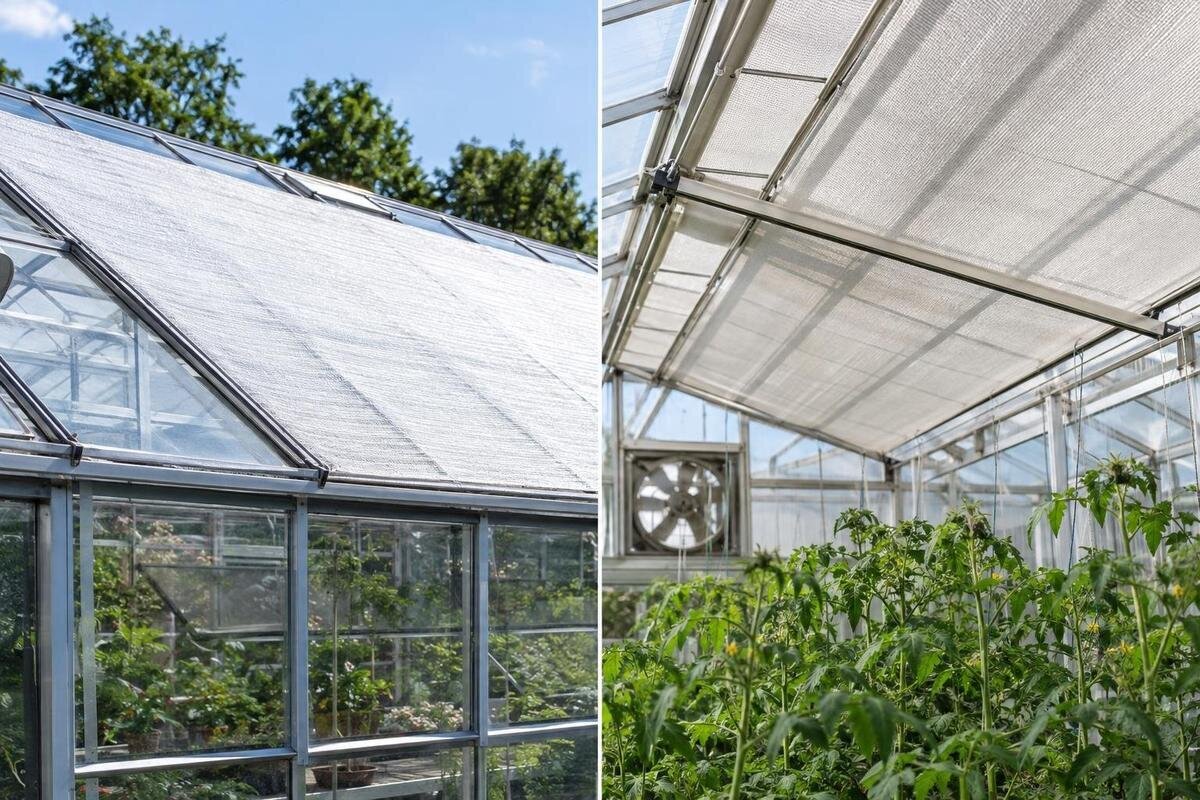
An external screen intercepts sunlight before it passes through the greenhouse glazing. Depending on its material and finish, it reflects or absorbs some incoming radiation, so less solar energy reaches interior surfaces and air. That makes the outside position especially relevant when direct sun is driving heat across a broad area. It does not guarantee a set temperature reduction: glazing, coverage gaps, sun angle, shade properties and ventilation all influence the result. Sun can also enter through uncovered sides, so a shaded roof alone may not address the whole problem. A shade label cannot tell you how much cooler the air will be in your greenhouse.
An internal screen meets sunlight only after it has crossed the glazing. It can reduce direct light on plants and work areas, and it may reflect some radiation back out through the glazing, but energy absorbed by the screen is released as heat inside the greenhouse. Some energy can still leave again; the net effect depends on the material and glazing. For overall solar heat gain, an otherwise comparable external screen is usually the more direct intervention because it acts earlier. An interior space can therefore feel less bright even when its air temperature changes little. Treat light control and heat reduction as related, but not identical, outcomes; judge cooling by readings rather than appearance.
Identify the problem before choosing a position
Before choosing a position, name what needs to change. Is the whole greenhouse warming during sunny periods, or are particular plants, benches or work areas exposed to strong direct light? Does the problem arrive at one time of day, or last through much of the bright period? External shade is generally more relevant when the aim is to limit heat entering through broad glazing areas. A local internal screen may suit a smaller light-exposure problem, but it will not stop the sun warming the rest of the enclosure. This distinction helps avoid darkening every bed to solve a problem affecting one crop zone.
Shade does not do ventilation’s job. It reduces some incoming solar energy; ventilation exchanges indoor air and helps carry heat away. If warm air persists because vents are closed, obstructed or not suited to the conditions, a screen may reduce the heat load but cannot guarantee a lower air temperature. If ventilation is working as intended and direct sun remains the main source of unwanted warmth, comparing shade positions is more useful. Keep the question narrow: you are choosing where to intercept light, not selecting a complete climate-control system. A shaded work area and a cooler greenhouse are not always the same result.
Before you choose 2
Check where sunlight reaches the greenhouse
Look at the greenhouse at the time the problem occurs, not only in a midday photograph. Sun can enter through the roof at one angle and through side glazing at another; a roof-only screen will not shade every surface at every hour. Nearby buildings, trees and the greenhouse’s roof shape also change the lit areas. Observe crop and work zones at the relevant times, then consider how the pattern changes across the season. This helps identify whether the exposed roof, a side or just a small area needs shade. It is not a reason to cover every pane.
Use the exact model and size when asking which surfaces can take a screen; a family name or photograph does not show approved attachment points. The Pyramid Greenhouse page can help identify the structure you are discussing, but you still need its specific layout and fixing guidance. Then decide whether a roof screen covers the area that actually gets sun, or whether a side-facing or internal arrangement is needed. Avoid choosing solely because a location is easy to reach: the shade may leave the main exposure unchanged, or block useful light elsewhere.
External shade reduces heat gain but is more exposed
An external system has the thermal advantage of intercepting radiation before it crosses the glazing, but a roof screen is exposed to outdoor conditions. The screen, mechanism and fixings must be intended for that exposure and approved for the structure; wind and movement can put different demands on an external fitting than an internal one. Check how the proposed arrangement sits around roof vents, gutters, doors and moving openers. A shade that partly blocks an opening, catches on a mechanism or rubs the glazing can interfere with normal greenhouse use. Confirm clearances in the product instructions rather than assuming the screen will sit clear.
Think about how the screen will be reached and operated. An outside control may be convenient if accessible from the ground, or impractical if adjustment requires roof access; position alone does not determine ease of use. Do not treat glazing bars, seals or panels as universal fixing points. If you have a Bloomcabin Prestige Greenhouse, have the exact selected model and its documents to hand when asking about external shade. The product page identifies the greenhouse, but does not state which shade fittings are compatible.

Before you choose 3
Internal shading: access and usable growing space
An internal screen avoids direct outdoor exposure and may be easier to inspect or adjust, but it is not automatically easy to use. Roof-level fittings can still be hard to reach, and a curtain or net can take up headroom, narrow a work route, shade plants that need light or get in the way of pruning and watering. Consider the screen in both positions: when deployed, can you reach vents and work under it; when retracted, does it fold or gather where you need to pass? Include door movement and the path for carrying trays or tools.
Map the actual benches, paths and storage before settling on an internal shade run. The Spacious Greenhouse listing covers models from 47 to 70 m², so the exact size and chosen layout matter when planning zones and access. That area range does not show where a curtain can be fixed or how people will move around it. Check the plan and the model-specific instructions, then consider whether one broad screen or a smaller shaded area gives the light control you need without making routine work awkward. Account for changes in plant height and crop layout, too.
Check fixings against the exact greenhouse frame
Compatibility starts with the greenhouse manufacturer’s approved fixing details, not with the apparent strength of a bar or convenience of a clip. Find out whether the shade system is specified for the precise model and size, where its supports may attach, and whether it remains clear of glazing and moving parts. Internal and external systems can place different demands on supports, especially outdoors. If instructions do not name your greenhouse or show a suitable arrangement, do not infer approval from similar-looking frames; ask the greenhouse or shade supplier for model-specific guidance. A well-fitting cover is not necessarily a safely supported one.
Record the model, size, roof or wall area to be shaded and intended position before requesting a compatibility answer. The Aluminium Greenhouses range is listed from 3.77 to 28.08 m², so the family label alone cannot identify one fitting layout. Give the supplier the exact variant and, where available, the relevant manual or drawing. If a proposed fitting would bear on glazing or an unapproved frame member, pause and ask a qualified professional rather than improvising fasteners or tension. The same check applies when changing to a different shade mechanism later.
Before you choose 4
Keep vents, doors and controls clear
Shade and ventilation solve different parts of the heat problem, so one should not compromise the other. Check the roof and side vents with the shade in its intended position and keep automatic openers, handles and chains clear. An internal screen may sit in the path of an opening vent; an external one may cover an opening or restrict its movement. Check the clearance specified by the greenhouse and opener manuals, including any cord or mechanism, rather than trimming, tying back or rerouting parts by guesswork. Do this before fixing the shade, while another position is still easy to consider.
Include doors and the usual route for watering, harvesting and moving equipment. When planning shade for a Lean-to Greenhouse, check the selected model’s wall and roof arrangement rather than borrowing clearance assumptions from a freestanding structure. Consider how you will reach each control with the screen deployed and with it retracted. If the proposed placement prevents a vent from moving freely or makes normal access awkward, look for another approved arrangement or ask a qualified installer to assess it. Shade should reduce exposure without making routine greenhouse tasks harder.
Compare shade positions under similar conditions
A simple comparison is more useful than judging by brightness or by one hot afternoon. Use a reliable thermometer or logger protected from direct radiation, positioned consistently in the area you care about and away from heated surfaces. Note the date, time, outside conditions and vent positions. Record a baseline, then change one factor such as shade position rather than altering shade and ventilation together. Compare days with similar sunshine and outside conditions, or repeat the observation; a cloudy day after a bright one can make an ineffective change look successful.
Record whether the same area is covered and whether the screen is fully open, partly drawn or in another specified position. Include the exact greenhouse setup in the notes: if yours is from the Limited Edition aluminium greenhouse range, record its selected size and configuration as well as the screen position. Note direct sun on crops separately from air-temperature readings; the first may improve even if the second changes little. Keep vent settings consistent between observations, and do not read too much into a single result. The aim is to see which position helps in your greenhouse, not promise the same outcome elsewhere.

Before you choose 5
Choose the position that matches the main need
An external position is usually the stronger starting point when your main objective is to limit solar gain across the greenhouse before sunlight passes through the glazing. It is a practical choice only if the system can be fitted and operated in a model-approved way, covers the exposed area and leaves vents and access clear. If the problem is mainly direct light on selected plants, work areas or one zone, an internal screen may be easier to target. Judge it by the exposure you want to change, not by an assumption that any interior shade will reduce the temperature throughout the greenhouse.
Using both positions is not automatically better: two layers may cut useful light more than intended, complicate access and add another fixing and operating system. Consider a combination only if the greenhouse and shade instructions permit it and your observations show a reason. A catalogue name such as T-Model Orangery Greenhouse helps you identify the structure when seeking technical details, but it does not settle whether a particular shade kit fits. Choose a single arrangement that addresses the main issue first, then reassess light, temperature and daily access with it in place.
What to confirm before ordering
Before ordering, confirm the shade is designed for the side of the glazing where you plan to use it and that its stated size and fixing method fit the exact greenhouse variant. Ask what it attaches to, whether the control is reachable, how the screen moves around vents and doors, and whether the maker provides installation and care instructions for that model. Clarify whether the stated coverage includes the area you need; a general product label or photograph cannot answer detailed fit questions. If the documentation is unclear about supports or clearances, ask the supplier rather than adapting the system on site.
Plan for routine use, not just installation. Check how you will open, retract or remove the screen when conditions change, how it can be cleaned as instructed, and whether it stays accessible during crop work. If you are considering a model from the Limited Edition greenhouse range with storage, include access to the storage and the normal walkway in your layout check, while confirming the exact configuration from its manual. Allow for carrying trays and tools through that space with the screen in either position. A compatible fixing detail, usable access and a clear ventilation path are better evidence of a suitable choice than the words “external” or “internal” alone.
Frequently asked questions
Which position usually reduces greenhouse heat gain more?
External shade is usually more direct because it intercepts sunlight before it passes through the glazing. The actual temperature change depends on coverage, shade material, glazing, sun angle and ventilation. Compare readings in similar conditions rather than treating the position alone as a guarantee.
Is internal shading still useful?
Yes. An internal screen can reduce direct light on particular plants or work areas and may suit a layout where access from inside is useful. It generally has less effect on overall solar heat gain than comparable external shade, because sunlight has already passed through the glazing.
Can greenhouse shading replace ventilation?
No. Shading can reduce some incoming solar energy, but it does not exchange indoor air or remove heat in the way ventilation does. Keep vents and their controls unobstructed, and check that the chosen screen does not interfere with their movement.
Can I attach a shade to a glazing bar?
Only if the greenhouse or shade instructions approve that fixing for your exact model and size. A bar that looks strong is not proof that it is a suitable fixing point. Ask the supplier for model-specific guidance rather than improvising an attachment.
How can I compare external and internal shade fairly?
Take readings with a sensor protected from direct sunlight, in the same position, and keep ventilation settings consistent. Compare similar sunny conditions or repeat the observations. Note changes to direct sun on plants separately from air-temperature readings, since those outcomes can differ.
External shade is generally the more direct way to limit solar energy entering through greenhouse glazing; internal shade remains useful when the priority is controlling direct light over a specific growing area or operating the screen from inside. Neither position guarantees a particular temperature or replaces functioning ventilation. Identify the exposure you want to change, check the exact greenhouse’s approved fixing details and compare results in similar conditions. The best choice addresses that problem while preserving useful light for crops, convenient access and unobstructed vents.
