
One Large Greenhouse Pane or Several Smaller Panes?
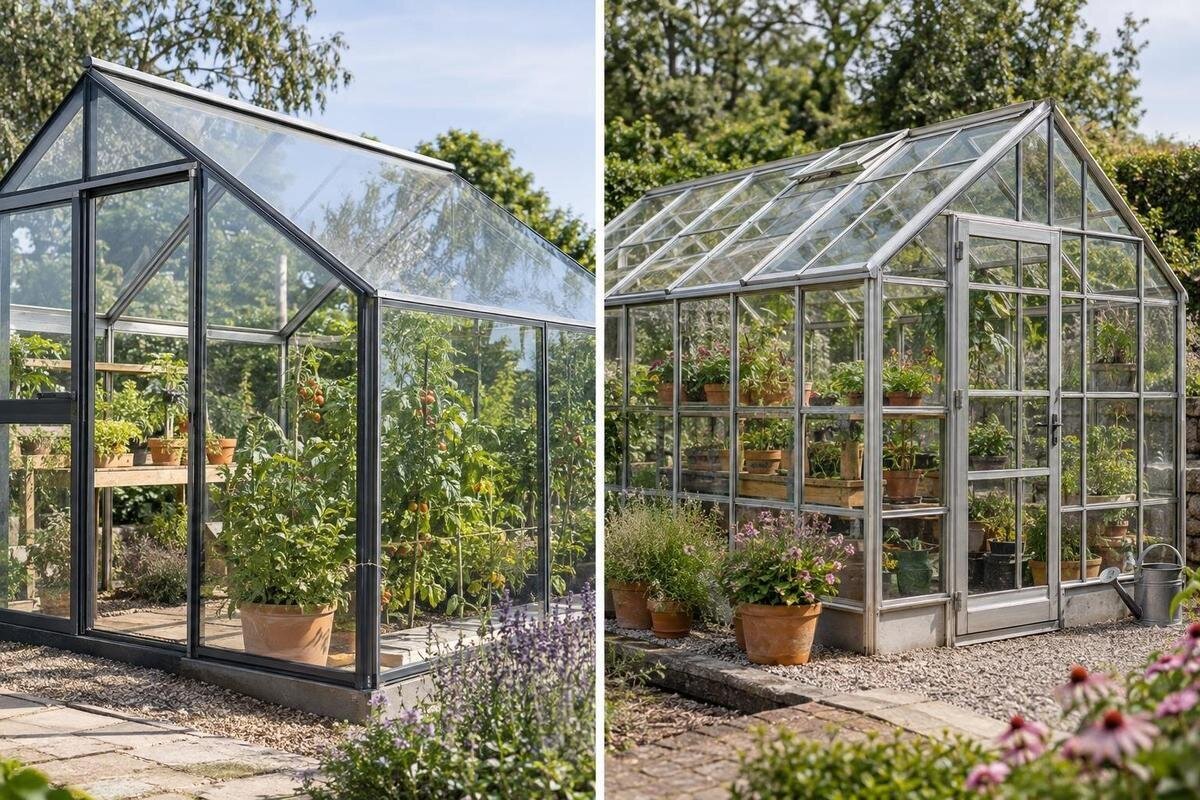
Greenhouse glazing guide
Choosing between one broad greenhouse pane and several smaller ones involves more than counting sheets of glass. Pane layout affects the visual rhythm of the frame, the size of each piece to move, and what a replacement job may involve. It does not, by itself, tell you the glass type, thickness, light performance or whether a pane can be replaced separately. Compare the drawings and specifications for the exact greenhouse configuration, then weigh appearance against handling and future parts support.

What counts as one pane or several?
Here, a large pane means one sheet of glass spanning a relatively wide or tall opening in the greenhouse frame. A smaller-pane layout divides that opening into separate glazed sections. The comparison may apply to one wall, one roof slope or a single bay; it does not mean that a whole greenhouse is covered by one continuous sheet. A structure can also use different pane arrangements on its sides, ends and roof. Check a dimensioned elevation or glazing schedule to see the divisions clearly. A photograph may hide a bar in reflections or show only one face, so it is not enough to establish the full layout.
Pane size is separate from the glazing material and its specification. Two layouts could use the same specified glass, while pane count alone says nothing reliable about thickness, finish, light transmission, impact behaviour, fixing method or suitability for a particular site. Those details come from the manufacturer's information for the chosen configuration. Keep the comparison narrow: identify the model and option, then compare the same section of each design. If you have only a front image, ask for a drawing or written schedule rather than estimating dimensions from perspective; panels nearer the camera can look much larger than those further away.
How pane size changes the greenhouse's appearance
Within the same opening, fewer glazing bars leave a broader area of glass without internal divisions. From a distance, the greenhouse may read as more open and less patterned. Several smaller panes make the frame grid more prominent and create a repeated visual rhythm. That can suit a traditional or carefully ordered garden, while a less divided face may feel quieter. These are preferences, not measures of quality. The frame still surrounds every pane, and roof bars, vents and doors can interrupt the view, so one large sheet does not make a greenhouse frameless. Consider how the whole elevation looks from the places where you will see it most often.
Compare full elevations at a similar scale and viewing angle, keeping the frame colour, roof shape and opening layout in mind. Otherwise, a difference in greenhouse style can be mistaken for a difference in pane layout. When considering the Bloomcabin Oasis Pyramid Greenhouse, look at the drawings for your chosen configuration from the viewpoints that matter in your garden. Include the ends as well as the sides, and the roof if it is visible from the house or a path. Check the proportions of the divisions as well as their number: a pane count alone does not show whether the overall pattern will look balanced.
Why the frame layout matters
Glazing bars and supporting profiles are part of the system that defines the openings and how panes are held in place. They are not always decorative lines that can be removed or moved. A greenhouse designed for several smaller panes cannot simply be changed to take one larger sheet by omitting intermediate bars. The new pane and the altered frame would need to match a configuration designed for them. Treat a larger-pane option as a manufacturer-specified layout, not a do-it-yourself adjustment. If you prefer fewer divisions, check which configurations are actually available for the model and size you are considering.
Ask for a drawing that shows the frame and glazing together, rather than relying on a product photograph or overall floor area. It should let you count panes on each face and see where bars, doors, vents and roof sections interrupt them. For Limited Edition greenhouses with built-in storage, compare the precise size and configuration on your shortlist. Identify which divisions belong to the frame and which mark the edges of opening units. This makes it easier to discuss the layout with the supplier and distinguish a glazing option from a broader change in frame proportions. A drawing for another size may not show the arrangement you would receive.
Moving and fitting large greenhouse panes
A larger pane takes more planning to move from the delivery point to the greenhouse. For the same glass type and thickness, a larger sheet will generally contain more glass and weigh more; its dimensions can also make it awkward to grip or turn through a gate or along a narrow path. A smaller pane may be easier to handle as an individual piece, but that does not guarantee less work overall. Several units need to be unpacked, carried and positioned, and they may need temporary storage before fitting. Access, packaging and the installation instructions all affect the job, not just the size of the largest sheet.
Map the route from the unloading point to the frame, noting gates, steps, tight corners and places where glass might need to be set down. If you are considering the Prestige greenhouse, use its configuration-specific glass schedule to identify the largest piece that must travel along that route. Ask the supplier what handling equipment or number of installers is needed, and use a qualified glazier or installer if the instructions call for one or the task is beyond your experience. Do not assume a smaller pane is manageable by one person. Allow for the dimensions of the packaging as well as the glass when discussing access and unloading.

What pane size means for replacement
Several smaller panes can have a practical repair advantage if each is a separate, removable unit and the manufacturer can supply a matching replacement. Damage to one unit might then mean replacing that section rather than sourcing a larger sheet. An individual pane may also be less cumbersome to transport and position. None of this is guaranteed by the pane count. Fixings may depend on neighbouring parts, panes may be made to specific dimensions, and replacement parts may not always be available. Before treating a small-pane layout as easier to maintain, confirm how the system is repaired and whether its individual panes can be ordered separately.
With a larger pane, there may be fewer units to identify, but the replacement itself can be more demanding to move and fit. Even if damage is local, do not assume that a sheet can be repaired in place; ask the supplier or a glazier what the correct replacement process is. When comparing a Bloomcabin Orangerie configuration, establish whether replacing one pane involves disturbing neighbouring panes or frame parts. Keep that answer with the model, size, option and purchase details. A photograph of the relevant frame area can help identify the part, while the glazing schedule provides the dimensions and specification needed to order it.
How to match replacement glazing
A replacement needs to fit the designed opening and match the glazing specification, not merely look similar to the damaged pane. Ask which measurement is required: the visible opening, the glass cut size or another dimension stated by the manufacturer. Confirm the pane's location, glass type and thickness, edge details, any specified markings and the way it is fixed in the frame. A nearby pane may not be the same size, and a piece that appears to fit may still be the wrong specification. If you are unsure which measurements to take, do not order using a rough estimate; get the required details confirmed first.
Where possible, use the original glazing schedule, assembly instructions or parts list. Mark the pane's position on a diagram so a supplier can distinguish a roof panel from a side or end panel. For an Aluminium Classic Greenhouse, record the selected size and glazing option alongside that diagram rather than relying on the range name alone. If the paperwork is missing, ask the manufacturer, supplier or glazier to identify what is required from the model and frame. If glass has broken, keep people clear of the area and arrange safe removal and fitting through a competent person rather than improvising with replacement material.
Compare roof and wall panes separately
Do not assume that side and roof glazing use the same pane pattern. Roof slopes, gables, vents and door openings can create different dimensions and interruptions, even within one greenhouse. A side elevation might show broad panels while the roof divides the slope differently; the exact arrangement depends on the design. Compare the relevant elevations and roof plan, and note any pane above a path, bench or planting area that would be difficult to reach for cleaning or replacement. Pane size does not establish safe access. Follow the supplier's access guidance and use a competent installer where roof work requires professional help.
For a lean-to greenhouse, compare the roof, outward-facing side and both ends rather than borrowing assumptions from a freestanding design. When reviewing an Aluminium Wall Greenhouse, ask for drawings of the selected configuration and check how the panes are identified on each face. Pay particular attention to the distinction between fixed roof glazing, opening vents and differently shaped end sections. A broad side pane and a nearby roof pane may look similar in a photograph without being interchangeable. Recording their positions separately helps you compare the layout now and identify the right section if replacement glazing is needed later.
Make a like-for-like comparison
Record the same details for each candidate: the frame layout, the number and position of panes on every face, the dimensions of the largest unit and the glass specification. Count glazing in doors and opening vents separately from fixed panes so the comparison shows where each type is used. If you are comparing small panes with a larger-pane alternative, check whether both are offered in the same greenhouse size and whether other parts of the frame change too. A pane-count comparison is useful only when the drawings describe equivalent sections. If they do not, note which differences are due to the overall design rather than the glazing layout.
Use your comparison record to separate confirmed details from questions still awaiting an answer. For the Limited Edition Aluminium Greenhouse, note the selected configuration beside its pane count and glass specification, then add the replacement-ordering details. These should include any individual part references and the information the supplier needs to match a pane. Request clarification if a diagram does not distinguish fixed glass, opening vents or another type of infill. Keep the completed record with the assembly instructions and purchase details. Someone ordering a replacement later should be able to identify the original section and option without reconstructing the choice from photographs.

Pane count, cleaning and performance
Several smaller panes are not automatically safer, stronger or cheaper to replace, and one large pane is not automatically clearer, more durable or better value. These outcomes depend on the glass and frame specifications, how each pane is supported and retained, and the supplier's replacement arrangements. Separate those performance questions from the visible differences you can assess in a drawing. More bars create more visual divisions and more frame edges and junctions to wipe around. Fewer internal bars leave a broader area of glass. Neither arrangement, by itself, establishes the greenhouse's overall quality or suitability, so avoid treating an attractive frame pattern as evidence of better glazing performance.
For cleaning, look at both the number of frame junctions and the position of the glass. On drawings for the T-Model Orangery Greenhouse, identify which surfaces you could reach comfortably and which would require the supplier's guidance on access. A less divided panel may offer a broader surface to wipe, but its size does not tell you whether you can reach all of it. Likewise, a small pane high on a roof is not necessarily convenient to clean. Consider the roof and walls separately, including the areas around vents and doors. This keeps the maintenance comparison focused on the complete layout rather than the number of sheets alone.
Choose the layout that suits your priorities
A larger-pane layout may suit you if a less divided appearance is important and the size of each unit, the route to the frame and the replacement process are acceptable. Fewer internal bars can create a cleaner visual pattern, but confirm the effect from full drawings rather than a perspective photograph. A smaller-pane layout may suit you if you prefer a more regular grid or want individual units to be smaller. Bear in mind that it involves more separate pieces and does not guarantee a simple repair. In either case, compare the same greenhouse size, glazing type and configuration so you are weighing pane layouts rather than unrelated design differences.
Before deciding, check three things: how the complete elevations look, how the glass will be delivered and fitted, and how a damaged pane can be identified and replaced. If any answer is unclear, ask the supplier or installer to confirm it for the model and size you intend to buy. That turns an abstract choice between one pane and several into a comparison of the appearance you want, the handling you can arrange and the parts support available for that configuration. Pane count matters, but documented compatibility matters most when a sheet needs replacing.
Frequently asked questions
Does one large pane let more light into a greenhouse?
Not necessarily. Pane size alone does not establish light transmission. The glass specification and the amount of frame within the glazed area also matter, so compare information for the exact configurations rather than using pane count as a guide to growing performance.
Are smaller panes easier to replace?
They can be less cumbersome to move, but only if the damaged pane can be removed separately and a matching replacement is available. Confirm the fixing system, replacement process and parts support before assuming that a smaller pane means an easier repair.
Can I remove frame bars to fit a larger pane?
Do not treat that as a simple glazing change. The bars form part of the design and define how the panes are supported and retained. Ask the manufacturer whether a larger-pane configuration is available and approved for the exact greenhouse.
How can I compare the handling requirements?
Get the dimensions and glass specification for the largest pane in each option, then consider the route from the delivery point to the greenhouse and the space available for installation. Follow the supplier's handling guidance and arrange qualified help if it is required.
What should I keep for a future replacement?
Keep the greenhouse model and configuration details, glazing schedule or parts list, and a diagram showing each pane's position. A photograph of the relevant frame can help, but the supplier will still need to confirm the correct glass size and specification.
Pane size is a design and maintenance choice, not a stand-alone quality score. A wide panel may give you the cleaner visual pattern you want, while smaller units may be more manageable to handle or source one at a time if the design and supplier support that. The dependable choice is the one whose drawings, handling requirements and replacement route you understand before the greenhouse is assembled. Choose the frame pattern you prefer, then keep the configuration details where they will be easy to find.
