
Late Frost Plant Triage in an Unheated Greenhouse
Greenhouse growing guide
Late spring frosts can catch seedlings and freshly planted crops before the growing season is fully under way. An unheated greenhouse may reduce exposure to wind and slow some temperature swings, but it can still cool to damaging levels; the covering is not a heat source. The practical response is to rank plants, check the coldest crop zone, protect a small high-risk group first and move pots only if the destination is genuinely safer. This guide separates reliable actions from assumptions so you can protect vulnerable plants without treating the greenhouse as a guarantee.

An unheated greenhouse can still freeze
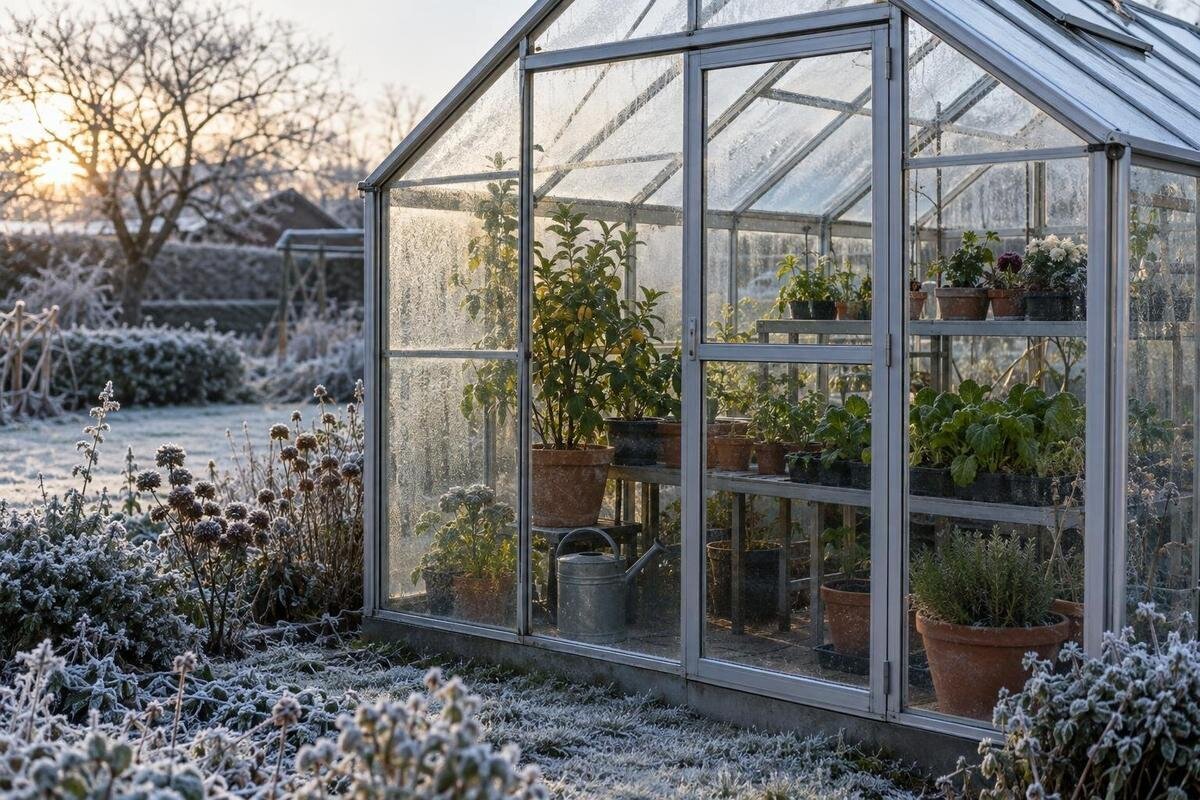
An unheated greenhouse has no ongoing heat source, so its protection depends on the conditions and any warmth stored in the structure and ground. The enclosed air may cool more slowly than the open garden, but that advantage can fade over a long night. On a clear night, leaves and surfaces can lose heat to the sky; gaps, open doors and cold edges add variation. A greenhouse can therefore feel sheltered while a leaf or pot still reaches a damaging temperature. Frost visible on the glazing is not a reliable measure of the temperature at every plant, and the absence of frost on the roof does not prove the crops escaped damage.
Treat the greenhouse as a buffer rather than a promise. Product size and model names are not frost ratings: the Limited Edition Aluminium Greenhouses listing gives a range from 3.77 to 28.08 m², which is useful for footprint planning but cannot tell you the overnight low at your site. When comparing structures, distinguish the space available for crops from the conditions those crops will experience. For plants already inside, rely on a thermometer placed in their growing area. Do not leave tender crops unprotected solely because the forecast sounded mild or the greenhouse felt warm at dusk.
Use the forecast to decide when to act
Use the local forecast as an advance warning, not as a reading from inside the greenhouse. A forecast minimum refers to a different position and exposure; your garden’s shelter, ground level, cloud, wind and structure can all affect what plants experience. If frost is forecast, or the expected low is close to a crop’s known tolerance, prepare before evening rather than waiting for frost to appear. Tender crops with uncertain tolerance deserve attention when you cannot verify the conditions inside.
Look beyond a single line on an app: note when the coldest part of the night is expected, whether conditions may stay cold for several hours and whether another cold night follows. Forecasts can change, so keep covers and a safer place for pots ready rather than making the plan at midnight. Decide who will move the trays, where they will go and when the greenhouse will be checked again. If you will be away that evening, make those arrangements earlier rather than depending on a last-minute visit. A calendar date is not proof that the risk has passed; spring conditions and individual sites vary. After the event, compare the forecast with the actual minimum inside. Those records make the next decision less dependent on guesswork.
Measure temperature at crop height
A minimum–maximum thermometer or data logger is more useful than a daytime glance. Set it at the height of the most vulnerable leaves, among the crops you need to protect. Keep it away from direct sun during the day, glazing, a cold post, damp soil and the leaves themselves; contact with those surfaces can distort what it records. Follow the instrument’s placement and operating instructions. If one end, low shelf or door-side bed seems colder, move the sensor or add a second one for that night instead of assuming the centre represents the whole greenhouse.
Keep a simple record of the date, forecast low, inside minimum, sensor position, crop location and any cover used. Humidity readings can describe overnight conditions, but relative humidity alone cannot tell you whether a leaf froze or whether a plant is safe. The T-Model Orangery Greenhouse listing spans 16.52 to 30 m²; for a future layout, mark the proposed crop groups on the chosen floor plan and consider which positions need separate readings. Give each sensor position a simple name, such as the seedling bench or door-side bed, so records from different nights remain comparable. Note any change in position rather than treating readings from different locations as a continuous record. A clear photo of the sensor position and affected plants can make comparisons more useful.
Triage crops by vulnerability and replaceability
Make three practical groups: move, cover and monitor. Put newly emerged seedlings, tender warm-season crops such as tomato, capsicum, cucumber, courgette, beans or basil, and recent transplants near the top if they have not been hardened off. A pot or propagation tray is easy to relocate and may contain many plants, so it can be worth prioritising over a single established plant. Species are not guarantees: cultivar, stage, recent exposure and the length of the cold all matter. If a plant is valuable or difficult to replace, give it a higher priority even when its cold tolerance is uncertain. Keep the list manageable: identify the trays and pots individually, then assign the remaining beds to groups. This turns a general intention to protect tender crops into a plan you can carry out before dusk.
Plants already acclimatised to cooler conditions and established, cold-tolerant crops may sit lower on the list, but do not assume they are immune. Group vulnerable plants where a cover can reach them without blocking the aisle or pressing against foliage. If you are planning a future crop layout, Pyramid Greenhouse options are listed from 5.53 to 18.9 m²; use the selected plan to check the space needed for both the covered group and access around it. Sketch the supports as well as the pots, allowing room to lift the cloth without snagging neighbouring stems. A layout that fits all your crops in ordinary conditions may still be awkward when temporary protection is added.

Use temporary covers with an air gap
Use horticultural fleece or frost cloth on hoops or other supports, with enough clearance to keep the material off leaves. Cover a compact group before the coldest part of the night and secure the edges so the layer does not lift. A cover can reduce exposure and hold some warmth around plants, but it does not produce heat; its effect depends on the material, fit, gaps, duration and how cold the night becomes. There is no universal temperature gain to count on. A light layer is an extra barrier, not a substitute for moving exceptionally tender seedlings to a safer place when that is possible.
Do not drape ordinary plastic directly over foliage: it can touch cold leaves, trap moisture and rub against stems. If plastic is the only available outer cover, support it so it cannot rest on the crop, secure it, then remove or open it when the frost threat has passed and the greenhouse starts warming. Keep cloth away from heat sources and use it as its maker intends. For forward planning, the Limited Edition Aluminium Greenhouses with Storage listing identifies a version with built-in storage; check its actual layout against the covers and supports you need to put away. Measure folded covers and the longest support rather than assuming everything will fit. Keep the items for each covered group together so that a missing hoop or fastening does not delay preparation.
Move pots only if the alternative is safer
Containers are often a higher priority than established plants in the ground because the root ball is exposed around its sides, and a small volume of growing medium can cool quickly. Before dusk, move seed trays and pots that can be carried to a sheltered space you know stays within the plants’ safe range. A porch, shed or garage is not automatically frost-free; if you are unsure, check its temperature or choose a place with more reliable conditions. Keep plants from touching cold glazing, and group pots only where leaves still have room and are not packed under a wet cover.
Do not spend time relocating every container if that risks snapping stems or leaves too little time to protect the plants that remain. Prioritise small pots, recently potted seedlings and plants you cannot replace, then cover the rest or accept that some risk remains. Check the route before carrying a full tray: clear the doorway and make space at the destination so you are not balancing plants while rearranging other items. Keep plant labels with their pots, especially when several similar seedlings are moved together. For beds and large tubs that are awkward to move, protect the foliage in place rather than repeatedly shifting roots or disturbing the soil. A temporary move is useful only if the destination is less exposed; a colder unheated shed can be worse than the greenhouse.
Restore normal ventilation as the space warms
Protection is for the cold period, not a reason to keep the greenhouse covered or shut all day. Check the plants and temperature after sunrise; as the space warms, remove inner covers or open them so the crops do not overheat and damp material can dry. Keep normal vents and door access clear, and return to routine ventilation when conditions allow, following the greenhouse and accessory instructions. Avoid treating a tight seal as a dependable way to create heat; it may leave crops in damp, stale air after the cold spell.
If you are comparing a replacement structure, establish how its ventilation will work with your crop layout. The Bloomcabin Prestige Greenhouse listing names a metal foundation; look separately at the selected configuration for details of vents and compatible accessories. On your layout, mark the openings and the space needed to reach their controls. Temporary hoops and cloth should not obstruct that access when you need to uncover plants and restore ventilation. If someone else will check the greenhouse in the morning, explain which covers to open and where the temperature is being measured. This makes the change from overnight protection to daytime growing conditions easier to manage.
Space for temporary frost protection
If you regularly run out of room for a cover, the problem may be the crop layout rather than the greenhouse’s ability to retain heat. Leave enough access to move trays, reach the door and place supports around a group without snagging neighbouring plants. A simple sketch of benches, beds and the tender-crop area shows whether you can protect priority plants without covering a crowded space. If the greenhouse serves both seedling raising and mature crops, decide in advance which area can be cleared first when a cold alert arrives.
The Spacious Greenhouse listing gives a range of 47 to 70 m². Compare the chosen floor plan with the space your crops and temporary covers actually need, rather than buying by the broad area range alone. Mark benches, beds, paths and the place where moved trays would stand. Then check whether you could reach each priority group while the covers were in position. A large footprint does not mean every plant can be protected under one inner cover; separate groups need their own arrangements. Distinguish essential space for your current frost plan from extra space intended for future growing, so the purchase addresses the layout problem you have identified.

A wall or sheltered site is not a frost guarantee
Position can help or hurt, but do not count on a nearby wall storing enough daytime warmth to protect plants all night. The wall’s material, sun exposure, surrounding shelter and overnight conditions matter, and a sheltered corner can still become cold. Look for patterns in readings at crop height, especially around doorways, near glazing and at low shelves. Put the most sensitive plants where records show safer conditions, not simply where the space feels sheltered before sunset. If you have not logged a cold night yet, treat the site as untested.
The Lean-to Greenhouse page lists configurations from 3.69 to 14.34 m². When considering a wall greenhouse, relate the selected layout to the adjoining wall and the positions where your tender crops would stand. Do not put plants against cold surfaces or assume a wall that feels warm at dusk will stay warm later. Once the greenhouse is in use, record conditions near the wall and elsewhere at crop height rather than relying on the impression of shelter. Keep those locations identifiable in your notes, especially if you later rearrange benches. This helps you assess the particular site without attributing every difference to the greenhouse’s shape.
Assess damage and update your plan
After the coldest period, avoid handling or cutting frozen foliage. Let plants thaw, then assess stems and growing points as well as leaf edges. Damage can become clearer over the next day or several days, so a scorched leaf does not always mean the whole plant is lost. Continue the plant’s usual care while you watch for new growth; heavy feeding or repeated pruning will not reverse damaged tissue. Record the initial appearance and compare it with the same plant over the following days, rather than judging survival from one damaged leaf. Keep uncertain cases separate in your notes from plants whose condition is clear, so you can return to them for another assessment. Once the extent is clear, remove tissue that is plainly dead with clean tools and leave live growing points undisturbed. Replace seedlings that have collapsed beyond recovery.
Write down which crops were hit, which positions were coldest, the actual minimum, how long the cover stayed on and whether the forecast matched. Photograph damaged areas and the sensor location before moving benches. Use the record to identify what needs changing: the priority order, the destination for pots, the covered group or access around it. If recurring crowding calls for a different floor plan, Aluminium Greenhouses options are listed from 3.77 to 28.08 m². Compare a selected layout with the specific difficulty you recorded, rather than assuming a different model will solve it. A useful revised plan tells you exactly which plants to move and cover next time, and makes clear which arrangements worked well enough to keep.
Frequently asked questions
Can an unheated greenhouse stay above freezing?
Sometimes, depending on the night and the structure, but you cannot assume it will. The air around a plant may cool differently from the forecast or the space near the door. Use an overnight minimum reading at crop height to judge conditions.
Which plants should I protect first?
Start with seedlings, recently transplanted tender crops, propagation trays and valuable plants that would be difficult to replace. Portable pots are often easy to prioritise. A plant’s stage, recent exposure and cultivar all matter, so use known crop tolerances where you have them.
Should frost cloth touch the leaves?
Use hoops or another support to keep the cloth clear of foliage where possible, and secure its edges. A supported layer can reduce exposure, but it does not create heat or guarantee a safe temperature. Avoid draping ordinary plastic directly over plants.
Does high humidity mean plants are safe from frost?
No. Humidity describes moisture in the air; it does not tell you the temperature of a leaf or whether a plant is safe. Check the overnight minimum near the crop, and use humidity readings as part of the record rather than as a frost warning on their own.
When can I tell whether a plant has survived?
Let frozen foliage thaw before handling it, then inspect stems and growing points as well as leaf edges. Damage may become clearer over the following days. Wait for signs of living growth before deciding that a whole plant is lost.
The aim is not to make an unheated greenhouse behave like a heated growing space. It is to use the protection you can provide where it matters most: move the most vulnerable pots, cover plants that must stay, and measure conditions where the crops are. An overnight minimum, a short crop-priority list and photos of any damage give you a practical record for the next late frost. Some losses may still occur, but a measured, selective plan helps you avoid relying on a mild-feeling afternoon or the greenhouse walls alone.
