
Managing Tomato Soil Fatigue in the Same Greenhouse
Greenhouse soil guide
Repeated tomato crops can leave a greenhouse bed under pressure, but a poor harvest does not prove the soil is exhausted. ‘Soil fatigue’ describes a pattern, not one diagnosis: soil-borne pests or disease, nutrient imbalance, salt build-up or declining structure may contribute, while uneven watering, restricted roots and other growing conditions can look similar. Map where plants struggle, check roots and records, and test representative soil before adding fertiliser or replacing a bed. If tomatoes cannot move to a different plot, targeted renewal, a rotation break in part of the space or a separate growing medium can still reduce reliance on the same root zone.

What ‘soil fatigue’ means in a tomato bed
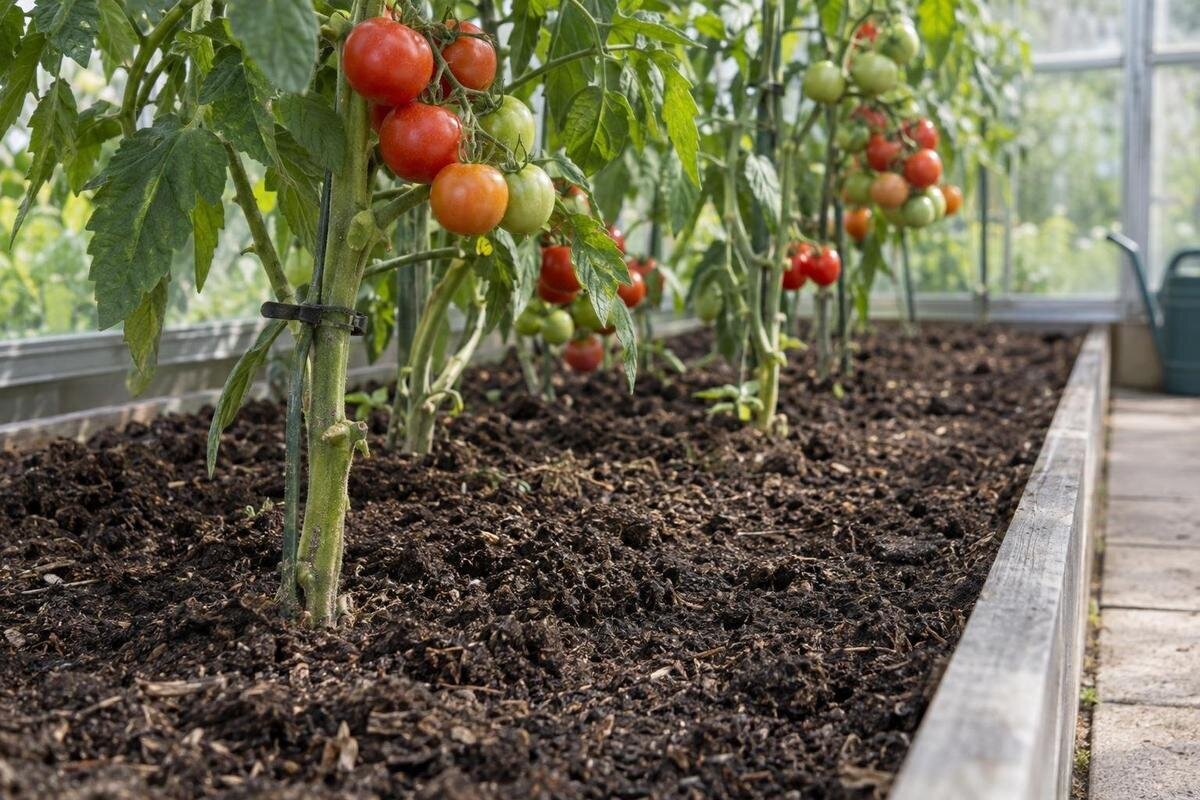
Tomato soil fatigue is a convenient name for declining performance after repeated crops in one root zone, rather than a diagnosis of a specific problem. Growing tomatoes repeatedly exposes the soil to similar nutrient demands and may allow pests or diseases that affect tomatoes to persist. Nutrient removal, an imbalance, accumulated salts or declining soil structure can also contribute, but each has different signs and remedies. Even in fertile soil, plants can have damaged roots or suffer from poor drainage; weak growth may also occur without a persistent soil problem. The label is a reason to investigate a pattern across seasons, not grounds to strip out every bed.
Crop rotation is the broad preventive approach: change the plant family using the bed and avoid returning tomatoes to soil that may carry a problem. The general greenhouse crop-rotation guide covers wider planning; this article focuses on what to do when moving tomatoes is difficult. Shifting a row a short distance within the same bed may leave it in much the same soil, so consider which root zone is actually being reused. Replacing the greenhouse structure is not soil treatment either. If you are already planning a new growing space, use the T-Model Orangery Greenhouse listing, with floor-area options from 16.52 to 30 m², as a footprint reference only; the bed and growing medium still need their own plan.
Map symptoms across the greenhouse
Draw the bed and mark where each plant sits, including bed edges, paths and irrigation lines. Note which plants wilt, yellow, stop growing or set less fruit, and whether the pattern follows the whole bed, one end, a row or isolated planting spots. Add planting and first-symptom dates, harvest notes, cultivar, seedling source if known, recent inputs and irrigation changes. A simple map may reveal a link to a water line, an old planting hole or a particular edge that a general impression misses. Mark healthy plants too; they provide useful comparisons rather than just a record of failure. Give each bed or planting position a consistent label so photographs, soil samples and harvest notes refer to the same place. Keep observations separate from explanations: record that a plant wilted and when it happened, rather than labelling that position as exhausted soil before you have investigated it.
Compare at least one affected plant with a healthier one planted at a similar time, rather than comparing different varieties or planting dates. Photograph the whole plant and close views of leaves, stem base and roots; note whether roots are sparse, damaged or unusually discoloured, but do not treat appearance as a diagnosis. Where possible, inspect representative plants rather than pulling up every weak one. When measuring a future test or container zone, keep bed and path areas distinct. The Pyramid Greenhouse range is listed from 5.53 to 18.9 m²; its specific layout, not the area figure alone, determines whether a separate comparison zone fits.
Rule out watering, roots and other stresses
Start with causes you can check without changing the soil. Confirm that each plant receives water consistently; blocked emitters, uneven hand-watering, a dry outer edge or a waterlogged low spot can produce a patchy bed. Check moisture at root depth in several places, not just at the surface, and observe whether water drains or remains after irrigation. Compare more than one watering point and note whether symptoms follow the same line. A fixed watering schedule is not evidence that every part of a greenhouse bed is equally wet.
Also note recent changes in fertiliser, irrigation water, shade, airflow or available root space. Too much fertiliser or salts can stress roots; poor drainage, compaction or a pot-bound transplant can restrict them. Heat or low light may affect flowering and fruit set without soil being the main cause. Check roots before deciding that nutrient levels are wrong, and look for leaf or stem symptoms that appear consistently. If pests or disease signs recur, photograph them and seek a suitable horticultural diagnosis rather than applying several treatments at once; blind treatment can make later comparisons harder.
Take a soil test before adding fertiliser
Take a sample before adding compost, lime, fertiliser or other amendments, and follow the testing laboratory’s collection instructions. Sample the tomato bed at a consistent depth and from several representative points, avoiding a spot directly beneath a recent fertiliser dose or compost pile. Keep a visibly affected zone separate from a healthy comparison zone instead of mixing them together; a combined sample can hide a local problem. Label each sample with its location, crop history and date so the results can be linked to the right part of the greenhouse.
Ask the laboratory which tests suit the crop history. Soil pH, soluble salts or electrical conductivity, and available nutrients may be useful, but a routine fertility panel will not identify every root disease, pest or physical problem. A separate water test may matter if the supply is suspected. If a redesign would let you keep test and production areas apart, sketch those zones first. The Limited Edition Aluminium Greenhouses with Storage range has listed floor-area options from 5.52 to 28.08 m²; compare the exact configuration separately from the bed-test results.

Use test results to choose a proportionate response
Read results alongside the sampled zone and the symptoms on the plants. A low reading does not automatically mean the crop needs a large dose, and an adequate nutrient level does not rule out poor root function or disease. Soil pH affects nutrient availability, while salts can stress roots even when nutrients are present; both need interpretation in context. Follow the laboratory’s advice for an amendment and application rate. Where practical, change one factor at a time so you have a clearer idea of what helped. Turn the findings into a short plan for each sampled zone: what the result indicates, what remains unexplained and which change you will make. Do not apply a recommendation for one affected corner to the whole greenhouse without checking whether the other samples support it. Record the product, amount and area treated so the next comparison is meaningful.
Do not add fertiliser, manure or compost by habit: each brings different nutrients and salts, and over-application can compound an imbalance. Organic matter can improve soil condition when it is suitable and used appropriately, but it cannot reliably remove a persistent pest or disease. If your response involves reshaping beds, compare the plan with the actual greenhouse configuration. The Bloomcabin Prestige Greenhouse range is listed from 3.77 to 28.08 m², but you still need to check the chosen version’s dimensions and layout against your growing plan.
Crop rotation in a limited growing area
If the whole greenhouse cannot be taken out of tomato production, look for a meaningful break in the soil tomatoes use. Where another suitable bed is available, move tomatoes there and grow a crop from a different plant family in the former tomato bed. Check the alternative bed’s crop history too; moving tomatoes between beds that have both carried them repeatedly does not provide the intended break. Peppers, eggplants and potatoes are also in the nightshade family, or Solanaceae, so they are not a dependable rotation away from tomato-related soil problems. The right substitute depends on the pest or disease involved and the growing calendar; no crop is a universal reset. Write down which bed will rest from tomatoes and what will occupy it. If there is no suitable alternative soil, containers with separate growing medium may be more practical than calling a small shift within the existing bed a rotation.
If beds can be divided, rotate the whole strip or bed, not just the plants within a few centimetres of their old position. Roots and cultivation may still connect nearby planting spots. Remove volunteer tomatoes and related weeds, and keep track of which crop occupied each bed. For a larger footprint comparison, the Spacious Greenhouse range is listed from 47 to 70 m². Use the plan for the specific configuration to assess whether separate crop zones and paths fit; do not assume the model provides separate beds.
Use containers to separate tomatoes from old soil
Grow bags or pots can separate tomatoes from an old bed if their roots remain in clean, contained growing medium. Choose a medium intended for the crop and container system, use clean containers, and position them so roots cannot grow through drainage holes into the ground. Keep drainage from a suspect bed from flowing into the containers. Simply setting a bag on contaminated soil, reusing old bed soil in a pot or keeping infected roots does not create a reliable break from the old root zone.
Treat the container area as a separate growing system: check its moisture, follow the medium’s nutrient guidance and keep tools or runoff from carrying soil back to the bed. Check the product’s intended use and directions rather than assuming a medium is suitable because it looks clean. If you are comparing structures for a container-and-bed plan, the Aluminium Classic Greenhouse range is listed from 3.77 to 28.08 m². Check the selected configuration’s usable space and access against the positions you have planned.
Renew the bed without guessing at the cause
Renew a bed in proportion to what you know. If test results show a correctable chemical imbalance, follow advice for that result rather than removing soil. If poor structure is the issue, consider whether compaction, drainage or bed depth can be improved without mixing distinct affected and unaffected areas. If a soil-borne problem is confirmed, ask an appropriate horticultural laboratory or adviser how much soil and which plant residues are involved. Replacing only visible surface material may leave the cause in the root zone.
Before bringing in new material, measure the bed’s length, width and depth, then check that the proposed soil or growing medium is suitable for greenhouse vegetables. Ask the supplier what the stated volume covers; do not estimate the amount from the greenhouse’s total floor area alone. Keep old and new material separate during the work, clean tools between zones, and handle suspect residues according to local waste guidance. If you are considering a smaller-footprint layout for a distinct bed, the Lean-to Greenhouse range is listed from 3.69 to 14.34 m²; check the chosen configuration against the site and planned bed.

Plan the greenhouse around a workable growing system
Plan the growing arrangement before selecting or rebuilding a greenhouse. Draw bed boundaries, paths, door access and container positions, and allow room to tend plants. Consider whether separate zones can stay distinct in practice. A rotation plan will not help if the only other bed is inaccessible or is continually used for tomatoes as well. Include the work involved in changing crops or renewing media: where containers will be filled, how old material will be removed and whether you can reach each zone without crossing another bed. Check access with the planned plants and containers in place, rather than judging only the empty floor. This helps distinguish a layout that looks spacious on paper from one you can maintain throughout the season. If a new greenhouse is needed, compare its internal measurements and layout for the exact configuration, not just the exterior footprint or the model name.
Keep the growing-system decision separate from the fatigue diagnosis: an in-ground bed, raised bed and containers each have different media, watering and renewal requirements. The Limited Edition Aluminium Greenhouses range is listed from 3.77 to 28.08 m², but that range does not show whether a particular bed plan fits a particular model. Check the current product plan and dimensions, then map the root zones and paths against them. A different structure can give you another layout to consider; it is not a treatment for soil.
Track the next crop to see whether the change worked
Record the next season’s planting positions, growing medium, inputs, irrigation pattern, planting date, symptoms, flowering, fruit set and harvest. Use the same zone labels and note when symptoms first appear. If you changed the medium or applied an amendment, keep the record specific enough to compare the treated area with an unchanged one. Decide what you are comparing before the season begins: the return of a particular symptom, root condition, plant growth or harvest. Record observations at comparable stages of growth, not only when one plant looks particularly good or poor. Note differences in cultivar or planting date alongside the results so they are not mistaken for effects of the soil treatment. Better growth is encouraging, but it may also reflect weather or plant differences, so look for a sustained improvement rather than judging the change from one harvest.
If plants continue to wilt, fail or show abnormal roots after watering and test results have been addressed, seek a diagnosis before repeating soil treatments. A laboratory or qualified local horticultural adviser can consider plant and soil samples alongside the crop history. While the cause is unresolved, keep soil from suspect areas out of clean beds and containers. The aim is not to declare the soil permanently ‘good’, but to identify the pressure, reduce repeated exposure where possible and use evidence to guide the next change.
Frequently asked questions
Does poor tomato growth prove the greenhouse soil is fatigued?
No. Wilting, yellow leaves, poor fruit set and weak growth can result from uneven watering, root problems, nutrient imbalance, salts, pests, disease or other growing conditions. Compare affected and healthy plants, check the roots and irrigation, and test the bed before treating soil fatigue as the cause.
Do I need to replace all the soil in the bed?
Not by default. The right response depends on what you find: a measured nutrient imbalance, poor structure and a confirmed soil-borne problem need different approaches. Replacing only the surface may not address a problem deeper in the root zone. Seek horticultural advice if a pest or disease is suspected.
Can I grow tomatoes in pots in the same greenhouse?
Yes, if the roots stay in clean, suitable growing medium and the containers remain separate from the old bed. Use clean containers, avoid filling them with bed soil, and prevent drainage or tools from carrying soil back and forth. Pots sitting on the bed are not a complete break if roots grow into the soil or runoff carries soil between the two growing areas.
Should I add compost or fertiliser before testing the bed?
Take a soil sample first and follow the laboratory’s collection instructions. Keep affected and healthy zones separate, label each sample, and ask which tests suit your crop history. pH, soluble salts and nutrients may be relevant; a recurring pest or disease may need a separate diagnosis.
What can I grow instead of tomatoes as a rotation crop?
Choose a crop from another plant family, then check whether it could host the specific pest or disease you suspect and whether it suits your growing calendar. Peppers, eggplants and potatoes are close relatives of tomatoes, so they are not a dependable rotation away from tomato-related soil problems.
Tomato soil fatigue is best treated as a question to investigate, not a reason for automatic soil replacement. Map the pattern, check roots and irrigation, sample the bed and choose a response that matches the evidence. When tomatoes cannot leave the greenhouse, rotate part of the growing area, use a genuinely separate medium or renew only what needs attention. Clear crop records make those constrained choices more reliable over successive seasons.
