
Growing Okra in a New Zealand Greenhouse
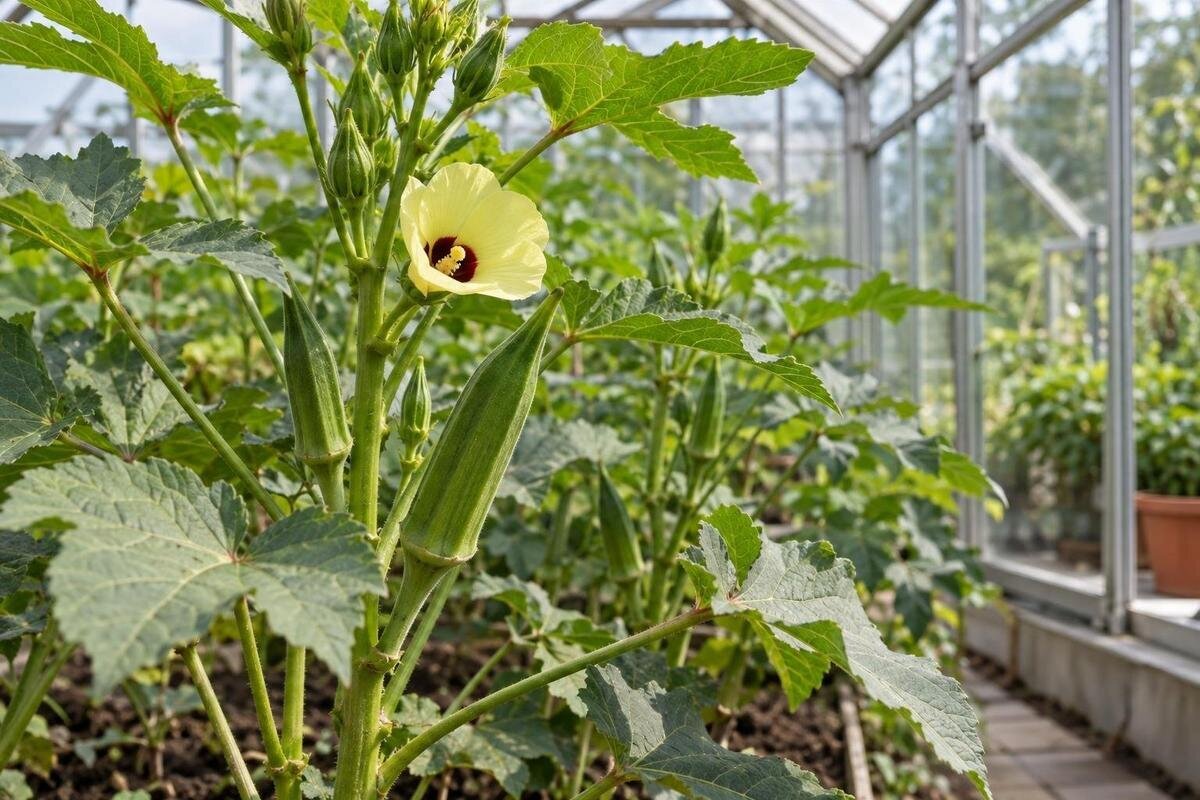
New Zealand growing guide
Okra can crop in a New Zealand greenhouse, but it needs sustained warmth, not just shelter. Cool nights can slow growth even when the greenhouse becomes hot during the day. The key questions are whether the soil and nights stay warm, whether your local summer lasts long enough for flowering and repeated pod picking, and whether heating the space is worthwhile. This guide explains how to assess those conditions, plan room for the plants and decide whether an unheated greenhouse is realistic.

Before choosing a greenhouse 1
Okra needs warmth in the soil and at night
Okra is a heat-loving, frost-tender crop, not simply a vegetable that benefits from being under glass. It grows most reliably when the root zone, air and nights stay warm; cold soil slows germination, while a cool spell can stall seedlings even if the greenhouse feels pleasant in the afternoon. As a practical guide, wait until the growing medium is consistently around 20°C or warmer before sowing, rather than treating one sunny day as proof that the bed is ready. Check the soil and the air at leaf height, away from direct sun. A reading around dawn reveals overnight conditions that a warm afternoon can conceal.
An unheated greenhouse can reduce wind exposure and warm up quickly, but it loses heat after sunset. Okra can therefore face both problems: cool nights early in the season and excessive heat in a closed house on a bright day. Use a minimum–maximum thermometer near the plants and compare overnight readings with morning conditions before moving seedlings out of a warm propagation area. Glazing is not a guarantee against frost, and daytime warmth does not carry over automatically. If nights remain cool, postpone transplanting or keep young plants somewhere reliably warmer.
Plan sowing around your local summer
New Zealand's seasons are opposite to those in Northern Hemisphere growing guides, so late spring and summer are the relevant window for planting and growing okra. Treat that as a broad window, not a fixed national date. Wait until local frost risk has passed and the soil has warmed, then sow early enough to leave a long stretch of hot weather before autumn. Coastal shelter, elevation, inland night temperatures and the greenhouse's immediate setting all affect the start and finish of the season. A sunny position helps, but no calendar can replace readings from your own site. Local frost records are useful context; temperatures in your greenhouse may differ.
Many cultivars can produce the first pods roughly 50–65 days after sowing in suitably warm conditions, but that is an estimate rather than a promise. Cool starts extend the wait, and the first pod is not the same as a useful harvest: plants need to flower, set pods and keep producing before autumn cools. Check whether the seed packet counts maturity from sowing or transplanting, as the difference affects your available window. Starting seed earlier in a warm propagation area can help, but planting into cold soil simply shifts the delay to the greenhouse bed. Allow time for repeated picking, not just the first harvest.
Before choosing a greenhouse 2
When is heating worth considering?
If you are weighing up heating, first record overnight minimums and soil temperatures where the plants would grow, including during a cool spell. A reading at plant height is more useful than one high on a sunny wall. Compare the pattern with okra's need for sustained warmth and with the time left before autumn. An unheated structure may be enough in a naturally warm summer, while repeated cold nights can leave plants alive but slow or unproductive. Check conditions over several nights rather than basing the decision on one warm afternoon; a short record is more useful than guesswork.
Heating is easiest to justify when it bridges a limited gap, such as raising seedlings or extending an otherwise warm season for a short period. It is harder to justify if the whole greenhouse needs warmth for months. Running costs depend on the structure, heat loss, local temperatures, target conditions and the area being heated. The Classic aluminium greenhouse listing spans footprints from 3.77 m² to 28.08 m²; that range helps compare floor area but says nothing about heat retention or energy use. Estimate those separately, and get qualified advice on any fixed heating system and its installation. If other crops will share the warm space, consider heating as a shared growing cost rather than assuming okra alone will justify it.
Choose a sunny site and workable layout
Okra needs a bright position and room for a tall, leafy canopy. Before choosing a site, watch how buildings, fences and trees throw shade across the greenhouse; the pattern changes through the day and season. Aim for a place with direct sun for much of the day, especially while the crop is growing and flowering. Shelter can reduce wind exposure, but a shaded corner does not provide the light or warmth okra needs. Check whether nearby trees may eventually overhang the roof or interfere with the intended growing bed. It is easier to adjust the layout before the structure is installed.
Plan the greenhouse position and planting together. Doors need to open fully, vents must remain accessible, and the aisle should let you reach leaves and pods without stepping into a bed. A wall-mounted design may be worth comparing where that form suits the site, but it still needs useful sun and workable access; do not assume a wall will guarantee warmer nights. The Lean-to Greenhouse listing gives footprint choices from 3.69 m² to 14.34 m². Check the specific plan against the sun, wall and door positions rather than treating the stated footprint as planting area.

Before choosing a greenhouse 3
Start seed warm and transplant carefully
Start seed in a warm, bright place rather than sowing into a cold greenhouse bed. Individual pots or cells make it easier to transplant without disturbing roots, and a warm propagation area can bring germination forward without heating the whole structure. Follow the seed packet for sowing depth; keep the mix evenly moist, not waterlogged, and provide strong light as soon as seedlings appear. If light is weak, seedlings can become stretched before the weather is ready for planting out. Avoid leaving them cramped in small cells for too long; moving them carefully while they are still growing well helps avoid repeated disturbance.
Move seedlings only when the greenhouse bed and nights are suitable, and harden them gradually over several days so the change from a sheltered propagation space is not abrupt. A plant that looks large enough can still be set back by a cold root zone or a sudden drop in night temperature. Keep an eye on seed trays during sunny weather, as a closed greenhouse can warm quickly. Plan where trays, working space and mature plants will sit before settling the layout. The Limited Edition Aluminium Greenhouses listing covers footprints from 3.77 m² to 28.08 m²; check the floor plan for possible bench and bed positions, since the stated area does not specify either.
Allow space for mature okra plants
Okra's mature height and spread depend on the cultivar, so check the seed packet before marking out a bed. As a starting point, allow roughly 30–45 cm between plants, then widen the gap if the variety makes a broad canopy or you need access from both sides. Crowded leaves shade one another and make pods harder to find; a greenhouse bed also needs room for air to move through the plants. Leave a clear aisle rather than filling every spare patch with another plant. Base your spacing on the expected mature size, not the small seedling you put in the ground.
Set out plant centres, door clearance and any path before planting. Okra does not always need a stake, but a tall cultivar that leans may benefit from support; follow the seed supplier's guidance. Check the expected height against the roof and make sure plants will not block vents or doorways. A structure's footprint alone cannot show whether your intended row fits. The T-Model Orangery Greenhouse is listed in sizes from 16.52 m² to 30 m², but those figures do not establish its usable bed arrangement. Draw the row and aisle on the relevant plan before deciding how many plants to grow.
Before choosing a greenhouse 4
Keep the root zone moist but not wet
Okra needs steady moisture but not a waterlogged root zone. In a bed, improve drainage where water sits and add organic matter to help soil hold moisture evenly; do not plant in a low spot that stays saturated. Water deeply enough to wet the main root area, then check the soil before watering again rather than giving frequent, shallow splashes. Once the soil is warm, a light mulch can slow surface drying, but keep it away from the stem and do not use it to hide persistently wet ground. Use a balanced fertiliser according to its label, and avoid excess nitrogen, which can favour leafy growth at the expense of pods.
Greenhouse heat increases water use, and pots can dry much faster than a bed, so check the root zone during sunny spells. Container growing is possible, but choose a deep, roomy pot rather than a small decorative one, and monitor it more often. Make sure containers have drainage holes; restricted roots and rapid drying make a long-season crop harder to maintain. If comparing footprints for beds or containers, the Pyramid Greenhouse listing spans 5.53 m² to 18.9 m². Confirm that your chosen layout leaves room for plants, a route for watering and access to inspect them; the footprint alone does not confirm the internal arrangement.
Maintain airflow and check flowers and leaves
Look through the canopy regularly, especially under leaves and around growing tips, for pests such as aphids and whiteflies. A tall, dense plant can hide an early problem, so space and access matter as much as a tidy appearance. Remove weeds and dead leaves, and avoid stripping large amounts of healthy foliage. Okra flowers usually set pods without hand-pollination, so poor fruiting is more likely to call for a check of temperature, light, watering and general plant stress than immediate hand-pollination. Notice whether flowers are dropping during cold spells or after the plant dries out.
Ventilate on hot days to limit heat build-up and keep air moving, but remember that daytime ventilation does not solve cold nights. Check that vents and doors remain accessible once the crop is tall, and look in on plants during bright weather before the greenhouse becomes excessively hot. A greenhouse with storage has a different space plan from one used only for beds: the Limited Edition Aluminium Greenhouse with Storage is listed from 5.52 m² to 28.08 m². Include the built-in storage in your layout check and confirm how much of the chosen footprint remains available for plants and access; do not count every square metre as crop bed.

Before choosing a greenhouse 5
Pick pods while they are young
Once flowering begins, inspect plants daily or every other day in warm weather. Pods can pass from tender to tough quickly, so pick them young and follow the variety's guidance; many are harvested at about 5–10 cm, but the ideal length varies by cultivar. Check tenderness as well as length, using the seed-packet description as a guide: young pods should be tender, whereas overmature ones become fibrous. Leaves can hide fruit, so check both sides of the plant and the lower stems during each picking round. Regular checks help you catch pods before they become too large.
Cut pods with clean scissors or secateurs rather than twisting hard against the stem, and wear gloves if your chosen variety's foliage irritates your skin. Picking regularly keeps the harvest at a useful eating stage and can encourage continued production, though it cannot make up for cold weather or too little season. Arrange plants so you can reach the back of each bed without stepping on roots. The Bloomcabin Prestige Greenhouse listing gives footprints from 3.77 m² to 28.08 m²; check the drawing for an aisle and access to both sides of the planting, as the size range does not specify your internal layout.
Decide whether okra suits your greenhouse
Okra is worth trying in a greenhouse if you enjoy fresh pods, can provide a long, hot growing period and are willing to pick often. Where the greenhouse is unheated and the local summer is short or cool, try one or two plants first rather than allocating the full bed. Note sowing, transplanting, first flower and first pick; those dates show whether your site provides enough season and whether a warmer seed start helped. If the first flowers arrive late, that is useful evidence for adjusting next year's sowing date or deciding the crop is not a good match.
Before selecting a structure for this crop, compare usable bed space, headroom, access, ventilation and realistic heating needs. A larger greenhouse is not automatically a warmer one, and okra alone does not require a vast floor area. The Spacious Greenhouse listing ranges from 47 m² to 70 m²; that scale is more relevant to a mixed growing plan than a few okra plants, so judge it against the whole garden's use. The best fit is the space you can keep bright, warm enough and accessible through the season, not simply the largest footprint.
Frequently asked questions
Can I grow okra in an unheated greenhouse in New Zealand?
Yes, if your site has a long, warm summer and the greenhouse stays warm enough overnight. Shelter can help, but an unheated greenhouse does not guarantee warm soil or protect okra from every cold spell. Check night and soil temperatures before planting.
When should I sow okra?
Sow in late spring or early summer once frost risk has passed and the growing medium is consistently around 20°C or warmer. The right timing varies by site, so use local conditions rather than a fixed national date.
How much space does an okra plant need?
A practical starting point is roughly 30–45 cm between plants, with more room for a broad cultivar or easier access. Check the seed packet and allow for the mature plant, not just the size of a young seedling.
How often should I pick okra pods?
Check plants every day or two once pods begin to form, especially in warm weather. Pick them while young and tender; many varieties are harvested at about 5–10 cm, but the ideal size depends on the cultivar.
Does greenhouse-grown okra need hand-pollination?
Usually not. Okra flowers generally set pods without hand-pollination. If flowers are not followed by pods, check warmth, light and watering first, as cool conditions or plant stress can interrupt growth.
Growing okra successfully depends on sustained warmth and enough time for repeated harvests. A naturally hot, long summer may be enough without heating; a cooler site can leave plants alive but with little time to flower and produce pods. Base the decision on night and soil temperatures, the season left before autumn, and the cost of warming the whole space. If those conditions suit your garden, a carefully planned planting and regular picking can make okra a rewarding addition to the greenhouse.
