
Growing Pak Choi in a New Zealand Greenhouse
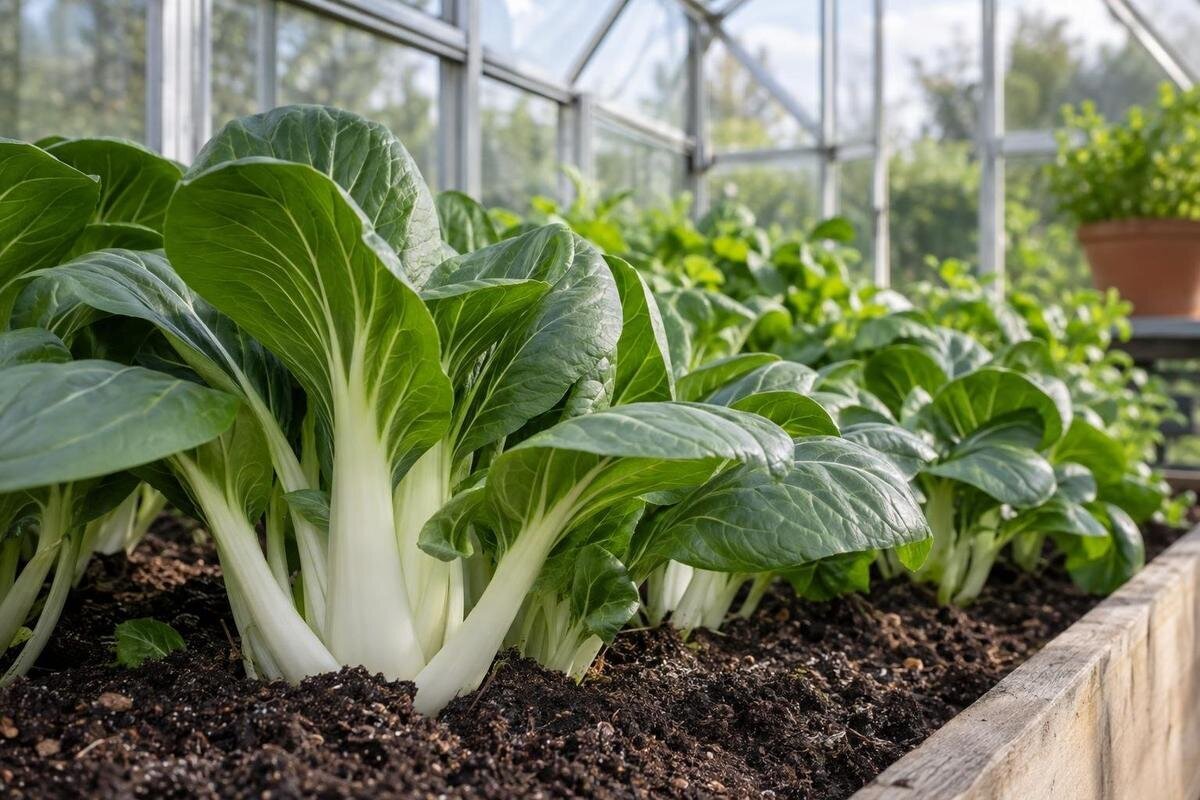
NEW ZEALAND GROWING GUIDE
Pak choi is a useful crop for the cooler part of the greenhouse year, but shelter does not remove the risk of heat, cold or bolting. In New Zealand, timing varies with location and with how quickly your own greenhouse warms and cools. Small, repeated sowings and close observation are more dependable than a fixed national calendar.

Why pak choi suits the cooler greenhouse months
Pak choi is a cool-season brassica grown for its crisp stalks and leaves. It usually establishes and forms good heads in mild conditions; prolonged heat can shorten the harvest window and make flowering more likely. A greenhouse can shelter plants from wind and heavy rain, which is useful in unsettled weather, but it does not automatically provide ideal temperatures. In an unheated structure, nights can still be cold, while sunshine can raise daytime temperatures quickly. Winter light and cold soil also slow growth, so a sowing that germinates may stay small for longer than its seed packet suggests. Treat the greenhouse as a buffer from weather, not as a heated growing room, and judge its value by the season you want to extend.
Measure conditions in the space you plan to use. A min–max thermometer placed near the crop for a week can show how warm sunny afternoons become and how low temperatures fall overnight. Note whether trees, fences or buildings shade the bed, too. The Lean-to Greenhouse is listed in sizes from 3.69 m² to 14.34 m², but its footprint does not indicate sun exposure, wall shadow, ventilation or usable bed area. If you compare this format with another, check the site orientation and layout rather than assuming a wall will keep pak choi warm.
Plan sowings around New Zealand’s seasons and your site
In New Zealand, late summer is February and autumn runs from March to May. These are often useful months to begin sowing as the strongest summer heat eases. Winter, from June to August, can bring much slower growth in an unheated greenhouse, especially where soil stays cold or daylight is limited. Late winter into early spring, roughly August to September, offers another opportunity, but plants maturing as days lengthen and temperatures rise may bolt quickly. Treat these as broad windows, not a national timetable: exposure, elevation and overnight temperatures can shift the useful sowing period, even between nearby gardens.
Use the harvest estimate on the seed packet as a starting point, then allow more time if winter conditions slow growth. To spread picking, sow small batches about two to three weeks apart while plants are growing steadily; lengthen the gap or pause if a cold spell leaves seedlings barely progressing. Note when each batch is likely to leave the bed so you can plan room for its replacement without crowding plants that are still growing. Listings for the Limited Edition Aluminium Greenhouses run from 3.77 m² to 28.08 m². When comparing sizes, allow for overlapping batches, paths and existing crops: total floor area is not the same as planted bed area.
How to reduce the risk of bolting
Bolting is the shift from leaf production to a rising central flower stem. Once it elongates, pak choi stalks can become tougher and the leaves may develop a stronger taste; the change can happen faster than a whole row can be picked. Several cues can contribute, including heat, longer spring days, a prolonged cold period followed by warming, and stress from uneven moisture or an overgrown, root-bound seedling. The balance depends on cultivar and plant age. A cold night does not mean every plant will bolt, and no single greenhouse temperature or calendar date guarantees that it will not.
Choose a variety described by its seed supplier as slow to bolt or suitable for your intended sowing season, and follow its guidance. Keep batches small enough to harvest before plants become over-mature; do not leave the oldest heads in the bed while waiting for the rest. Even moisture and steady growth reduce avoidable stress, but they cannot erase the effect of prolonged cold or a sudden spell of heat. In an unheated greenhouse, focus on timing and prompt harvest rather than trying to keep the structure sealed or changing the whole crop plan after one cold snap.
Sow small batches and choose the right cultivar
Direct sowing into prepared beds is straightforward where the soil stays moist, and it avoids transplant disturbance. Make shallow drills at the depth on the seed packet, sow thinly, cover lightly and water gently. Keep the surface evenly damp until germination, not saturated. Cell trays are useful when the main bed is occupied or pests are active, as you can label and monitor each batch before planting out. Transplant while seedlings are young and handle the root plug carefully; plants that have been crowded in a tray too long may pause after planting. Thin direct-sown seedlings early rather than leaving a dense clump to compete.
Choose seed labelled for baby leaves or full heads according to how you want to harvest, and tag each batch with the cultivar and sowing date. Winter sowings may take longer than packet estimates because light levels are lower and the soil is colder, so avoid expecting them to mature as quickly as a fast autumn batch. Include seedling trays in your space planning: T-Model Orangery Greenhouse listings range from 16.52 m² to 30 m². Consider where trays would sit while the main beds are occupied, how you would reach them for watering and whether their labels would remain easy to read. Check the proposed bench layout before planning propagation alongside mature crops.

Spacing pak choi and allowing access for harvest
Set spacing according to the size at which you intend to harvest. As a starting guide, allow about 15–20 cm between compact plants picked young and 25–30 cm for full-size heads. Follow the packet if it gives different spacing for your cultivar. Thin seedlings rather than trying to move crowded older plants. Evenly spaced plants develop more uniformly and are easier to inspect. Closer rows may suit baby-leaf harvesting, but dense foliage can shade lower leaves and slow air movement. In a narrow greenhouse bed, fewer plants that you can reach are often more useful than an extra row hidden at the back.
Draw the bed and path before sowing. Include access from each side, door clearance, benches, other crops and a place for seedling trays. The Aluminium Greenhouses are listed in sizes from 3.77 m² to 28.08 m². Use the layout for the size you are considering, then mark mature plant spacing and harvesting access on your own sketch. Pay particular attention to the back of a bed: you should be able to reach a head without leaning across younger plants or stepping into the growing soil. Decide which rows you can comfortably tend before calculating how many plants to sow, rather than filling every available gap.
Keep soil moisture and growth steady
Pak choi needs fertile soil that stays evenly moist but drains freely. Before sowing, loosen compacted ground and mix in mature compost if the soil needs better structure or fertility; avoid fresh manure, which may be too strong and uneven. If the greenhouse bed receives little direct rain, check its moisture rather than assuming shelter keeps it damp. Containers can work where bed access is limited, but use a suitable growing mix, free-draining containers and enough surface area for the chosen spacing. Smaller volumes dry faster and need closer checking. Avoid sowing into waterlogged or packed soil, where roots and seedlings can struggle.
Water when the root zone begins to dry, aiming to wet the soil rather than repeatedly sprinkling only the surface. Check more than one point: bed edges may dry faster than the centre, and a bright day can change moisture levels quickly. Keep water supply steady while young plants establish and heads form; drought followed by heavy watering can interrupt growth. Feed only if the soil or container mix needs it, following the fertiliser label. Excess nitrogen is not a remedy for slow winter growth. Include space for watering gear in your layout. Limited Edition Aluminium Greenhouses with Storage are listed from 5.52 m² to 28.08 m²; check how the storage area is arranged and whether you can retrieve equipment without blocking access to the beds.
Ventilation limits heat build-up
Ventilation helps manage greenhouse temperatures as well as damp air. During a bright spell, open doors or vents as needed so heat does not build up; check conditions near the leaves before plants show signs of wilting. Adjust ventilation to the weather and the structure rather than following a fixed winter rule. Air exchange helps reduce stagnant, humid conditions and allows foliage to dry, while a cold direct draught can stress young plants. If the greenhouse has different openings, follow the maker’s guidance and consider whether they can be reached and used with your planned bed layout.
A listed footprint is not a ventilation specification. The Bloomcabin Prestige Greenhouse is listed in sizes from 3.77 m² to 28.08 m²; before choosing any model, check the published details for vent positions, opening methods and access. Do not infer climate control from a product name or total floor area. Pak choi can tolerate cool growing conditions better than a hot, sealed space, but ventilation cannot provide heat on a cold night. Your aim is to avoid needless daytime heat and stagnant air without exposing the crop to harsh conditions.
Inspect brassicas for pests under cover
Pak choi remains attractive to brassica pests in a greenhouse. Check the undersides and folded centre leaves regularly: aphids can cluster on tender growth, caterpillars leave holes or droppings, slugs and snails may feed at night, and flea beetles can leave small round holes. Shelter may reduce some exposure, but pests can enter through doors and vents or arrive on seedlings and weeds. Inspect transplants before putting them in the bed, remove weeds around the crop and look closely at new leaves. An enclosed space is not automatically pest-free.
Leave enough room to inspect the whole plant, then remove small groups of pests by hand and clear damaged leaves or plant debris. Fine insect mesh can help only if it excludes the pest you are targeting; fit it securely and check that it does not restrict ventilation or trap pests inside. The Pyramid Greenhouse is listed in sizes from 5.53 m² to 18.9 m². When planning rows within your chosen size, leave access to the inner leaves as well as those at the bed edge. Make inspection part of your watering routine so that plants at the back receive the same attention as those beside the path.

Harvest pak choi before the flower stem develops
Harvest at the size you want rather than waiting for a fixed number of days. For full heads, cut the plant cleanly near the base once it has formed a usable head. If you prefer leaves, pick outer leaves lightly and leave the centre growing. Do not rely on a whole plant producing a second full head after cutting. Check the oldest plants frequently as spring approaches: a central stem beginning to rise or flower buds forming are signs to harvest promptly. Once bolting is under way, stalks may toughen and the leaves can become stronger in flavour.
Staggered sowings let you pick the oldest batch while the next is still filling out, instead of harvesting everything at once. Clear finished plants so they do not shade younger seedlings, and re-sow only when the temperature window suits. If several crops share the greenhouse, label rows by variety and sowing date so you can track each batch separately. The Spacious Greenhouse is listed in sizes from 47 m² to 70 m². For a larger growing area, decide how much pak choi you can use while it is ready to pick rather than sowing every spare row. Allocate the remaining space to paths and other crops instead of producing more mature heads than you can harvest promptly.
Reset the bed and keep a crop record
After harvest, clear old plants and fallen leaves, then inspect the bed before sowing again. Pak choi is a brassica, so where space allows, rotate it with crops from a different plant family rather than repeatedly using the same patch for related crops. This can help limit the build-up of brassica-specific pests and diseases. If roots are swollen or plants are stunted, clubroot may be a concern; do not simply sow another brassica in the same soil. Seek local growing advice if you suspect a persistent soil problem, especially in a greenhouse where beds are used intensively.
Keep a short record of cultivar, sowing date, first harvest, bolting and any unusually hot or cold spells. Compare autumn and spring batches rather than judging the whole season as one result. If a crop bolted early, note its age and the weather it experienced; if it barely grew in winter, record how long the soil stayed cold. Change one part of the next sowing plan at a time, such as the date or cultivar. After a few batches, your notes will show which windows your own greenhouse supports.
Frequently asked questions
When should I sow pak choi in a New Zealand greenhouse?
In many places, begin as summer heat eases and sow further batches through autumn. A late-winter or early-spring batch can work if your site is not too cold, but warming weather and lengthening days increase bolting risk. Use your seed packet and greenhouse observations to refine the timing.
Can an unheated greenhouse grow pak choi through winter?
Sometimes. A greenhouse can shelter plants from wind and heavy rain, but cold soil and short days may slow growth, and overnight temperatures remain variable. Mild, sheltered sites may keep growing; colder gardens may see little progress. Protection does not mean active growth all winter.
How far apart should pak choi be planted?
Follow the spacing on the seed packet for your cultivar. As a guide, allow about 15–20 cm between compact plants harvested young and 25–30 cm for full heads, with enough room between rows to reach and inspect them. Thin crowded seedlings while they are small.
Does cold weather make pak choi bolt?
Cold exposure can contribute, particularly when followed by warmer conditions and longer days, but cultivar, plant age, heat and growing stress also matter. A cold night does not guarantee bolting. Choose a variety suited to the sowing season and harvest promptly.
What should I do if a flower stem appears?
Harvest the plant promptly rather than waiting for it to form a fuller head. Once the central stem elongates, stalks may toughen and leaves can develop a stronger flavour. Younger flower stems may still be usable, but sowing another batch is a more reliable way to maintain a supply.
For pak choi, the main greenhouse advantage is an extended growing season, not year-round warmth. Sow as summer heat begins to ease, keep batches small through the cooler months, and watch plants as spring temperatures and daylight increase. Pick heads before their central stems elongate, then use your sowing and harvest notes to refine the timing for your own site.
