
Growing Carnivorous Plants in a Greenhouse
Greenhouse growing guide
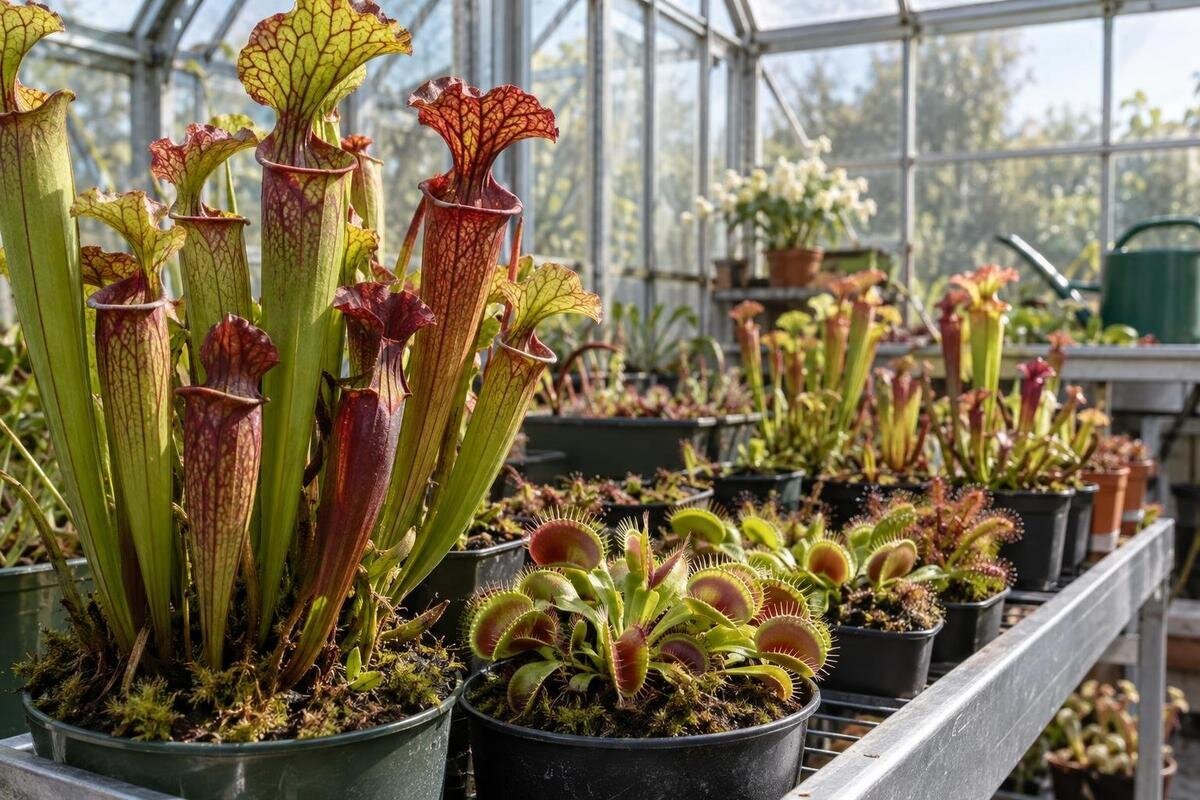
Carnivorous plants make a striking greenhouse collection, but the label covers plants from very different environments. A Venus flytrap and many Sarracenia need strong light, mineral-poor water and a cool seasonal rest. A Nepenthes may need warm lowland conditions or cooler nights, depending on its species; sundews and butterworts vary too. A greenhouse does not automatically supply the right climate: sunlight can raise temperatures rapidly, while an unheated structure may cool close to outdoor conditions overnight. Begin with species names and their growth cycle, then plan water quality, light, airflow and winter care around those needs. This avoids keeping every pot in one wet tray or trying to make one setting suit the whole collection.

A greenhouse creates several microclimates
A greenhouse is a shelter, not a fixed climate. Sunlight warms the air, glazing and benches during the day; with inadequate ventilation, temperatures can rise beyond what a plant tolerates. After sunset, an unheated structure can cool close to outdoor conditions, so it does not automatically keep tropical species warm. Even within one house, the roof, a sunny wall, a lower shelf and the doorway can produce different conditions. Heating, vents and surrounding shelter all matter. Treat the greenhouse as a set of positions to measure, rather than assuming one average temperature describes every pot.
Before settling on a collection, record minimum and maximum temperatures where the pots will sit, including on bright days and cold nights. A min/max thermometer at plant height and a short log can show whether a group suits the site, and when you may need to vent or move pots. Leave room to shift plants between brighter, cooler or more sheltered positions. The Classic aluminium greenhouse catalogue covers footprints from 3.77 to 28.08 m²; use that range to compare area, then confirm the chosen option’s usable layout and ventilation details.
Identify each plant’s seasonal group
Sort plants by botanical name before deciding where to put them. Dionaea muscipula (Venus flytrap) and many Sarracenia are temperate bog plants with a pronounced winter rest; neither should be treated as a tropical indoor plant. Temperate sundews such as Drosera rotundifolia also have a seasonal cycle, while Drosera capensis usually does not need the same cold dormancy. Pinguicula is another mixed group: temperate species and many Mexican species have different winter patterns, and some Mexican butterworts form a drier rosette. The label ‘sundew’ or ‘butterwort’ alone is not enough to set a watering routine.
Nepenthes need another kind of sorting. Lowland and highland types have different temperature preferences: lowland species such as Nepenthes ampullaria generally need warmer nights, while highland species such as N. villosa are adapted to cooler conditions and a day-to-night temperature drop. Neither label alone gives a complete growing target, and the needs of hybrids can vary. Check reliable, species-specific guidance before buying, particularly if the plant label is incomplete. If your greenhouse cannot support both groups, use separate positions or enclosures rather than compromising conditions for every plant. A lean-to greenhouse can be compared as a format for a particular site, but its wall placement may change light and airflow; its listed footprint options range from 3.69 to 14.34 m².
Water quality and storage
Minerals are a common problem in carnivorous-plant care. Many familiar bog species are adapted to nutrient-poor conditions, and repeated watering with mineral-rich water can leave salts in the medium. Avoid water from a sodium-ion softener. Cleanly collected rainwater, distilled water or reverse-osmosis water is a safer starting point, though a rain barrel can pick up dust or residues from a roof and storage container. A handheld meter that reports total dissolved solids (TDS) or conductivity is more useful than judging water by appearance. A common grower rule is below about 50 ppm TDS, but treat it as a guide rather than a universal species limit.
Plan the supply as part of greenhouse care. Store collected water in clean, covered containers, label separate sources and keep untreated water away from the pots so it is not used by mistake. Boiling water or passing it through an ordinary household filter does not necessarily remove dissolved minerals. If a reading is higher than the commonly used guide, choose a verified low-mineral source instead of relying on the water to improve in storage. A greenhouse with built-in storage may be worth comparing if you need space for dry supplies; check what the storage is designed to hold, and do not assume it is a rainwater tank or collection system.
Choose nutrient-poor growing media
Ordinary potting mix, garden soil and fertiliser-rich compost are usually unsuitable for common carnivorous bog plants. Their roots are adapted to low-nutrient conditions, so feeding the pot with compost or routine liquid fertiliser can cause harm rather than help. Many growers use unfertilised sphagnum-based mixes for Sarracenia and Venus flytraps, but the ingredients and water retention still need to suit the plant. Some Nepenthes need a more open, airy medium, and Pinguicula species can have different requirements again. If you prefer a peat-free option, choose a mix intended for carnivorous plants rather than assuming a generic substitute will behave the same way.
Keep plants in individual pots or clearly separated groups so you can change their care without disturbing the rest. A tray that suits a Sarracenia during active growth may keep another plant too wet; the pot size, root depth and medium all affect how quickly it dries. Use clean pots and tools, and prevent fertiliser runoff from neighbouring plants reaching the carnivorous ones. Repot when the medium has broken down or the plant outgrows its container, using a species-appropriate mix rather than topping it up with garden compost. Separate pots also make it easier to adjust watering as plants enter or leave seasonal rest.

Match light to each species and manage summer heat
Light requirements differ markedly between groups. Venus flytraps and many Sarracenia need very bright, direct light once acclimatised. Several Nepenthes prefer bright, filtered light and may scorch under intense sun, particularly when heat and stale air build up. Sundews vary too, so use the species name rather than assuming all plants with sticky leaves want the same position. Move plants into stronger light gradually, whether they are coming from a shaded shelf or a less sunny growing area. Watch new growth and leaf colour over time, but consider temperature and watering as well: weak growth can have more than one cause.
In summer, ventilate before the greenhouse becomes excessively hot, and use temporary shading only where measured conditions call for it. Heavy shade also reduces light, so it is not a good permanent solution for sun-loving flytraps or Sarracenia. Check the hottest bench rather than relying on a reading from a cooler doorway. When comparing greenhouse options, the Pyramid Greenhouse listing spans 5.53 to 18.9 m², but neither floor area nor shape tells you how much sun reaches a particular bench. Check the site’s orientation, nearby obstructions, glazing and planned plant positions before deciding where each group will grow.
Bench spacing, airflow and plant height
Humid air is not the same as stagnant air. Crowded pots and persistently wet surfaces can encourage mould and pests, even when humidity itself suits the plants. Leave gaps between pots, avoid pressing leaves against the glazing and aim for gentle air movement without drying sensitive plants too quickly. A fan may help circulate air where natural ventilation is limited, but it does not replace suitable venting or correct waterlogged media. Look at how long surfaces stay wet and where condensation gathers; these can prompt a review of spacing, watering and airflow, but neither observation identifies a particular disease on its own.
Plant height affects both light and access. Some Nepenthes climb or trail as they grow, while Sarracenia pitchers need room to stand and spread without being shaded. Keep taller plants from blocking light to smaller sun-loving species, and leave a clear route to reach every tray. Measure shelf depth, hanging positions and headroom before adding equipment: external greenhouse height is not the same as usable growing space. The T-Model Orangery catalogue lists options from 16.52 to 30 m², which can help compare footprints for a larger collection. Check the specific plan and ventilation details as well; area alone does not guarantee circulation or easy access.
Winter dormancy in temperate species
For Venus flytraps, many Sarracenia and temperate sundews, winter dormancy is part of the annual cycle, not a sign that the plant should be kept warm and actively growing. Growth slows, leaves may die back or a resting bud may form, depending on the species. Keep labels in place so dormant pots are not mistaken for dead plants, and do not add routine feeding to try to restart growth. The exact winter method depends on the plant, its container and the conditions at your site. Follow a credible guide for the species rather than copying a temperature or timetable from a different plant collection.
An unheated greenhouse may shelter pots from some rain and wind, but it cannot guarantee consistently cool conditions. Sunny days can warm it, and cold nights can cause sharp swings; measure at bench height through the season. Dormancy is also not the same as drought: keep moisture at the level the species needs, and do not let bog plants dry out completely. Consider how the pot, not just the foliage, will fare in winter, since small containers can be more exposed to temperature changes. If a plant is described as hardy, check that the guidance covers its roots and container in conditions like yours.
Tropical species need a different winter plan
Winter care for tropical species should not follow the dormancy routine used for Venus flytraps and temperate Sarracenia. For Nepenthes, the lowland or highland group helps explain whether warmer nights or a marked day-to-night temperature drop is important. Tropical sundews also vary, and some tolerate a broader range than Nepenthes. Plan winter positions around the species you own rather than a single ‘tropical’ setting. A mixed collection may need separate warmer and cooler areas; choose plants whose requirements you can meet rather than trying to find a compromise for incompatible groups. A requirement for cool nights does not mean a plant can tolerate frost.
If a species needs winter warmth, decide how you will provide and monitor it before buying. An unheated greenhouse follows outdoor weather more closely than a climate-controlled growing space; added heating requires suitable equipment and ongoing checks. Measure where the plant sits and keep its day-and-night pattern in mind rather than raising heat to compensate for poor light. The Limited Edition aluminium greenhouse catalogue includes options from 3.77 to 28.08 m², but footprint alone cannot provide a tropical climate. Allow for the space and controls the plants actually need, and confirm that the chosen setup can maintain them through the cold season.

Plan working space, water and access
Allow room for the work involved, not just the pots. Set aside space for trays, covered water containers, spare pots and a clean surface for repotting. Keep a clear route to the vents, water supply and every bench; a collection that can only be watered by shifting other plants is harder to care for consistently. Think about where spills go, and keep containers out of doorways and walking routes. Leave space for mature plants rather than planning around their size at purchase. This is especially important for climbing Nepenthes and for groups of Sarracenia that will need enough light and room as their pitchers grow.
Check the base and site requirements before settling on a greenhouse, particularly if benches, water containers and equipment will add weight. The Prestige Greenhouse with metal foundation listing names a metal foundation, but that description alone does not show whether a particular base suits your ground or planned loads. Compare the product documentation and consult the supplier or a qualified installer about site and foundation requirements where needed; do not infer a load rating from a product title. Keep heavy containers secure and accessible, and leave space to reach ventilation without leaning over delicate plants.
Expand the collection after a full seasonal cycle
Begin with a small group that shares light, water and winter requirements, then add plants only when you know the greenhouse can support another growing zone. Keep a simple record of each species, its water source, position, repotting and seasonal changes. If a plant declines, change one factor at a time where possible; moving it, changing the water and replacing its medium all at once makes the cause harder to identify. Retain labels through dormancy, and buy accurately named, nursery-grown plants. Avoid collecting wild plants; responsible sourcing helps protect wild populations and gives you a better chance of knowing what conditions a plant needs.
Scale the structure to access as well as plant count. The Spacious Greenhouse listing covers footprints from 47 to 70 m², providing an area comparison for a large collection. Use the selected model’s dimensions and opening layout to assess how benches, growing zones and clear working routes would fit. Extra space is no substitute for zoning, monitoring or ventilation, while smaller options can work if the plants share conditions and remain easy to reach. Compare the room needed by your established collection with the space an additional group would require. Expansion should make those groups easier to accommodate, not simply allow more pots to be crowded onto the same benches.
Frequently asked questions
Can carnivorous plants stay in an unheated greenhouse?
Some temperate species, including Venus flytraps and many Sarracenia, need a cool winter rest. An unheated greenhouse may suit them, but it can still have sharp temperature swings. Warmth-requiring Nepenthes may need a different setup, so check the requirements of each species and measure conditions where the pots sit.
Is collected rainwater always suitable?
No. Dust, roof residues and dirty storage can affect it, and clear water can still contain dissolved minerals. Collect and store rainwater cleanly, then use a TDS or conductivity meter if its quality is uncertain. Distilled or reverse-osmosis water is another low-mineral option.
Can I water every carnivorous plant from a tray?
No. A tray can suit many bog plants during active growth, but Nepenthes generally need a moist, airy medium rather than standing in water. Some Mexican Pinguicula also need less water during their winter rest. Group plants by species and seasonal needs.
Do carnivorous plants need fertiliser in a greenhouse?
Most commonly grown carnivorous plants do not need fertiliser in their potting mix. Nutrient-rich compost and routine liquid feeds can harm sensitive roots. Do not use fertiliser to compensate for poor light or weak growth; first check the plant’s species, water, medium and growing conditions.
How much light does a Venus flytrap need?
Venus flytraps need very bright light and can grow in direct sun once acclimatised. Introduce stronger light gradually, and watch for greenhouse overheating in summer. This advice does not apply to every carnivorous plant: many Nepenthes prefer bright, filtered light.
A successful carnivorous-plant greenhouse is built around differences in light, water and seasonal temperature. Match each plant’s medium and watering routine to its needs, ventilate before summer heat builds, and keep temperate dormancy separate from tropical winter care. Species names and temperature records at plant level are more useful than broad labels such as ‘bog plant’ or ‘tropical’. Once a small, compatible group has made it through a full seasonal cycle, you will have a sound basis for deciding whether the collection can expand or needs another growing zone.
