
Planning an Early Sweet Pea Crop Under Glass
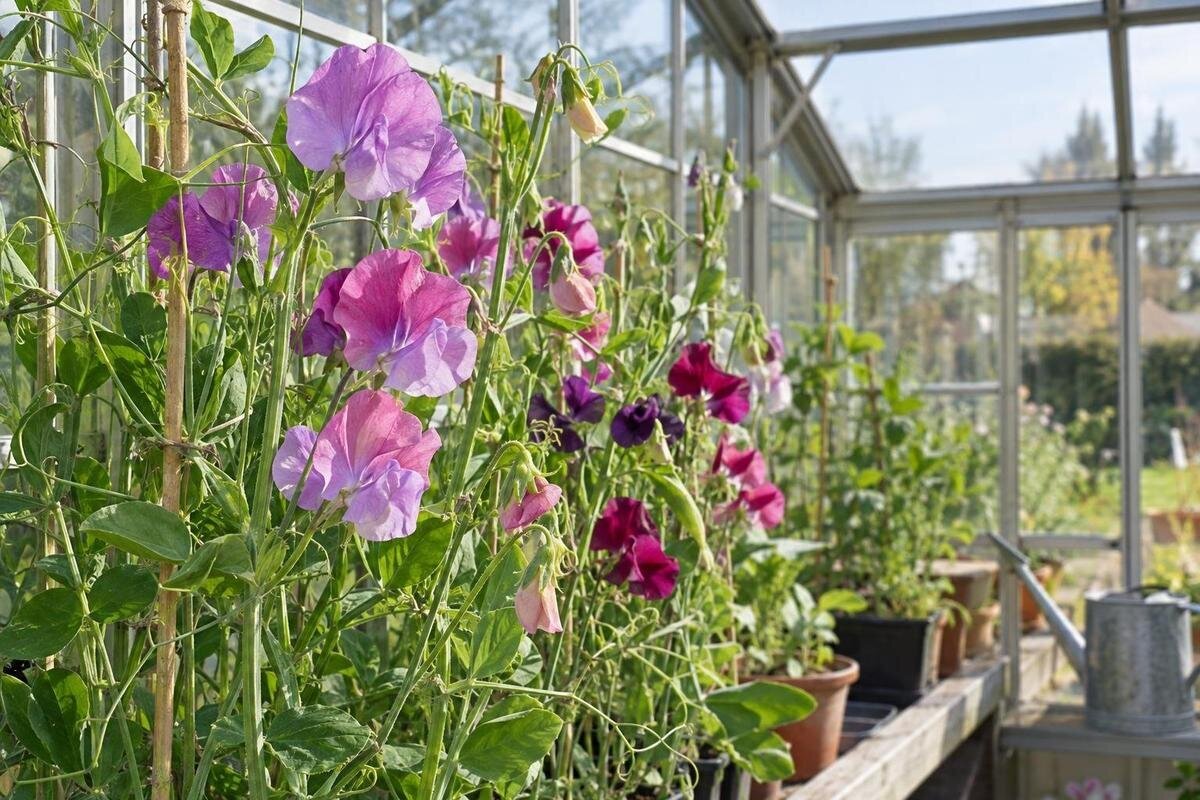
Sweet peas under glass
An early sweet pea crop under glass depends on more than moving the sowing date forward. Sweet peas are cool-season climbers; a greenhouse can shelter young plants and extend the usable growing window, but strong sun can turn that same shelter into a hot environment. A reliable plan balances sowing time with winter light, gives roots room and shoots firm vertical support, and includes a routine for ventilation. These details help you aim for earlier cut stems without forcing the crop into excess warmth.

Why a cool greenhouse suits sweet peas
Sweet peas (Lathyrus odoratus) are cool-season annual climbers. Under glass, they can be started earlier than in an exposed bed because young plants are sheltered from rain and wind, and pots or a prepared row are easier to manage. The greenhouse is not automatically cool, though: on a bright day it may warm quickly, while nights remain cold. Treat it as weather protection that still needs active temperature management, rather than as a heated growing room. For a cut-flower crop, the aim is steady growth and usable stems, not maximum warmth. Access to the plants matters as much as seeing the first bloom.
Flowering date depends on cultivar, sowing date, root establishment, light and the conditions inside the structure. Sowing earlier only creates an advantage if seedlings still receive enough light and space to grow strongly. A batch raised in a dim, warm corner may stretch and take longer to produce useful stems than one started later in brighter conditions. Check the seed packet for mature plant height and sowing guidance, and treat the date as a starting point rather than a promise. The greenhouse extends the season; it cannot remove the crop’s need for cool, bright growth. Judge success by stem quality and the first-flower date.
Sowing dates, germination temperature and daylight
Think about temperature in two stages. For germination, around 15°C is a common working reference for sweet peas; follow the seed packet if it gives a different range, and measure close to the pots rather than relying on a distant outdoor forecast. The temperature at bench or soil level can differ from the roof space. A tray kept much warmer than necessary may germinate, but warmth is not a substitute for light once shoots appear. Move emerged seedlings to the brightest available position and keep them on the cool side, avoiding abrupt swings. Look for compact, sturdy growth; long, pale stems suggest the balance of warmth and light is wrong.
Light should shape the sowing date as much as temperature. Sweet peas prefer a bright, sunny position; in the greenhouse, watch where direct light falls on the actual bed or bench at different times of day. Short winter days, low-angle sun, a wall, trees or neighbouring buildings can reduce usable light even when the glazing looks clear. For an earlier cut, sow a modest first batch and another later rather than committing all seed to the earliest possible date. In New Zealand there is no single sowing month for every site: use the packet’s cultivar notes and your local conditions. Comparing batches helps you see which timing works best.
Space for climbing plants and harvesting
Plan for the whole job, not just the plant row. Mark where the sweet peas will grow, the support line, a path that lets you reach both sides of the crop, and somewhere to set seed trays, water and cut stems. A tight layout makes routine picking awkward and can leave you leaning across tendrils. Measure usable internal height from the soil or container surface to the lowest roof bar, gutter or opening mechanism; external ridge height does not tell you how much vertical support is available. Keep doors and vents reachable after plants climb, and make sure the route lets you reach the base for watering, tying in and removing faded flowers.
The Pyramid Greenhouse is listed in floor-area options from 5.53 m² to 18.9 m², which gives a comparison point when sketching a row and access path. Use the plan for your chosen size to work out the usable bed length, clear height and placement of openings. Allow for paths and any fittings in its specification rather than treating the full floor area as planting space. Draw the support line onto the plan as well as the bed: the climbing plants must remain accessible as they fill out. If the support crosses a doorway or makes a vent difficult to reach, amend the arrangement before settling on a footprint.
Check sunlight at the proposed greenhouse site
Assess sunlight at the proposed site before deciding where the growing row will go. Check at several times of day: a greenhouse may sit in full sun at midday but be shaded during the morning or afternoon by a house, boundary fence or deciduous tree. Sweet peas prefer a sunny position, so the brightest available bed is usually the better choice for an early crop. Note seasonal shade too, particularly if nearby trees will be in leaf while the plants are growing. Look at light reaching the bed itself, not just the roof; a sunny patch of glazing does not necessarily mean the plants beneath it receive direct sunlight.
If you are considering a wall greenhouse, the Lean-to Greenhouse is one product to compare; its listed floor-area range is 3.69 m² to 14.34 m². Compare the drawings for the exact model with the proposed wall, including any eaves and nearby buildings that could shade the crop. Observe sunlight at the intended growing height, and check where the growing row can sit in relation to the openings. A wall may shelter a crop, but the orientation and surroundings determine whether that position is bright enough. Keep the row clear of persistent shade wherever possible rather than choosing its position solely for convenient access from the house.

Prepare a deep, well-drained root zone
Sweet peas form long roots, so start them in deep individual pots or root trainers rather than keeping them in a shallow tray for too long. Handle seedlings gently when planting; move them while they are young enough to establish before the roots become tightly packed. For an in-ground bed, loosen the soil and improve it with mature compost if needed, while preserving free drainage. The aim is fertile soil that holds moisture without staying saturated. Because glass excludes most rainfall, plan to water the bed deliberately even after wet weather outside. In pots, check moisture more often, as a small volume of growing mix dries sooner.
Use the floor plan to separate growing space from supplies. The Limited Edition Aluminium Greenhouses with Storage listing gives options from 5.52 m² to 28.08 m² and identifies storage as part of the product. When comparing the exact configuration, allow for that feature rather than treating the entire stated area as a planting bed. Keep pots, ties and tools accessible without narrowing the path beside the sweet peas. Check the layout details for the selected option instead of assuming the storage position or capacity from its name.
Install supports before shoots start climbing
Sweet peas climb by tendrils, so give them vertical netting, strings or another support they can grip. Put the support in place before planting or before shoots reach it, and guide new growth towards it while stems are still easy to handle. Keep leaders upright and separated instead of letting them tangle across the row. Fine mesh gives tendrils something to catch; where a line is too wide or smooth, you may need to guide the stems with loose ties. Choose support height to suit the cultivar and the usable greenhouse height, and leave access for harvesting.
Before fixing netting, wire or lines to a greenhouse frame, confirm that the manufacturer permits that fixing and identifies a suitable point. Do not assume glazing bars or roof members are intended to carry crop supports. The Bloomcabin Prestige Greenhouse is listed in floor-area sizes from 3.77 m² to 28.08 m². For your chosen configuration, establish both the available support height and the permitted attachment points, asking the manufacturer or installer where necessary. The support plan needs to account for both: enough room for the cultivar to climb and an appropriate way to hold the netting or lines. If the fixing information is unclear, use a separate support arrangement that is stable for the site and does not rely on the glazing.
Ventilation to prevent overheating
Ventilation matters because a greenhouse can heat rapidly under spring sunshine. Check conditions at plant height with a thermometer; a max–min reading shows whether bright afternoons are followed by cold nights. Open available vents or doors as the air begins to warm, rather than waiting until foliage wilts or the space feels stuffy. Keep openings unobstructed by trellis, pots and hanging material so air can move through the crop. Ventilation also helps reduce trapped damp air around foliage. Adjust opening to the weather: a fixed schedule may be unsuitable on a cloudy, cool day or a still, sunny one.
The Aluminium Greenhouses page covers variants from 3.77 m² to 28.08 m², but floor area is not a guide to ventilation. For the size you are considering, check which roof or side openings are included, where they sit, how they operate and whether you can reach them after supports go in. If an automatic opener or extra vent matters, confirm that it is included or compatible with the specific configuration; do not assume this from the greenhouse name. Keep the growing plan clear of openings and use the manufacturer’s information for operation.
Water consistently and avoid excess nitrogen
Because the greenhouse keeps rain off the bed, check moisture in the root zone rather than relying on rainfall or a fixed calendar. Water deeply enough to moisten the growing medium, then allow excess to drain; avoid leaving pots standing in water. Directing water to the soil rather than routinely wetting leaves keeps foliage drier and makes it easier to spot changes. Feed according to the soil or growing mix and the fertiliser label. Generous high-nitrogen feeding can encourage leafy growth at the expense of flowers, so more is not automatically better. A consistent routine is preferable to alternating drought and saturation.
For a large growing footprint, map the water route before planting. A hose or watering can should reach the root zone without dragging through climbing stems, and a watering point or container should not block the working path. The Spacious Greenhouse is listed in floor-area variants from 47 m² to 70 m²; those figures help compare scale but say nothing about water supply, vents or crop layout. Use the plan for the exact size to decide whether you can tend the full row evenly, and keep water from pooling on the path or against the structure.

Picking sweet peas for cut flowers
Pick flowers regularly while stems are useful and before pods begin to mature. For bunches, cut when the lower flowers on a stem are open and the upper buds are showing colour but remain closed; the best stage can vary with cultivar and how quickly the bunch will be used. Use clean, sharp snips and avoid tearing the vine. Remove faded flowers before seed pods form, because allowing seed to develop can reduce continued flowering. Keep enough healthy leaves on the plant for growth, and check each stem rather than cutting every shoot to the same height. Take cut stems to clean water promptly.
Allow a route for picking and bunching in your greenhouse plan as well as for planting. The Limited Edition Aluminium Greenhouses listing includes options from 3.77 m² to 28.08 m²; compare the selected variant’s internal measurements with the length of a support row and the space needed to reach it. A floor-area figure cannot show whether a door, bench or other fittings interrupt a continuous row, so use the product drawing for the particular size. If the bed is too crowded to cut without bending adjacent stems, reduce the number of plants rather than sacrificing access.
Recording results and refining the growing plan
Keep a record of sowing, emergence and first flowers so you can compare the early and later batches. Note temperatures and shade alongside those dates, including whether seedlings grew compactly or became long and pale. Record stem quality as well as the first bloom: an earlier flower is only part of the result when you want stems for cutting. Include practical observations from tending the crop, such as whether you could reach the roots to water, guide shoots onto supports and pick without bending neighbouring stems. These notes help you distinguish a timing problem from a layout problem before planning the next crop.
Use those observations when comparing a different greenhouse or revising your planting layout. The T-Model Orangery Greenhouse listing gives a range from 16.52 m² to 30 m². Compare the exact option’s internal dimensions and openings with the space your crop needs, using your notes to identify where the previous arrangement was cramped or difficult to manage. Draw the row, support, path and cutting space together so you can assess the complete working layout rather than the planting area alone. Carry forward arrangements that worked well, and revise those that obstructed access or ventilation. If a structural or fixing question remains unclear, ask the manufacturer or a qualified installer rather than improvising.
Frequently asked questions
Can I grow sweet peas in a heated greenhouse?
Yes, but sustained warmth is not the goal. Sweet peas are a cool-season crop, and a temperature around 15°C is a common reference for germinating seed. Follow the packet for your cultivar, then move emerged seedlings to a bright, cooler position. Extra warmth cannot make up for limited light.
When should I sow sweet peas for an early crop in New Zealand?
There is no single month that suits every site. Use the seed packet’s sowing guidance, then consider how much natural light your greenhouse receives and how cool it stays. A small early batch followed by a later sowing lets you compare results and spread the harvest.
Do sweet peas need full sun under glass?
They prefer a bright, sunny position. Glass does not compensate for heavy shade from a wall, tree or nearby building, and low winter light can slow growth. Check where sunlight reaches the actual bed or bench at different times of day.
What support should I use for greenhouse sweet peas?
Use vertical netting, strings or another support that the tendrils can grip, and put it in place before shoots start climbing. Keep stems accessible for tying in and cutting. Before attaching anything to the greenhouse, confirm that the manufacturer permits that fixing.
How can I stop a greenhouse getting too hot?
Monitor conditions near the plants with a thermometer and open available vents or doors as the air warms. Keep openings clear of foliage and supports, and adjust to the weather rather than following a fixed schedule. A cool, bright environment is more useful than trapped heat.
Early sweet peas under glass are a cool-season timing project, not an exercise in holding as much heat as possible. A modest early sowing, bright position, room for roots, upright support and timely ventilation give the crop a better chance of producing useful stems ahead of outdoor flowers. Keep notes on sowing and first-flower dates alongside temperature, shade and ventilation. Those observations show whether to adjust the sowing time, improve the light or change the layout next time. Through flowering, steady, cool, well-aired growth is a more dependable aim than simply closing the greenhouse to retain warmth.
