
A School Greenhouse Plan for Terms and Holidays
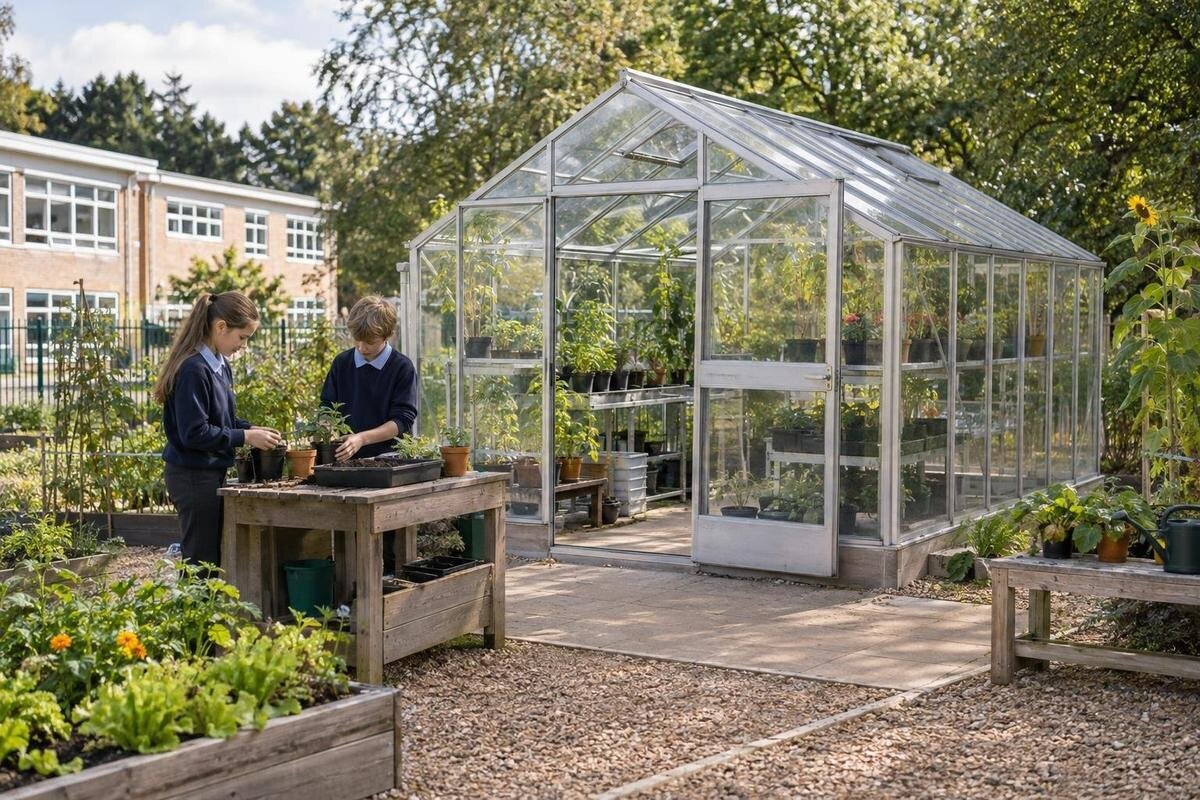
School greenhouse planning
A school greenhouse can turn plant care into a sequence of lessons, but pupils need clear adult oversight and plants still need attention when the school is closed. Plan the teaching timetable, authorised access and holiday handover together rather than treating the greenhouse as an ordinary classroom with a lock. The school’s own child-protection, visitor, health-and-safety and property procedures should guide the way it is built, used and maintained.

Before choosing a greenhouse 1
Agree the learning purpose and project roles
Decide what pupils will learn before comparing greenhouse models. A term plan might use the space to observe germination, compare growth, practise recording changes or follow a crop from sowing to harvest. Choose outcomes that fit the year levels and teaching programme, then decide whether lessons will be whole-class demonstrations, small supervised groups or short rotations. Be clear about what the greenhouse is not for: it should not become an informal lunch area, wet-weather shortcut or a place where pupils drop in between lessons. If several classes need access, agree how sessions are booked and who can cancel a visit when staff cover or conditions are unsuitable. A clear purpose makes later decisions about access, materials and maintenance easier.
Name the people responsible for approving and running the project. This may involve a school leader, the teacher responsible for learning, the staff member who manages the site and a facilities or property contact. Confirm which approvals are needed for the location and who can authorise them before choosing a site or ordering a structure. Ask the relevant building or design professional to assess matters outside the teaching team’s role, including site conditions and installation. Keep decisions with the operating plan, so staff can see who has authority to open, alter or close the greenhouse. Project ownership should also be clear when a teacher changes role or a new class takes over.
Build term-time lessons around the growing calendar
Fit growing activities to the school calendar rather than assuming every crop will be ready at a convenient lesson. Map sowing, observation, transplanting, harvesting and clearing against term dates, assessment periods and likely interruptions. Choose a mix of short and longer observations so a class can still learn from its records when plants are not ready to harvest. Plan an indoor alternative for days when conditions make greenhouse work unsuitable; that avoids pressure to use the space simply because it has been booked. Keep plant labels and class notes in a shared, school-approved place so the next teacher can continue the sequence.
Give each visit a defined task, a clear finish point and an adult responsible for closing the session. For example, one group might record plant changes while another prepares labels, with the teacher checking that everyone returns equipment and leaves the growing area in the agreed state. Keep activities manageable within the lesson time and leave room for instructions, questions and moving between tasks. The Aluminium Classic Greenhouse is listed in sizes from 3.77 m² to 28.08 m², but a listed area does not determine the number of pupils a teacher can supervise. Check the selected plan, clear space and school’s supervision arrangements separately.
Before choosing a greenhouse 2
Set supervision and safeguarding rules before access
Use the school’s current child-protection and safeguarding policies to set the access rules, rather than creating informal arrangements for the greenhouse. Ask the principal or the staff member responsible for those policies to confirm which adults may supervise, whether volunteers need approval or checks, how visitors are managed, what rules apply to one-to-one contact, and how concerns or incidents must be reported. Confirm any requirements for photography and sharing pupil work as well. Record the answers in the greenhouse plan and make sure every staff member involved knows where to find them. Do not assume that being on school grounds makes a greenhouse an approved setting for unsupervised activity.
For each session, name the lead adult and any supporting adults, agree how the class will enter and leave, and follow the school’s usual procedure for checking that all pupils are accounted for. Set the expected group arrangements through the school’s approved process. Assess supervision for the specific layout being considered, whether it is the Pyramid Greenhouse or another model, so each adult understands their role during the session. A pupil’s assigned job is not a substitute for adult oversight, and the plan should say what happens if the lead adult is called away or cover is unavailable.
Map the route, entry and teaching layout
Walk the route from the classroom to the greenhouse with the pupils and staff who will use it. Check where the group waits, how an adult can keep everyone in view, whether doors and paths stay clear, and how students move with trays or watering equipment. Look closely at thresholds, wet surfaces and places where hoses or other items could obstruct movement. Consider the needs of students who use mobility aids or require other adjustments, and involve the appropriate school staff in assessing the route. Visibility through greenhouse panels should not be treated as a replacement for active supervision.
Sketch the route and teaching area using the actual dimensions and layout for the model under consideration, including the space needed to enter and move around. The Prestige Greenhouse with Metal Foundation is listed in sizes from 3.77 m² to 28.08 m²; that range is a starting point for comparison, not confirmation that a particular configuration fits the site. Check the selected plan with the school’s property contact and relevant professionals, including any access and installation requirements that apply. Do not assume that a product name or listed foundation makes a structure suitable for a particular school surface.

Before choosing a greenhouse 3
Choose a size the school can supervise and maintain
Plan the usable space around the way lessons will run, not simply the amount of growing area available. Decide whether a class will work together, rotate through smaller groups or visit in separate sessions. Allow room for adults to guide activities and for pupils to move without crowding the entry or working area. Storage, benches or other planned furnishings also change how much space remains for a group. Ask staff who will supervise the sessions to review the layout before a final choice; an appealing plan on paper may not support the movement and visibility needed for a particular activity.
A larger structure may allow a different lesson layout, but it also leaves the school responsible for the space and plants it chooses to maintain. The Spacious Greenhouse is listed in sizes from 47 to 70 m². Compare the actual drawings with the planned activities, then consider who will check the plants and keep the space in order during term and holidays. Include routine care and tidying in the discussion with staff, rather than considering only the time spent teaching. If the proposed growing area would need more care than the school can reliably provide, revise the plan before choosing the size. Choose only the scale that the school can supervise, maintain and authorise for its site.
Control tools, water and growing materials
Decide what equipment pupils may use and how it will be issued, returned and stored. Keep sharper tools and any materials that pupils are not authorised to handle under adult control, following the school’s procedures. Make a simple inventory so staff can notice missing or damaged items before another class arrives. Keep walkways clear of watering cans, trays and hoses, and make a plan for dealing with spills or damaged equipment. Check school guidance for handling growing media, plant material and any substances used in the greenhouse; do not assume that every item is appropriate for a student activity.
The Limited Edition Aluminium Greenhouses with Storage listing identifies built-in storage and sizes from 5.52 m² to 28.08 m². That description does not establish how much school equipment will fit or whether the storage meets the school’s access-control needs. Check the details of the chosen configuration and decide which items must remain under adult control. If the school stores materials that require special handling, apply its usual procedures rather than relying on a greenhouse cupboard or storage area as the safety measure. Make clear who is responsible for checking the inventory and reporting damage or shortages.
Before choosing a greenhouse 4
Assign responsibility for term-time and holiday plant care
Write down who checks plants during the school week, what needs attention and how a missed task is reported. Student participation can be part of supervised learning, but responsibility for the greenhouse should remain with an identified adult. Match the growing plan to the care the school can reliably provide, including weekends and term breaks, rather than relying on a general expectation that someone will remember. The T-Model Orangery Greenhouse is listed in sizes from 16.52 m² to 30 m²; whatever scale is being considered, the planned growing area and routines still need a clear owner.
Before each school holiday, prepare a handover that names an authorised adult, a backup and the agreed visit schedule. Include the plant-care tasks, how access is managed, how visits are recorded and who to contact if the person finds damage or cannot complete the planned work. Set the frequency of checks according to the plants and the school’s actual setup, not a guess or a product description. Do not assume that a student duty roster continues during closures, or that an informal volunteer may enter the site. If approved adult cover is not available, adjust the growing plan before the school closes.
Keep access controlled during school closures
Agree who may enter the greenhouse outside normal lessons and how they obtain and return keys or other access devices under school policy. Keep the authorised list current, and use the school’s visitor and contractor procedures for anyone else who needs to be on site. A care visit should have a clear purpose and a record of who attended; it should not become an open invitation for families or pupils to drop in. Include a simple opening and closing check in the handover, covering the greenhouse, the surrounding route and any issue that needs to be passed to the site contact.
If the site team is comparing a wall-style option, the Lean-to Greenhouse is listed in sizes from 3.69 m² to 14.34 m². Its product type and listed area do not establish that a particular school wall, path or access arrangement is appropriate. The facilities contact and relevant professional should assess the proposed location and how approved adults will reach and secure it. In every configuration, tell holiday-care staff what to do if access is blocked, the greenhouse appears damaged or they cannot complete a visit; they should report the issue through the agreed school channel rather than improvising.

Before choosing a greenhouse 5
Plan for weather, damage and unexpected absences
Include a simple contingency plan for days when conditions, staffing or the state of the greenhouse make a visit unsuitable. Identify who decides whether a session or care visit should go ahead, who informs the people involved and what happens to the plants if planned work is missed. Set out how staff should report damaged glazing, doors, water access or other problems, and who can authorise a return to use. The Limited Edition Aluminium Greenhouse is listed in sizes from 3.77 m² to 28.08 m²; its listed size range does not describe weather performance or site suitability, which need to be checked for the specific option and location.
Keep any ventilation, watering or other operating instructions with the school’s approved facility information, and make clear which adults are authorised to use the relevant equipment. If a system needs installation, repair or alteration, refer it to the school’s facilities process and an appropriately qualified professional; do not ask pupils to troubleshoot it. When a building issue means access must stop, follow the school’s process for restricting entry and notifying staff. A plan that includes a no-visit option is more dependable than one that assumes a class or holiday carer can always attend.
Review the plan at term boundaries
Review the greenhouse plan before each new term and whenever staff, class use or school procedures change. Check that the authorised adult list is current, the lesson timetable still works, the care rota has named cover and the holiday dates have been accounted for. Revisit the route, equipment inventory and access arrangements with the people who use or maintain the space. If the school has changed its relevant policies, update the greenhouse plan rather than relying on old instructions. A short review with the teacher, site contact and school leader can resolve practical conflicts before they affect a lesson or a closure handover.
Use a simple log to note completed care visits, plant problems, equipment issues and changes to access. Record incidents and safeguarding concerns through the school’s approved reporting process, not only in an informal greenhouse notebook. Keep any personal information within the school’s usual controls. At the end of a term, ask staff what caused delays, blocked movement or made supervision difficult, then make specific changes to the next plan. This feedback helps the greenhouse remain a managed learning space rather than an extra task with unclear ownership.
Frequently asked questions
How many students can use a school greenhouse at once?
There is no number to take from a greenhouse’s listed area alone. The school should consider the usable layout, activity, student needs, adult visibility and its own supervision requirements, then set group sizes through its approved planning process.
Who should care for plants during school holidays?
Arrange care with adults whose access and role have been approved under school policy. Name a primary person and a backup, agree what checks are needed and how to record them, and simplify the growing plan if suitable cover is not available.
Can students water plants without a teacher present?
Do not assume that pupils may enter or work in the greenhouse without adult supervision. Follow the school’s safeguarding and access rules for every task; a student duty roster does not replace the approved adult supervision arrangement.
What should a holiday-care handover include?
Record who is authorised to visit, the agreed plant-care tasks and schedule, how access is managed, who to contact if something is wrong, and how visits are logged. Include a backup plan for missed visits or a change in access.
How do we choose the right greenhouse size for a school?
Work from the planned lessons, group arrangements, clear routes, storage needs and the school’s capacity to maintain the space. Treat listed area as an early comparison only; confirm the chosen layout and site requirements with the appropriate school staff and professionals.
A workable school greenhouse plan joins the learning calendar to clear supervision, controlled access and named plant-care duties. When those arrangements also cover school holidays, staff changes and days when a visit cannot go ahead, pupils can use the space as part of a planned programme without leaving its safety or upkeep to chance.
