
Growing Turmeric in a New Zealand Greenhouse
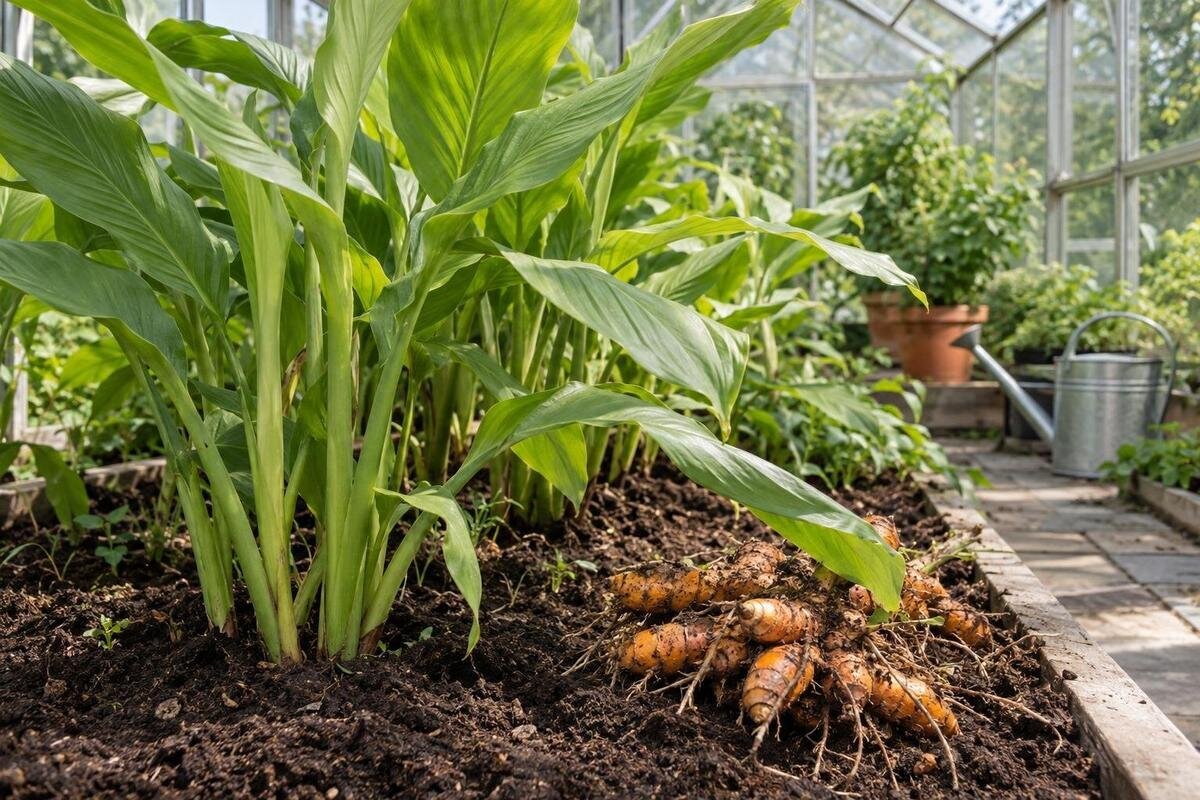
Greenhouse growing guide
Growing turmeric in a New Zealand greenhouse is possible, but it requires sustained warmth and a long growing season rather than a few weeks of winter protection. The rhizomes need months of warm root-zone conditions, a roomy container and steady moisture without waterlogging. A greenhouse can extend the useful season, but an unheated structure still gets cold at night and may overheat on sunny days. The key question is whether your site can keep the plant warm for long enough to build a worthwhile crop before autumn temperatures fall.

01
Turmeric needs months of warmth
Turmeric (Curcuma longa) is a tropical plant grown for its swollen underground rhizomes. It needs sustained warmth through leaf production and rhizome filling, not just a warm spell that triggers shoots. For active growth, keep both the air and potting mix warm; about 20–30°C is a useful broad guide, not a promise of a particular harvest. Cold roots slow development even when a sunny afternoon makes the greenhouse feel warm, while frost can damage foliage and rhizomes. Under consistently warm conditions, allow roughly eight to ten months from planting to mature rhizomes. Cooler spells, weak light or an early end to the season can delay or limit the crop, so think in months of active growth rather than days after a sprout appears.
In New Zealand, the main growth window is spring and summer, but the usable span varies with latitude, elevation, exposure and shelter. A mild coastal garden and a colder inland site cannot rely on the same calendar, and a greenhouse does not remove that difference after sunset. A plant can develop healthy leaves yet still have too little warm time to enlarge its rhizomes before autumn cools. If your season is short, trial one or two pots before planning a large harvest. Decide whether a modest fresh crop, or keeping sound planting pieces for next season, makes the space and energy worthwhile.
An unheated greenhouse has limits
An unheated greenhouse can reduce exposure to wind and rain and warm up quickly in sunshine, but it does not create heat. At night, the temperature can fall substantially; under strong sun, the same space can become hotter than the air outside. Neither peak alone tells you whether turmeric has had a suitable growing period. Place a min–max thermometer near the plant and pot, then note overnight lows as well as midday highs for several weeks. Potting mix, especially in a large container, warms and cools differently from the air. Use those readings to judge whether active growth is possible, rather than trusting how comfortable the greenhouse feels at lunchtime.
Site and footprint are part of that assessment. Choose a spot with useful sun and enough access to check, water and ventilate the plants; nearby shelter may change exposure, but do not assume a wall or greenhouse model will supply the warmth turmeric needs. The Lean-to Greenhouse is listed in sizes from 3.69 to 14.34 m², which helps compare footprints against the space available. That area range says nothing about overnight temperatures. Check the detailed plan for the selected size, and observe shade and cold-air exposure at the actual site before treating any model as a growing solution.
02
Time planting to suit potting mix temperatures
Use warmth, not a date on the calendar, as the planting signal. Rhizomes can be started indoors in late winter or early spring if you can keep them in a consistently warm place. Move them into their final greenhouse position only when the root zone is warm and nights are milder; in many areas that is late spring or early summer, but local conditions decide. In an unheated greenhouse, a warm day followed by cold nights can stall newly planted pieces. A thermometer placed in the potting mix gives a better guide than the air reading alone, while the forecast helps you avoid moving a tender plant too early.
Allow enough time after planting for foliage to grow through summer and the rhizomes to fill. If warmth arrives late, move the container to a warmer position rather than leaving it in a cold corner, or accept that harvest may be smaller. Your planting plan also affects how much greenhouse space you need: one container started indoors presents a different layout question from several large pots growing alongside other crops. For comparison, Limited Edition Aluminium Greenhouses are listed across 3.77 to 28.08 m². Compare the selected size with the space your plants will occupy through the season, including access between them. A larger growing area does not itself provide a longer warm season.
Start with healthy, budded rhizomes
Choose planting rhizomes that feel firm and plump and have visible buds, sometimes called eyes. Soft patches, mould or heavy shrivelling are poor signs. Rhizomes sold for planting by a trusted garden supplier are a sensible starting point; do not assume every culinary turmeric will sprout. A shop-bought piece may be old or damaged, so failure to establish does not by itself show that the greenhouse was unsuitable. Keep planting stock separate from any pieces that show signs of rot. Turmeric is usually propagated from rhizomes for a home crop, rather than raised from a seed packet, so the condition of the planting piece matters from the outset.
Plant a small rhizome whole, or divide a larger one only where each section has at least one clear bud. Let a cut surface dry before planting, as a fresh wound in cool, wet mix is prone to rotting. Set the bud uppermost and cover it shallowly, roughly 3–5 cm deep, in moist potting mix. Keep the container warm while shoots form; this can take several weeks. Until leaves appear, water sparingly so the dormant piece is not sitting in saturated compost. Once shoots are growing, increase watering gradually and check that the container drains freely.

03
Choose a broad, deep container
Turmeric rhizomes spread sideways as the plant develops, so a small herb pot quickly becomes restrictive. Choose a broad, deep container with drainage holes; as a practical starting point, about 30 cm across and deep gives one planting piece more room than a small pot. Use a larger vessel if you want to plant several pieces. This size is not a promise of yield: warmth, light and the length of active growth matter just as much. Avoid cramming rhizomes into a narrow pot, where they have less room to develop and moisture is harder to manage evenly. A container also makes it easier to move the crop away from cold conditions if needed.
Allow space around the pot for mature leaves, watering and access; the canopy can overhang and make a tightly packed bench awkward. Count the path and working clearance as well as the container footprint when comparing greenhouses. The T-Model Orangery Greenhouse has listed area options from 16.52 to 30 m². That is the stated floor-area range, not the area available solely for pots or benches once paths are included. Check the chosen layout against both the number of containers and their mature spread. Enough space to reach each pot is more useful than extra floor area that becomes inaccessible as the foliage develops.
Use free-draining mix and steady moisture
Use a loose, fertile potting mix that holds some moisture but drains freely. A quality container mix with mature compost or other well-rotted organic matter can support sustained growth, while dense garden soil may settle and stay wet in a pot. The aim is for excess water to pass through the drainage holes while the mix retains enough moisture for active leaves. A container without drainage is a poor choice. If you prepare your own blend, check how it behaves after watering; ingredients that seem open when dry can compact once repeatedly wet. Starting with fresh mix also avoids relying entirely on old, depleted potting media.
While leaves are growing, keep the mix evenly moist, not constantly waterlogged. Feel the top few centimetres and water thoroughly when they begin to dry, then let excess drain rather than leaving the pot sitting in a full saucer. Hot, sunny greenhouse weather can dry a container faster than outdoor conditions, so check more often during warm spells instead of following a rigid weekly schedule. Plan watering access before filling and positioning heavy pots. The Pyramid Greenhouse has listed floor-area options from 5.53 to 18.9 m²; compare the selected layout with the route your watering can or hose will need to reach each container. Leave enough room to check the mix and see whether water is draining.
04
Provide bright light and ventilation
Give turmeric bright light, with some protection from harsh midday heat if the greenhouse is in full sun. Deep shade reduces the energy available for leaf and rhizome growth; intense sun through a warm enclosure can scorch or wilt leaves, particularly after a plant has been raised indoors. Acclimatise it gradually to stronger light and check conditions at leaf height. In New Zealand the sun is generally to the north, but shade from trees, fences and buildings changes across the day and season. Observe the proposed growing position in late spring and through winter rather than assuming that a bright summer corner stays bright when the days are shorter.
Air movement matters as well as light. Manage ventilation on warm days before heat builds up, keep leaves from being pressed against neighbouring plants and avoid persistent damp, stagnant conditions. Humidity alone is not a reason to mist the foliage, and wet leaves with poor airflow can invite disease. Include storage features in the space plan rather than counting all the floor area as growing space: Limited Edition Aluminium Greenhouses with Storage are listed from 5.52 to 28.08 m². Check the layout for the chosen size to see how storage relates to accessible growing area, then make sure the turmeric still has room for light and airflow.
Feed and inspect plants during active growth
Feed only while the plant is actively growing. A balanced liquid fertiliser suitable for edible container crops can be used at the rate on its label; fresh potting mix and compost already supply some nutrients, so adding more is not automatically helpful. Avoid feeding a dormant, leafless pot, when the plant is not taking up nutrients at the same rate. Heavy doses are no shortcut to bigger rhizomes and can create problems in a confined pot. If leaves look pale or growth stalls, check temperature, drainage and watering before assuming the answer is more fertiliser. Consistent conditions are more useful than trying to make up for a short warm season with extra feed.
Check plants weekly for pests, damaged leaves and changes in the mix, especially after humid weather. Remove dead foliage, keep weeds out of the pot and make sure water can drain freely. These routine checks are easier when you can reach the whole plant rather than just the leaves nearest the path. The Prestige Greenhouse is listed in sizes from 3.77 to 28.08 m². When comparing a selected size with your crop plan, consider where you will stand to inspect leaves and tend the container. Avoid putting the turmeric behind other crops that will block access as they grow; a crowded layout makes small changes harder to notice.

05
Harvest at natural die-back and protect planting stock
Use the plant’s natural cycle to judge harvest. In warm conditions, expect around eight to ten months from planting, although cooler spells can delay maturity. As the plant approaches dormancy, foliage commonly yellows and dies back; that change, in its seasonal context, is more useful than a calendar date. If leaves yellow early during a cold or waterlogged spell, do not assume the rhizomes are fully developed. Gently open the mix at the pot’s edge to inspect one area if you are unsure, then cover it again if the crop needs longer. Harvesting too early can leave a smaller crop, so allow the plant time to finish if conditions permit.
Lift the clump carefully once the foliage has naturally died down and before frost threatens the container. Shake or brush off loose mix, then separate the rhizomes without cutting through sound pieces you want to keep. Set aside plump, firm sections with buds for next season and store them in a cool, dry, frost-free place. Inspect them occasionally, as damp pieces can rot. If turmeric is part of a larger crop collection, plan where containers will go after harvest as well as where they will grow in summer. The Spacious Greenhouse has listed areas from 47 to 70 m², offering a footprint comparison for larger growing plans. Its area alone does not establish whether it will provide a warm enough overwintering space.
Decide whether extra heating is worthwhile
Heating becomes relevant if measured night and root-zone temperatures leave too little warm time for a full season. Before choosing it, record typical lows and highs over several weeks and decide whether you want to support one movable pot or maintain warmth throughout a greenhouse. Keeping a larger space warm can require more energy than warming a smaller protected area, although demand depends on the structure, weather and temperatures you are trying to maintain; there is no reliable universal cost figure. If extra heating is needed, factor in suitable equipment and seek qualified advice for any electrical work rather than improvising. If you cannot maintain warmth, a seasonal trial may be more sensible.
Do not treat catalogue size or a model name as proof of insulation, an included heating system or suitability for a tropical crop. For example, Aluminium Greenhouses are listed with area options from 3.77 to 28.08 m². Use the specifications for the exact size you are considering alongside your site readings, intended pot layout, ventilation needs and heating plan. The area range cannot predict night temperatures or the energy needed to maintain warmth. This is the final distinction to make when buying for turmeric: a greenhouse may accommodate the containers comfortably without providing the long warm season the crop needs.
Frequently asked questions
Can turmeric grow in an unheated greenhouse in New Zealand?
It can succeed where the warm season is long, but an unheated greenhouse is not reliably warm overnight. Check temperatures beside the pot, including overnight lows. If the mix stays cool for much of the season, expect slow growth and a smaller harvest.
When should I plant turmeric in New Zealand?
Start rhizomes indoors in late winter or spring only if you can keep them warm. Move them to their final container when the potting mix is warm and cold nights have eased—often in late spring or early summer, depending on your site.
How long does turmeric take to mature?
Allow roughly eight to ten months in consistently warm conditions. Cooler weather can extend the growing period, and a short season may limit rhizome size. Natural yellowing and die-back of the foliage can help indicate that the plant is nearing dormancy.
What size container does turmeric need?
Choose a broad, deep container with drainage holes. Around 30 cm across and deep is a practical starting point for one planting piece; use a larger pot for several pieces. That size is not a guarantee of yield.
Can turmeric stay in its pot over winter?
Only leave it where the pot can be kept free from frost. After the foliage dies back, reduce watering and avoid leaving the mix wet. If your greenhouse gets cold, move the pot to a protected place or lift healthy rhizomes for storage.
Turmeric is most viable in a New Zealand greenhouse when you can provide a long, warm season in a spacious, well-drained container. Start with a few healthy rhizomes, measure conditions where the pot will actually sit and let the plant’s gradual die-back guide harvest. A greenhouse may extend the season, but it is not tropical by default. If cold nights dominate or heating is impractical, adjust expectations and treat the crop as a trial rather than counting on a large harvest.
