
Overwintering Olive Trees in a Greenhouse
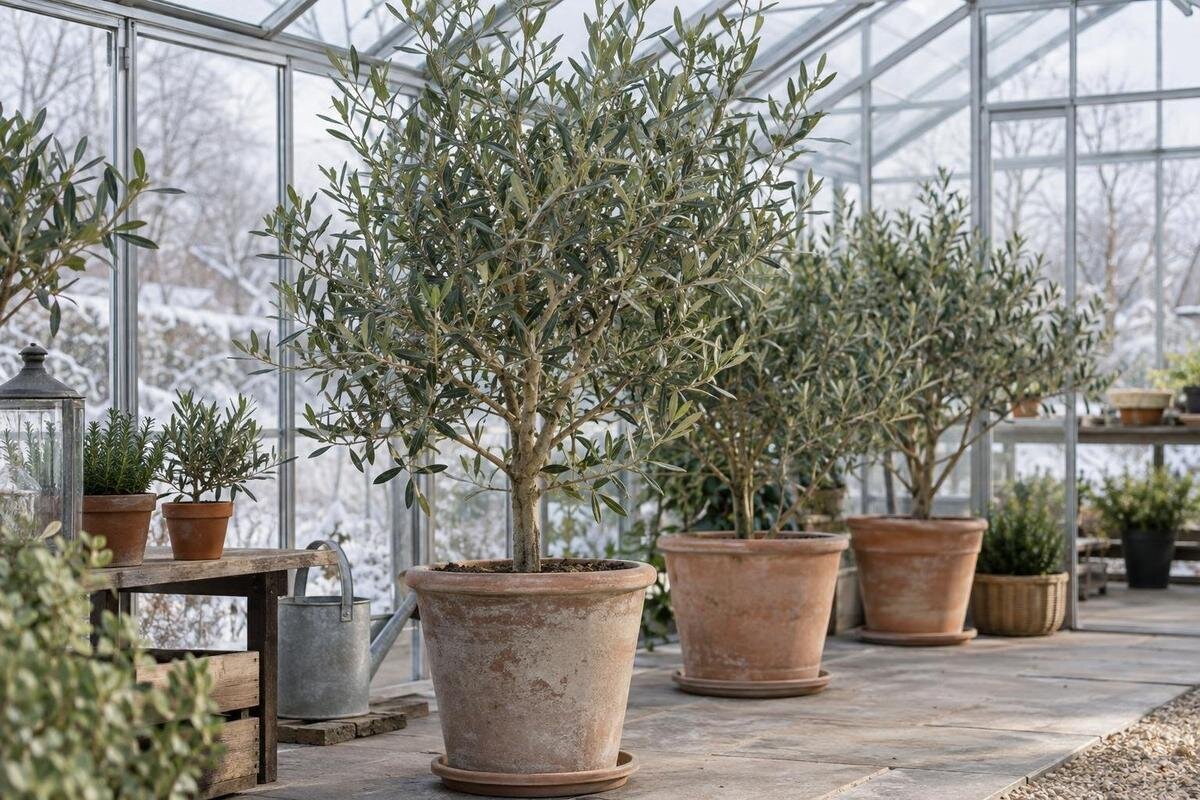
Winter care for potted olives
A potted olive can spend winter under greenhouse cover, but shelter alone does not guarantee suitable temperatures or enough light. The result depends on the tree’s cultivar and condition, the cold it is accustomed to, the greenhouse site and how it is managed. A sound routine combines bright winter conditions, a protected but well-drained root ball, measured watering and ventilation on mild sunny days. This guide focuses on those decisions without treating any one temperature as safe for every olive.

01
Winter temperatures in an unheated greenhouse
An unheated greenhouse can reduce direct exposure to wind and rain, and sunlight may warm it during the day. It does not provide a dependable overnight minimum: heat can escape, and temperatures vary with cloud, wind, site exposure, the structure, glazing, leaks and whether openings are left open. A cold night can still stress an olive under cover. There is no single safe minimum for every olive; cultivar, age, health, acclimatisation, length of exposure and conditions around the container all matter. A recently potted tree, for example, may respond differently from an established tree already acclimatised to cool conditions.
Measure conditions rather than guessing from the outdoor forecast or the warmth you feel at midday. Place a min/max thermometer at canopy height, out of direct sun and away from glazing; record night lows and daytime highs across several types of weather. If practical, take a second air reading near the pot to see whether the lower part of the greenhouse behaves differently, remembering that air temperature does not measure the potting mix. Repeat after changing ventilation or moving the tree, and compare the results with reliable advice for the specific cultivar before a cold spell. A sunny midday reading alone does not show what the tree experiences overnight.
Measure the olive before choosing a greenhouse
Measure from the floor to the tallest shoot, and record the canopy’s widest span in more than one direction as well as the pot’s width, including its rim and handles. Allow for growth rather than squeezing the tree between panes or shelves. Check the doorway, turning space and route from outside; a tree that fits once inside may be hard to move through the entrance if its pot is heavy or branches catch. Leave room to inspect both sides of the canopy and water without brushing leaves against the frame. If you use a trolley, include its width and turning space in the plan.
Catalogue area is only a starting point. The Classic aluminium greenhouse range lists sizes from 3.77 m² to 28.08 m², but total floor area does not tell you the clear height, door opening or unobstructed space for a tree. Check the drawing and specification for the exact size you are considering, then compare those clearances with the measured crown and pot. Include a path to the tree, space for a pot wrap and room to reach the selected vents. A larger floor area does not necessarily solve a low roof or a narrow entrance.
02
Choose a bright winter position
Olive trees are evergreen, so their foliage remains through winter and benefits from bright natural light. A greenhouse can shelter a tree, but it does not make a shaded position bright. Check nearby trees, fences, sheds, boundary walls and house eaves; as the sun tracks lower, their shadows can cover a site that was sunny in summer. A row of taller pots can create the same problem inside. Light at the canopy matters, not just whether the roof receives sun.
Assess the actual position during the cooler part of the year if possible. Note when direct light reaches the canopy and whether a neighbouring building shades it for much of the day; a brief patch of sunshine may not mean the spot stays bright. Leave gaps between the olive and other plants so the crown is not crowded. A Lean-to greenhouse is listed in sizes from 3.69 m² to 14.34 m². When reviewing any wall-mounted layout, consider the wall’s shadow as well as the footprint, and verify clear height and the placement of openings in the selected configuration.
Insulate the pot and protect the root zone
In a garden bed, surrounding soil buffers roots from rapid changes; in a container, potting mix is exposed around the sides and can cool more quickly. A greenhouse may keep rain and wind off, but it does not make the root ball warm. Wrap the sides of the pot with suitable insulating material or place it in a more sheltered part of the greenhouse. Keep drainage holes open, and do not wrap so tightly that water is trapped around the base or the mix stays saturated. Protecting the container is usually more practical than covering an evergreen crown, which still needs light and air.
Make sure the pot remains stable and accessible after adding protection; a loose wrap can hide blocked drainage or make checks harder. Account for the extra width of a wrapped container and the space needed to reach beneath it. The Limited Edition aluminium greenhouse range includes listed sizes from 3.77 m² to 28.08 m². On the layout plan, allow room for the protected pot without narrowing the path or crowding neighbouring plants. Choose a position where you can inspect the wrap and drainage without moving the tree each time. Keep it clear of cold draughts where practicable, while allowing fresh air into the enclosure.

03
Water by checking the potting mix
Watering is often the winter task most easily overdone. With shorter days and slower growth, potting mix can stay damp longer than in summer, especially in a cool, poorly lit greenhouse. Check below the surface near the root ball instead of following a weekly schedule. When the upper part has begun to dry, water enough to moisten the mix, then let excess drain freely. A dry surface can be misleading if the mix is still damp lower down, so check a little beneath it. The aim is neither a permanently wet pot nor a completely dried-out root ball; the interval depends on pot size, mix, temperature, light and the tree’s condition.
Check the saucer or tray after watering and empty standing water; make sure the pot is not sitting where runoff blocks its holes. Water earlier in the day when possible, and avoid splashing foliage unnecessarily. If leaves yellow or fall, do not respond by adding water automatically: check both moisture and drainage first, then consider light, temperature and visible pests. The T-Model Orangery Greenhouse listing gives sizes from 16.52 m² to 30 m². If comparing it, use the layout and access details to confirm the olive can be reached for watering and drainage checks.
Ventilate when the greenhouse warms
Ventilation matters even when the air outside feels cool. On a sunny day, a closed greenhouse may warm quickly, while humid air and wet foliage can linger where there is little air exchange. Monitor the temperature through the bright part of the day and use available openings when conditions allow. Reduce ventilation if it would expose the olive to an unsuitable cold draught. Do not judge by how the doorway feels alone: the air around the crown can differ from the outdoor air and change sharply as cloud passes.
Before buying, check which vents or doors the exact configuration includes, where they sit in relation to the tree and whether they can be operated easily in winter. The Oasis Pyramid greenhouse is listed in sizes from 5.53 m² to 18.9 m². Compare the ventilation specification with your proposed layout: the olive should not obstruct an opening or prevent you from reaching its controls. Include neighbouring plants and staging in this check, rather than planning around an empty greenhouse. Leave space around the crown for air movement, and make sure routine ventilation will not require shifting a heavy pot.
04
Keep storage clear of the olive and the vents
Keep the greenhouse usable for plant care, not just storage. Crowded pots and stacked materials can shade the olive, block openings or make it harder to see fallen leaves and pests. Give other plants room for their canopies, and keep items out of the route to the door and vents. Plants packed close together can also slow air movement and make changes to individual trees harder to notice. If you are sheltering more than one tree, draw their positions on a plan and include mature canopy widths, not just pot diameters.
If a built-in storage option is on your shortlist, check what the selected plan reserves for storage and how that affects light, access and airflow around the plants. The Limited Edition greenhouse with built-in storage is listed from 5.52 m² to 28.08 m²; the range figure alone does not say how much growing area remains in a particular layout. Compare the exact configuration, and avoid putting stored tools or containers in front of an opening or beside the olive where they obstruct inspection.
Inspect leaves, stems and potting mix
Inspect the olive regularly, especially after a spell of damp, still weather or a sudden temperature change. Look for new leaf yellowing or drop, spots, sticky residue, fine webbing, damaged shoots and changes in the potting mix’s smell or drainage. These signs have several possible causes; note whether they affect one branch or the whole canopy, and check moisture, light, temperature and visible insects before changing care. Look beneath leaves and around stems as well as across the top of the canopy. Remove fallen leaves and debris from the pot surface and nearby floor so changes are easier to spot.
Give yourself a clear view of the canopy rather than positioning the tree behind staging or other plants. If comparing the Prestige greenhouse with metal foundation, the listing gives sizes from 3.77 m² to 28.08 m². Use the internal layout to plan inspection access on both sides of the tree, including room to reach leaf undersides and look along the stems. Consider whether you can see the pot surface and remove fallen leaves without squeezing between containers. A layout that allows these small tasks to be done easily makes regular checks more manageable throughout winter.

05
Moving the olive under cover and back outdoors
Prepare for winter before the weather becomes severe. Check the tree for pests and damaged branches, confirm that the potting mix drains freely, and make sure the greenhouse is ready for routine ventilation. If the olive has been outdoors, moving it under cover changes its light and airflow; observe it closely rather than assuming the move itself solves winter stress. As spring brings brighter, warmer spells, increase ventilation when needed and avoid leaving the space shut for long sunny periods. If the tree is to go back outdoors, allow a gradual transition instead of shifting it abruptly between contrasting conditions.
Choose the size for the number and mature size of plants you plan to shelter, plus the access you will actually use. The Spacious Greenhouse listing covers 47 to 70 m². If comparing a larger model for several plants or other uses, mark the olive’s winter position on the plan alongside the other plants and equipment. Keep its route to the door clear so moving it outdoors in spring does not require rearranging the whole greenhouse. Check that its canopy will not be shaded by taller plants and that you can still reach the openings needed for ventilation as the weather warms.
Build a simple winter care routine
Use a simple routine through the colder months. Check the overnight minimum and daytime high, look at the forecast before a cold spell, assess moisture before watering and note whether sunshine has warmed the greenhouse enough to need ventilation. Recheck the pot insulation after watering or moving the container, because wraps can shift and drainage holes can become hidden. Keep brief notes on the date, readings, watering and visible leaf changes. Recording whether openings were in use can help distinguish a response to one unusual day from a recurring pattern.
Use your notes to review the olive’s position and care as winter progresses. If the same leaf changes recur, compare their timing with watering, overnight lows and periods when the greenhouse stayed closed. Record the cultivar if known and keep its plant-care guidance alongside your observations, so you are not relying on a general temperature figure. For the first winter, regular checks help establish how conditions vary at your site; later, those records give you a useful comparison when the weather changes. The aim is a bright, manageable shelter and a routine suited to your tree, not constant warmth.
Common questions
Can an olive tree stay in an unheated greenhouse over winter?
Often, but an unheated greenhouse is shelter, not a guaranteed frost-free space. Suitability depends on the olive’s cultivar and condition, how well it is acclimatised, protection around the pot and the actual overnight lows at your site. Measure conditions near the tree and compare them with reliable guidance for that cultivar rather than relying on a generic minimum temperature for olives.
What is the lowest temperature an olive tree can tolerate?
There is no single safe figure for every potted olive. Cultivar, age, health, previous conditions, length of cold exposure and the protection around the roots all affect how a tree responds. Ask a reputable nursery or consult a reliable horticultural reference for cultivar-specific guidance, then compare it with temperatures measured where the tree is kept.
How often should I water an olive tree in winter?
Avoid a fixed weekly schedule. Check the potting mix below the surface and water when the upper part has begun to dry, then let excess water drain freely. Cooler temperatures and lower light can slow drying, but the interval also depends on the pot, mix and tree. If leaves drop or yellow, check moisture and drainage before adding more water.
Should I wrap the whole olive tree for winter?
Protect the pot and root ball first. An insulating wrap around the sides of the container can help limit exposure, provided it does not block drainage or trap water at the base. Covering the whole tree as a routine can restrict light and airflow. If temporary canopy protection is needed for a particular cold spell, follow advice for the cultivar and check that the covering is not holding dampness against the foliage.
Why is my olive tree dropping leaves inside the greenhouse?
Leaf drop can follow a change in light, temperature or watering, but it can also have other causes, including pests. Note when it began and whether it affects one branch or the whole canopy. Check the potting mix and drainage, record temperatures, and inspect the leaves and stems for visible signs of pests. Avoid reacting by automatically watering more or shutting the greenhouse; adjust care only after checking the conditions.
Good winter care comes from understanding the conditions around your own tree: how bright its position stays, how quickly the greenhouse warms in sunshine and cools overnight, whether the container drains well, and how easily you can provide fresh air. Keep a record of those observations alongside reliable guidance for the cultivar. A greenhouse can provide useful shelter for a potted olive, while regular checks help you respond to the tree and the weather rather than assuming that being under cover is enough.
