
Small Greenhouse Cucumbers Yellowing Too Soon
CUCUMBER CROP TROUBLESHOOTING
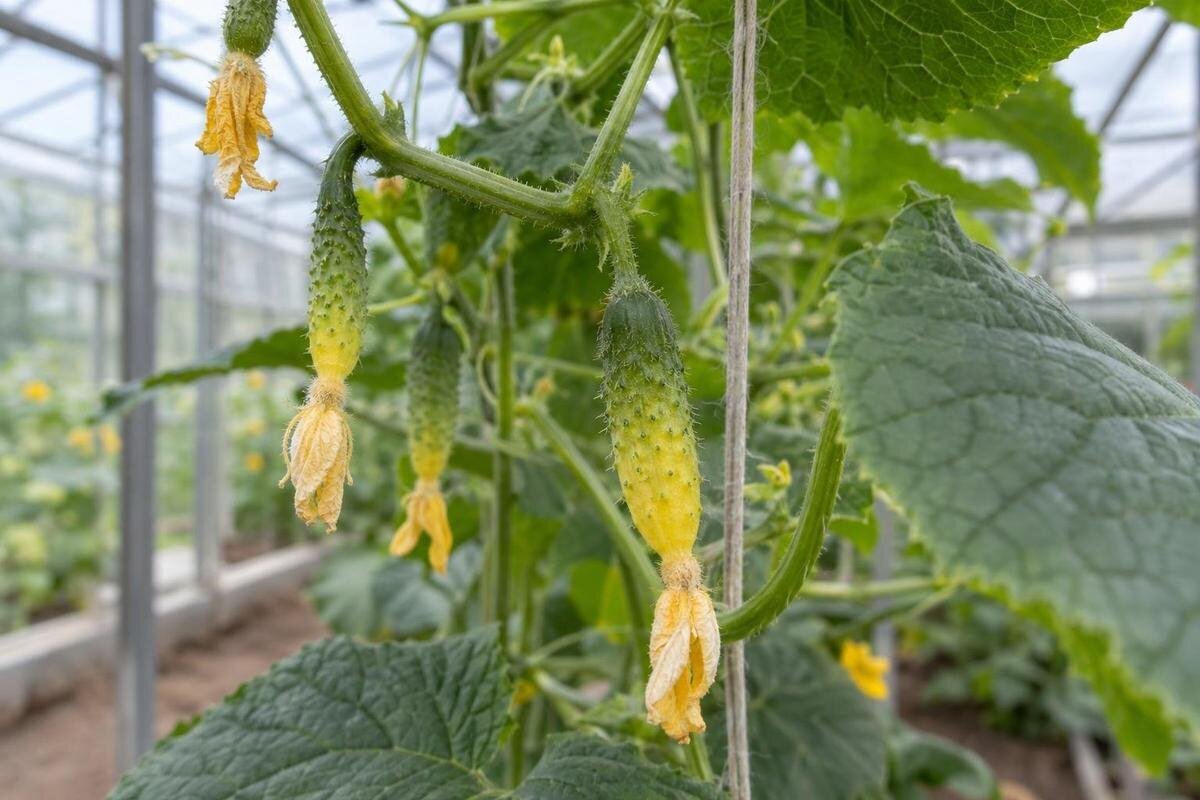
Greenhouse cucumbers that turn yellow while still small have often stopped developing: the young fruit began to grow, then stalled. That points first to fruit set and crop stress rather than to a yellow-leaf problem. Pollination requirements vary between cucumber cultivars, and a heavy fruit load, uneven root moisture, temperature swings or low light can produce a similar result. The pattern across the vine—and the seed packet—gives more useful evidence than one yellow fruit.

What a small yellow cucumber can mean
A small cucumber that stops lengthening, turns pale or yellow, then shrivels or drops is often an aborted fruit. The flower has started fruit development, but the plant has not carried it through to harvest. That is different from yellowing leaves and is not, by itself, evidence of a nutrient shortage. A cucumber that reached its expected size before yellowing may instead be overmature or have stayed on the vine too long. Check the cultivar, too: a few types are yellow when ripe, while many greenhouse cucumbers are harvested green. Note the fruit’s size and whether it stopped growing; colour on its own is a weak clue.
Look at the flower and fruit together. A female flower has a small ovary behind the petals that looks like a miniature cucumber; if it swells and then stops, fruit retention is worth investigating. Male flowers have no ovary and do not form cucumbers, so a fallen male flower is not an aborted fruit. Check several nodes and plants: one stalled fruit may not indicate a crop-wide problem, while multiple young fruitlets yellowing at a similar stage deserve attention. Take a dated close-up and a whole-vine photograph before removing anything. These images help show the pattern and any change over time, but cannot identify the cause on their own.
Check the variety’s pollination needs
Pollination depends on cultivar, so growing in a greenhouse does not tell you whether bees are needed. Some cucumbers require pollen transfer to set fruit; many greenhouse types are parthenocarpic, meaning they form fruit without fertilisation. Check the seed packet, nursery label or supplier’s cultivar description for wording such as “parthenocarpic”, “pollination required” or “protected growing”. Female flowers have the tiny ovary; male flowers provide pollen but do not have a small cucumber behind the bloom. Some cultivars produce both flower types, while others are predominantly female, so counting blooms alone cannot diagnose a failure.
For a pollination-dependent variety, limited insect access or poor pollen transfer while flowers are open can leave fruitlets undeveloped. If the variety is parthenocarpic, lack of bees is not the cause; adding pollinators or hand-pollinating without checking the label is not a safe default. In some cultivars, pollination can result in seeded or misshapen fruit. Compare the stated requirements with the flowers and with the timing of fruit loss. If the label is missing, ask the seed supplier or a local horticultural adviser to identify the cultivar before changing how flowers are managed. Male flowers alone do not prove that a variety needs pollination.
Compare fruit load with plant growth
A cucumber vine must support its leaves, stems and every developing fruit. If a young or slowed plant sets several fruits at once, it may not retain all of them; later fruit can stall while larger ones continue growing. A heavy mix of near-mature and newly set fruit is one clue to crop load, especially when leaf growth has slowed. It is not proof: weak light, root stress and pollination problems can create a similar pattern. Compare plants of the same cultivar and note whether the more vigorous vines carry fruit further. Check whether stalled fruit are concentrated on plants with the greatest load, rather than relying only on the total number of cucumbers.
Harvest at the cultivar’s recommended stage rather than leaving mature fruit well beyond it; overmature fruit can turn yellow, and regular picking makes it easier to see whether new ovaries are enlarging. Record the number and sizes of developing fruit before removing anything. Do not strip healthy flowers or young cucumbers as a precaution: some fruit fail naturally, and blanket thinning hides the cause. For future spacing, plan trellis positions and paths as well as bed footprint. The Classic greenhouse size options range from 3.77 to 28.08 m². Sketch where the vines would stand and where you would reach them to pick fruit. This distinguishes usable cucumber row space from the total floor area and lets you compare layouts without assuming a larger footprint will resolve crop-load problems.
Check moisture around the roots
Fruit growth can falter when roots alternate between very dry and saturated conditions. A dry root zone restricts water uptake; persistently wet, poorly drained soil or potting mix can also impair root function. The surface may look dry while the deeper roots are still moist, so check below the surface where roots are active instead of watering by appearance alone. Containers, raised beds and in-ground beds dry at different rates, and sunny weather can change that rate quickly. There is no single watering interval for every greenhouse, container size, growing medium or plant. Aim for reasonably even moisture without waterlogging, and avoid using one plant’s watering schedule as a rule for the whole crop.
Look for a pattern: wilting after a dry spell, uneven growth in containers, or water remaining around roots after irrigation may justify checking moisture and drainage, but none confirms one cause. Restore steadier moisture according to the growing medium rather than letting it dry out and then giving it a large rescue watering. Note watering, weather and the next flowers, and avoid changing fertiliser at the same time. If planning a future setup, the Lean-to Greenhouse range is listed from 3.69 to 14.34 m². Trace how you would reach every bed or container from a water point, including those behind mature vines. Identify any places where checking the growing medium would be awkward. Comparing that access on a layout plan is more useful for watering than comparing floor areas alone.

Look for heat, cold and low-light periods
Temperature swings can interfere with flowering and the steady growth of young fruit. A greenhouse may heat rapidly in direct sun, while a cool night or sudden change in weather adds a different stress; extremes can also affect pollen and flower function. Low light over several dull days, shade from trees or a crowded canopy can limit the energy available for fruit growth. These conditions often overlap: a heavily loaded plant has less margin when light drops or root moisture is uneven. One yellow cucumber cannot tell you which factor mattered, so compare the timing of symptoms with the weather and conditions inside the greenhouse.
A minimum–maximum thermometer placed near the crop, out of direct sun, can reveal swings that a single midday reading misses. Connect its readings with the dates flowers opened and young fruit began to yellow, and note whether shaded plants or one end of the greenhouse are affected more often. Use available ventilation and shading in response to actual conditions rather than assuming one setting works through every change in weather. If comparing a future structure, the Limited Edition aluminium greenhouse listing covers 3.77 to 28.08 m². Use your observations to identify what you need to assess at the proposed site: nearby shade, the intended crop position and the opening arrangements. The area figure helps with a floor plan, but does not describe the light or ventilation your cucumbers would receive.
Don’t diagnose a nutrient problem from fruit colour alone
Yellow fruit alone does not diagnose a nutrient shortage. A vine with healthy foliage can lose young fruit because of pollination, water or temperature stress, while weak growth and several discoloured leaves may point to roots, nutrition or another plant-health issue. Too much nitrogen can favour leafy growth over balanced fruiting, and excess fertiliser can build up around roots; feeding more without evidence may worsen the problem. Follow the fertiliser label and the needs of the growing medium instead of applying a general “fruiting” remedy. Avoid combining several new products at once, as that makes both the symptoms and the response harder to interpret.
Compare new and older leaves, shoot growth, root-zone moisture and feeding history. A nutrient problem tends to have wider effects on growth or foliage than one isolated young cucumber, but visual patterns overlap and cannot replace an appropriate soil or growing-medium test. If poor set repeats after moisture and cultivar needs have been checked, investigate the medium before making a targeted correction. For a future bed layout, the T-Model Orangery Greenhouse listing gives options from 16.52 to 30 m². Mark which areas would contain in-ground beds, raised beds or containers, and record the medium and feeding plan for each. This keeps decisions about the structure separate from decisions about nutrition: floor area does not establish root-zone depth, drainage or nutrient status.
When yellowing may point to a wider plant problem
If young fruit yellow alongside spotted, mottled or distorted leaves, damaged shoots, fruit lesions or signs of pests, consider a wider plant-health issue rather than assuming simple fruit abortion. Such signs can have different causes and may look alike; colour patterns alone are not enough to name a virus, fungus, bacterium or pest. Note where the mark appears—on the skin, at the flower end or across the fruit—and whether it is spreading. A single oddly shaped cucumber on an otherwise vigorous vine is weaker evidence of a spreading problem than similar symptoms appearing on several plants.
Photograph the whole plant and close views of affected fruit and both sides of leaves, recording the cultivar and date. Keep an image from before removing damaged material so the progression can be compared. If symptoms spread between plants, new growth becomes distorted or fruit develops lesions or soft decay, seek advice from someone qualified in horticulture and share the photos and seed-packet details. When considering a new layout, the Pyramid Greenhouse listing gives area options from 5.53 to 18.9 m². Plan where you would stand to inspect each vine, including its lower leaves and fruit hidden behind foliage. Check the proposed bed and path arrangement rather than judging inspection access from the overall area or a product photograph.
Keep a short record and change one factor at a time
For each affected plant, note the cultivar, when flowers open, the number and size of young fruit, harvests, leaf condition, watering and any recent fertiliser. Add temperature readings if available and note unusually dull, hot or cold spells. Take photos from the same angle so you can judge whether fruit is enlarging. A notebook and plant labels are enough; a complex spreadsheet is not necessary. Include unaffected plants as a comparison. The record can show whether the problem follows one cultivar, one bed or a particular spell of weather, which is more useful than trying to remember conditions after the fruit has changed.
Where practical, change one plausible factor at a time. If the label identifies a pollination-dependent cultivar, investigate pollen transfer; if moisture varies sharply, address that; if fruit is being left overmature, improve harvest regularity. Then watch the next set of flowers instead of expecting already yellow, stalled fruit to recover. Write down what changed and when, so a later improvement is not automatically attributed to the most recent adjustment. If storage is part of a future greenhouse plan, the Limited Edition greenhouse with storage listing covers 5.52 to 28.08 m². Mark the storage area separately from beds and paths when comparing layouts. Include space to reach stored items without obstructing the route you use for watering, harvesting and checking plants.

Review greenhouse layout if the problem keeps returning
If the problem recurs across different vines, review the greenhouse as a growing environment rather than searching for one universal cucumber setting. Note where plants receive sun, whether foliage is crowded, where air can move, and how ventilation is used during warm conditions. Check whether every bed is reachable for watering, picking and inspection. Observe light and shade at different times rather than basing a decision on one visit. Orientation, nearby trees, plant spacing and ventilation interact, so a change that helps one part of the greenhouse may not solve the conditions affecting another.
Keep the crop diagnosis separate from a buying decision: a new greenhouse is not a treatment for aborted fruit. If comparing structures, consider the site, usable beds, paths and opening arrangements against your actual crop plan, and confirm product details before choosing. The Prestige Greenhouse listing shows area options from 3.77 to 28.08 m². Put the intended beds, mature vines and access paths on the same plan, rather than comparing empty floor space. Note which shortcomings of the current layout you are trying to address and whether a different planting arrangement could address them first. The stated area alone does not establish ventilation, light or suitability for a particular site.
Plan the next cucumber crop around the variety
For the next planting, choose a cultivar whose pollination behaviour suits a protected setting and follow its supplier’s spacing and harvest guidance. Plan plant numbers around bed space, root volume and support arrangements, leaving access to reach the vines for routine checks. A spacious greenhouse can still be overplanted if trellis space, light and air movement are ignored; a compact plan can be manageable if fruit is visible and watering access is even. Use the cultivar’s stated growing requirements rather than treating one cucumber rule as suitable for every variety.
Before replacing or expanding a structure, use this season’s notes to identify what actually happened: were failures linked to particular weather, beds or cultivars, and could the layout be adjusted? Separate changes to the crop plan from changes to the building. For example, choosing a cultivar with known pollination requirements is a different decision from making a bed easier to reach. Carry those specific lessons into the next planting rather than redesigning everything around one failed fruit. The Spacious Greenhouse range lists area choices from 47 to 70 m². Consider how much of that space your planned crop would use and how you would manage the beds. Treat the area as one part of a site and crop plan, not a promise of more fruit; space, variety and growing conditions all affect how well a cucumber crop develops.
Frequently asked questions
How can I tell whether a small cucumber is aborted or simply not ready?
Watch whether it continues to enlarge over several observations. A fruit that stops growing, turns yellow and shrivels is often aborted; one that is still firm and enlarging may simply be young. Check the cultivar’s expected harvest stage and colour as well.
Do all greenhouse cucumbers need bees?
No. Pollination requirements depend on the cultivar. Some cucumbers need pollen transfer, while parthenocarpic types can form fruit without fertilisation. Check the seed packet or supplier’s description before trying to attract pollinators or hand-pollinate.
Can a heavy crop load make new cucumbers turn yellow?
It can contribute. A vine carrying many fruits may not retain every young one, particularly if its growth has slowed. Compare fruit load, leaf growth and conditions across several plants; heavy cropping is a clue, not a diagnosis on its own.
Should I add fertiliser when baby cucumbers turn yellow?
Not on colour alone. Pollination, moisture, temperature, light and crop load can all affect young fruit. Extra fertiliser may worsen root stress if the problem is elsewhere. Review the growing medium and feeding history before making a targeted change.
Will a yellow cucumber recover?
A fruit that has stopped growing and is already shrivelling is unlikely to become a normal harvest. A cucumber that is still enlarging is worth watching. Once a fruit has clearly failed, focus on the conditions affecting the next flowers and fruit.
Treat a yellowing baby cucumber as a clue, not a diagnosis. Confirm what the cultivar needs, compare affected fruit with the rest of the vine, and relate the timing to crop load, moisture, temperature and light. Once a fruit has stalled and shrivelled, the useful test is whether the next flowers develop under steadier, suitable conditions.
