
How to Buy a Greenhouse for a Coastal Garden: Materials and Maintenance
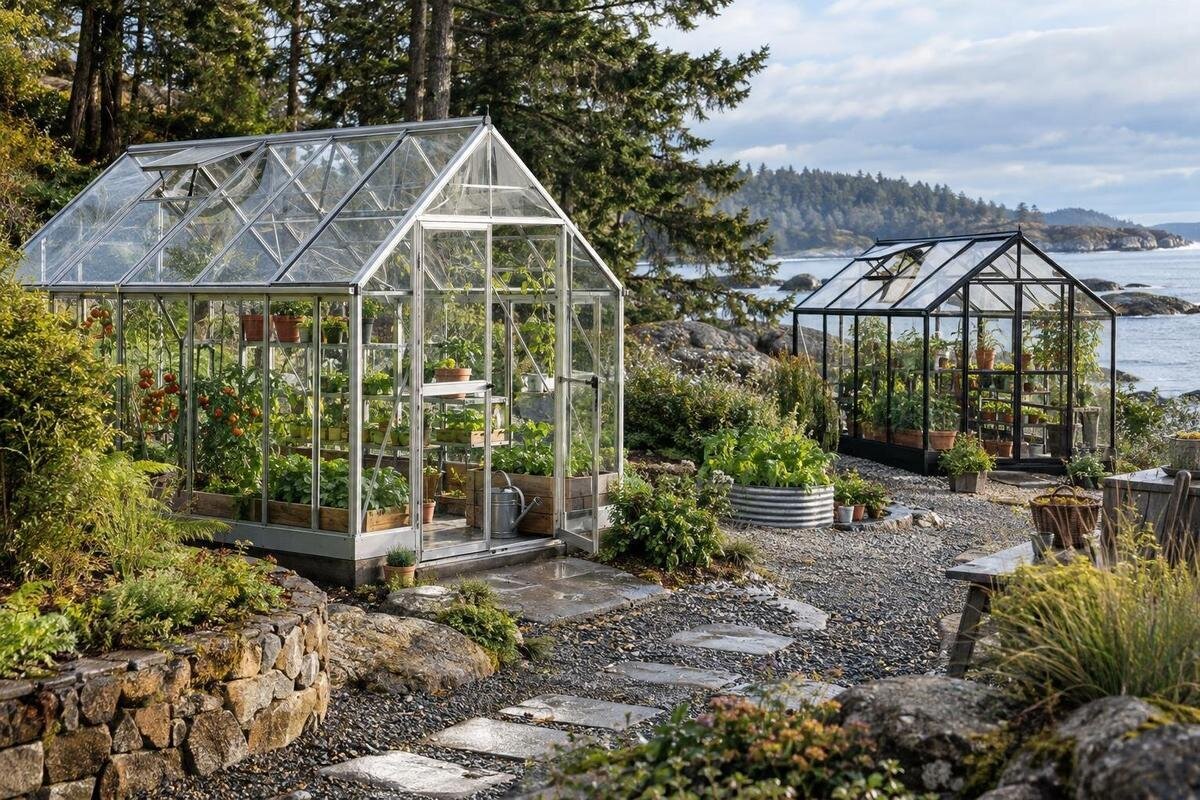
GREENHOUSE BUYING GUIDE
When you buy a greenhouse for a coastal garden, choosing a frame described as metal or a shape that looks sheltered is only a starting point. Salt carried in spray and wind can reach finishes and fittings, while gusts, rain, damp ground and airborne grit create separate demands. A useful comparison begins at the proposed site and continues through frame details, fasteners, panels, installation requirements and care instructions. This guide explains which product information to request, what a product name cannot establish, and how to assess the maintenance involved before ordering.
Assess salt exposure at the exact site
Coastal conditions vary from one yard to the next. A greenhouse exposed to open water or direct spray may collect more salt than one screened by terrain or buildings, but distance alone is not a dependable measure. Wind direction, storm paths, elevation, nearby structures and garden drainage all matter. Before browsing, identify whether the proposed spot gets salt-laden spray, strong gusts, wind-driven rain, standing water or airborne sand. Each exposure leads to a different buying question: salt points to corrosion and cleaning details; wind calls for design and anchoring documents; poor drainage affects site preparation.
Observe the exact footprint in different weather and, where possible, after a storm. Note where salt residue appears on nearby surfaces, how water moves across the ground, which direction gusts reach the site from and what shelter nearby features actually provide. Do not assume a hedge, fence or building makes a greenhouse safe in high winds; barriers can alter local wind flow, and product-specific design information and suitable installation are needed to assess fit. Keep these observations as questions for the seller and installer. A simple site sketch and photographs can make the discussion more precise than a broad label such as coastal.
Compare frame materials and protective finishes
Frame material is only the starting point. Aluminum, steel and treated wood have different corrosion, decay and upkeep considerations, and the finish can matter as much as the base material. Salt and moisture can attack vulnerable coatings and hardware. Aluminum does not form iron rust, but it is not immune to corrosion, particularly where a finish is damaged or moisture and deposits collect at joints. Descriptions such as coated steel, galvanized steel or treated wood need exact details. The aluminum classic greenhouse listing is a listing to research, not proof of its alloy, coating or coastal suitability.
Request written maintenance instructions for the frame and finish: approved washing methods, cleaners to avoid, how to handle scratches and how often the manufacturer recommends inspection. Clarify whether the stated finish covers cut edges, drilled areas, welds, doors and accessory parts, or only the main visible profiles. Ask which claims apply to salt-air exposure and whether there is a defined exposure limit or test condition. Broad descriptions such as weather-resistant are not proof of suitability for every shoreline. If materials differ across components, request a list of what is used where. Clear answers help you judge whether routine care is realistic for your site and schedule.
Inspect fasteners and joints for coastal exposure
Small connections can determine where a structure needs cleaning and eventual repair. Hinges, screws, brackets, door tracks, roof clips and panel retainers may use different metals or finishes from the main frame, and salt residue can collect where surfaces meet. Ask for the fastener material and corrosion protection, how contact between unlike metals is addressed, and whether fasteners can be replaced without damaging adjacent parts. Do not infer hardware quality from the frame name or a product photograph. For a listing such as the aluminum limited edition greenhouse listing, request specifications for the exact configuration you would order, including hardware that may be supplied separately.
Look for an assembly manual or parts list that identifies connection points and replacement components. Find out how the manufacturer expects those areas to be inspected and cleaned, and what to do if a coating is scratched or a fastener shows corrosion. Ask how to reach joints for routine checks and whether replacement parts are identified by model or configuration. Confirm that any replacement fasteners are approved for the assembly; improvised substitutions can create compatibility or structural problems. These details help you plan care and repairs, not just the initial assembly, and make it easier to compare two products whose frame materials sound similar.
Verify wind performance and anchoring requirements
Wind and salt are separate checks. A greenhouse made with materials described as corrosion resistant could still lack documented performance for the gusts or exposure at your site. Request the product's wind-performance information, the design or test conditions behind it, and the exact configuration those details cover. The frame, glazing, doors, vents and accessories can affect what is evaluated. A listing titled the aluminum lean-to greenhouse listing does not establish its wind rating, wall-attachment details or anchor requirements. Compare documentation for the complete installed assembly rather than relying on the product name or a general claim.
Ask which foundation and anchoring method the manufacturer approves, what site conditions must be met, and whether installation needs a qualified local professional. The suitable approach depends on the ground, exposure, structure and design, so general advice or online rules of thumb should not replace the product instructions and a site-specific assessment. Check that doors and vents have secure closing arrangements for the documented use, and ask which accessories are included. If applicable information is missing, treat that as an unresolved buying question, not as evidence that the greenhouse can manage a storm. A qualified installer can help assess the site without relying on guesswork.

Choose glazing with replacement and cleaning in mind
Glazing affects what you will clean and how you will service the greenhouse. Compare the exact panel material, stated specifications, attachment method, seals and the manufacturer's documented wind or impact performance for the complete build. These details cannot be inferred from a photograph or the word greenhouse; the Bloomcabin Oasis pyramid greenhouse listing needs its own panel specifications before you can judge it for your site. Ask whether individual panels can be replaced and whether matching replacement panels and seals are available for the version you are considering.
Salt deposits on glazing may reduce clarity until they are cleaned, but the suitable method depends on the panel and finish. Ask whether fresh water, a particular detergent or a soft tool is permitted, and which substances or cleaning methods could scratch, cloud or damage the material. Check how panel edges and seals are exposed to wind-driven rain, whether seals are service parts, and how the manual says to inspect them. Do not assume impact resistance, UV protection or long-term panel availability unless those points are stated for the specific product. Repairability and care instructions matter alongside appearance.
Measure the footprint and working space
Before choosing a design, measure the proposed footprint and the routes needed to use and maintain it. Include clearance for doors and vents, access around the outside for washing and inspection, and room to bring in replacement panels or tools. The dimensions shown for a product may describe its exterior footprint rather than clear interior floor area, so ask for both and check where posts or braces sit. If you are comparing the Garden View T greenhouse listing, look for an actual dimensioned plan; the title alone does not establish the footprint or usable space.
Consider where you will stand to clean salt from the frame and glazing, inspect joints, clear drainage and check doors after rough weather. A greenhouse pressed into a narrow gap may make routine care awkward even if it fits on paper. Make a site plan with boundaries, paths, drainage flow, overhead obstructions, doors and access, then compare it with the supplier's drawings. Leave room for clearances specified by the manufacturer and recommendations from the installer rather than taking measurements from a product image. If the plan depends on changing fences, vegetation or drainage, confirm those changes before ordering.
Check ventilation, doors and everyday access
Coastal weather can shift between sun, humidity, rain and wind, so check how the greenhouse is ventilated and how you will operate it in ordinary conditions. Ask for the number, location and operating method of each vent and door, whether openings can be secured, and what the manufacturer says about leaving them open or closed in windy weather. Do not assume that a shape or size provides adequate airflow, or that an opening will remain secure in gusts. When reviewing the Bloomcabin Orangerie listing, use its published configuration, not the product name, to confirm which access and ventilation components are included.
Think about day-to-day access as well as plant care: can you reach a vent, open the door without blocking a path, and check a latch or seal after rain? If an opening mechanism, screen or automatic operator is offered separately, establish whether it is compatible with the exact model and intended for that configuration. Salt and moisture can affect moving components, so ask for their care requirements and replacement-part details. A manageable layout and clearly documented openings make it easier to use and inspect the greenhouse as weather changes.
Plan maintenance from the manufacturer's instructions
Maintenance is easier to assess before purchase than after salt deposits accumulate and weather exposure begins to affect the frame. Ask for written care instructions covering the frame, fasteners, panels, seals, vents, door tracks and drainage, and distinguish routine cleaning from repairs. The right method varies by material; abrasive pads, strong cleaners or pressure washing can damage a surface if the manufacturer advises against them. A product name such as the Bloomcabin Prestige greenhouse listing does not identify approved cleaning methods or service intervals, so compare care documents for the exact model and finish.
Translate the instructions into a routine you can actually perform. Consider whether water can reach the site, whether all sides and roof edges are accessible for inspection, and how you will check areas hidden by shelves or stored items. After storms, a visual check for loose panels, damaged finishes, blocked drainage, stuck doors or new corrosion can show when the manufacturer's instructions call for service. Do not climb or carry out repairs beyond your ability. Ask which issues require the manufacturer, seller or a qualified professional. If access is difficult, factor that into the site or configuration rather than taking shortcuts that conflict with care instructions.

Confirm storage and replacement-part details
Organization can influence whether maintenance gets done. If a listing such as the aluminum greenhouse with built-in storage listing interests you, verify what storage is included, its dimensions and location, and whether it occupies interior space or changes the exterior footprint. A product title alone does not establish these details or the storage unit's suitability in damp, salty air. Decide where tools, cleaning supplies and replacement parts can be kept without blocking vents, doors or inspection points. Store any supplies according to their labels and the greenhouse manufacturer's guidance rather than assuming a shelf or cabinet suits them.
Ask for an illustrated parts list and the process for obtaining compatible panels, seals, hinges, fasteners or operating parts. Check whether parts are specific to a model and how the manufacturer identifies the exact configuration; do not treat a general statement as a guarantee of future supply. Review any warranty or service terms for the materials and exposure they cover, exclusions, maintenance obligations and claim steps. Do not assume that salt-air corrosion is included. These are product-specific terms that the listing name cannot settle. Clear written information about parts and service helps you judge the practical care commitment without guessing about longevity.
Review the order against the documented specifications
Use the same comparison for each candidate: exact model and variant, frame and finish, fasteners, panel and seal details, wind documentation, approved anchoring and foundation information, access layout, care steps, parts support and order contents. Mark each point as confirmed in writing, unanswered or not applicable; do not turn a marketing phrase into a yes. This keeps the decision grounded in product-specific information rather than a single feature such as the material name or a polished photograph. Include separately ordered accessories, bases, vents, openers, anchors or replacement panels only when the product documents identify them.
Before placing an order, match the selected model and configuration to the documents and check that the instructions address the exposure at your site. Resolve discrepancies in panel type, included accessories, finish, quantity or required base, and confirm who will handle assembly and site preparation. If important corrosion-care or wind and anchoring questions remain unanswered, pause for written clarification or ask a qualified installer to assess the site. A coastal greenhouse is a commitment to both structure and upkeep; the useful choice is the one whose documented conditions match the yard and whose maintenance you can sustain.
Frequently asked questions
Is aluminum always the best greenhouse frame for a coastal garden?
No. Aluminum does not rust like iron, but that alone does not establish how a particular frame will handle salt exposure. The alloy, finish, joints, fasteners and care instructions all matter. Compare the product-specific details and do not treat the frame material as proof of wind performance or coastal suitability.
How close to the ocean is too close for a greenhouse?
There is no universal distance that answers this. Direct spray, prevailing winds, storms, terrain and nearby shelter all affect exposure. Assess the proposed site and ask what conditions the product documentation covers. For questions about anchoring or the site itself, seek an assessment from a qualified installer.
What should I ask about wind resistance?
Request the product's wind-performance information and the design or test conditions it covers. Confirm that it applies to the exact configuration, including panels, doors and vents, and ask for the approved foundation and anchoring requirements. If the information does not address your site, ask a qualified professional to assess it.
How often should I clean a coastal greenhouse?
Use the manufacturer's instructions rather than a universal schedule. The right routine depends on the materials, how much salt reaches the greenhouse, local rain and how easy each area is to reach. Ask which cleaning tools and products are approved, and inspect for deposits or damage after rough weather.
Can a general-purpose greenhouse be used near the coast?
A general product description does not establish coastal suitability. Check the exact model's frame and hardware details, wind and anchoring information, panel specifications and care instructions. If important exposure limits or maintenance requirements are not documented, get clarification before deciding rather than relying on the product name.
On the coast, no single frame label or greenhouse style settles whether a model suits a particular yard. The decision depends on documented material and hardware details, wind and anchoring information for the exact configuration, panel and parts support, and cleaning instructions that fit the site's exposure and access. Compare that evidence alongside footprint and layout, then consider whether the ongoing care is manageable. If a critical detail remains unknown, do not fill the gap with a product name or a general promise. Clear specifications and realistic maintenance expectations are the soundest basis for choosing a greenhouse for your coastal garden.
