
Buying a Greenhouse for a Hot Climate: Ventilation and Shading
Greenhouse buying guide
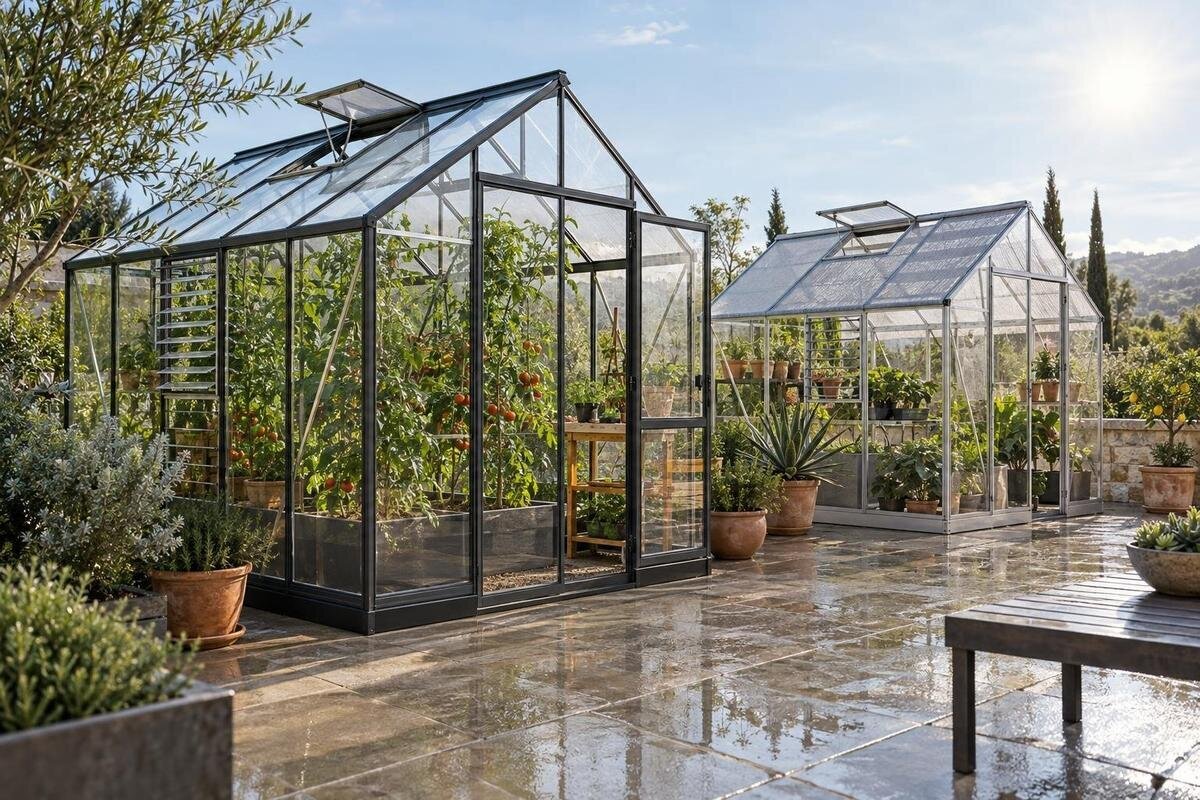
Buying a greenhouse for a hot climate calls for more than choosing a frame and adding a vent. Solar gain, outdoor temperature, airflow paths, glazing, shade and the crops you plan to grow all affect conditions inside. Before comparing models, map the sun across the proposed site and decide which plants must stay protected during the hottest weeks. Then compare the exact opening and shade details documented for each configuration. A greenhouse may limit heat buildup, but neither ventilation nor shading guarantees a cool interior when outdoor conditions are hot.
01
Assess the heat and sun at the site
Hot climate is not one uniform growing condition. Humid air, dry wind, cloud cover and long, clear afternoons create different combinations, while two corners of one yard may heat differently. Note seasonal daytime and nighttime temperatures, hours of direct sun, nearby shade and typical breezes at the intended site. Hard paving and light-colored walls can reflect additional sun toward glazing; trees cast moving shade but may obstruct openings. Visit the spot at different times or map summer sun, including morning and late afternoon. The useful comparison is not simply sunny versus shaded, but whether strong solar exposure coincides with already-hot outdoor conditions. If humidity matters to your crops, record it alongside temperature, and note whether evenings cool down.
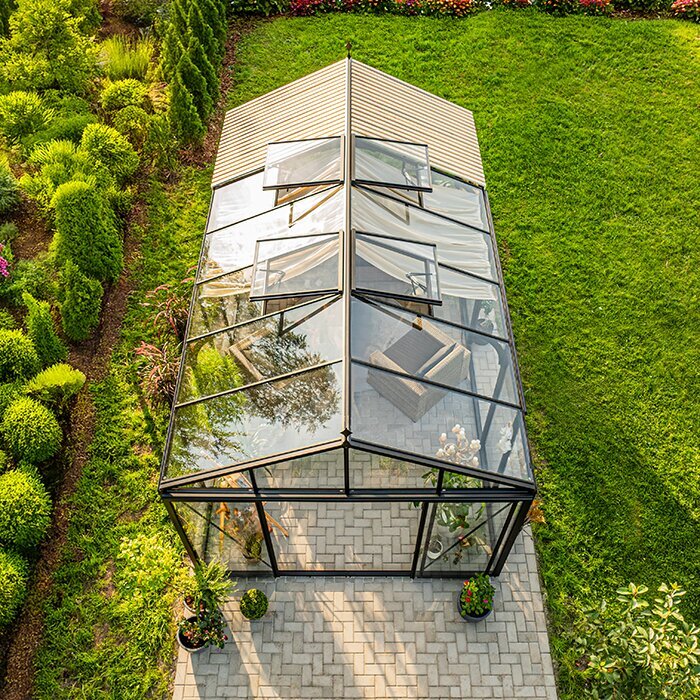
Then consider how nearby buildings affect both shade and air movement. A wall can shade part of a greenhouse while also limiting openings or cross-flow; the result depends on orientation and layout. For an aluminum lean-to greenhouse, compare the manufacturer's drawing with your wall, eaves and door clearance. Confirm which sides can open and how you will reach them after installation. Do not assume a nearby building automatically provides useful shade: its shadow may miss the hottest hours, and surrounding surfaces can reflect heat toward the glazing.
Choose around the plants you plan to grow
Write down what the greenhouse must do through summer and the shoulder seasons. Seedlings, leafy greens, heat-loving fruiting crops, herbs and overwintered plants differ in their responses to temperature, direct sun and humidity; varieties can differ too. Use reliable crop-specific growing guidance for the plants you intend to grow, and note which ones must remain inside during the hottest weeks. A structure used mainly for spring starts or fall protection may have different requirements from one expected to support summer production. Set the comparison around the most heat-sensitive crop you plan to keep inside, not an average temperature or a vague all-season goal. Record any preferred ranges from crop-specific sources rather than seeking one universal greenhouse target.
Estimate the mature planting layout before comparing dimensions. Beds, benches, tall vines, hanging baskets and pathways all take room and can obstruct vents or cast shade. Note plant height, work access, where trays will sit and whether you can reach opening controls after planting. Assess an aluminum classic greenhouse using this crop-first list: compare its published usable dimensions, glazing information and actual vent details with your plan. A stated footprint is not the same as clear growing area once you allow for paths, equipment and space to tend plants. Make room for mature growth, not only for seedlings on delivery day.
02
Compare ventilation openings, not vent counts
Treat ventilation as an air route, not a feature count. Natural ventilation is often planned with lower inlets and higher outlets so incoming air can pass through the growing space while warm air escapes; openings on opposing sides may also use breezes when the site allows. Ask where roof, sidewall and end-wall openings sit and how large they are when fully open. A vent count without location or opening area is hard to compare across models. A door may contribute to airflow, but do not assume an open doorway alone can provide the exchange your crops need. Nearby structures, prevailing breezes and the filled interior all affect how air can travel.
Request net opening area or another clear description of capacity, and ask whether insect screens, louvers or covers reduce free area. Check that openings remain accessible after benches and tall plants are in place. Manual handles, crank systems, automatic openers and powered exhaust fans have different operating requirements, so compare them separately. If you are considering an aluminum limited-edition greenhouse, review the exact version's vent locations, operating method and listed options. For automatic or powered equipment, ask what triggers it, whether it needs power, whether a manual override is available and how it behaves during a power interruption. Also clarify whether controls are supplied with the unit.
Map airflow through the furnished greenhouse
Sketch the intended layout and trace a path from an inlet to an outlet. Include beds, benches, shelves, partitions, storage and tall plants, because each can change how air reaches the canopy. Leave practical space around foliage so air can move and you can tend the plants. Judge the plan when the greenhouse is furnished, not just when empty: leaves spread, trellised growth adds density, and trays may occupy work space. Mark door swings and tall supports too. If you intend to use separate areas for propagation and mature plants, check that each still has a route to the openings. A vent serving one end may not exchange air evenly through the growing area.
Changes in a floor plan—such as a projection, corner or partition—can create spots where airflow differs. Request a dimensioned drawing and mark every opening on it. For a Garden View T greenhouse, use the actual plan and vent locations to assess the whole layout rather than assuming circulation is uniform. Note whether fences, walls or dense plantings outside could block an inlet. If you plan to add a circulation or exhaust fan, confirm whether it is included, what the listing specifies and whether installation raises electrical questions for a qualified professional. A fan name or image does not establish its capacity.
03
Choose shading for your crops and seasons
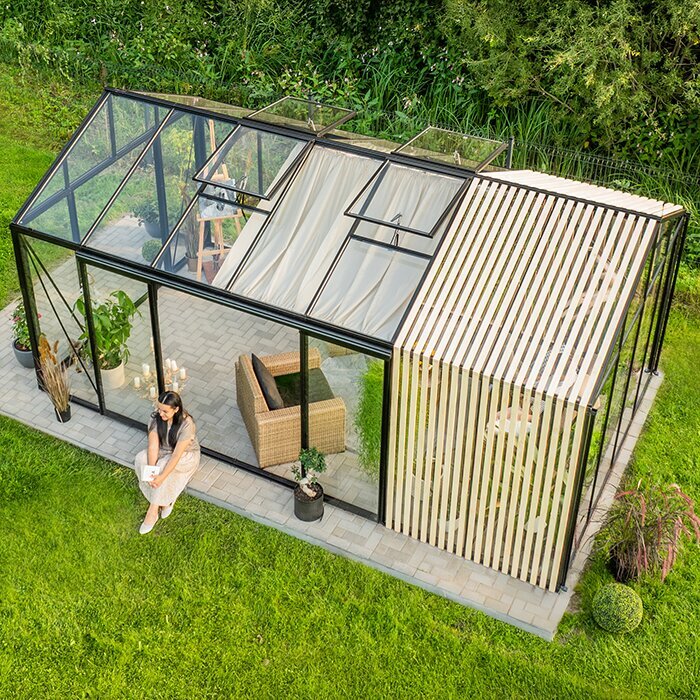
Shading and ventilation solve related but different problems. Shade reduces incoming solar energy; ventilation exchanges indoor air with outdoor air. When outside air is already very hot, ventilation alone cannot promise a low interior temperature. Shade can ease solar load, but it also reduces light and may affect growth. Compare stated coverage and shade rating with crop needs, local exposure and the seasons you want to use the greenhouse. Ask what a percentage refers to, since ratings are not comparable unless their basis is clear. Do not choose by cloth color or a broad phrase such as heavy shade. Decide whether you need coverage on the roof, walls or both.
Choose between fixed, removable or adjustable shade based on how often conditions change and whether you can reach and store it. Fixed shade can simplify operation, yet may limit useful light in cloudy weather or cooler months; an adjustable system offers control but requires access and handling. Exterior shade intercepts sunlight before it passes through glazing, while interior shade works after light has entered. For a pyramid greenhouse, check the manufacturer's details for coverage and compatibility rather than assuming a generic cloth fits the structure. Confirm attachment approval, operating method and whether the shown accessory is included or optional for the exact model. Ask how removable shade is stored when it is not in use.
Read glazing and shading as one system
Read glazing details alongside the shade plan. Glazing differs in light transmission and diffusion, and some constructions also affect heat transfer; the right balance depends on crops and the growing seasons you want. Ask for product-specific information about the material and relevant light properties of the exact configuration. Avoid assuming that clear, tinted or multiwall glazing will by itself prevent summer heat buildup. Cutting light too far can limit growth even while reducing solar gain, and the greenhouse still needs an effective air-exchange plan. Find out whether screens or shade layers alter light or airflow compared with the base configuration. If your crop guidance gives light requirements, compare only figures described on a consistent basis.
Think of the greenhouse as a coordinated setup: glazing affects incoming light, shade limits some solar gain, and vents allow air exchange. If an accessory covers a surface or opening, verify that it works with the other components and ask what effect the seller documents. For a Bloomcabin Prestige Premium greenhouse, check the exact glazing, vent arrangement and compatible shade options in the product details or with the seller. The words in a model name do not supply those specifications. If information is missing, request it in writing; a clear comparison is more useful than guessing from photographs.
04
Plan for access, controls and storage
Consider how the system will be handled on a hot day. Someone may need to open vents, adjust shade, water plants and keep routes clear. Mark doors and controls on the plan, then check whether you can reach them when the greenhouse is fully planted. Screens and moving parts need inspection and cleaning; inaccessible handles or tangled shade can make a useful feature awkward to use. Think about when you can tend the structure and whether operation depends on a person being present at a particular time. A feature that needs frequent adjustment is practical only if it fits your routine. Ask how replacement parts are identified, and plan where removable shade will be stored.
Storage also affects usable space and airflow. If a product is described as a greenhouse with built-in storage, check the published location and dimensions, then decide where pots, tools, hoses and shade materials will go. Do not infer the storage layout from its name or image. Keep supplies from blocking an inlet, narrowing the aisle or casting unwanted shade on crops. Confirm which screens, vents, openers, fans and shade pieces come with the exact order and which are optional. Listing these choices now can prevent a later accessory from conflicting with the planting layout.
Measure the site and check preparation needs
Measure the space around the proposed greenhouse, not just its footprint. Check the delivery and assembly route, room to open doors, clearance for servicing vents, and whether nearby structures shade or block openings. Mark trees, fences, eaves, downspouts and paved surfaces on a rough plan. Observe shadows during the warm season: one midday look may miss intense morning or late-afternoon sun, and shade patterns change as the sun moves. If the site sits close to a wall or fence, confirm that side openings and controls remain reachable after assembly. Note the nearest water source and how a hose could cross the route.
Confirm site preparation, foundation and anchoring requirements for the exact greenhouse using the manufacturer's instructions and qualified local help where needed. A shade attachment or fan may add requirements, so ask whether the accessories are approved for that model and whether they change assembly or service access. For powered equipment, check the expected power supply and have wiring or installation questions answered by a qualified professional. Keep this separate from the heat-management comparison: a thoughtful shade plan cannot compensate for an unsuitable site or a setup that does not follow its instructions. Check that routine cleaning will remain possible once the structure is planted.
05
Confirm exact specifications before ordering
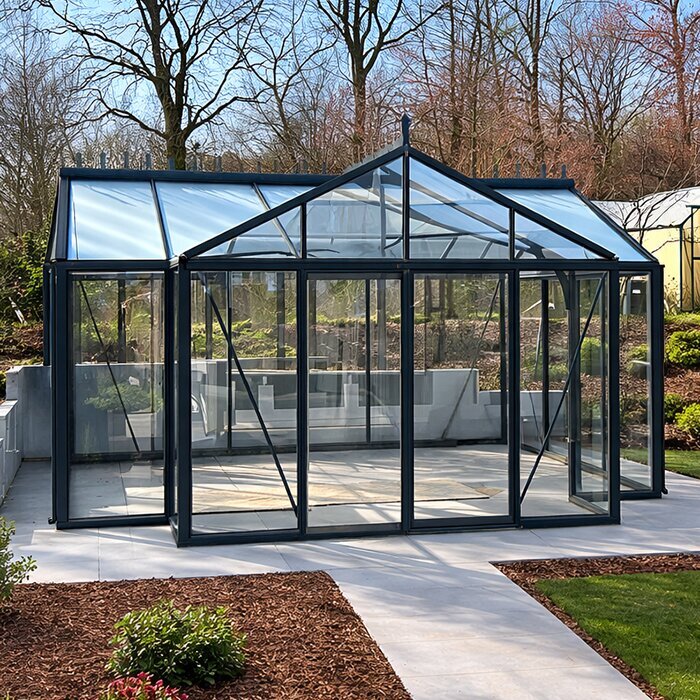
Before ordering, record the exact configuration, not just the product name. Request vent locations and opening dimensions, glazing type and relevant light data, shade options and coverage, screen details, included accessories and compatibility statements. Ask whether photos show the standard model or optional items, and whether each drawing matches the size or version you selected. Confirm whether stated dimensions describe the exterior footprint or usable interior area. A page for Bloomcabin Orangerie should be checked against these same questions; its name alone does not establish dimensions, ventilation capacity or shade provisions. Save written responses that identify each option and model so the order remains clear.
Clarify practical order details as well: what arrives in the package, what assembly is expected, what site preparation the instructions assume, and where to get help with replacement parts or future accessories. If a description says well ventilated, ask which documented openings support that claim. If shade appears in a photo, ask whether it is part of the order and which greenhouse version it fits. Compare written specifications, not headline language. Clear answers help you compare complete setups, anticipate separate accessories and understand what you must manage after assembly. Keep final answers with the product documents.
Compare the complete summer setup
Create a shortlist with the same categories for every model: site fit, crop needs, vent location and size, airflow through the planned layout, shade coverage, glazing information, controls, maintenance and setup requirements. Mark each item confirmed, unanswered or unsuitable; an unknown specification should remain unknown, not be read optimistically. Then calculate the complete configuration you would actually use, including compatible shade, screens, controls or fans if needed, plus any professional installation. Do not assume an accessory fits because it is sold for another greenhouse or looks similar. Value comes from how well the complete setup fits your needs, not from an appealing label.
Decide how you will judge conditions after assembly. A thermometer in the growing area, together with regular observation of plant response, can show whether ventilation, shade and crop placement are working as weather changes. Compare readings from representative growing areas rather than one unusually hot corner, and follow crop-specific guidance when interpreting them. Adjusting shade, vent timing or plant placement may be part of normal operation, but follow the structure's instructions. If summer conditions remain outside a crop's tolerance despite the options available, reconsider the growing season, crop mix or site. No greenhouse choice makes extreme outdoor heat disappear.
Frequently asked questions
Can ventilation alone keep a greenhouse cool in a hot climate?
Not necessarily. Ventilation can exchange accumulated indoor heat with outdoor air, but the result depends on the size and placement of openings, wind, screens, plant density and outside conditions. When outdoor air is already very hot, vents alone cannot guarantee a cool interior. Compare shading and crop needs as well.
Do I need roof vents, side vents, or both?
There is no single arrangement that suits every site. Higher outlets can help warm air escape, while lower inlets bring air into the growing area; openings on opposing sides may also make use of breezes. Ask for the actual locations and opening areas, then consider obstructions and your planned layout.
Is exterior shade better than interior shade?
Exterior shade intercepts sunlight before it passes through the glazing, while interior shade acts after the light has entered. Neither is automatically right for every crop or greenhouse. Check compatibility, coverage, shade rating, operating method and the light your plants need. Confirm whether the shade is included or optional.
Should I buy automatic vent openers?
Choose them only if their operation suits your growing plan. Ask what triggers an opener, whether it needs power, whether it can be operated manually and what happens during an outage. Automatic controls do not replace checking the opening capacity, shade plan or airflow through the growing area.
What specifications should I confirm before ordering?
Request configuration-specific details for vent locations and opening areas, glazing, screens, compatible shade coverage and controls. Confirm dimensions, which accessories are included, assembly and site-preparation requirements, and whether the product images show the exact version you plan to order. Keep written answers with your order documents.
A hot-climate greenhouse is a combination of site, crops, openings, glazing and shade—not a promise of a particular indoor temperature. Compare the air path in your planned layout, the shading your plants can tolerate and the details documented for the exact order. When those pieces fit together, you can make a realistic choice for summer growing instead of relying on a model name or a general ventilation claim.
