
How to Buy a Greenhouse for a School or Community Garden
GREENHOUSE BUYING GUIDE
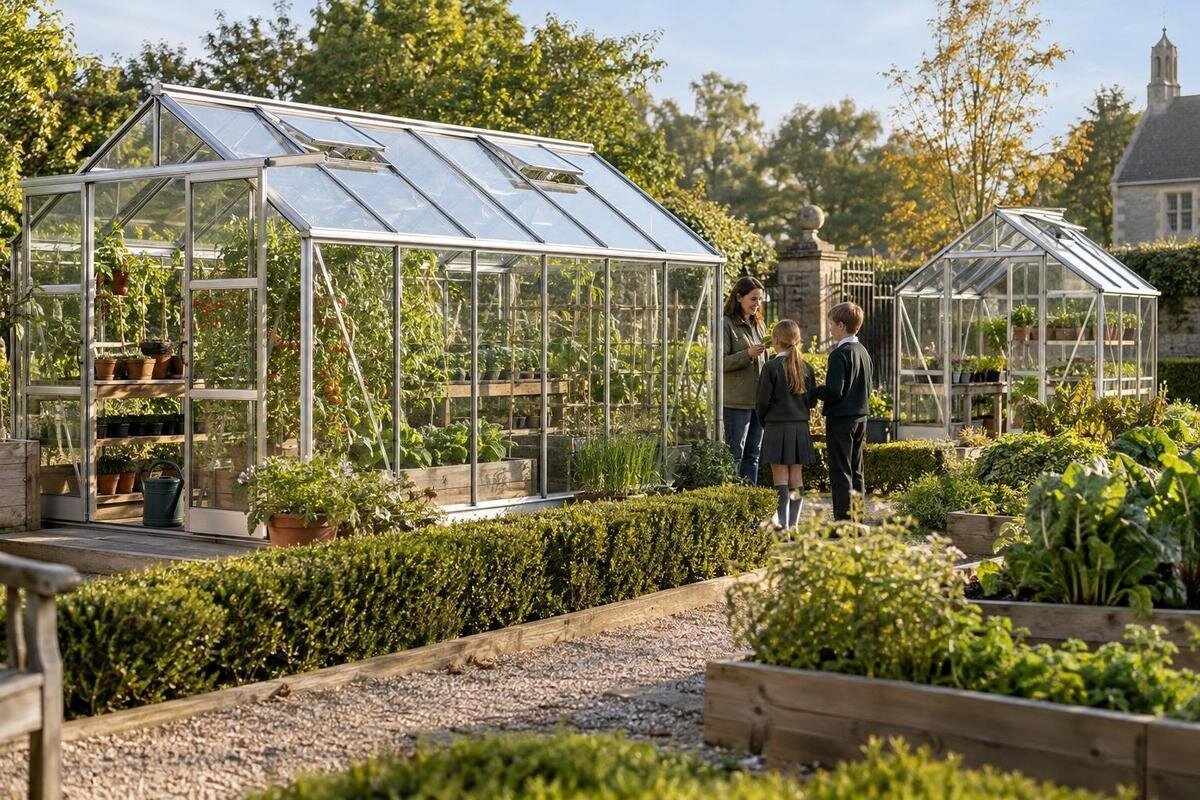
Buying a greenhouse for a school or community garden is a shared facilities decision as much as a growing project. The right candidate is the one whose usable space, site requirements, ventilation, access, upkeep, and purchase scope match the people who will run it. Agree on intended activities and stewardship first, then check product details and quote terms against one common plan.
Agree on the greenhouse’s purpose
Write down the greenhouse’s primary job before comparing styles. A school may want seed-starting lessons, plant science activities, or production for a garden program; a community group may prioritize shared starts, seasonal harvests, or demonstrations. Those uses create different needs for work surfaces, plant staging, access times, and seasonal staffing. Name the two or three outcomes the building must support, then list secondary uses separately. This prevents a long wish list from being treated as a set of equally important requirements. It also gives the group a consistent way to evaluate a feature: does it support a planned activity, or is it simply attractive to one buyer?
Identify the people who approve, fund, use, and maintain the greenhouse. In a school, teachers, facilities staff, administrators, and garden coordinators may need to coordinate; a community garden may rely on a board, plot holders, or rotating volunteers. Decide who controls access, handles routine checks, responds when something needs repair, and oversees student or public use. Include summer, school breaks, and periods when volunteer availability changes in that discussion. Record responsibilities before asking for proposals. A focused feature list backed by a clear stewardship plan is more useful than choosing a structure for an enthusiastic group that has not agreed on its ongoing role.
Translate growing plans into space needs
Translate the growing plan into tasks and approximate space. List what will be sown, potted, transplanted, displayed, or harvested, and whether starts are intended for outdoor beds or for growing inside the greenhouse. Note the supplies and equipment used for each task, along with any clean work surface, staging area, or storage the team expects. A plant list alone can mislead: crops may fill the room and leave little space for a class to observe or volunteers to move trays. Distinguish the area used for growing from the room needed to carry out work around it, and note which activities require repeated access during the week.
Map a typical week and the busiest teaching or planting days, including how many people may work at once. Compare a candidate’s published footprint and interior layout with a simple site sketch; do not assume the outside dimensions describe usable growing area. Show paths, work surfaces, beds or containers, and space to bring supplies in and out. If door details are available, include the area needed to use the entrance. Build around the program’s priorities rather than every possible future crop. If the plan may expand, decide what could stay outdoors or be handled elsewhere. That makes it easier to judge whether a larger purchase is justified now.
Select a practical site
Walk more than one possible location if the property allows it. Consider how sunlight and shade change over the day and through the growing season, including shade from nearby buildings or trees. Look at how rainwater moves across the area, how people will reach the greenhouse, and whether water is accessible for the planned work. Note nearby activity that could affect deliveries, garden routines, or supervision. A spot that looks open on a map may be harder to use once paths, doors, existing beds, and service areas are taken into account. Record observations on a site sketch rather than relying on memory when the group compares options.
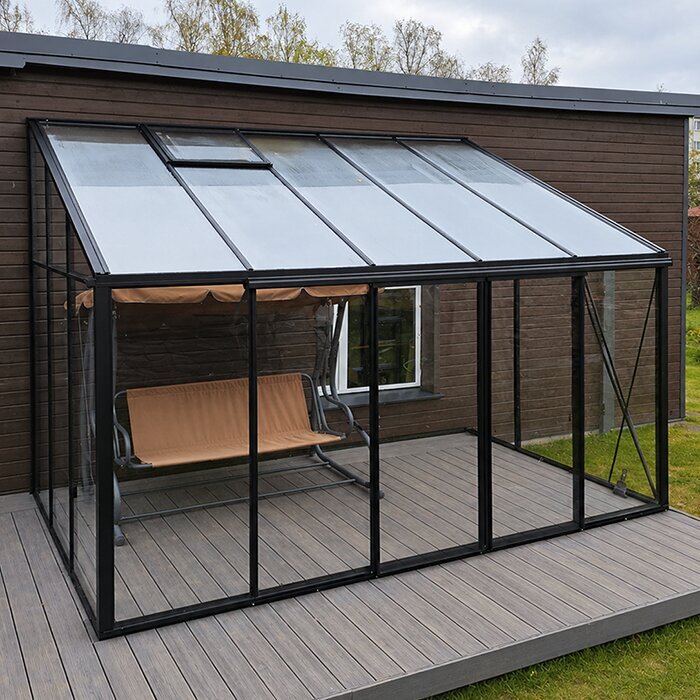
Confirm who controls the land and what approvals the school or organization requires before choosing a location. Ask facilities staff to review access, ground conditions, drainage, and any work needed to prepare the site. Before digging or foundation work, have relevant utilities located and ask a qualified professional to assess site and installation requirements. A wall-adjacent format may seem to save open yard, but its name does not confirm that a particular wall or clearance is suitable. If you are considering that style, the aluminum lean-to greenhouse listing is a page to review for its documented footprint and requirements. Check the proposed location against those details rather than assuming compatibility.
Size the interior for people and work
Separate the structure’s outside footprint from the space people can actually use. A scaled sketch can show where beds or containers, benches, demonstrations, and supplies might go, along with the route between them. Include the space needed to carry trays or equipment through the entrance and to pause while a group is learning. A layout that fits the maximum number of plants may not leave enough room for the activities that make a school or community greenhouse useful. Compare the dimensions on current product information with the tasks on your space list, and ask for clarification if interior measurements or a plan are missing.
Test the layout with the people who will use it. Walk through a typical task on paper: bring in supplies, set them down, explain a step to a group, and move the finished plants out. Consider whether several participants will need to work at the same time, and whether paths remain clear when tools and containers are in use. If participants have different mobility needs, include them in the review and check clearances against actual drawings. A named model such as the Garden View T greenhouse listing should be compared using its published dimensions and layout, not its title or an image. Treat the room as a working space, not just a count of growing beds.
Compare frame and covering details
Compare the frame and the covering as parts of one structure. Product information should help you identify the stated frame and panel materials, how components are joined, what covering is included, and what maintenance the supplier recommends. Ask how damaged or worn parts can be identified and replaced, and whether the relevant replacement components are described. Cleaning needs and exposure at the proposed site may also affect the group’s routine. Do not treat a broad material label as a complete specification or assume that two products described with the same material will have the same care requirements. Compare documented details and note any unanswered questions before seeking a quote.
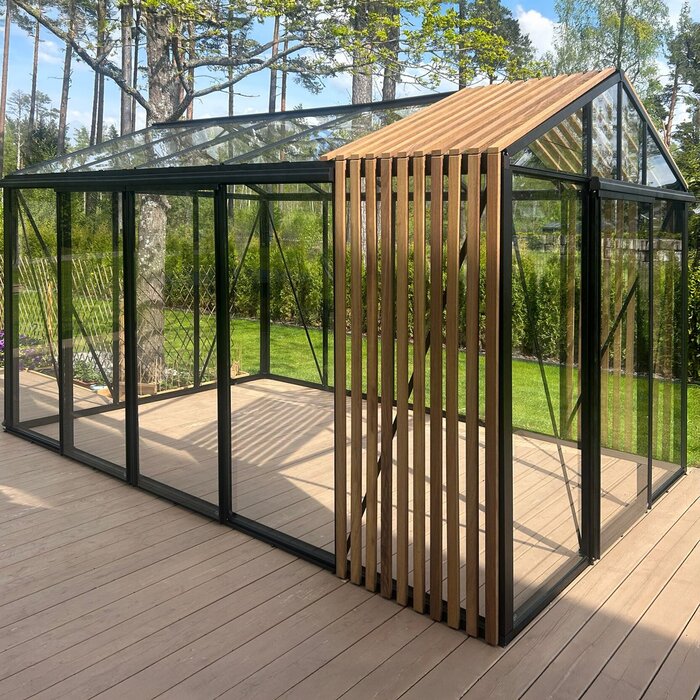
A product page such as the aluminum classic greenhouse listing can be included in the same comparison as other candidates. Use the current listing to verify the actual covering, frame details, included components, and care information; the model name alone does not establish them. Ask whether any published performance information applies to the complete structure and is relevant to the proposed site. If the group expects the greenhouse to stay in service for years, find out what maintenance tasks are expected and who can obtain replacement parts. This turns material selection into a practical question about documentation, upkeep, and support rather than a choice based on a product label.
Plan ventilation around daily staffing
Ventilation is both a product feature and an operating responsibility. Compare what the product information says about opening locations, how openings are operated, and which controls or components are included or optional. If a system is described as manual or automated, find out what that means for routine checks and what it requires to operate. The growing plan and site conditions affect what the group needs, so avoid assuming that a feature name alone answers whether ventilation is adequate. If details are unclear, ask the seller for the relevant product information and have a qualified professional review questions that depend on the proposed installation.
Work out who can check the greenhouse during school days, weekends, holidays, and community garden closures. A system that depends on someone opening or closing vents requires a dependable routine; automated features also need an assigned person to monitor and maintain them. Build that responsibility into a schedule and name a backup for absences. When comparing product pages, the limited-edition aluminum greenhouse listing can be reviewed alongside the other candidates, but its title does not describe ventilation or current product availability. Compare the written details and the group’s ability to manage them, rather than letting a model name stand in for an operating plan.
Account for access, storage, and supervision
Think through how students, volunteers, staff, and garden members will enter and use the greenhouse. Review the entrance and circulation details in product information, then compare them with the way people will carry tools, plants, and supplies. Decide who will have access, how use will be scheduled, and what supervision the organization expects for students or public activities. The group should also check its own site and safety policies before settling on a layout. These questions are distinct from growing capacity: a structure may have room for plants but still need a different arrangement to support the program’s daily routines.
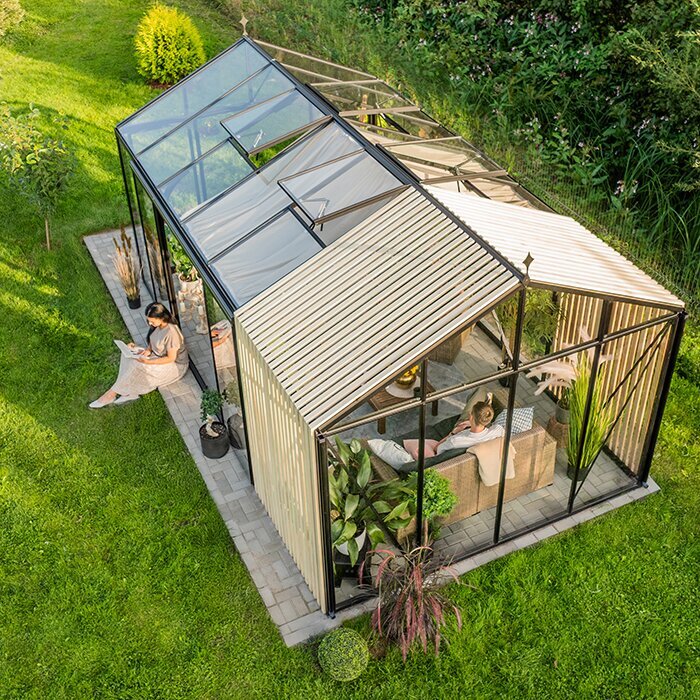
List the items that must be stored nearby, such as hand tools, pots, labels, and watering equipment, and decide which need secure or weather-protected storage under the organization’s policies. Keep storage from taking over the entrance or a path used for routine work. Confirm whether storage is part of a candidate, separate, or not described; do not infer its size or contents from a product name or photograph. A page such as the pyramid greenhouse listing can be assessed using its written layout and component list, just like any other option. Make sure the final arrangement leaves room for the people and tasks identified in the growing plan.
Budget for operation and maintenance
Set a total project budget rather than comparing only the greenhouse price. Ask for separate information about the structure, delivery, unloading, site preparation, foundation or other site work, assembly, and any professional review the project may require. Clarify which items are included in a quote and which are outside its scope; the product page alone may not answer every question about a complete project. Include tools or equipment the garden needs to begin using the space. A school or community group can then compare proposals on a consistent basis and decide whether the available funding covers the whole project, not just the structure.
Include recurring costs and staff time in the same discussion. Depending on the growing plan, the group may need to budget for water, power, seeds, pots, cleaning supplies, repairs, or replacement components; establish which of these apply rather than assuming every greenhouse needs the same resources. Assign a person or budget source to routine upkeep, and account for periods when the usual volunteer or staff member is unavailable. If storage is a priority, the aluminum greenhouse with built-in storage listing can prompt a specific question: what does the current product information say is included, and how much usable space remains? Verify the details before comparing its total cost with separate storage.
Compare product pages and quotes consistently
Create one comparison sheet and use it for every candidate. Record the model name, published outside and interior dimensions, frame and covering descriptions, ventilation details, door information, included components, and any accessories the group is considering. Add the information source and mark items that still need an answer. This makes it easier to spot gaps and prevents an appealing photograph or adjective from outweighing practical details. A listing such as the Bloomcabin Prestige Premium greenhouse listing can be added to the same sheet, but words in a model name do not establish dimensions, materials, or value. Compare the documented facts with the needs already agreed by the group.
Compare written quotes line by line. Ask each seller or installer to state whether delivery, unloading, assembly, site preparation, foundation work, and disposal of packing materials are included, and identify any exclusions or extra charges. Confirm the proposed work schedule and what the organization must provide before work begins. Review warranty and service terms as written, without assuming that different offers cover the same things. For a school or community garden, also confirm the internal approvals and budget sign-off needed for the purchase. A comparable scope gives the group a clearer view of what it is actually buying and what remains its responsibility.
Coordinate purchasing, delivery, and installation
Match the purchase schedule to the garden calendar and the people who can prepare the site and receive the order. Ask for current delivery and assembly timing in writing rather than relying on an estimate that may change. Confirm who will meet the delivery, where materials can be staged, and whether the access route is suitable for the planned delivery arrangements. A product page such as the Bloomcabin Orangerie listing can be added to the final comparison, but its name does not establish dimensions or delivery requirements. Check the current product information and quote against the site plan before the group makes a commitment.
Before approving the order, make sure the chosen model, written specifications, quote, site plan, and responsibility schedule all refer to the same project. Resolve open questions about included parts, site preparation, and who is responsible for each part of the work. Have facilities staff or a qualified professional review installation requirements that depend on the site; do not rely on a product title or general description for that assessment. Keep the final documents where the people who will manage the greenhouse can find them. This record helps the school or community group understand what was purchased and how the growing program is expected to use it.
Frequently asked questions
What should a school or community garden decide first?
Agree on the greenhouse’s main purpose, who will use it, and who will maintain it. Then list the activities and growing goals the structure must support. This gives the group a shared basis for comparing space, features, and costs.
How do we estimate the right greenhouse size?
Sketch the growing areas, work surfaces, paths, and entry space needed for planned tasks. Consider how many people may be inside at the busiest times, and compare the sketch with published interior dimensions—not just the outside footprint.
Should our greenhouse include water or electricity?
That depends on the growing program and how the greenhouse will be managed. List the tasks that need utilities, confirm what is available at the proposed site, and have a qualified professional review any utility or installation requirements.
Does an aluminum greenhouse automatically need less maintenance?
No material name alone establishes the maintenance involved. Compare the documented frame and covering details, cleaning guidance, replacement parts, and care requirements for the complete structure. Ask the seller to clarify anything the product information leaves open.
What should we confirm before placing an order?
Check that the written quote identifies the model, dimensions, included components, delivery arrangements, and any site preparation or assembly work. Confirm the proposed location and installation requirements with the organization’s facilities staff or a qualified professional.
A sound purchase is one the garden can keep using, not simply one that fits on the site. When the group can explain why the proposed space supports its growing and teaching plans, who will look after it, and what the full project includes, it can compare candidates with fewer assumptions. Matching documented product details to a practical site and a shared operating plan gives the greenhouse a clear role in the school or community garden.
