
How to Buy a Greenhouse for Orchids and Tropical Plants
Greenhouse buying guide
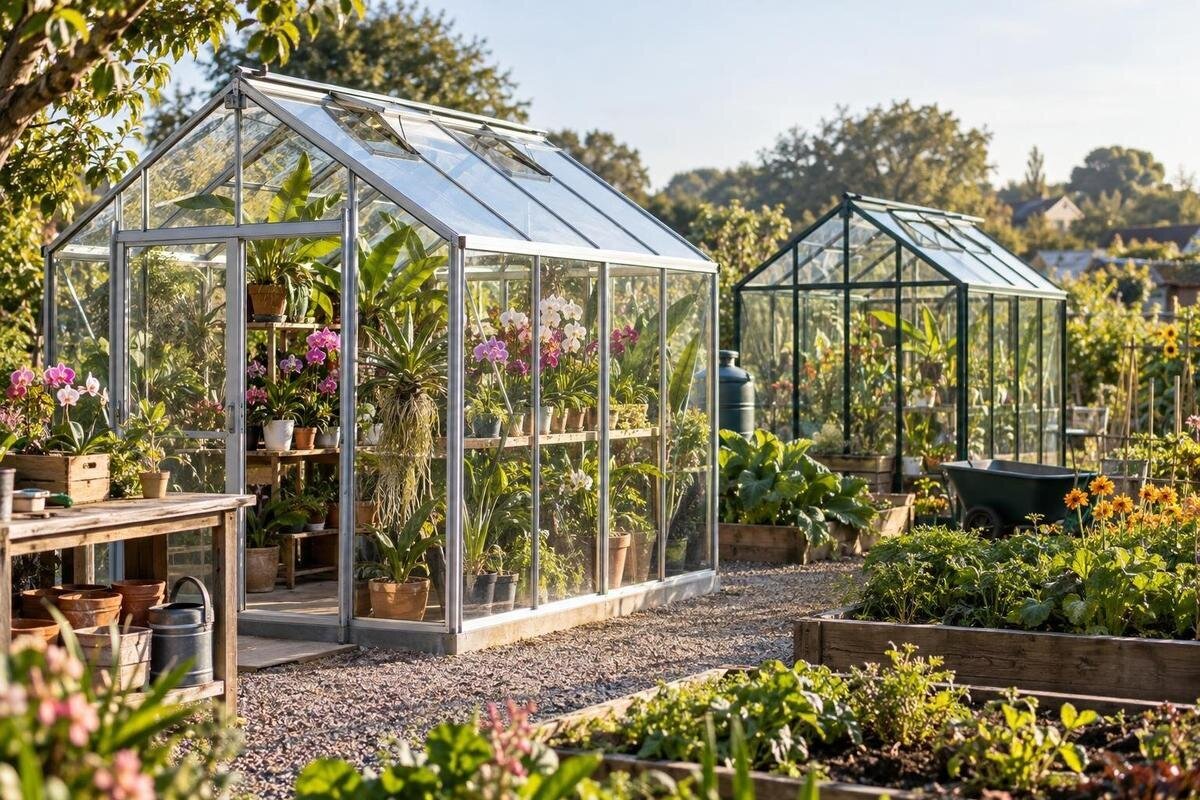
Buying a greenhouse for orchids and tropical plants is less about finding a structure labeled for those plants than matching its layout and controllable conditions to your collection. Orchids do not share one care profile, and tropical plants vary in preferred light, warmth, and moisture as well. A greenhouse creates another environment to manage; it does not automatically provide a stable growing climate. Before comparing models, map the site, group plants by similar needs, and check how the proposed structure handles light, ventilation, humidity, temperature, watering, and access. This guide turns those questions into purchase criteria you can verify in product details and installation documents.
01
Growing requirements for orchids and tropical plants
Begin with the collection, not the greenhouse shape. List the orchids and tropical plants you grow now, the plants you plan to add, and each plant's care requirements from a reliable cultivation source. Orchid species and hybrids do not all want the same light, warmth, or moisture; tropical foliage plants vary too. Treat “orchid greenhouse” as a search phrase, not proof that a greenhouse suits every orchid. The practical test is whether the conditions you can maintain in the proposed space overlap with the needs of the plants you actually intend to keep. Note whether care instructions call for seasonal changes or different day-and-night conditions.
Group plants by similar requirements before laying out benches. Note which can share brighter light, which need protection from intense direct sun, and which call for different temperature or moisture conditions. A shelf or separate area may help organize a collection, but a divider can also affect airflow, so it is not automatically a separate climate zone. Record mature height and spread, not just pot size, and note hanging or mounted plants that use overhead space. Include seasonal moves and room for future purchases. If the inventory reveals groups with little overlap, decide whether separate environments are practical instead of assuming one thermostat or humidity control will resolve different needs.
Site measurements and usable footprint
Measure the proposed base area and the route to it, not just a clear rectangle on a sketch. Note walls, fences, trees, overhanging branches, gates, slopes, nearby doors and windows, and how those features change with the seasons. Consider where rainwater drains, where water access is practical, and whether a delivery vehicle or assembly team can reach the site. If more than one location is possible, measure each separately; a small shift can change shade and access. Leave working room outside the structure for door movement, cleaning, carrying plants, and maintenance. The required base, clearances, and site preparation depend on the selected model and ground conditions, so rely on its installation documents rather than a generic footprint estimate.
Compare listed external dimensions with usable internal area; frame profiles, roof shape, and door location affect where benches fit. Sketch benches, an aisle, tools, watering supplies, and future controls, then test whether you can reach plants at the back without moving everything in front. Check door swing and whether large pots can pass through the clear opening. Keep access clear for ongoing care instead of counting every inch as growing space. The aluminum classic greenhouse can be one point of comparison, but use the dimensions and included-parts details for that exact model. If the listing does not distinguish external size from interior space, ask before ordering.
02
Freestanding greenhouses and lean-to layouts
A freestanding greenhouse and a lean-to solve different placement problems. A freestanding structure needs its own suitable footprint and enough outside access for cleaning and maintenance, but gives you more choice about where its sides face and how people reach it. A lean-to may suit a narrower site beside a building, yet wall and opening positions, shade, runoff from the adjoining roof, and the model's attachment requirements all affect the fit. Sketch where sunlight reaches the proposed location and how plants and equipment will enter. Also consider whether future wall repairs or window use would be obstructed. Neither format is inherently better for orchids; compare your site with each model's installation details.
Do not assume a nearby wall will provide enough warmth or that any wall can support an attached structure. Check the product documentation for permitted attachment conditions, the required base, clearances, and access to doors or windows, then compare those requirements with the actual building surface. The aluminum lean-to greenhouse is one listing you can examine for those details; its name alone does not establish compatibility with your wall, light pattern, or growing conditions. If attachment or drainage involves structural work, ask a qualified professional to assess the site before you order. For a freestanding alternative, check its foundation requirements just as carefully.
Bench space, headroom, and storage
Greenhouse floor area and actual growing area are different measurements. Benches use part of the floor, while pots, hanging baskets, and tall foliage use vertical space; an aisle, door swing, and work surface use more. List bench lengths and depths, the gap needed to reach plants, and clearance above the tallest mature specimen. Check the clear door opening and where it sits relative to the path inside. A tall roof will not compensate for a layout that blocks lower plants or makes watering awkward. Compare usable internal dimensions with your plan, not only the outside footprint. If you expect to hang plants or equipment, confirm that the manufacturer approves the relevant support points; do not infer capacity from appearance.
Storage can preserve bench space, but only if it serves the supplies you actually use. List potting materials, empty containers, labels, cleaning items, and seasonal accessories, and decide which must be protected from damp. Do not count a named storage feature as a particular capacity or included accessory until the product details say so. The aluminum limited edition greenhouse can be added to a layout comparison; confirm its current interior measurements, storage information, and component list rather than using the model name as a specification. Make sure stored supplies won't interrupt the route you need for watering and inspection. Allow room for future plant growth and for inspecting equipment.

03
Light exposure and glazing
Light is both a site issue and a plant-specific requirement. The proposed location changes with the time of day and season, and nearby buildings or deciduous trees can create shifting shade. Record when each part of the site gets direct sun, then compare that pattern with the documented light needs of the collection. Some orchids and tropical plants benefit from filtered light, while others need brighter conditions; neither group has one universal preference. A spot that looks bright in one season may be shaded in another, so observe the area over time when possible. Do not select a greenhouse solely because its name or photos suggest a bright growing space.
Look for the actual glazing material and any published information on light transmission, shading accessories, and care. Product photography cannot tell you how much usable light reaches each bench, and a high-transmission covering may not be right for every plant at every site. Plan how you could moderate intense sun without unnecessarily darkening lower shelves, and consider whether add-on shade can be installed and removed as conditions change. The Garden View T greenhouse belongs on a shortlist only after its listed glazing and light-control details are compared with your site's exposure. Ask how optional screens attach and whether they can be removed seasonally. If relevant details are missing, ask before purchase.
Ventilation and air movement
Ventilation affects how heat and moisture leave the greenhouse and how air moves around foliage. Compare the location and type of the operable vents, windows, and doors documented for each model, not just a count of openings. Their placement and clear opening affect the airflow a layout can achieve, while tall foliage and densely arranged benches can obstruct it. Compare vent placement with your intended bench arrangement, not an empty interior. Check whether vents are reachable for manual operation and whether opening doors provides useful cross-flow at the times you need it. For an orchid greenhouse, the goal is not simply to keep every vent open; it is to have a practical way to respond to changing conditions.
Separate included equipment from optional add-ons. If you plan to use automatic vent openers, circulation fans, or controls, confirm whether they are supplied, compatible with the structure, and suitable for the intended setup. Think about how you will notice a fault or a sudden weather change when you are away; automation reduces some routine adjustments but does not remove monitoring. The Bloomcabin Oasis pyramid greenhouse is a listing to review for its published ventilation details, not evidence of a particular airflow pattern. Have electrical work assessed and completed by a qualified professional rather than improvising an installation around plants and moisture.
04
Humidity, watering, and drainage
Humidity is often a priority for tropical plants, but there is no single setting that suits every orchid and tropical species. Check care information plant by plant, then decide whether their needs overlap enough to share the same greenhouse. Place a hygrometer near representative foliage rather than relying on how the air feels at the doorway; readings can vary between the canopy, floor, and roof, and relative humidity changes with temperature. A reading near a roof or doorway may not represent conditions among the plants. Recording readings at different times for several days shows what the site actually does before equipment is selected. This can help you judge whether one zone is sufficient.
Choose a realistic way to add moisture, remove excess moisture, and water without leaving standing water around benches. Humidifiers, trays, and hand watering have different requirements, so consider cleaning, power, and refill needs along with the routines you can maintain. Include access to a suitable water source and a way to manage spills or drainage; moisture control and ventilation need to work together. If storage is important, inspect the actual details for the aluminum greenhouse with built-in storage rather than assuming the title states its capacity, arrangement, or included parts. Avoid planning equipment around a photo alone.
Temperature control and seasonal limits
An enclosure does not maintain tropical temperatures automatically. Sunlight may warm it, while outdoor weather, nighttime conditions, air leakage, and documented construction affect how quickly the interior changes. Compare the collection's temperature requirements with realistic site conditions through the year, including the hottest sunny periods and cooler nights, not just an average daytime reading. Measure conditions where the plants will grow. Decide whether the greenhouse is for seasonal use, for a subset of plants, or for a year-round collection that needs supplemental controls. If different plants have incompatible temperature requirements, one thermostat alone will not resolve the conflict. A structure that feels comfortable on a mild day may still require a different plan at other times.
Before buying, identify which temperature controls are included, optional, or outside the manufacturer's recommendations, and check whether components can work together in the planned structure. Read any stated operating limits and installation requirements; if information is not published, ask the seller or manufacturer instead of inferring performance from glazing labels or product names. For planned heaters, automated controls, or powered equipment, confirm compatibility and consult a qualified professional about electrical work. The Bloomcabin Prestige Premium greenhouse can be compared using those same published facts, without assuming from its name that it has a particular temperature range or equipment.

05
Materials, maintenance, and ordering
Compare the frame and glazing by documented material, finish, care instructions, replacement availability, and manufacturer support; a material label by itself does not guarantee maintenance-free use. Check how the covering is secured and whether cleaning or replacing a component requires access you can provide. Review the exact parts and assembly instructions, and distinguish supplied accessories from separately listed options. For a sensitive collection, consider what you would do if a pane, vent part, or door component needed attention; ask whether matching parts and support are available before you commit. Give maintenance a place in the purchase decision, not just initial appearance.
Ordering details can affect whether a greenhouse is practical to receive and assemble. Confirm assembled dimensions, package contents, delivery access, unloading arrangements, whether assembly is included, and the stated base or site-preparation requirements. Read current delivery, return, and warranty terms rather than assuming a product photo or title explains them; request clarification on any condition that matters to your purchase. The Bloomcabin Orangerie can be reviewed against the same checklist as any other listing; its name does not establish size, glazing, climate capability, or included equipment. If a contractor will assemble it, share the exact installation documents before work begins.
A like-for-like comparison before purchase
Create a comparison sheet with rows for plant groups, measured site, internal dimensions, door access, bench plan, glazing, light-management options, ventilation, humidity management, temperature equipment, maintenance, assembly, and delivery. Mark each entry as confirmed, optional, unclear, or not needed. This separates requirements—such as fitting through the route and supporting the planned layout—from preferences such as shape or extra storage. Set a minimum for any specification that would be difficult to change after installation. Compare models only when you have enough information about the criteria that matter. If an essential dimension, included accessory, or installation condition is missing, request it before ordering rather than filling the gap with an assumption.
Then test each remaining option against the daily growing routine: where plants will sit, how you will observe conditions, and whether watering, cleaning, and seasonal adjustments remain convenient. A greenhouse that suits one corner of a collection may still be a poor fit if other plants need different conditions or routine access is awkward. Treat future expansion realistically: reserve room only if the site and your ability to manage it support that plan. Choose using verified layout and control details that fit the plants you intend to grow, and keep the product and installation documents with your order.
Frequently asked questions
What kind of greenhouse is best for orchids?
There isn't one greenhouse type that suits every orchid. Species and hybrids vary in light, temperature, and moisture needs, so begin with the requirements of the plants you actually own. Then compare the site and the exact model's usable layout, glazing, ventilation, and any climate-control options. Orchid-related wording in a product name is not proof that its environment will suit your collection.
Can orchids and tropical plants share one greenhouse?
Sometimes, if the plants can share the conditions you can maintain and the layout gives groups appropriate light and air movement. Tropical plants are a broad group, and orchid needs vary too. Arrange compatible plants together, monitor more than one area, and consider whether separate zones are practical. Don't assume one humidity or temperature setting will suit every pot.
Does a greenhouse keep plants warm and humid?
No. A greenhouse is an enclosure, not an automatic temperature or humidity system. Sun exposure, outdoor conditions, glazing, openings, and construction influence its interior, and relative humidity changes as temperature and ventilation change. Check which controls are included, which are optional, and what the manufacturer documents. Plan how you will monitor conditions near the plants before relying on a model for a sensitive collection.
How much space should I plan for?
Base the size on the usable interior rather than the outside footprint alone. Add bench dimensions, an aisle, door clearance, mature plant height and spread, watering access, and room to maintain the structure. Account for hanging plants only if the supports are documented for that use. Also check the route for delivery and assembly, since a structure that fits the site may still be difficult to bring into position.
What should I verify before ordering?
Confirm the assembled and internal dimensions, glazing and frame details, vent locations, accessories included or optional, assembly documents, base requirements, and delivery arrangements. Read current return and warranty terms, and ask about details missing from the listing. For building attachments or electrical or structural work, consult an appropriate qualified professional before proceeding.
A suitable greenhouse for orchids and tropical plants is one whose location, layout, and manageable conditions fit the collection you intend to grow. Inventory plant requirements, map sunlight and access, and compare the exact internal space, glazing, ventilation, moisture, and temperature details documented for each model. Verify assembly, included parts, delivery, and any site-specific professional work before committing. Choosing from confirmed details makes it easier to plan a greenhouse that supports compatible plants and a routine you can maintain.
