
Buying a Greenhouse for Snowy Winters: Questions About Structural Loads
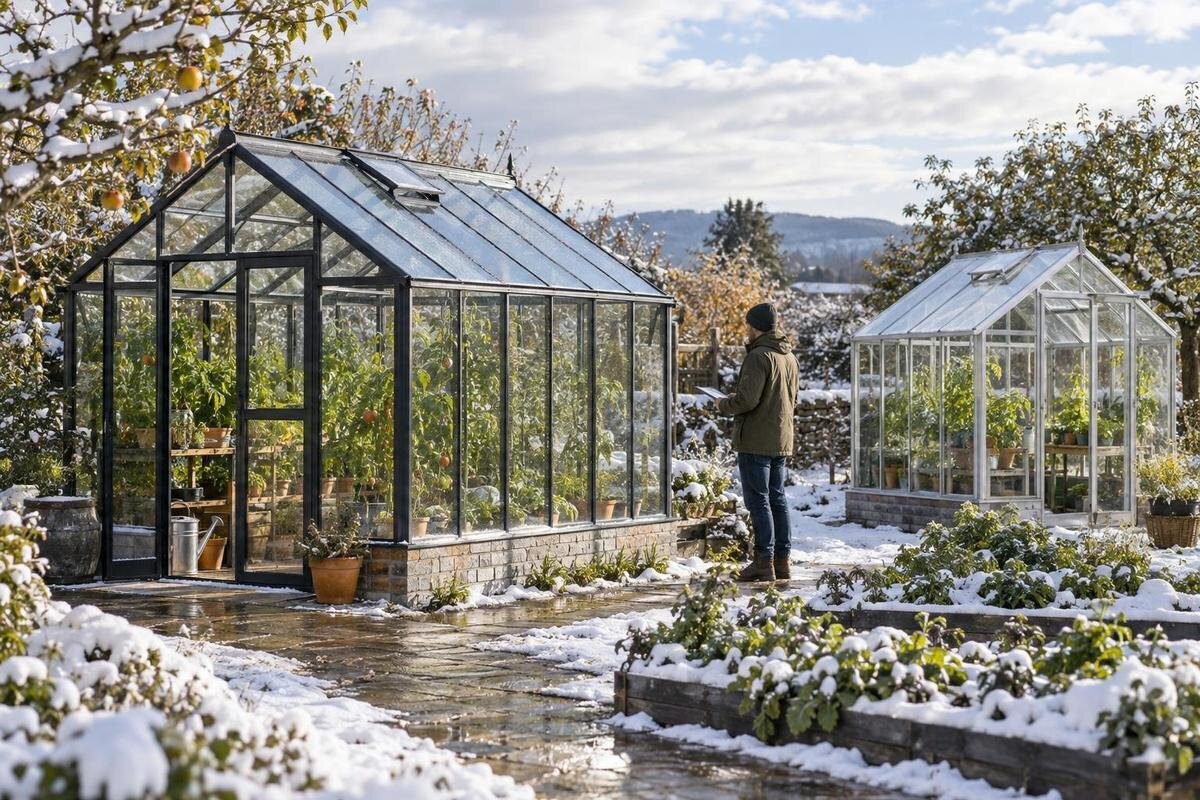
GREENHOUSE BUYING GUIDE
Buying a greenhouse for snowy winters means checking whether the structural information matches your site and the exact configuration you plan to order. A roof shape, frame-material label, or broad claim of winter use cannot replace a clear snow-load specification. Use these questions to identify what a rating covers, what it leaves out, and which written answers you need before comparing models or committing to a purchase.
Before you buy 1
Begin with the greenhouse site’s snow exposure
Before comparing models, describe the exact place you plan to install the greenhouse. Note whether it is open to the sky or sheltered by buildings and trees, whether it sits below another roof, and whether terrain or nearby structures could channel wind-driven snow. These details can help a seller understand the proposed setting; they do not determine a safe load on their own. Mention any roof edge that could shed snow toward the greenhouse rather than simply saying that it will sit near a house. Give the location and a simple site description when requesting technical information, and ask what additional local details are needed.
Do not treat an annual snowfall total, a typical forecast, or the word “snowy” as a design value. Snow depth alone does not describe the weight or distribution on a roof: settled or wet snow, drifting, and snow sliding from a higher surface can create conditions unlike an even layer. Ask a local building department or qualified structural professional which site-specific criteria should guide the purchase, then ask the manufacturer whether its rating addresses them. Write down the site assumptions so you can use the same ones for every model on your shortlist. If a seller cannot explain the assumptions behind a figure, record that gap rather than filling it with a guess.
What the snow-load figure actually covers
Treat “snow-load capacity” as an incomplete statement until the seller defines it. Request the numeric value and unit, such as pounds per square foot (psf), and ask whether it describes ground snow or the load supported on the greenhouse roof. Those figures are not interchangeable labels. A product page may use a short summary, while the technical sheet defines the scope; use the document tied to the model instead of assuming an advertising phrase covers every winter condition. If the units or terms are unfamiliar, ask for a plain-language explanation in writing before comparing models.
Ask what conditions the figure assumes: an even layer across the roof, or whether drifted and uneven accumulation is included; whether stated doors, vents, glazing, base, and braces are part of the assessed assembly; and whether there are exclusions or special maintenance conditions. Ask whether the value is a design limit, an allowable value, or a test result, and have the manufacturer explain its practical meaning rather than infer it from the largest number. Do not convert or rank figures with different definitions on your own. If terms such as “drift” or “unbalanced loading” are unclear, ask for a diagram or explanation. A useful comparison requires matching units and assumptions, not a spreadsheet of unexplained numbers.
Before you buy 2
Match the rating to the exact greenhouse configuration
Confirm the model, size, and full package before treating any number as relevant. Snow-load information may be tied to a particular roof span, frame layout, glazing, or set of options, so ask whether the exact configuration in the quote is covered. Check that the drawing or product code matches the model you are viewing, and ask whether extensions, extra bays, partitions, alternate panels, or optional vents change what the document applies to. The point is not to judge those changes yourself; it is to establish which assembly the manufacturer assessed and which variations need a separate answer.
When a page for an aluminum classic greenhouse is on your shortlist, ask the seller to match its snow-load information to the item code and package in your quote. The name alone does not tell you which size or configuration a figure covers. If the documentation describes a base model only, request clarification for every extension or option you intend to order. Also ask whether the information applies to the current version of the product. Keep the written answer with the final configuration so a later substitution does not leave you relying on a rating for a different assembly.
Consider the roof shape and nearby structures
Snow does not always remain evenly distributed. A roof’s slope, ridges, valleys, and transitions can affect where snow sits or slides; a greenhouse may also receive snow shed from an adjacent building. A taller wall, roof edge, fence, or change in terrain can alter exposure at the installation spot. These are reasons to ask whether the rating covers the way the greenhouse will actually sit, not reasons to assume that a steep roof sheds snow safely or that a particular outline is stronger. A simple site sketch showing the greenhouse and nearby roof edges may help explain the proposed placement, but it does not replace a structural assessment.
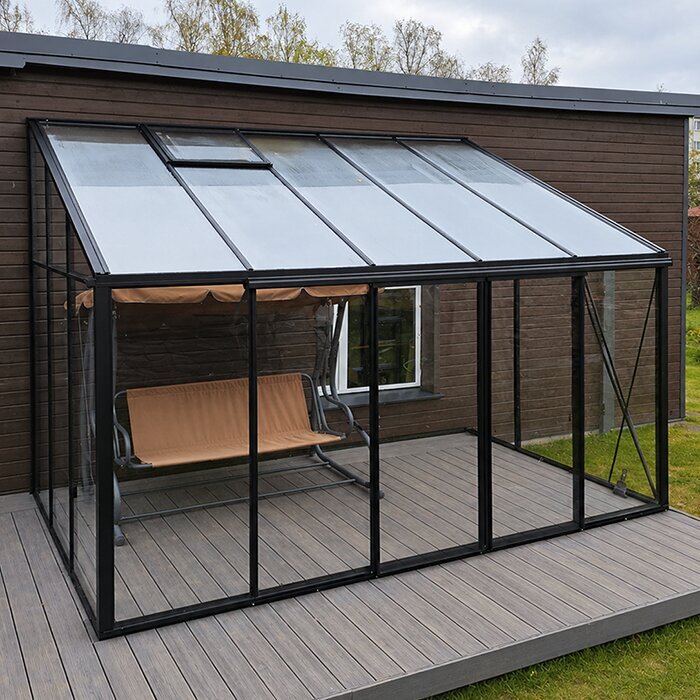
If you are considering an aluminum lean-to greenhouse, ask whether the published snow-load information applies beside the type and height of building you plan to use, or only to a different arrangement. The product category does not settle how an adjacent wall, roof edge, drift, or sliding snow affects the location. Request a model-specific statement about nearby structures and uneven accumulation. If the manufacturer’s information does not address your planned placement, have a qualified local structural professional review the site before you buy. Do not rely on appearance or on how a different greenhouse has performed elsewhere.
Before you buy 3
Ask how the frame and glazing are covered
Do not use a frame-material name or apparent thickness as a substitute for structural evidence. Snow forces pass through connected parts of an assembly, including frame members, joints, fasteners, glazing supports, and the points that connect the greenhouse to its base. Ask which parts are included in the rated design, how the connections and roof-support arrangement are covered, and whether the rating assumes the supplied glazing and specified fasteners. Clarify whether the glazing is counted as part of the load-bearing system or treated only as enclosure. A sturdy-looking panel or a heavy-sounding product description does not establish a snow-load rating.
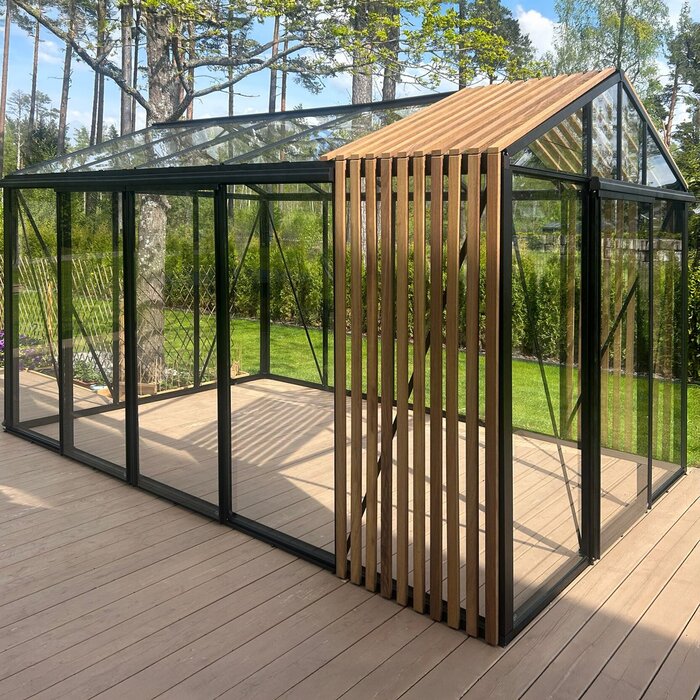
When reviewing a listing for an aluminum limited-edition greenhouse or another model, request the technical drawing and instructions for that exact version. Ask whether replacing a panel, using a different fastener, changing a brace, or omitting a component affects the rating, and who can confirm an approved replacement. Avoid reading capacity into a material label or photograph. If the information describes only a frame component rather than the assembled greenhouse, ask what documentation applies to the whole structure before treating that figure as the product’s snow-load capacity.
Check the foundation and anchoring assumptions
Ask what support arrangement the snow-load information assumes. The greenhouse may rely on a specified base or foundation and on anchors connecting the frame to it; the delivered kit may not include every support component. Confirm whether the rating assumes a continuous, level support, a particular base, or another arrangement, and request the matching installation drawing. Find out what is included in the quoted package and what must be designed or supplied separately. Do not choose anchors or alter a foundation by guessing from a product photo; have the manufacturer and a qualified installer resolve the support details for your site.
Ground conditions also matter to the installation plan: settling, movement, drainage, and seasonal frost can affect whether the specified support remains in place. Ask who is responsible for checking the prepared base and confirming that it matches the manufacturer’s instructions. A listing such as the Garden View T greenhouse identifies a product, not a foundation specification; request the relevant drawing and written requirements for that exact model. This keeps the greenhouse rating and its support details together rather than treating the frame as a stand-alone purchase.
Before you buy 4
Confirm which openings and accessories the rating includes
Check whether the rating covers the greenhouse with its doors and windows in specified positions and with all required braces or other parts installed. Ask whether vents, doors, gutters, partitions, shelving, automatic openers, or optional roof components are included, excluded, or subject to separate instructions. Do not assume an accessory changes the rating—or that it has no effect. The product documentation should identify the combination it covers. This matters when your chosen package differs from a basic model or when an installer proposes substitutions, so ask for the exact options and required components to be listed in writing.
For a package described by a title such as aluminum greenhouse with built-in storage, ask for the parts list and snow-load document that match the version in your quote. A product name does not establish which additions or options the technical information covers. Request an itemized list of the parts and options, then ask the seller to confirm that the load document corresponds to that list. If a required brace, connector, or panel is unavailable or replaced, pause and request written confirmation for the proposed alternative. Keep optional accessories separate until their compatibility with the documented configuration is clear.
Understand winter snow removal and maintenance
Ask how the greenhouse is meant to be managed after snowfall. Find out whether the published rating assumes snow is left in place or removed, whether the manufacturer specifies a removal threshold or frequency, and what it recommends after drifting, wet accumulation, or ice. Do not invent a safe removal threshold from the reported depth, and do not assume the roof can be cleared from inside or by climbing onto it. The manufacturer’s current written maintenance instructions should explain the required procedure and clarify any conditions that limit the load figure.
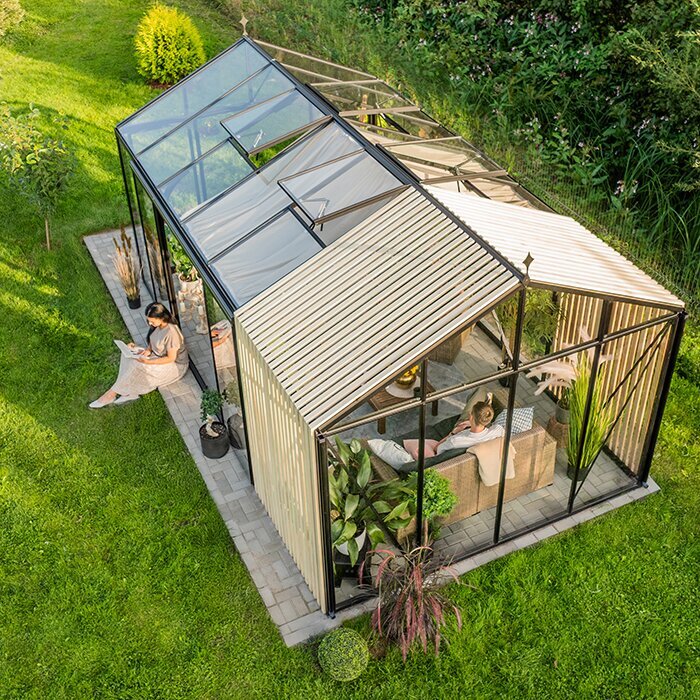
Maintenance requirements belong in the purchase decision because they affect how much attention the greenhouse will need during winter and who can carry out the work safely. Ask what method is approved, what tools or methods should be avoided, and how roof areas can be reached without loading the structure or creating a fall hazard. Follow the manufacturer’s instructions and use qualified help when needed. The roof outline in a photo, even on a page titled Pyramid Greenhouse Bloomcabin Oasis, does not reveal a safe snow-removal procedure. Ask for instructions that apply to the exact model rather than relying on its appearance.
Before you buy 5
Collect model-specific documents before ordering
Before ordering, collect the technical information in a form you can compare: a current specification sheet, a drawing for the chosen configuration, the installation manual, and a written explanation of the snow-load figure. Check that the model name, size, options, and version match the quote. Note the unit, whether the figure refers to roof or ground snow, the stated assumptions, required supports, exclusions, and any maintenance conditions. A short product-page claim without these details can prompt useful questions, but it does not establish what the number covers. Keep the documents together so you can refer to the same specifications when the order is finalized.
Ask for unclear terms to be explained in writing, preferably by the manufacturer or a seller who can identify the source of the information. A model title such as Bloomcabin Prestige Premium greenhouse does not tell you which load conditions are covered; documentation for the exact model is what answers that question. If a reply conflicts with the specification sheet, ask the seller to reconcile the difference and provide consistent information before you order. A simple comparison table can help: list each model’s rating, unit, configuration, support assumptions, exclusions, and maintenance conditions. If a key answer is missing, keep it visible as an unresolved question rather than assuming the most favorable interpretation.
Confirm the order and installation scope
Review the complete order, not just the greenhouse name or headline kit. Confirm the exact model and options, glazing, base or foundation responsibilities, anchoring components, delivery arrangements, unloading, and whether assembly is included or handled separately. The specification should match what is actually being supplied. Ask who will check that the prepared site meets the required support details and who to contact if a component is substituted, missing, or damaged. Do not assume delivery or assembly descriptions include structural review; ask what each service covers and whether the person assembling the greenhouse will verify the specified parts.
Compare quotes only when they describe the same configuration and support scope; otherwise, a lower total may omit components or services you need, while a higher total may include a different package. For a model such as Bloomcabin Orangerie, use the itemized order and corresponding technical documents, rather than the product title, to confirm what is included. If any component changes after you receive the rating, ask for confirmation that the documentation still applies before accepting the substitution. Keep the load information, drawing, installation instructions, and final parts list with the order confirmation. That record helps you check that the greenhouse assembled on site matches the configuration you evaluated.
Frequently asked questions
What snow-load rating should I look for in a greenhouse?
There is no single rating that suits every site. Ask for the written rating for the exact greenhouse configuration, including its units, assumptions, and support requirements. Then have a qualified local structural professional confirm whether those conditions match the location you plan to use.
Can I compare two greenhouse ratings in psf?
Only if you know what each figure describes and the assumptions behind it. One value may refer to ground snow and another to roof load, or they may cover different configurations or accumulation conditions. Ask the seller to explain the basis before comparing.
Does an aluminum frame guarantee snow strength?
No. A material name alone does not establish how the assembled greenhouse performs under snow. Look for documentation that applies to the complete model and configuration, including its connections, glazing, supports, and required components.
Is a lean-to greenhouse automatically safer beside a building?
No. Nearby walls and roofs can affect where snow collects or slides, and the effect depends on the specific placement. Ask whether the rating covers the proposed arrangement; do not infer suitability from the greenhouse shape or its position beside a building.
Should I clear snow from a greenhouse roof?
Follow the manufacturer’s written maintenance instructions. Ask whether the rating assumes snow is removed, what conditions require action, and what method is safe. Do not infer a removal threshold from snow depth or assume the roof can be reached by climbing on the structure.
A sound buying decision rests on a snow-load figure you can connect to the exact greenhouse, its support arrangement, and the conditions at your site. A clearly documented model is easier to compare and order than one whose rating or assumptions remain vague. If the information does not match the configuration you want, keep the question open until the seller, manufacturer, or a qualified local professional can clarify it.
