
Buying a Greenhouse in Stages: Essential Features and Later Upgrades
Greenhouse buying guide
Buying a greenhouse in stages works best when you postpone optional equipment, not decisions that determine whether the structure suits your site and growing plans. The greenhouse you order should be complete and useful for the first season, with the necessary footprint, access, and ventilation already settled. Benches, containers, shade accessories, and some controls may be possible later, but only if the chosen model can accommodate them. The word “upgrade” can cover very different work: moving a potting bench is not the same as changing an opening or utility route. This guide separates hard-to-change choices from add-ons you can defer, and explains what to check before ordering.

01
Decide what the greenhouse must do in its first season
Write down what you expect to grow and when: starting seedlings, keeping potted plants, growing food through part of the year, or maintaining plants across seasons can call for different routines. Then list the work you will actually do inside—watering, potting, moving trays, pruning, or checking plants—and who needs to reach them. Note roughly how many trays or containers you expect at peak use, and whether you need a place to work without moving everything first. This turns a general wish for more room into a practical brief. Avoid sizing around an imagined maximum that has no specific task or timing attached.
Divide the brief into “needed at opening” and “could add later.” The first list should cover a complete greenhouse, workable access, the openings or ventilation appropriate to your planned use, and any site preparation the manufacturer requires. The second might include movable benches, extra containers, a potting station, or controls that are not necessary for the first season. “Later” does not mean buying an incomplete frame or assuming you can alter it safely; confirm that the selected model is offered as a complete structure and that planned extras can be added without changing its core layout. If a feature is essential for access or plant care, put it in the first list.
Measure the site before choosing a footprint
Measure the area available before browsing sizes. Include the ground occupied by the full structure, the approach to the entrance, space needed to open doors, and room to work around the exterior if maintenance requires it. Check how sunlight and shade shift through the day and season; nearby trees, fences, walls, or future landscaping may change the light a greenhouse receives. Note the surface, slope, drainage, and possible routes for water or power as planning questions, not as reasons to assume a particular base will work. If the ground or preparation needs are uncertain, check the manufacturer’s requirements and ask a qualified professional about the site before choosing a model.
Compare your notes with the exact dimensions and drawings for each candidate, not just a category label or rough area figure. A stated footprint may not tell you how much usable interior space there is, where the door opens, or whether a bench will block access. Leave a practical route for carrying pots and supplies, and check any clearances specified by the manufacturer. The page for an aluminum classic greenhouse can be part of that comparison, but the name alone does not tell you whether it fits your plot. Confirm the full measurements, entrance layout, base requirements, and any space the manufacturer says to leave around it.
02
Choose the greenhouse shell before optional accessories
The frame, covering, base connection, and openings make up the greenhouse you will live with; they are not simple accessories. Compare what the product information says is included, the materials and panel types it identifies, the door and vent arrangement, and the manufacturer’s maintenance and replacement information. Check any stated environmental limitations against your location and intended season. Terms such as “classic,” “premium,” or a material label cannot substitute for those details. When listings use different language, compare documented facts instead of treating marketing terms as a performance ranking. Resolve unclear structural or site requirements before ordering rather than hoping an add-on will make the basic shell suitable.
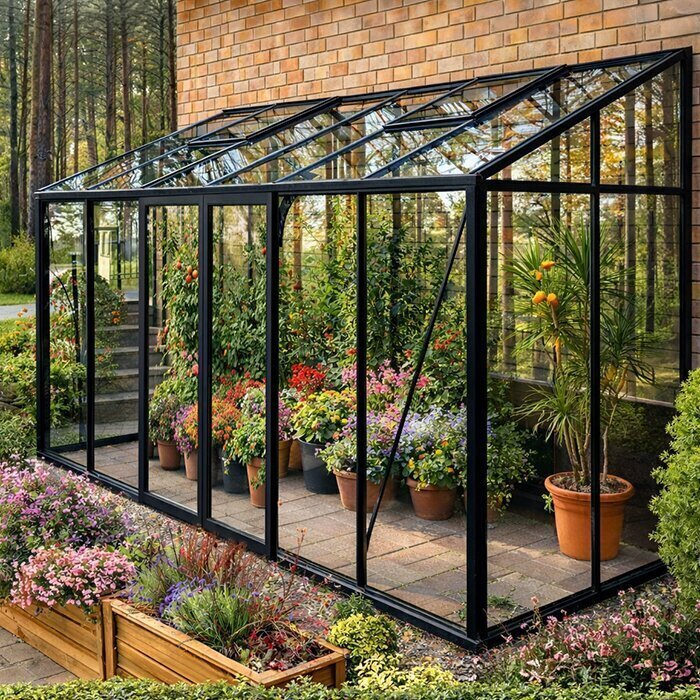
Choose the form and core specification for today’s site and planned use, while checking whether future changes are actually supported. Moving a greenhouse, changing its footprint, replacing its covering with another system, or adding openings may be difficult after assembly; the available options depend on the model. A page for an aluminum lean-to greenhouse belongs in a shortlist only after you verify its published layout and requirements against your site. Ask whether planned accessories have a stated compatible model or mounting method, and keep the answer with your order details. Do not assume a panel, extension, or door can be fitted simply because another greenhouse accepts one.
Treat ventilation as a core design question
Ventilation is a design decision, not just an accessory question. Look at the documented number, location, size, and operation of doors and vents, then compare those details with the plants, sun exposure, and seasons in which you plan to use the greenhouse. A greenhouse can heat up in sun, so the way air can move matters; do not treat a fan or automatic opener as a substitute for checking the basic opening arrangement. If the listing is unclear about whether an opening is included or optional, ask before buying. You are choosing a workable starting system, not a guaranteed temperature for every crop or weather condition.
Once the core layout suits your plans, you may be able to add an automatic vent opener, shade accessory, fan, or other control. First verify that the accessory is designed for the exact model and that its opening, frame, and placement are appropriate. Use manufacturer information, not a similar-looking photo, to establish compatibility. The page for the aluminum limited edition greenhouse is one candidate to inspect for published openings and included items, not evidence of any particular ventilation feature. If future equipment needs electrical service, consider its location early and have the work assessed by a qualified professional rather than improvising a route later.
03
Plan the working interior, not just the floor area
Plan the interior around movement, not a maximum count of pots. Sketch the space using product dimensions or drawings, then mark a route from the door to the places where you will water, tend, and move plants. Account for the benches or work surface you expect to use, plus the room needed to handle trays and supplies. Check usable height and door access in the manufacturer’s information rather than relying on the outside footprint. Consider whether you need space for potting or temporary staging, too. A tidy floor plan is useful only if you can carry things in and reach plants that need regular care.
Freestanding benches, pots, and tool containers are often easier to add later because they can be moved without modifying the greenhouse. That flexibility disappears if they fill the only clear route or depend on attaching a shelf to a frame not designed for it. A listing such as the Garden View T greenhouse should be assessed using its stated plan and interior details, not just its model name. Decide which work surface is essential on day one and which can wait. Mark future pieces on your sketch so they do not block an entrance, vent, or route you need for watering.
Consider water, power, and future equipment routes
Water and power plans can affect where a greenhouse belongs and what you can add later. Decide whether you will carry water in, use a hose, or want a watering system; consider where a connection would be convenient without creating a trip hazard or obstructing the entrance. For powered items such as lighting, fans, or automated controls, identify the intended equipment before planning a route. Do not improvise electrical connections or treat a product listing as an installation plan; ask a qualified electrician about the equipment and site. If water supply, drainage, or ground work is involved, seek suitable professional advice before making it part of your plan.
You do not need to buy every planned device with the greenhouse, but avoid making later installation impossible through a poorly chosen location or blocked access. Check whether the model’s documentation mentions compatible mounting points, openings, or service requirements, and whether a future item needs a specific fitting. For the Bloomcabin Oasis pyramid greenhouse, as for any option, use the listing and manufacturer information to answer those questions rather than inferring utility connections from the name. Put unresolved requirements on your pre-order list. A plan to “figure it out later” is risky when the answer could affect the shell, layout, or need for professional work.
04
Separate easy additions from compatibility-sensitive upgrades
Classify each planned upgrade by how it is fitted. Freestanding pots, trays, labels, and movable work surfaces generally offer more flexibility than items fixed to the frame. Shade material, automatic openers, lighting, fans, and irrigation components may depend on a specific opening, mounting point, power source, or greenhouse size. That does not mean they cannot be added; it means you should check the instructions for the intended model before counting on them. Write the exact model name and any part number beside each planned upgrade. A generic product description is rarely enough to establish that an accessory will fit.
Built-in features deserve particular attention because a product name may not explain precisely what arrives or how a feature is arranged. On a page titled an aluminum greenhouse with built-in storage, confirm the contents, dimensions, location, and whether related parts are included or sold separately; do not infer all those details from the wording alone. Apply the same care to shelving, benches, partitions, or storage sold for another model. If the information is missing, ask the seller or manufacturer for a written answer before committing. Keeping a compatibility record can prevent a later purchase from becoming an unusable extra.
Compare the complete order, not just the model name
Compare the order by what completes the greenhouse, not only by the headline model. Review which frame, panels, doors, vents, base components, fasteners, and other items are included, and which are optional or sold separately. The listing and order summary should make clear whether the selected product is a complete greenhouse or still needs essential parts. Check whether delivery, site preparation, or assembly is part of your purchase, if applicable, but keep those services distinct from equipment you may add months later. A staged plan works only if the first order can serve its intended purpose once the necessary structure is in place.
Make an add-on record before checkout with each item, the exact model it fits, the source of compatibility information, whether it is essential now, and a future budget estimate. A product page for the Bloomcabin Prestige Premium Greenhouse can be reviewed like any other candidate: read the selected configuration and included components rather than assuming the model name covers every accessory. Save the product information and answers for the options you choose. Packages and availability can change, so do not base a future plan on an add-on you have not confirmed can be ordered or supported for that model.
05
Set a staged budget without compromising essentials
Divide your budget into the complete greenhouse, any essential site work or service, accessories needed for the first season, and upgrades you can defer. Keep a reserve for ordinary project costs instead of spending the entire amount on optional equipment at checkout. Rank deferred items by how they would improve your actual routine, not by how many features a listing advertises. A shade accessory may matter more to your use than a bench, for example, while someone else may have the opposite priorities. Base the first-year plan on the plants and tasks you identified, not on an assumption that every possible upgrade will eventually be useful.
Compare the cost of buying an appropriate setup now with the combined cost of the base structure and the additions you expect to need later. Include separate shipping or fitting costs stated by the seller, and ask whether waiting affects compatibility or support; do not assume staged buying is automatically cheaper. A page such as Bloomcabin Orangerie can be included in the comparison, but use documented specifications, configuration, and included items rather than names or images. If an essential feature would be difficult to retrofit, prioritize it before a decorative or convenience upgrade.
Turn your priorities into an order plan
Write down the sequence before placing an order: define first-season tasks, measure the site, identify the shell and opening details you need, and check what is included. Next, list each hoped-for upgrade, when you might need it, and what information would prove compatibility. Separate confirmed options from assumptions. This record makes it easier to compare product pages fairly and keeps the first purchase focused on essentials rather than a long wish list. It also gives you a reference when you revisit upgrades after seeing how much space and time your first season actually requires.
Before checkout, confirm the exact model and selected options, published dimensions, required site preparation, package contents, and any compatibility answers that affect the shell or openings. If a future change relies on a structural alteration, special anchoring, or electrical work, have the manufacturer or a qualified professional clarify the requirements before purchase. After using the greenhouse for a season, revisit the list: keep upgrades that solve a real limitation, drop those that no longer matter, and add only equipment the structure can support. A sound staged purchase is complete enough for today and flexible only where the facts allow.
Frequently asked questions
Which greenhouse features should I buy up front?
Buy the parts that determine whether the greenhouse fits and works for your plans: the right footprint and form, a complete frame and covering, suitable access and ventilation, and any site preparation the manufacturer requires. Confirm what the order includes. Benches and optional controls can wait only if the basic design remains useful without them.
What greenhouse upgrades can usually wait?
Movable pots, trays, freestanding benches, and tool containers are often easier to add than changes to the shell, though they still need to fit the space. Shade accessories, automatic openers, fans, and watering controls are not automatically interchangeable; verify the exact model’s compatibility and any mounting or utility needs first.
Can I add on to or enlarge a greenhouse later?
Only if the manufacturer supports the specific extension or alteration for that exact model and your site can accommodate it. A similar name or material does not prove compatibility. Check the required parts, approved configuration, and any structural or installation implications before buying on the assumption that the greenhouse can grow.
Is buying a greenhouse in stages cheaper?
Not necessarily. Staging may spread spending, but separate orders could involve additional shipping or fitting costs, and a delayed accessory may not match a revised product package. Compare the full cost of the setup you need, including essentials now and verified future options, rather than assuming that deferring a purchase lowers the total.
How do I know whether an accessory will fit later?
Use the exact greenhouse model and the accessory instructions, or get confirmation from the manufacturer. Check connection points, dimensions, openings, and any service needs, and keep the answer with your order information. Product photos or a generic description are not enough to establish a fit.
The strongest staged plan starts with a complete greenhouse that already fits the site and supports your first-season routine. Choose the shell, access, and ventilation with care; then defer only the accessories that can be added without undermining those essentials. Keep compatibility information with your order and revisit the list after using the greenhouse. That way, each later purchase responds to a real need rather than an assumption about what the structure can accommodate.
