
Buying a Greenhouse Kit: Assembly Skills and Tools
Greenhouse buying guide
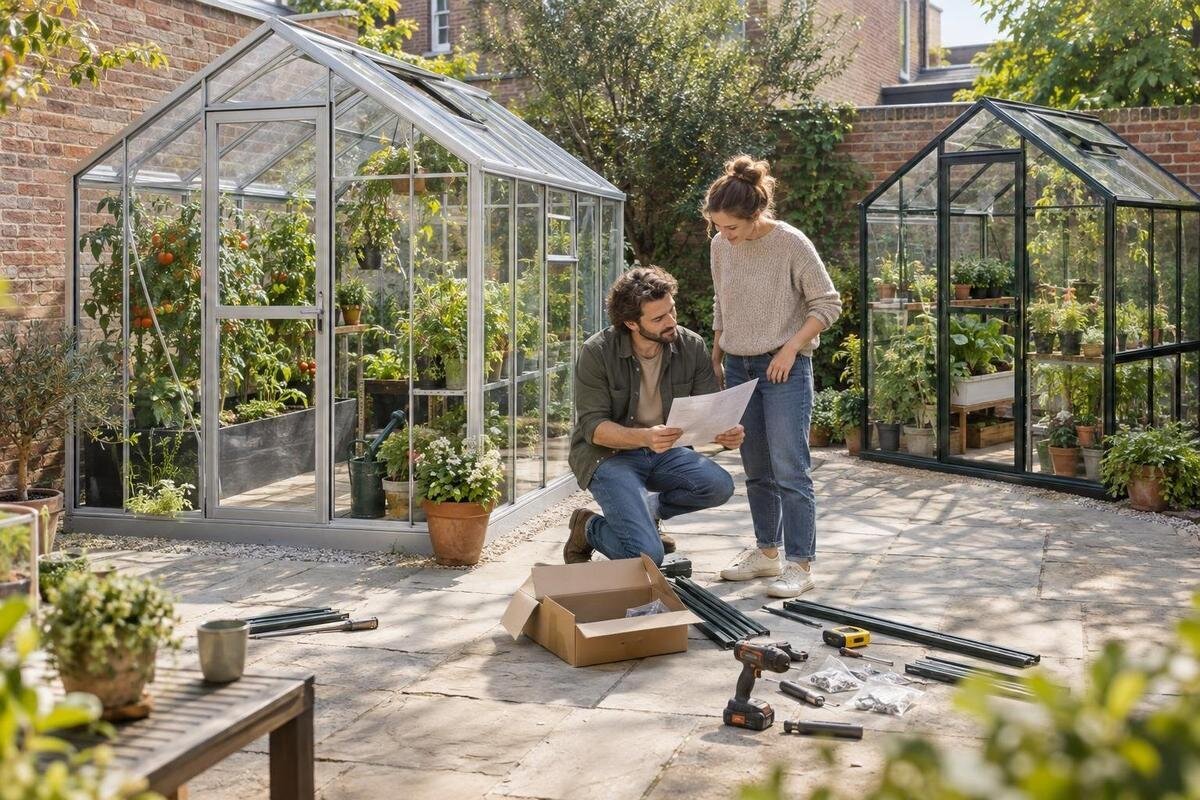
Buying a greenhouse kit also means choosing the assembly work that comes with it. A structure may suit your growing plans yet be a poor fit if the instructions assume tools, lifting help, or site preparation you have not planned for. Product names and photos do not show how complex assembly is or what the package includes. Before ordering, look for the manual for the exact model, tool list, recommended number of people, and stated base or site requirements. Those details help you compare options with your experience and decide whether to assemble the greenhouse yourself, work with a helper, or ask about professional assembly.

Get the instructions for the exact kit
The first item to request is the assembly manual for the exact model and configuration on your shortlist. Check whether you can read it before purchasing and whether it includes a parts key, a fastener list, and steps in their intended order. A contents list should distinguish supplied components from items that need separate preparation; clear diagrams should identify pieces rather than leave you guessing from a photo. Notice whether part labels remain consistent throughout the guide. Also check whether the manual identifies a revision date, downloadable file, or support contact, so you know which document to keep available during the project. If all you can see is a brief product description, you cannot yet make a sound estimate of the skills or tools required. Note that gap before comparing kits.
Confirm that the manual matches the product page and any options you intend to select; instructions for a similar model may not cover the same parts. Ask whether the document is current and where base or site-preparation requirements are explained. An aluminum classic greenhouse listing is a product page to examine, not evidence about how assembly works: its name alone cannot tell you what the instructions require or what arrives in the kit. Base your assessment on the applicable instructions and stated package contents, and keep any unanswered questions about scope together.
Use the assembly sequence to gauge task complexity
Read the sequence for the kinds of work it describes, not just the number of pages. Depending on the design, directions may involve identifying similar pieces, aligning sections, repeating fasteners, positioning panels, or adjusting doors and vents. These are examples of task types, not a promise that every greenhouse kit includes them. Mark any steps that appear to require careful measuring, holding a part steady, or following a particular order. Pay attention to when the instructions tell you to check alignment, because correcting a mistake is usually easier before later parts are attached. Clear diagrams and labeled pieces can make unfamiliar work easier to understand, but they do not replace reading the steps before you begin.
Notice whether the manual explains how pieces are identified and when adjustments are made. If it uses an unfamiliar term or assumes a technique you have not used, ask for clarification before deciding the task is manageable. A video for a different model may leave out important differences. The name aluminum lean-to greenhouse does not reveal the assembly sequence or whether the instructions specify particular support; use the product-specific manual to answer those questions rather than guessing from the label.
Match the work to your experience
Take stock of the hands-on tasks you are comfortable doing. Useful experience might include following a multi-step diagram, keeping similar parts organized, measuring and aligning components, or fastening pieces consistently. Familiarity with furniture assembly can help, but it does not automatically mean greenhouse assembly will feel the same. Consider how you normally handle a project when several small parts look alike: a labeled work surface, separate containers, and a method for checking each completed step can prevent confusion. The manual may describe tasks you have not encountered before, so compare its actual steps with what you have done rather than relying on a general sense that you are handy.
If you are new to this kind of project, look for instructions you can understand and a clear way to get help with any unfamiliar steps. Decide in advance whether a capable helper, guidance from the supplier, or professional assembly could bridge a skill gap. A listing for a limited-edition aluminum greenhouse is not a difficulty rating; use the instructions for that specific product to assess the work. If the manual is unavailable, ask what skills it assumes instead of treating the missing information as proof that assembly is easy or hard.
Confirm the tools before adding them to your budget
Use the manual's tool list as your starting point. Instructions may call for measuring tools, screwdrivers, wrenches, or other equipment, but those examples are not a guaranteed list for every kit. Check for exact types or sizes and see whether the directions distinguish between a required tool and an optional alternative. A tool that looks similar may not be the one specified, so do not purchase a collection of equipment based only on a generic greenhouse checklist.
Compare the list with tools you already own or can access, and account for any missing items when planning the project. Check their condition as well as their availability: a tool that slips, has an unsuitable size, or cannot be used comfortably can slow down careful work. Buying, borrowing, or renting may each be worth considering, depending on the tool and how often you expect to use it. Find out which items, if any, are included with your order rather than assuming they come in the box. When reviewing the Garden View T greenhouse listing, as with any product page, rely on its stated contents and applicable instructions to establish the tool requirements.
Check whether assembly needs a second person
Look for a recommended number of people in the instructions and note the steps that may require more than one set of hands. Depending on the design, a task might involve holding a component in position while another is secured, or handling a part that is awkward for one person. Do not estimate the need for help from a product photo. If the guide does not state whether assistance is needed, ask before ordering so you can factor a helper into your plan.
Think about whether a helper will actually be available when you plan to assemble the greenhouse, not just in theory. Agree on the likely work period in advance and share the relevant instructions, so neither person arrives without understanding the task. The manual can help you identify where someone else may be useful and whether their role calls for a particular skill. If handling a component or reaching a task feels beyond your comfort, pause and seek capable assistance rather than improvising. A listing for the pyramid greenhouse Bloomcabin Oasis does not establish crew size; only the relevant instructions or a clear answer from the seller can do that.
Separate greenhouse assembly from site preparation
A kit's assembly work and the preparation of its location are separate questions. Check what the manufacturer specifies for the base or foundation, anchoring, and the condition of the site, and whether any of those items are included in the package. Read these requirements early, since site work may need to be completed before you can lay out parts or begin the assembly sequence. Do not assume that assembling the greenhouse is the only work involved, or that every kit uses the same preparation. These requirements can affect the tools, skills, and schedule you need to plan for before placing an order.
Keep site work within the instructions and your experience. If the stated foundation or anchoring requirements are unclear, or the work would involve unfamiliar construction, ask the manufacturer or consult a qualified professional about what your site needs. A product page such as the aluminum greenhouse with built-in storage should be checked for its own stated requirements; a product name does not establish what base or site preparation is needed. Get the relevant details before treating the kit as ready for assembly.
Read the package contents and exclusions
Review the contents list to understand what the order actually covers. Depending on the product, buyers may need to distinguish the greenhouse components and covering from a base, fasteners, tools, or other accessories. Do not assume that any of these items are included simply because they are commonly associated with a greenhouse project. If the page or manual does not say whether an item is supplied, ask directly and keep the answer with your order information.
The distinction matters for both preparation and assembly: a missing tool can usually be sourced, while a component or site requirement can change the project plan. When the order arrives, compare the delivered packages and visible labels with the documentation before beginning, and set aside any question about missing or damaged items for prompt clarification. Check whether the package description is clear enough for you to identify what you would receive, and ask what to do if a listed item is absent or damaged. The Bloomcabin Prestige premium greenhouse name, like any model name, does not confirm package contents. Use the current product details and instructions to verify what is included and what you need to arrange separately.
Estimate the time from the actual instructions
Avoid planning around a guessed number of hours. If the manufacturer gives an assembly estimate, check whether it applies to the same model, specifies a crew size, and accounts for site preparation. If there is no estimate, ask whether one is available and what work it covers. A time figure is useful only when you understand its scope; it may not include preparing the location, sorting parts, or dealing with interruptions.
Make a practical schedule around the steps you can confirm. Allow time to review the instructions, organize the supplied parts, complete any separately required preparation, assemble the greenhouse, and tidy the work area. Build in time to stop and check the manual if a part or step does not match your understanding; rushing to recover a schedule can make an unclear task harder to resolve. Plan around the availability of any helper rather than assuming you will have uninterrupted time. A listing for the Bloomcabin Orangerie cannot, from its name alone, tell you how long assembly will take. Use an applicable estimate or a clear answer from the seller to decide whether your schedule is realistic.

Choose between DIY assembly and outside help
Self-assembly is a better fit when you understand the instructions, have access to the listed tools, can meet any stated helper requirements, and are comfortable with the separate site work. A gap in one area does not automatically rule out the kit, but it does need a plan. Separate the tasks you can complete confidently from those that require help, rather than assuming a helper can solve every uncertainty once work has started. You might be able to borrow a tool, arrange help for a specific task, or choose professional assembly if that option is offered. Decide what support would be needed before comparing the total effort involved.
If you are considering outside help, first establish whether assembly assistance is available for the particular kit and what work it covers. Ask whether you still need to prepare the site or supply tools, and whether the person or service handles the tasks you cannot take on yourself. These questions help you compare a do-it-yourself plan with a supported one without assuming that any service is included. If no workable plan covers a task required by the instructions, pause the purchase decision until you can resolve it.
Compare kits with a written assembly checklist
A short comparison sheet can keep the buying decision grounded in the work each kit requires. For every option, record whether you can review the correct manual, which tasks it describes, the stated number of people, the exact tools, the package contents, and any base or site requirements. Add a place to record where each answer came from, such as the product page, manual, or seller response, so you can revisit the source if details conflict. Mark each item as confirmed, unclear, or not included. This separates facts from assumptions and makes it easier to see whether one option demands a tool or skill you have not planned for.
Compare the preparation each kit calls for, not just how familiar its name sounds or how straightforward its product photo appears. Consider the effort and cost of obtaining missing tools or help alongside the work you can do yourself. Before ordering, resolve any uncertainty that could change the assembly plan, the contents you need, or the preparation required at the site. The strongest choice is the greenhouse kit whose documented requirements fit your experience and resources, with a clear plan for any work you will not do alone.
Frequently asked questions
Can one person assemble a greenhouse kit?
That depends on the instructions for the exact kit and on the tasks involved. Look for a stated crew size and any steps that require parts to be held or handled together. If the manual does not say, ask the seller or manufacturer rather than assuming the greenhouse can be assembled solo.
What tools are needed for greenhouse kit assembly?
There is no universal tool list. The manual may call for measuring or fastening tools, but the exact types and sizes vary. Check which tools are required, whether any are included, and whether the instructions allow alternatives before buying or borrowing equipment.
Is a greenhouse kit manageable for a first-time builder?
It may be, but the word kit does not tell you how demanding assembly will be. Review the instructions for clear diagrams, labeled parts, and tasks you can confidently handle. If a step is unfamiliar, consider whether an experienced helper or professional assembly is an option before ordering.
Does a greenhouse kit include a base?
The word kit does not establish what is included. Check the product details and applicable instructions for a base, foundation or anchoring requirements, and any separately purchased items. If the package scope or site requirements are unclear, ask for clarification before you place the order.
Should I buy tools before the kit arrives?
It is safer to wait until you have the tool list for the exact model and know which items are included. If the manual is not available before purchase, ask for the required types and sizes first. Then compare buying, borrowing, or renting only the tools you actually need.
The best greenhouse kit for a do-it-yourself buyer is not necessarily the one with the simplest-sounding name or the shortest-looking parts list. It is the option whose instructions, tool requirements, site preparation, and helper needs are clear enough to assess against your skills and resources. Resolve the details that could change who must do the work or what you need to obtain. That makes assembly a planned part of the purchase rather than a surprise after the kit arrives.
