
Buying a Greenhouse on Black Friday for Next Spring: A Planning Guide
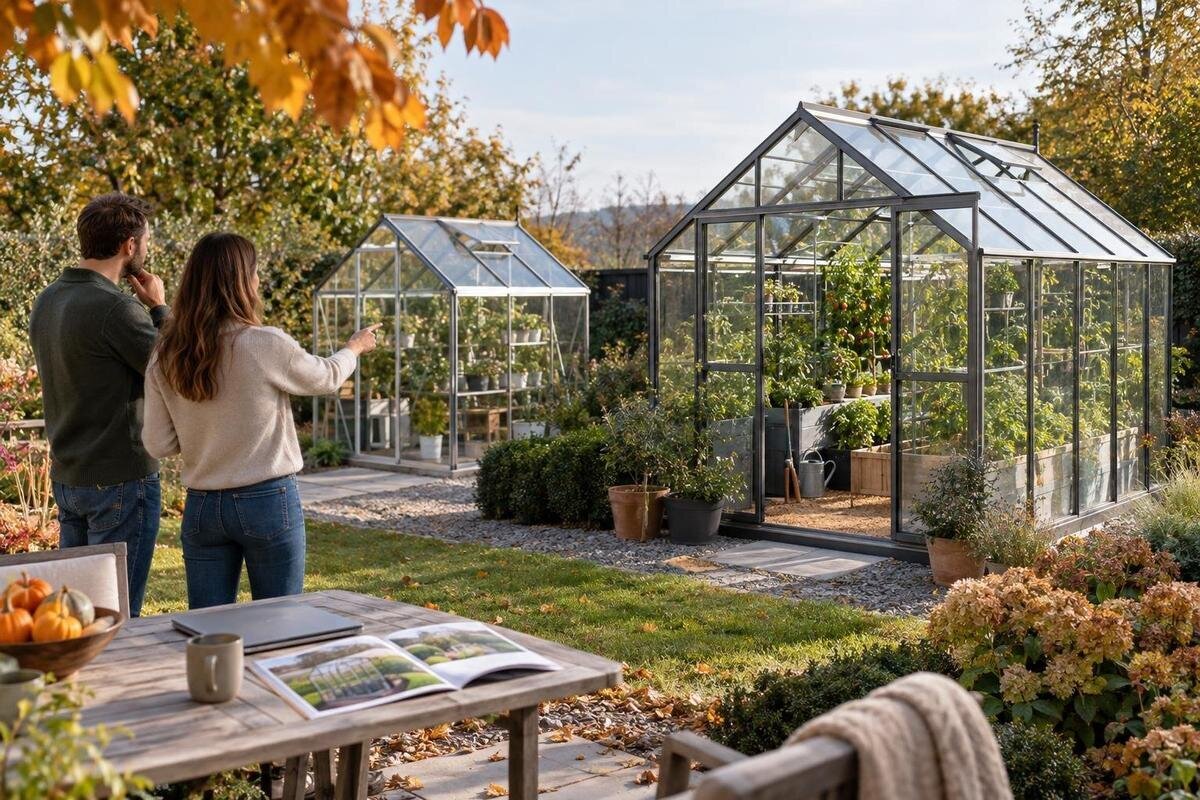
Greenhouse buying guide
Buying a greenhouse on Black Friday can give you time to plan for spring, but an appealing listing is useful only if the model suits your garden and can be installed before you need it. Use the winter planning window to settle the growing layout, site, specifications, delivery route, and installation plan. Verify any promotion separately; the date itself does not guarantee a discount or a delivery schedule.
How to assess Black Friday greenhouse offers
Black Friday can be a useful point to make a spring purchase, but the date alone does not establish that a particular greenhouse is discounted, in stock, or deliverable when you need it. If you buy a greenhouse on Black Friday, confirm the exact model, the current offer terms, any stated dates, eligibility rules, coupon requirements, and exclusions. Compare the same model and the same included components rather than relying on a headline percentage. A product title such as the aluminum limited edition greenhouse listing identifies an item; it is not proof of a Black Friday promotion or limited availability.
Before checkout, note terms that could change whether the offer works for you: whether it applies to your delivery address, what happens if the item is backordered, and what the seller’s stated cancellation, return, and order-change policies allow. Save the product details and order confirmation with the exact model and itemized contents so you can check that the order matches your plan. A promotional label or crossed-out figure alone cannot show the final amount or establish a saving. If price is a deciding factor, compare current, like-for-like offers and the checkout total; treat that as one part of the decision alongside fit, timing, and installation.
Work backward from your spring planting plans
Choose a target date based on your own planting calendar, then work backward. Allow separate time for confirming specifications, preparing the site, receiving the greenhouse, assembling it, and resolving unexpected issues. Aim to have it ready for its intended use, not simply to have placed the order by a date that feels early. If you are planning a particular crop or starting seedlings, use that plan to set milestones; there is no single spring date that suits every region and growing schedule. Leave a buffer between expected delivery and installation so a change in a carrier estimate or a stretch of unsuitable work weather does not immediately derail the plan.
Ask the seller for current shipping and delivery estimates for the exact item and your ZIP code, and find out how you will be notified if they change. Clarify where the carrier will leave the packages, whether an appointment is needed, and what access the carrier expects. Do not assume that a product page or a holiday order date guarantees a particular arrival week. Use the Bloomcabin Orangerie listing to inspect item-specific details, then confirm timing and delivery conditions for your address before setting installation dates. Keep a backup window if the structure needs to be ready by a particular gardening milestone.
Match the growing plan to usable greenhouse space
Write down what you want to grow and how you expect to use the space across the season. Count plant groups or containers, note whether you need a potting area or room to stage seedlings, and decide how much floor space should stay clear for moving around. A plan based only on how many plants fit can leave no practical route for watering, pruning, harvesting, or bringing supplies in. Sketching benches, beds, containers, and a work surface on graph paper helps reveal trade-offs before you compare product dimensions. Think about whether storage belongs inside the greenhouse or elsewhere; that choice affects how much room remains for cultivation.
Use dimensions and diagrams—not feature wording—to decide whether that plan fits. A listing named the aluminum greenhouse with built-in storage raises useful questions: what exactly is described as storage, where is it placed, and what fittings are included? Check the current product details for capacity, placement, and any effect on the planting layout instead of inferring those answers from the name. Compare the resulting usable growing area with your sketch, and leave room for equipment or containers you actually expect to use. If the layout works only when every inch is occupied, revise the plan before ordering; a greenhouse needs working access as well as plant space.
Measure the footprint and room around the greenhouse
Measure the proposed location at ground level and record its usable boundaries, not just the broadest width and length. Note fixed obstacles, trees, fences, doors, existing beds, and the route you use to enter the yard. Then check the greenhouse’s published outside dimensions and any drawing showing interior width, height, door position, and other openings. Those figures answer different questions: an exterior footprint helps establish site fit, while interior clearance helps you plan how benches, containers, and people will use the space. Do not treat a marketing image as a scale drawing. If the site is irregular, mark its shape and compare it with a plan before narrowing your shortlist.
Include working clearances in the plan. Make sure you can approach and use the entrance, reach planned growing areas, and get around the greenhouse for ordinary upkeep. Check how a door or vent moves, if the drawings show it, so it will not conflict with a fence or another fixed object. A name such as the Garden View T greenhouse listing does not tell you the usable layout or whether its footprint fits your plot; rely on the current dimensioned drawing and model-specific information. If the published details leave the door position or interior measurements unclear, ask for a drawing before comparing capacity. Measuring can rule out a model that looks right in a photo but would be difficult to access in your chosen spot.
Choose a greenhouse format that suits the site
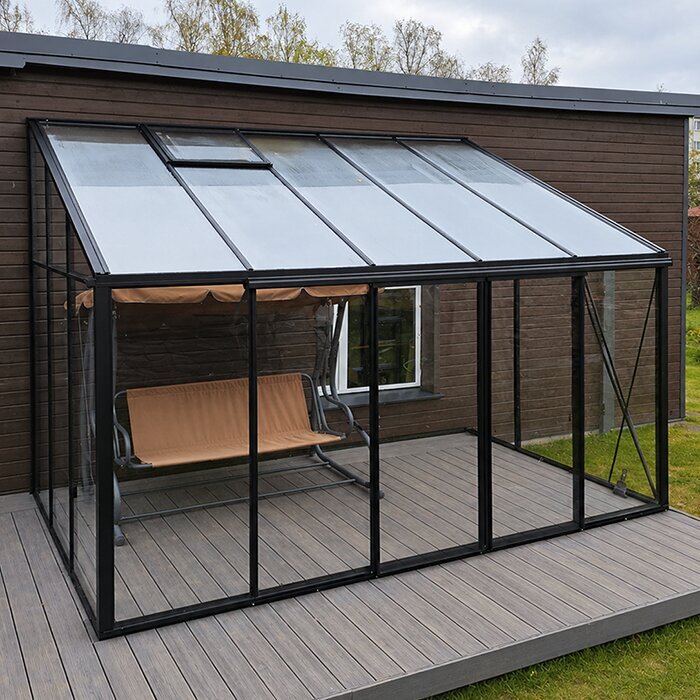
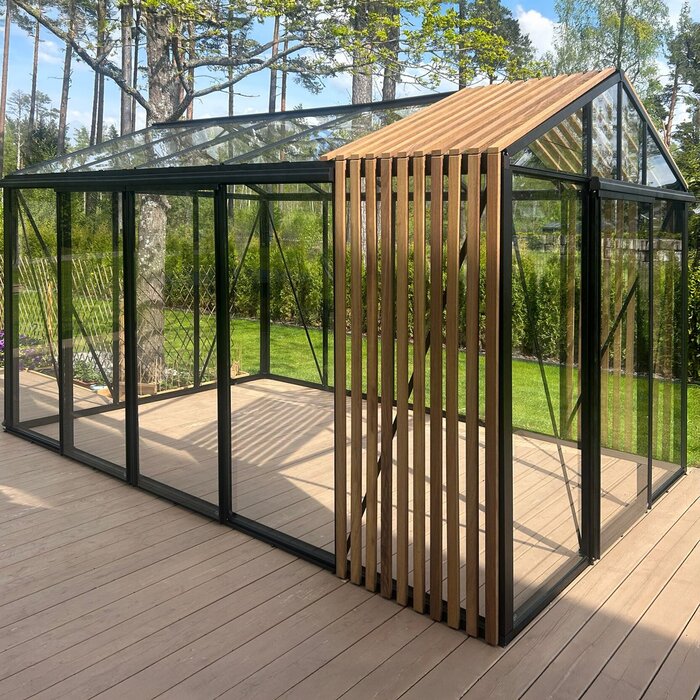
Decide whether the planned site works better for a freestanding greenhouse or for a format intended to sit beside another building. A freestanding greenhouse needs its own clear location and practical access; a lean-to arrangement has a different relationship to the wall and the building beside it. Check sunlight and shade at relevant times of day, nearby roof runoff, drainage, exposure, and room to open doors and maintain both structures. Conditions vary from one yard to another, so a format that suits a neighbor is not automatic proof that it suits your plot. Use the manufacturer’s placement guidance to identify conditions that may rule out a location.
If you are considering the aluminum lean-to greenhouse listing, verify its exact attachment, clearance, surface, and site requirements in the product details before deciding where it will go. The term lean-to is a format label, not a guarantee that a particular wall is suitable or that the unit can be installed against any building. For a freestanding option, check the stated placement and anchoring requirements rather than assuming the frame can stand on an arbitrary surface. Consider drainage and access after accounting for nearby buildings, not just the greenhouse footprint. Where site conditions or structural interfaces are uncertain, ask the manufacturer or a qualified installer to assess the fit before ordering.
Compare frame and glazing specifications
Compare the frame and glazing using the specification sheet, not the category label or appearance of a photograph. Confirm the stated materials for the frame and panels, panel thickness and configuration, how the glazing is retained, and whether replacement parts are identified. Check whether the manufacturer gives details relevant to your climate and exposure, such as stated wind or snow limits where applicable; do not infer those limits from a product’s shape, material name, or general sales language. If maintenance, insulation, or light transmission matters to your use, look for documented information on those specific points and compare models on the same basis. For site-specific structural questions, use manufacturer documentation and qualified professional input rather than improvised calculations.
The aluminum classic greenhouse listing is a product identity, not a complete materials or performance specification. Check the actual listing and manual for its frame construction, glazing type, measurements, included fittings, and installation constraints, then compare those stated details with alternatives. Distinguish standard components from optional upgrades, and look for clear information on replacement panels or parts if future repairability matters to you. A model that shares a material or style label with another may still have different specifications, so do not carry assumptions from one page to another. If a key property is not published, ask before ordering rather than treating silence as confirmation.
Check ventilation, access, and optional features
Ventilation, access, and small components can affect how convenient a greenhouse is to use, even when its footprint is suitable. Check the listed ventilation options, including any vents or windows, their locations, and how they operate. Consider whether you can reach them and whether their positions suit the way you plan to arrange beds or benches. Review the entrance width and door operation against the routes you will use to bring in pots, compost, or tools. Consider accessories such as shelving, shade, automatic opening devices, or irrigation only if they serve a real need in your plan. Confirm whether each item is included, offered separately, or compatible with the chosen model; do not assume a photograph shows the standard package.
Words such as premium in a product title are not a contents list. Evaluate the Bloomcabin Prestige Premium Greenhouse listing through its current specification and included-parts information, not by reading extra features into the name. Make a short list of the functions you need, then match each one to a stated component or a clearly compatible accessory. Verify that accessories fit the exact model and can be obtained on a timeline that works for your spring setup. This helps avoid ordering a greenhouse that appears complete in an image but leaves a key item unresolved. Keep the plan proportionate: add-ons should solve an identified need rather than expand the purchase without improving the way you garden.
Planning the base and assembly before delivery
Treat the base and assembly as part of product selection. Find out whether the manufacturer requires a particular base or foundation, what surface preparation is specified, how the structure is anchored, and which tools or parts are included. Details can vary between models, so do not use a general greenhouse guide or another product’s instructions as a substitute for the chosen model’s manual. If the site needs excavation, a constructed base, or an assessment of the ground, arrange that work in advance and use an appropriately qualified person where needed. The point is to confirm that the selected greenhouse and site can be brought together on a realistic schedule before you buy.
Locate the assembly instructions for the exact model, or ask the seller where you can review them, and check the assembly scope and any guidance on how many people are needed. The Pyramid Greenhouse Bloomcabin Oasis listing still needs its own drawings and installation information; its name does not specify a base, anchoring method, or assembly sequence. Decide whether you will assemble it yourself or hire help, then coordinate that choice with delivery and site preparation. Leave enough calendar space for the work and for resolving missing or damaged parts, without assuming how long a particular assembly will take. If the instructions refer to a condition you cannot assess confidently, get professional guidance before proceeding.
Check property requirements and access to the site
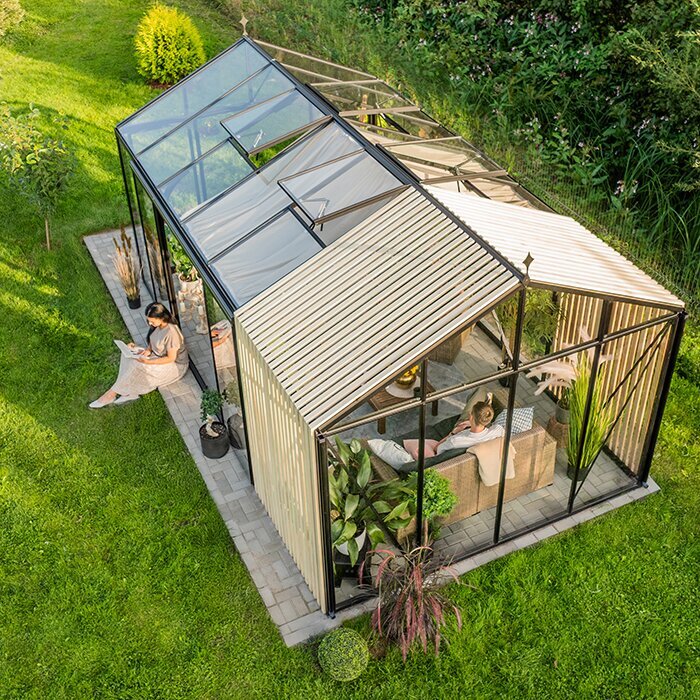
Before finalizing the location, check whether any property, neighborhood, or local requirements affect where or how a greenhouse may be placed. Rules can depend on the property and location, so do not assume that a small-looking structure is automatically unrestricted or that a neighbor’s setup settles the question. If applicable, ask your homeowners association, landlord, property manager, or local building and planning office what applies to your address. Check any relevant placement, height, drainage, or approval conditions before choosing a model, because a restriction may affect the footprint or format you can use. Keep written guidance with your planning notes, especially if the answer influences what you order.
Look for physical site constraints as carefully as administrative ones. Compare the delivery and assembly route with the package dimensions provided by the seller, and note gates, steps, narrow turns, low branches, and surfaces that may be difficult in wet or winter weather. Check where water will drain and whether shade or exposure differs from what you first observed. If site preparation requires digging, use the local utility-location service or a qualified contractor to identify buried services rather than guessing. For uncertain ground, drainage, or structural conditions, seek a site-specific assessment before ordering. These checks help prevent a model that fits on paper from becoming impractical to deliver or install.
Use a written comparison before you order
Compare your finalists against the same written record. Include the exact model name, exterior and interior dimensions, frame and glazing details, door and vent information, base requirements, listed inclusions, optional components, current offer terms, and delivery estimate for your address. Mark each item as confirmed, unanswered, or not relevant instead of filling gaps with assumptions. That makes differences visible and gives you a focused set of questions for the seller. If one greenhouse has clearer documentation, that is useful information in its own right; if another matches your growing plan better but has an unanswered installation condition, resolve that issue before treating it as a ready choice.
Review the order summary against your record immediately before submitting it. Make sure the model and selected options are the ones you compared, the delivery address and timing are correct, and the stated promotion terms still apply. Keep the written confirmation, product documentation, and any response about site requirements together; you may need them when coordinating preparation or assembly. A Black Friday deadline can make a decision feel urgent, but an offer should not replace the checks that determine whether the greenhouse can be used as planned next spring. If a core detail remains unclear, pausing is more useful than relying on a guess.
Frequently asked questions
Is Black Friday guaranteed to be the cheapest time to buy a greenhouse?
No. The date alone does not establish that a model is discounted or that a promotion represents a saving. Check the current offer terms and compare the same greenhouse and included components with other available options.
How far ahead should I order a greenhouse for spring?
There is no single lead time that works for every greenhouse or delivery address. Work backward from when you want to use it, confirm the current delivery estimate with the seller, and leave time for site preparation and assembly.
What measurements should I check before choosing a greenhouse?
Compare the available site dimensions with the greenhouse’s published exterior dimensions. Also review any interior measurements, door position, access route, and space for paths, beds, containers, and upkeep.
Can I rely on a product name to compare greenhouse specifications?
No. A name identifies a product but does not replace its current specifications. Check the listed dimensions, frame and glazing details, ventilation, included parts, and installation requirements for the exact model.
Can I order a greenhouse before the site is fully prepared?
You can plan the purchase in advance, but first confirm that the model’s site and base requirements can be met and that delivery timing works with your preparation schedule. If the greenhouse may arrive before the site is ready, ask the seller how the packages should be stored.
A spring-ready purchase depends on more than choosing a greenhouse during Black Friday. Let your growing plan and documented specifications shape the shortlist, then confirm that the site, delivery route, and installation schedule work together. Treat verified offer terms as one comparison point, not as a substitute for those checks. If a core measurement, site condition, or delivery or installation detail is unresolved, settle it before checkout so the seasonal deadline does not decide for you.
