
Buying a Greenhouse Online: What to Check Before Paying
Greenhouse buying guide
Buying a greenhouse online means choosing from measurements and written specifications instead of walking around the structure. A polished photo can suggest its shape, but it can’t tell you whether the footprint fits your yard, how much room the door needs, what the panels are made of, or which components arrive in the package. Before paying, compare the product page with a measured site plan, then check the delivery route and the details in the order summary. The goal is to confirm that the exact listed configuration fits your intended site and that you understand what the order includes—not to decide from appearance alone.
Measure the clear space on the ground
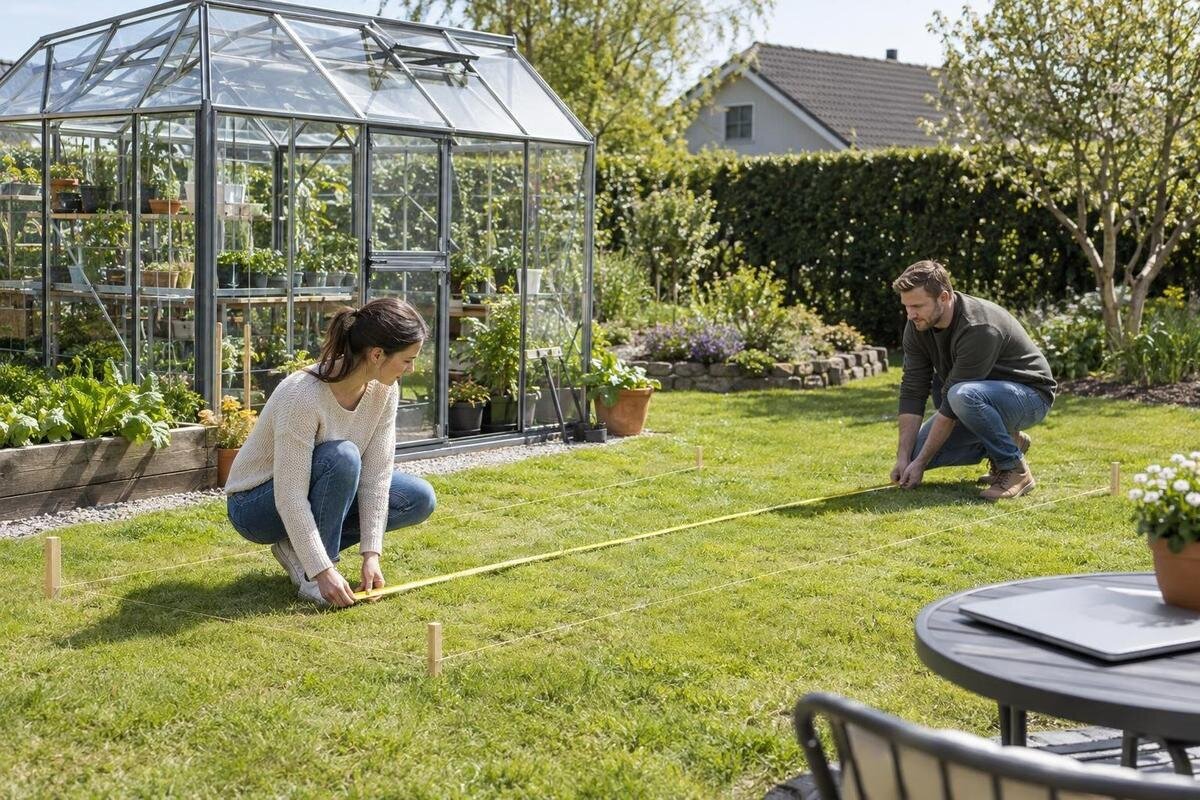
Begin with the area the greenhouse can actually occupy, not the bed you hope to fill. Measure the maximum usable length and width in feet and inches, and note anything that cuts into the outline: fences, walls, trees, eaves, utility equipment, drains, raised beds, or gates. On an irregular site, sketch the boundary and mark the narrowest points rather than reducing it to a generous average. Measure from fixed reference points and repeat the measurements where a boundary changes direction. Record which side can face the entrance and which sides must remain reachable; those choices affect more than the growing area. If you are measuring beside a house or boundary, note downspouts, overhangs, and service access as well. Mark permanent features separately from movable items so that a temporary clear area does not create a misleading impression of the available space.
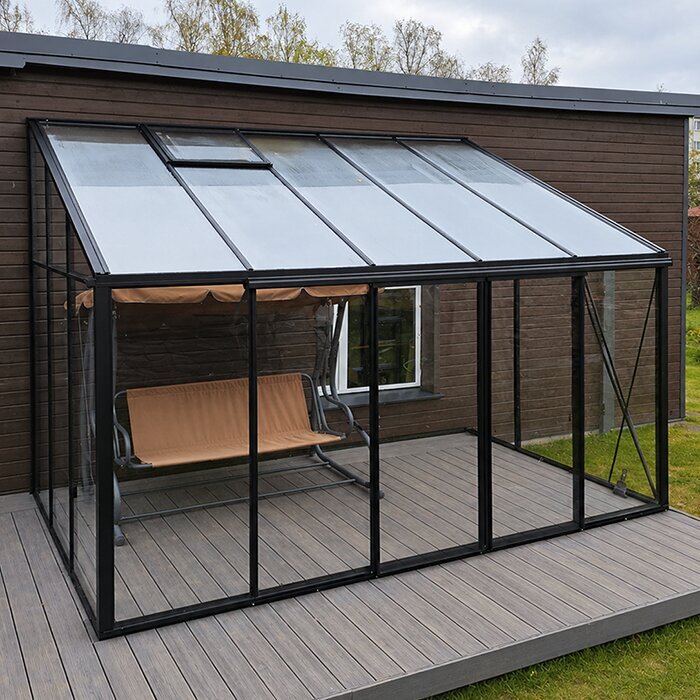
Separate the footprint from the room you need to work around it. You may need access to assemble the structure, clean panels, operate doors, or reach planting areas, but don’t rely on a universal clearance number: the space needed depends on the design and your plans for using it. On your sketch, outline the proposed location, show paths to the entrance, and mark any side that will be difficult to reach. A listing titled an aluminum lean-to greenhouse listing still needs to be checked against a measured plan for its exact position; its category name doesn’t establish its dimensions or the access your site will require. If space is tight, compare your measurements with the listed exterior footprint before deciding.
Compare the footprint with the dimensioned plan
A product page may give an overall length and width, but first check what those numbers refer to. They might describe the outside edges, base, roof projections, or another reference line; don’t rely on a figure until the dimensioned drawing labels it. Check whether the measurement includes eaves, gutters, trim, or a base rail, if present. Confirm the units and the orientation of each dimension, then match length to length and width to width on your site sketch. A greenhouse that appears to fit when rotated may put its entrance in a different place or change the access route. Write the dimensions directly on your sketch rather than relying on a mental comparison. This also makes it easier to see whether turning the structure creates a conflict with a gate, path, wall, or overhead feature.
Look for a plan view that shows the full outline, especially when the structure isn’t a simple rectangle. A model name such as the Garden View T greenhouse listing helps identify an item, but only a dimensioned plan can show which portions of the outline each figure covers. If the page gives only maximum length and width, ask what points those numbers measure and whether they include any projections or optional parts. Keep the answer with your site sketch. Compare the listed outside boundary with the same physical boundary on the ground, not with the area of a planting bed or a cropped product image.
Check peak and sidewall height
Length and width aren’t enough if the site has an overhead obstruction or a height limit. Check the overall height at the highest point and, separately, the sidewall or eave height; these measurements describe different parts of the greenhouse. If the page gives only a peak measurement, ask for a profile drawing or the other height details before deciding where shelves, tall plants, or a person will fit. The maximum height alone doesn’t show how much headroom is available near the sides, where the roof profile may slope downward. Compare the profile with nearby branches, eaves, wires, or other fixed features from the actual proposed position. A site can look open from a distance while having a localized obstruction exactly where the ridge or roof edge would be.
Confirm the surface from which the height is measured, especially if the product requires a particular base or supporting surface. Note any nearby obstruction and check whether the listed height refers to the greenhouse itself or to a separate component. A name such as the Orangerie greenhouse listing offers no reliable clue about peak or sidewall measurements, so use the product details rather than estimating from a photo. If the available vertical clearance is limited, ask for the relevant dimensions in writing before you pay.
Map the door opening and approach
A greenhouse can fit within the measured footprint and still be awkward to enter. Look for the clear opening width and height, not only the outside size of the door panel, and confirm where the entrance sits on the plan. Check whether the door slides or swings, which way it moves, and whether it needs clearance inside or outside. See whether a threshold affects the passage. If you plan to move a potting bench, cart, tray, or other large item through the opening, measure the item at its widest point and compare it with the stated clear opening. Consider routine use, too: a path that works for an empty-handed person may be inconvenient when you are carrying watering cans, plants, or supplies. Keep the approach clear enough for the way you expect to use the greenhouse.
Confirm that the configuration you’re considering includes the door shown in the listing, and check whether other positions or sizes are optional. A title such as a pyramid greenhouse listing doesn’t specify the entrance dimensions, opening direction, or usable passage. If the technical page doesn’t say whether a measurement refers to the clear opening or the door frame, ask before ordering. On your site sketch, mark the approach and the room needed to open the door so a fence, wall, path, or stored equipment won’t block access.
Read the frame and panel specifications
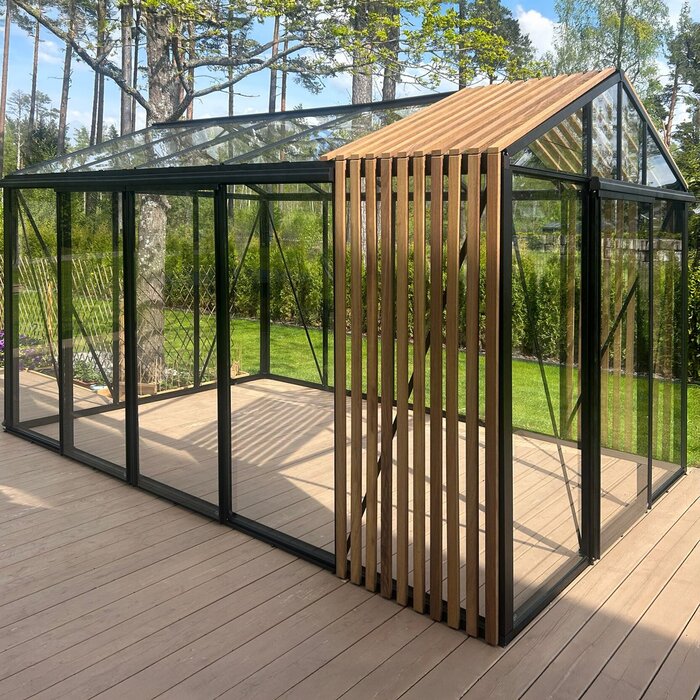
Treat the frame and the glazing as separate buying questions. Look for the material specified for the frame and the material used for the panels, including thickness or construction details where provided. A broad description such as “clear panels” may not tell you whether the product meets your preferences for visibility, cleaning, replacement, or upkeep. Compare the exact material names and any written care or replacement information instead of inferring details from a panel’s color, reflections, or appearance in a photo. Save or print the specification details you are comparing, particularly when several configurations appear on one product page. That gives you a reference for asking a precise question if a description uses a general term but does not identify a component clearly.
The name an aluminum classic greenhouse listing identifies a model; it isn’t a complete material specification. Find the details for both the frame and each panel type, and check whether the page distinguishes standard components from options. If the frame finish, panel construction, or replacement-part availability matters to you, ask for specifics tied to the exact configuration. Words such as classic, premium, or limited edition don’t establish an alloy, panel performance, or maintenance requirement. If replacement matters, ask how compatible parts are identified; don’t assume that a generic panel will fit.
Confirm what the order includes
Before payment, make a list of what you expect to receive and compare it with the contents information for the exact model and selected configuration. Check the frame, glazing panels, door, vents, fasteners, connectors, base components, anchoring parts, instructions, and any other item essential to your plans. Each may be included, excluded, or offered as an option, so don’t infer its status from a staged photo. If a component appears in an image but isn’t named in the description, confirm whether it is part of the order. Note quantities or sizes wherever the listing provides them. Distinguish required components from accessories you simply prefer, since that separation clarifies both the order total and what still needs to be sourced. Review the cart after each option selection rather than assuming a prior choice remains attached.
Pay close attention when a model name mentions an added feature. An aluminum greenhouse with built-in storage listing is an identifying title, not an inventory or measurement: confirm what storage component is supplied, its dimensions, and whether it’s included in the configuration you select. Check any bundle or accessory choice in the cart, and distinguish greenhouse components from tools, staging, or décor shown for presentation. An itemized contents list makes comparisons clearer and helps you avoid budgeting for an accessory that turns out to be separate.
Check the site and base requirements
Before assuming a patch of ground is ready, look for the manufacturer’s site-preparation requirements. Find out what kind of base or supporting surface the product requires, whether base components are included, and what the instructions say about the surface. A greenhouse footprint isn’t the same as a foundation plan. If the ground slopes, drains poorly, consists of loose fill, or has other constraints, don’t improvise a solution based on a photograph. Get the product’s written requirements and consult an appropriate qualified professional about site-specific support where needed. Check the proposed location after rain if drainage is uncertain, and note whether water collects along the intended edge. The goal is not to diagnose the site yourself, but to identify conditions that should be considered before the order is placed.
Conditions also vary from one site to another. Ask for model-specific documentation relevant to the exposure you expect, such as wind or snow guidance, rather than guessing from frame material, panel appearance, or a general description. A qualified professional can help interpret the information when exposure or base design calls for expertise; an online listing alone can’t establish suitability for every location. Confirm whether anchoring parts are supplied or specified separately, and whether the product instructions address them, before deciding what additional work or materials to arrange.
Plan delivery from the drop-off point
A greenhouse that fits the yard still has to reach it. Before checkout, look for the package count, dimensions, and weights, along with the stated delivery method and drop-off location. If those details aren’t shown, ask how the shipment will arrive and whether unloading or moving cartons beyond the delivery point is included. Don’t assume that delivery means placement at the greenhouse site. A limited-edition aluminum greenhouse listing identifies a product, not its carton sizes or delivery arrangements, so use the current shipping information for the exact order.
Trace a practical route from the drop-off point to the intended site. Measure gates, narrow passages, steps, corners, and overhead clearance, and note whether the route includes gravel, a slope, or another obstacle that could affect moving packages. Check who is responsible for unloading and whether an appointment, equipment, or additional help is required, using the seller’s current terms rather than an assumption. Read the instructions for reporting missing or damaged packages, and keep your order details available when the shipment arrives. Planning this route helps prevent a mismatch between the delivery point and the location you measured. If access changes with parked vehicles, locked gates, or a shared driveway, account for those practical conditions in advance. A route that is technically wide enough may still be unusable at the time of delivery.
Review the listing and order terms
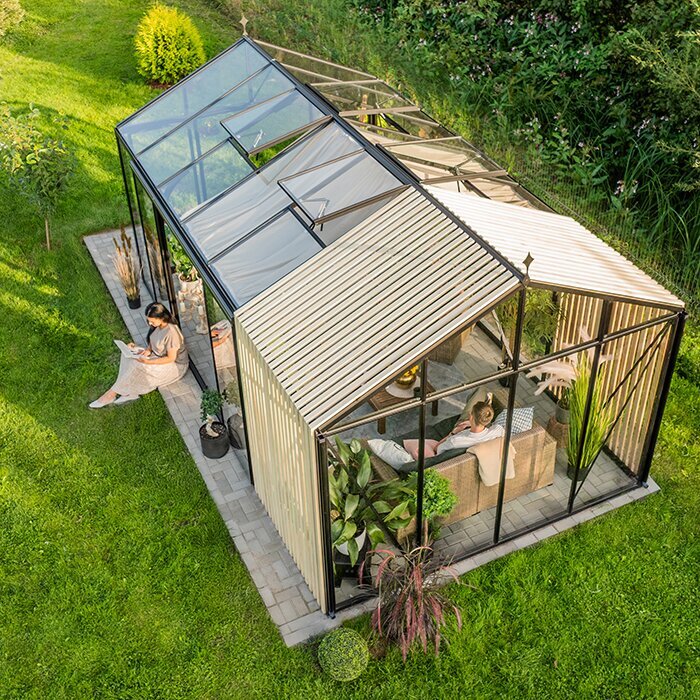
Just before purchase, verify that the item in your cart matches the model and configuration you assessed. Recheck the product name, selected size or options, quantity, panels or accessories, delivery destination, and the dimensions in the detail page. Product pages may show several configurations or let you add parts separately; an image for one option doesn’t automatically describe another. A listing called the Prestige premium greenhouse listing still needs to be matched with the exact choices in your order summary, rather than identified by its name alone.
Read the current checkout and seller terms for shipping charges, taxes, returns, cancellation, warranty coverage, and any stated reporting deadlines. Don’t rely on an old screenshot or a general assumption about what applies. These details can matter if dimensions or package contents differ from what you understood. If a specification is missing or two parts of the page conflict, ask the seller to clarify the exact model and configuration in writing before paying. Keep the relevant product details and written answers with the order confirmation for reference. Compare the written reply with the cart description before you submit payment, especially if the question concerned an option, accessory, or included component. This simple record can prevent confusion about which version of the listing informed your decision.
Use a comparison record before checkout
Turn your requirements into a compact comparison rather than relying on memory. For each model, record the outside footprint, peak and sidewall heights, door opening and position, materials, included components, base requirements, package information, and delivery method. Note where each figure came from, and mark it confirmed, unanswered, or not applicable. That record makes gaps easier to spot: a blank for a dimension isn’t evidence that the greenhouse fits, and a product photo can’t fill in a specification. Use the same units and measurement definitions across each listing you compare. Add the date you checked each listing, because current product and checkout details may change. A short notes column for questions sent and answers received also helps separate confirmed information from assumptions made while browsing.
Check the figures against your site sketch and the items that matter most to you. Your choice should account for the available area, the entrance and package route, essential components, and the site requirements for the base and delivery. If an important point is still unresolved, pause checkout and ask a focused question rather than deciding from appearance or headline wording. This is the practical value of a greenhouse buying checklist: it turns an attractive page into a decision grounded in details you can verify.
Frequently asked questions
How do I compare a greenhouse footprint with an irregular site?
Sketch the usable area and mark its narrowest points, then compare the outline with the product page’s dimensioned plan. Check what the listed length and width measure, and whether they include projections or a base. Leave room for the access you need rather than comparing the greenhouse only with a planting bed.
Which greenhouse heights should I check?
Look for the overall peak height and the sidewall or eave height; they describe different parts of the structure. If headroom matters for shelving, tall plants, or moving around inside, ask for a profile drawing or interior measurements as well. Confirm where the height measurement starts.
Can a product photo confirm the greenhouse materials?
No. A photo can help you recognize a model, but it cannot reliably specify the frame material, panel construction, thickness, or finish. Check the written details for both the frame and glazing, and ask for clarification if a material or replacement part matters to your decision.
How do I know whether accessories are included?
Read the contents list for the exact model and configuration, then compare it with the options in your cart. Check items such as the base, door, vents, fasteners, and accessories individually. If something appears in a photo but is not named in the listing, confirm whether it is included or sold separately.
What should I check about delivery before paying?
Confirm the delivery method and drop-off point, and look for package counts, dimensions, and weights. Check whether unloading or moving packages to the build site is included, and measure the route from the drop-off point to the intended location. Read the instructions for reporting missing or damaged packages.
An online greenhouse is a sound choice only when the dimensions, opening, components, site requirements, and delivery path make sense together. Keep your measurements and the answers you receive with the exact configuration you reviewed; they give you a clear basis for comparing models and checking the order. When an important detail is missing, treat it as unresolved rather than filling the gap with a guess or a product photo.
