
Buying Your First Greenhouse: A Step-by-Step Decision Guide
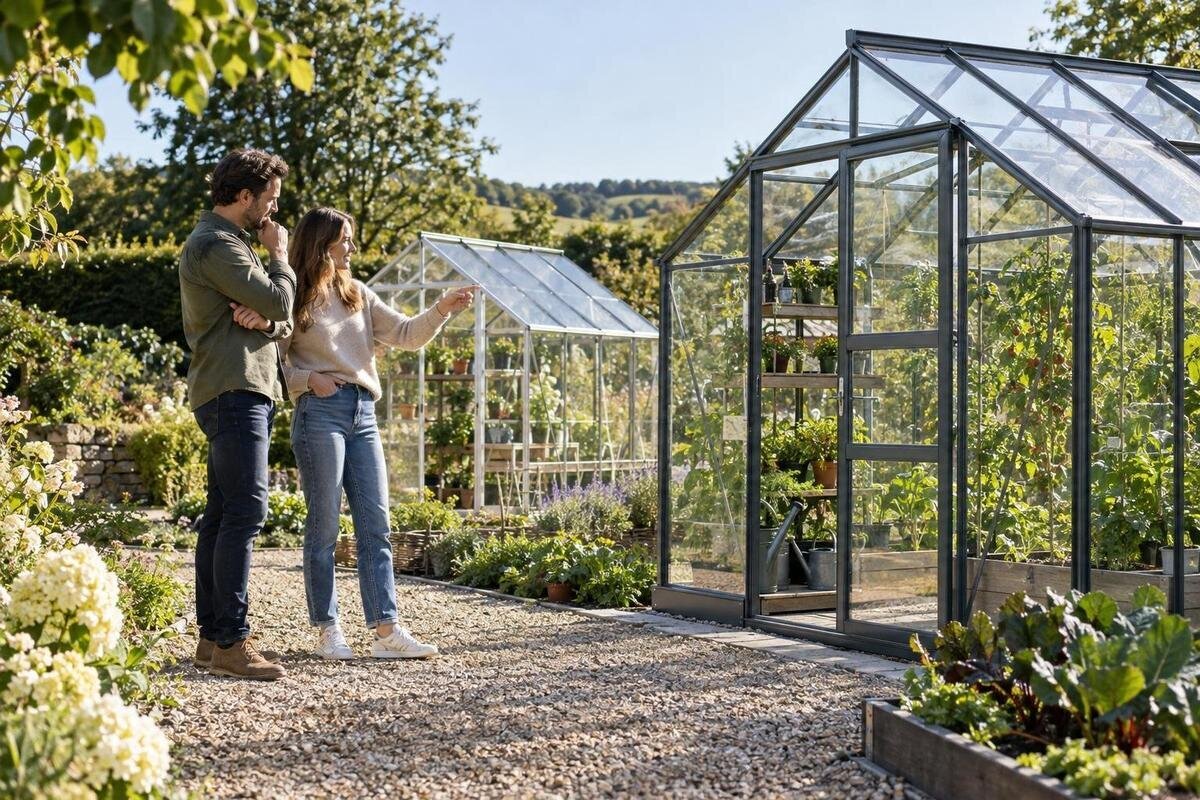
First-time greenhouse buying guide
Buying your first greenhouse is easier when you treat it as a growing workspace, not just a shape you like. What you plan to grow, how much time you can give it, and what your yard can accommodate all affect the choice. A model that looks appealing can still disappoint if there is no room for a path or if its setup requires more work than you expected. This guide follows a practical order: define your growing goals, measure and evaluate the site, compare styles and materials, then review the whole purchase before deciding.

1. Define what you want to grow
Begin by naming the job the greenhouse needs to do. Starting seedlings, growing vegetables, protecting tender plants, and extending the growing season are different goals; you may also want a place to work with pots, trays, or supplies. List the plants you expect to grow, the months you expect to use the space, and whether you prefer beds, containers, or a mix. Note roughly how many plants you need to accommodate and which tasks you want to perform inside. These choices affect how much bench space, floor area, and headroom matter. A short list keeps a first purchase grounded in actual use rather than an attractive product photo or a goal that may be difficult to maintain.
Separate essentials from experiments. If you plan to start seedlings, a reachable work surface and room to move trays may matter more than decorative details. If you expect to grow larger plants, consider their mature height and the space needed to water, prune, or harvest them. For winter growing or powered equipment, account for the additional operating and setup requirements before selecting an enclosure; a greenhouse by itself does not guarantee suitable heat, light, or ventilation. Write down your top three must-haves and a couple of compromises you could accept, such as less storage or a simpler outline. This makes it easier to compare models on function instead of letting an extra feature set the agenda.
2. Measure the usable space
Measure the maximum footprint the yard can spare, then measure the route to it. A greenhouse needs more than an empty rectangle: allow for the door opening, access to the outside for cleaning, any planned work area, and existing obstacles such as fences, trees, paths, and roof overhangs. Record the longest and narrowest dimensions rather than estimating by eye. Note overhead limits and the location of gates or tight turns, too, since the structure or its packaging may need to pass through them. A quick sketch with measurements makes comparisons more reliable and can reveal a space constraint before you have chosen a model.
Include height and maintenance access in the site plan, not just floor footprint. Leave room to reach the outside surfaces and keep the area around the greenhouse usable; avoid squeezing it against another structure just to make the dimensions fit. Check any property restrictions that apply to your site before committing. Use a product page, such as the Bloomcabin Orangerie page, to look for exact footprint and height details; if a measurement is not shown, ask before choosing. Compare the model’s stated dimensions with your sketch, including where its door is positioned and how it opens.
3. Evaluate light, water, and exposure
Light is difficult to judge from a single visit. Notice where shade falls in the morning, midday, and afternoon, and remember that nearby trees may cast different shade when their leaves are present. Consider the part of the year when you expect to grow, since sun angle and vegetation change through the seasons. A spot with the most open sky is not automatically the best choice if it is exposed to conditions your planned plants or the selected covering may not suit. Compare candidate areas based on what you observe, then check the specific model’s stated requirements rather than choosing by compass direction alone.
Consider exposure and water movement as well as sunlight. Observe whether water pools after rain and where runoff from nearby roofs or paved areas goes. If the site regularly holds water or has a slope, ask a qualified installer or site professional how to prepare it rather than assuming one base will work everywhere. Think about how you will carry water, compost, pots, and tools to the greenhouse; a convenient route makes repeated care easier. If lighting or other powered equipment is part of your plan, discuss site and electrical needs with a qualified professional. These checks can rule out a tempting spot before you make a purchase.
4. Choose between freestanding and lean-to styles
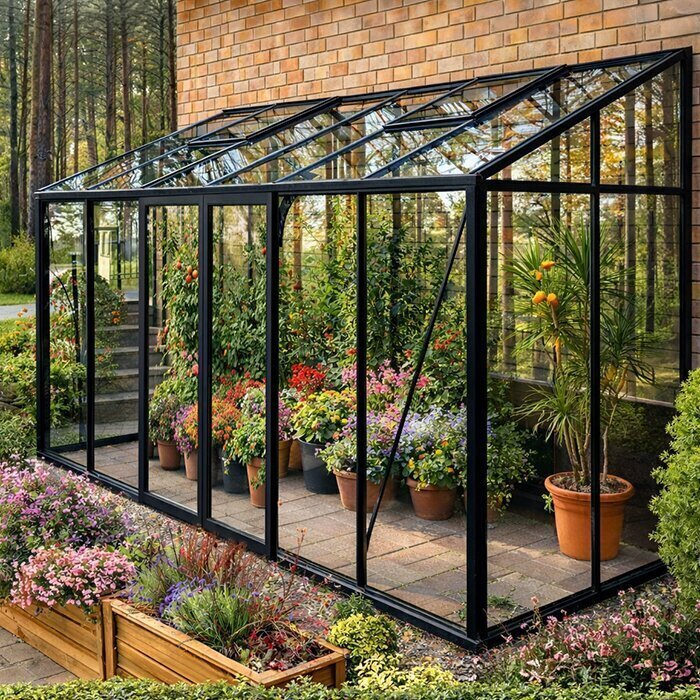
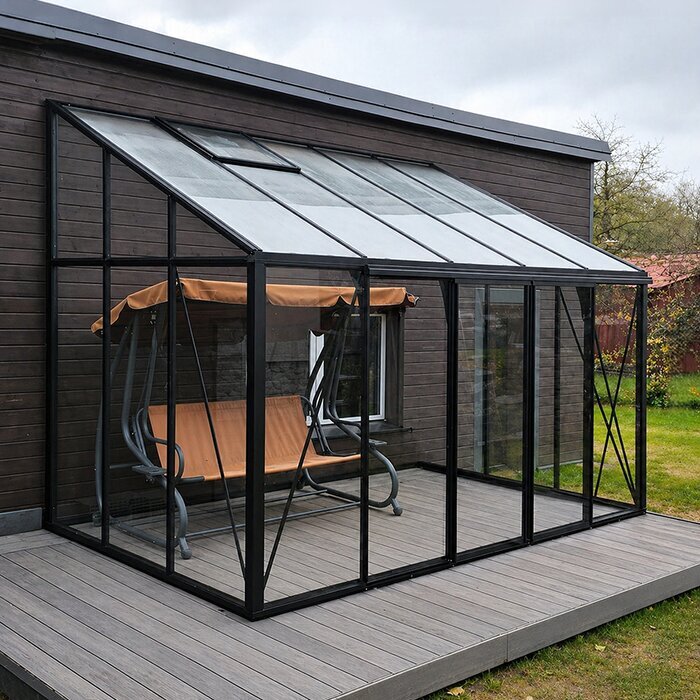
Choose the basic form by asking how it uses the space you measured. A freestanding greenhouse can sit apart from a house, giving you more choice about its position and access around its sides, but it uses a separate area of the yard and needs a route to reach it. A lean-to is arranged alongside a wall, which changes how it relates to the building and the available space. The wall and nearby features can affect light, ventilation, access, and runoff. These are general layout tradeoffs, not guarantees about any particular model. Think about which sides you need to reach regularly and how you will use the area in different seasons.
For a lean-to, assess the wall and its surroundings as part of the site, not as a blank backdrop. Check whether windows, doors, gutters, shade, or runoff could affect placement and everyday access. Compare an aluminum lean-to greenhouse as a style, but confirm the product’s specified placement and support requirements; the model name alone does not tell you whether or how it connects to a wall. If you are unsure whether a location or wall is suitable, ask the manufacturer or a qualified installer before ordering. A design that fits the available area on paper still needs to work with the actual building and the way you use it.
5. Compare the frame and covering
Treat frame material as a category to evaluate, not as a performance rating. An aluminum label alone does not tell you the frame profile, connector details, finish, fasteners, or how the frame meets its base; those particulars can differ between designs. If you are considering an aluminum classic greenhouse, use its product information to compare the stated construction details with your maintenance expectations and site conditions. Ask which components can be replaced and whether the materials are clearly described. Compare these details across your shortlist rather than judging from one label. Do not assume that a familiar material name guarantees a particular strength, service life, or weather performance.
Evaluate the covering separately from the frame. Check what the panels or other covering are made of, how their properties are described, and what care or replacement may involve. Useful points to compare include light transmission, visibility, insulation, cleaning, impact behavior, and the availability of replacement components, using the product information rather than assumptions about a broad material category. Also check whether the stated covering suits the conditions expected at your chosen site. A greenhouse can combine materials with different maintenance needs, so note them separately in your comparison. If an important detail is missing, ask for clarification before treating the option as a match.
6. Size the interior for plants and access
Outer footprint and usable growing room are different measurements. The frame, internal supports, door, benches, and wall shape affect where plants can go and how you move around. Check the listed width, length, overall height, and interior heights if available, along with the door location. Sketch the footprint on paper or mark it with string, then draw in the bench or bed sizes you expect to use and leave a route to reach every growing area. Include a place for staging a tray or pot if you will work inside. A greenhouse that looks spacious when empty can feel crowded once containers and working space are included.
Think about plants’ mature height as well as their starting size. Check whether you will be able to reach the upper parts of plants and work along the sides without blocking the route through the greenhouse. A product title such as the Garden View T Greenhouse page identifies an option to investigate, but a name does not establish its internal layout or usable aisle. Look for actual measurements or a plan, and compare those details with your sketch. Avoid adding capacity you will not use simply because a larger outline seems like a better value; more growing area also means more room to organize and care for.
7. Decide which features you will actually use
Features should support routines you expect to have. Consider how you will enter with pots or trays, where ventilation openings are located, and whether you can operate them when the greenhouse is arranged as planned. Decide whether shelves, benches, hanging space, or a water supply are important to your growing method. Check which features are included, which are optional, and whether accessories are compatible with the model. Product images may show a fully arranged greenhouse without clarifying what comes with it. A short list of necessary features helps you avoid paying attention to extras you will rarely use while overlooking something that would make daily care easier.
Storage can be useful, but account for the space it occupies and how easy it is to reach. A title such as the aluminum greenhouse with built-in storage is a reason to check what the storage area actually includes, where it sits, and how much room remains for plants and movement. Do not infer capacity or layout from the name alone. Make a simple inventory of what you expect to keep nearby, from hand tools to empty containers, and decide whether it belongs inside the greenhouse or elsewhere. Then check the product details for included shelves, fittings, or other components before treating them as part of the purchase.
8. Compare shape and visual fit
Shape affects more than appearance: it changes how a greenhouse occupies the yard and can influence where paths, plants, and work areas fit around it. Compare actual plans and measurements rather than judging by an exterior photograph. A model described as a pyramid greenhouse, for example, may have a different interior outline from a traditional rectangular design, but its name does not establish usable floor area or growing height. For a visual comparison, see the Bloomcabin Oasis pyramid greenhouse and check the available product details against your own layout. Pay attention to entry position and the room left for access, not just the overall silhouette.
Consider how the greenhouse will look from the places you use most, such as a patio, kitchen window, or garden path. A style that fits the surroundings may matter to you, but it should not take priority over access, light, and practical care. Check that planned planting beds, fences, and landscaping will not crowd the structure or obstruct the route around it. If the greenhouse is visible from the house, compare its outline and placement with the rest of the yard before deciding. A quick drawing or a marked-out footprint can help you judge the effect more realistically than a product image shown against an unfamiliar background.
9. Budget for the whole purchase
Set a total project budget, not just a budget for the greenhouse itself. Depending on your plan, you may also need to consider site preparation, a base, benches, containers, tools, delivery, or assembly. Not every buyer needs every item, and some components may be optional, so separate what you need before use from what can wait. Compare options on the same basis instead of assuming the lowest listed price represents the full project cost. If your growing plan includes heating or lighting, include setup and ongoing use in your own estimate; do not assume that systems are part of the enclosure. Leave room in the plan for site work you have not yet assessed.
Read current product information for the exact model and confirm details that affect your order, including included components, delivery arrangements, assembly responsibilities, and relevant support or coverage terms. A page such as the aluminum limited-edition greenhouse identifies a model, but its title alone does not establish current availability, price, included parts, or a promotion. Do not treat limited-edition wording as proof of a discount or scarcity. If a key detail is missing or unclear, ask before placing the order and keep a record of the answer. This gives you a clearer comparison than relying on a model name or an attractive image.
10. Shortlist options against your requirements
Once you know your site and budget, narrow the field using requirements that can rule an option out. Compare a small shortlist against your measured footprint, growing plan, preferred layout, and maintenance capacity. Mark each item as a match, a concern, or an unanswered question. Treat essential requirements differently from preferences: a color or decorative detail may be negotiable, while an access problem or missing dimension may not be. This method keeps comparisons consistent when products have different names and images. It also makes it easier to see which questions need answers before you spend time comparing less important features.
Before deciding, revisit the unresolved points and compare them with the exact product information. If you consider the Bloomcabin Prestige Premium Greenhouse listing, assess its stated details against your needs rather than treating the words in its title as evidence of performance or suitability. A sound choice is the model that fits your real site and growing routine with the fewest important unknowns, not necessarily the largest or most elaborate one. If a critical measurement, component, or setup requirement is unclear, pause the decision until you can confirm it. That final check can prevent a purchase based mainly on assumptions.
Frequently asked questions
How big should a first greenhouse be?
There is no universal best size. Begin with the space you can use and maintain, then map the plants, benches, and walking route you need inside. Compare usable interior dimensions as well as the outside footprint, and account for the door opening and access for routine care.
Is a lean-to or freestanding greenhouse better?
It depends on your site. A freestanding design offers more choice about where it sits, while a lean-to is arranged alongside a wall and needs careful consideration of the wall, light, access, and runoff. Check the specific model’s placement and support requirements before choosing.
Is an aluminum greenhouse a good choice for a first-time buyer?
Aluminum is one frame category to compare, not a guarantee of performance or fit. Review the particular frame, connectors, finish, covering, care requirements, and stated site conditions. Compare those details with other options and your maintenance expectations.
Do greenhouse kits include shelves, vents, and storage?
Inclusions vary by product. Check the details for the exact model, and distinguish included components from optional accessories. If the description is unclear, ask before ordering; a product name or photograph alone does not establish what comes in the package.
Should I buy a larger greenhouse for future plants?
Only if the additional space fits your site, budget, and care routine. Allow for plants you realistically expect to grow, but remember that a larger interior can also mean more space to furnish, maintain, and manage. Check the full footprint and access needs before deciding.
The right first greenhouse is the one that fits your real growing plans, site, and care routine. Measured space and a clear list of priorities make it easier to compare styles without being distracted by a product’s name or appearance. Take time to resolve important questions about layout, included components, and setup before choosing; a practical fit will matter long after the first look at the greenhouse.
