
Buying a Greenhouse for a Windy Garden: Site Assessment and Specs
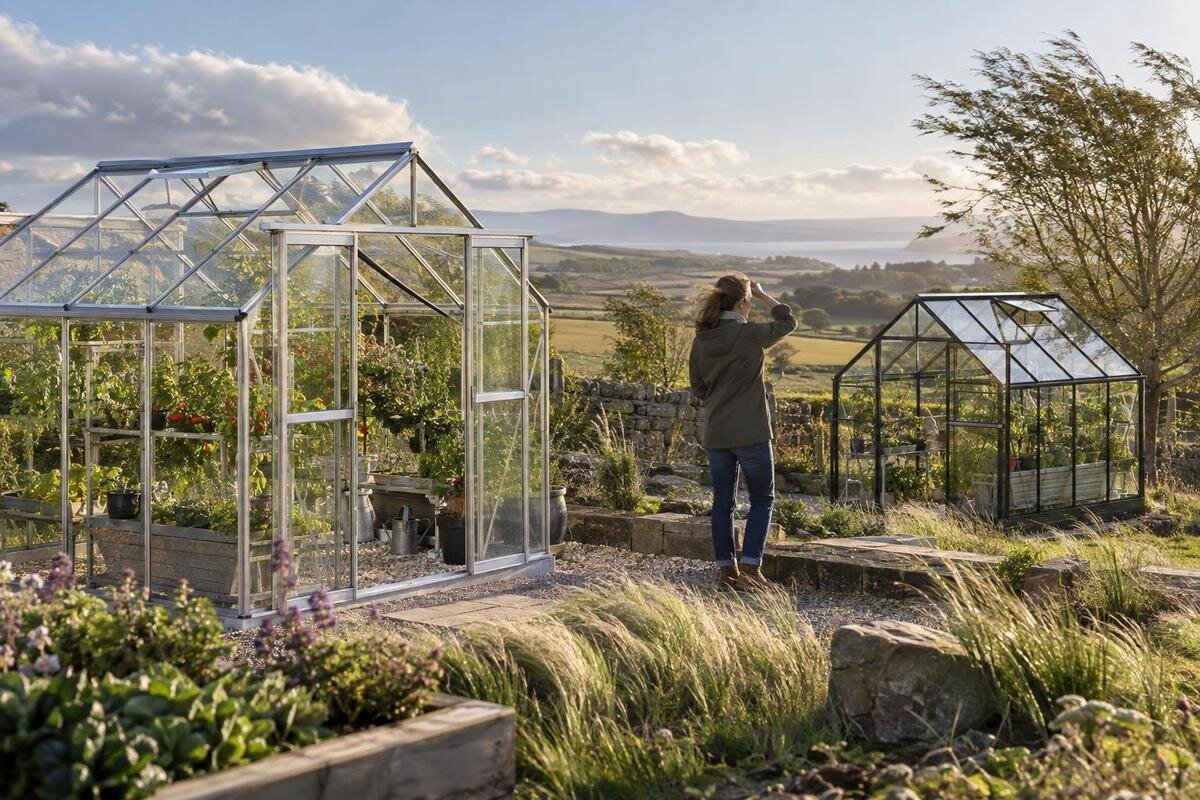
Greenhouse buying guide
If you plan to buy a greenhouse for a windy garden, base the decision on the proposed site and the complete documented setup. Exposure changes with direction, terrain, buildings, fences, and even the position of the footprint within one yard. Assess where gusts reach, what nearby shelter actually does, and what the ground can support. Then compare the frame, glazing, connections, anchoring, and any stated wind-load information for the exact model. The goal is to find a configuration that can be evaluated for your location, not to infer performance from a product name or material.

Wind exposure varies across a single yard
Begin with the proposed footprint, not a general impression of the yard. Note which directions bring the strongest or most frequent winds, whether the site is open or surrounded by buildings, and whether nearby terrain rises, falls, or narrows. Conditions can change within a short distance: a sheltered patio may not represent an exposed back corner, and a gap between buildings can channel gusts. Record differences by season as well. Leaf cover, temporary screens, and winter exposure can change the protection you perceive. If observations are limited, use reliable local wind records as background, not as a guarantee for one garden. Pay special attention to the first strong storms after seasonal changes, when your usual impression of the site may prove incomplete. Photographs or dated notes from these walks can help distinguish recurring exposure from a one-off weather event.
Walk the footprint from more than one direction and sketch likely gust corridors, barriers, and areas that remain sheltered. This greenhouse site assessment helps you ask better questions, but it cannot establish a structure’s capacity. If the aluminum classic greenhouse is on your shortlist, check the exact model documents for stated wind criteria, dimensions, frame and glazing configuration, and anchoring instructions—or ask where that information is available. The product name alone provides none of those answers. Mark missing details as unresolved, rather than filling them in from appearance, and keep the map as you compare other models or possible locations.
Nearby shelter can also change airflow
Assess each nearby barrier rather than simply labeling the plot sheltered. A wall, fence, hedge, or outbuilding may block wind from one direction, while its ends, corners, or gaps can change airflow. Vegetation also changes with the seasons and needs maintenance; overhanging branches introduce a separate impact concern. Record which side each barrier protects, how its height compares with the proposed greenhouse, and whether open approaches leave the site exposed when the wind shifts. A temporary screen or leafy summer hedge is not a substitute for documented greenhouse performance.
An attached greenhouse needs a separate check: the building it meets is part of the proposed arrangement, not a universal wind shield. Confirm that the model is intended for the attachment type and support surface you have, and ask how its instructions address the connection and anchoring. Wind can reach an exposed end or turn around a building corner, so a wall on one side does not settle the whole question. For an aluminum lean-to greenhouse, verify the manufacturer’s guidance for the planned location; do not infer a suitable setup from the lean-to label. If the wall or mounting surface is uncertain, have a qualified installer assess it before ordering.
Ground conditions shape the anchoring decision
Look closely at the area that will carry the greenhouse base. Lawn, loose fill, compacted soil, gravel, an existing slab, and a deck may call for different support and anchoring details; they are not interchangeable just because each can look flat. Check for soft patches, standing water, erosion paths, a noticeable slope, or soil that changes after rain. The model’s base must be supported in the way its documentation requires, and the footprint should not leave part of the structure on unstable or uneven ground. A level-looking surface does not demonstrate that it is suitable.
Establish the manufacturer’s requirements for the base before comparing finishes or accessories. Check whether a separate base or foundation is needed, what surface it must connect to, and what site-preparation assumptions apply. Avoid guessing at dimensions or anchor layouts. If the soil is variable, the ground is filled, or an existing paved surface has unknown construction, ask a qualified local installer or engineer to assess the situation. For the aluminum limited-edition greenhouse, as for any candidate, verify the requirements for the exact model instead of reading them into its name.
Compare the complete frame, not its material label
A frame’s material label is only one part of the comparison. Wind performance belongs to the assembled structure, including its profiles, spans, connectors, fasteners, braces, and reinforcement around large openings. Ask whether the available information describes the whole greenhouse or just a particular component. A sturdy-looking member or a material name is not a substitute for model-specific documentation. Compare descriptions and drawings for the same model and configuration, and avoid ranking frames by material alone. Note how doors and vents are treated, since openings can affect the surrounding frame design.
When comparing models, look for clear assembly and technical documents that explain the connections and any stated wind limits. A product page such as the Garden View T greenhouse identifies a candidate, but its title or shape does not establish joint strength. Ask whether the documented details apply to the size and options you want, and whether any parts needed for the stated setup are separate from the basic package. If the information is missing, contact the manufacturer before ordering. Keep the answer with your comparison notes so you can judge each candidate using the same evidence.
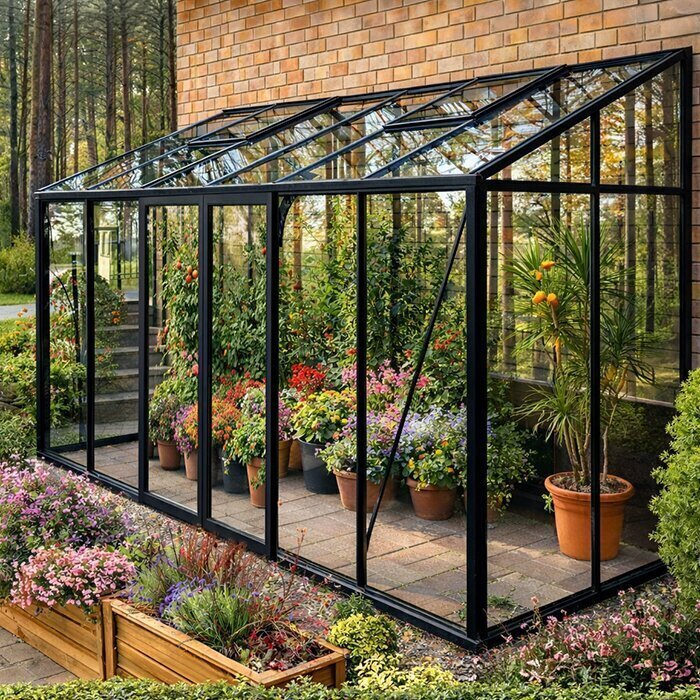
Check how the glazing is held in place
Glazing deserves the same scrutiny as the frame. Wind acts on the greenhouse’s surfaces, so check what panel material and thickness are specified, how the panel edges are retained, and which clips, channels, seals, or fasteners are used. The buying question is whether the exact glazing and retention method are covered by the performance information. A panel is not necessarily secure simply because it looks substantial or has a reassuring description; those details alone do not explain how it connects to the frame.
Find out whether the wind information changes with glazing choices, replacements, or other options. Compare the exact panels and retainers with the model documents, including how doors, roof sections, and vents are handled. The Bloomcabin Oasis pyramid greenhouse is a model name, not evidence of a particular glazing or wind-tested assembly; confirm those details in the documentation for the configuration you would order. Ask whether replacement panels and fasteners must match specified parts. Avoid assuming that one glazing material is inherently right for your particular exposure.
Confirm the anchor system and base as a pair
Treat anchoring and the base as a matched system. Find out how the frame is intended to connect to the base, which anchor types are specified, and what ground or foundation they assume. A stake, screw anchor, slab, or other attachment is not automatically suitable for every frame and soil. Compatibility needs to be established through the manufacturer’s instructions and an assessment of the site. Ask whether the stated wind information includes the specified anchoring arrangement instead of treating anchors as optional accessories. Do not improvise a layout or substitute hardware when the documents do not authorize it.
Make the package comparison explicit: are anchors, a base, and necessary connectors included, available separately, or outside the greenhouse package? The answer can vary by model and listing, so check the exact item and selected options rather than assuming a kit is complete. A title such as aluminum greenhouse with built-in storage says nothing about its foundation or anchoring arrangement. Ask for the installation documents and confirm who will provide any separately required components. If the ground or connection falls outside the instructions, get qualified advice before placing the order.
Read wind-load figures with their assumptions
A wind figure is useful only when you know what it represents. Ask whether it is a test result, a stated design limit, or another kind of specification; which units and wind convention it uses; and what exposure and installation assumptions apply. A speed value without its measurement basis or reference conditions cannot be compared reliably with another value. Check whether the document covers the complete greenhouse, a particular frame and glazing, a defined base, and a stated position for doors or vents. If a seller provides only a general claim such as wind-resistant, ask for the underlying model-specific information.
Compare each answer with your garden, not just with a competitor’s headline. The site conditions and the assumptions behind product data need to be understood on the same basis; do not try to convert or interpret engineering values yourself. Ask the manufacturer to clarify whether the exact model, selected glazing, anchoring system, and installation setup are covered. The Bloomcabin Prestige Premium greenhouse still needs that specific evidence; prestige or premium wording is not a wind rating. If the information is incomplete or hard to relate to your site, ask a qualified local engineer or installer to review it before you buy.
Fit the greenhouse to the site plan
Place the planned footprint on a simple site sketch and check more than its area. Note the direction the structure would face, the path you use to reach it, any door swing or access aisle shown in the model documents, and whether maintenance would leave one side pressed against a fence or hedge. Keep access in mind while observing wind: a convenient position may have different exposure from another spot in the yard. There is no universally correct orientation based on a greenhouse shape. Use the manufacturer’s stated conditions alongside the wind map you recorded.
Check the documented footprint and assembly clearances against the site before ordering, leaving room to handle components and work without blocking a path. Do not assume a smaller footprint or a particular roof outline automatically resolves wind concerns. For a candidate such as the Bloomcabin Orangerie, rely on the actual model plan and installation guidance—not the name—to check placement and access. If moving the greenhouse for shelter would put it on a slope, in a low wet area, or on an unsuitable base, account for that tradeoff rather than treating it as an automatic improvement.
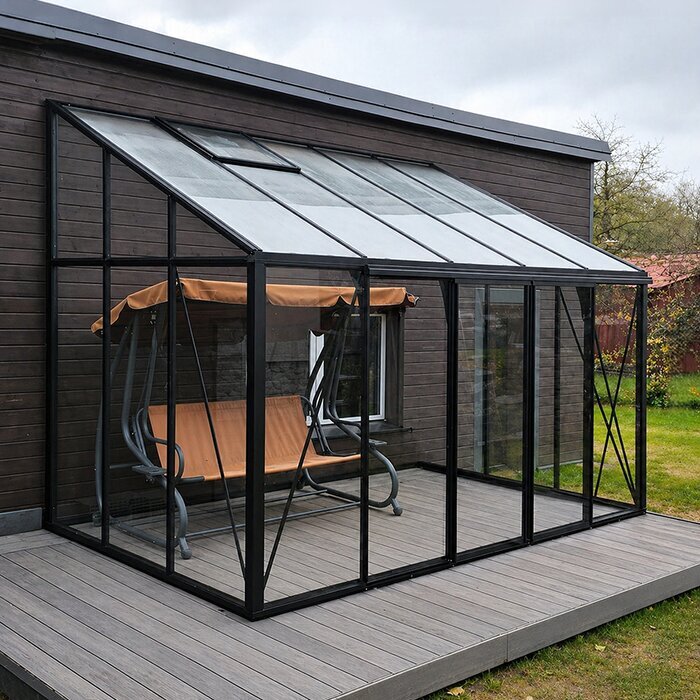
Verify package contents and delivery logistics
Before checkout, identify the exact greenhouse model and configuration behind the product page or quote. Make a list of what the package includes: frame pieces, glazing panels, retainers, doors, vents, connectors, anchor components, and any base, if listed. Confirm which choices are included and which are optional, then ask whether the wind information applies to the combination you selected. Product photos and a broad category name cannot establish what arrives in the box. Save the item description, specification documents, and written answers together so the ordered configuration matches the one you assessed.
Plan delivery and assembly logistics as part of the purchase. Check that the delivery route and unloading area can accommodate the shipment, and that you have a suitable place to store components according to the maker’s handling guidance. Ask who will assemble the greenhouse and whether that person needs to inspect the base before work begins. Avoid a plan that forces unsafe handling in adverse conditions; if the site or assembly is unfamiliar, consider a qualified installer. These checks do not change a wind rating, but they help prevent a mismatch between the product ordered and the structure actually assembled.
Make a documented comparison before ordering
A simple comparison table makes missing evidence visible. Put each candidate in a separate row and record site exposure, nearby shelter, ground and base requirements, exact frame and glazing, anchor method, wind specification and its assumptions, and package contents. Mark each item as documented, confirmed in writing, or unresolved; do not fill blank cells with conclusions drawn from appearance or a product title. This keeps an attractive feature or convenient footprint from distracting you from unanswered wind and anchoring questions. Compare only configurations that could actually be installed at the assessed location.
Use the comparison to decide whether a model is a fit or needs more investigation. If the manufacturer cannot clarify which wind information applies, or if its stated base and anchoring conditions do not match your site, pause rather than treating a general claim as approval. Share your site notes and the model documents with a qualified local professional when the ground, support, or wind basis needs technical interpretation. A sound purchase decision matches the complete documented setup to the garden—not simply a reassuring name or an apparently substantial frame.
Frequently asked questions
Is a heavier greenhouse automatically more wind-resistant?
No. Weight alone does not show how the frame, joints, glazing, and anchors perform together. Look for wind information for the complete model and the exact base and anchoring setup. If a specification is unclear, ask the manufacturer what configuration it covers.
Can a fence, hedge, or wall make an exposed site suitable?
Nearby shelter may change the wind reaching a site, but its effect can vary with direction, gaps, corners, and season. It does not prove that a greenhouse is suitable for the location. Treat shelter as part of the site assessment, not a replacement for model-specific wind information.
What wind-load rating should I look for?
There is no single number that answers this for every garden. First establish what the figure represents, which measurement basis and site assumptions it uses, and whether it covers the exact greenhouse configuration. Ask the manufacturer or a qualified local professional to help interpret it for your location.
Can I choose anchors separately after buying?
Do not assume that generic anchors will match the frame, base, or ground conditions. Check the manufacturer’s anchoring instructions and package details before ordering. If the specified base or anchoring approach does not suit your site, ask for professional advice before selecting a different setup.
Does a wind specification cover every glazing or vent option?
Not necessarily. Wind information may apply only to a particular model configuration. Confirm whether it covers your selected glazing, frame, base, anchors, and the stated position of doors or vents. Ask the manufacturer to clarify any options or installation conditions the documents do not address.
Choosing a greenhouse for a windy garden is a matter of matching the site to a documented, complete setup. Keep the wind map, ground assessment, model details, anchoring information, and any written clarifications together while you compare. If the relevant configuration or its requirements cannot be confirmed, do not treat an attractive listing as an answer. Resolve the uncertainty first, or set that candidate aside.
