
Choosing Greenhouse Shade Cloth: Percentage and Placement
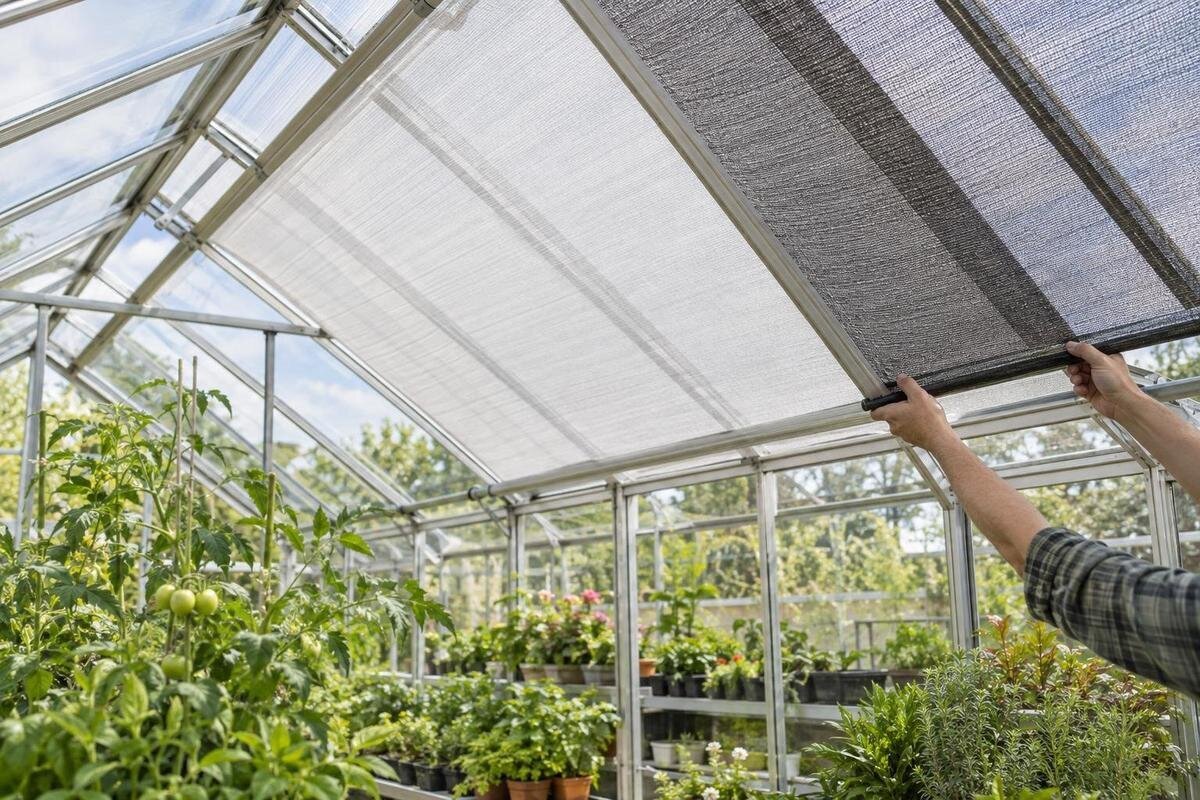
Greenhouse light management
Shade cloth is often sold by a percentage, but that figure alone cannot tell you whether it suits the plants in your greenhouse. The decision depends on crop-specific light needs, the light that actually reaches leaves through the day, and the locations where exposure is excessive. Measure first, confirm what the cloth rating means, and plan coverage around the affected crop zone. A measured, adjustable approach is more reliable than applying one percentage across every plant and season.

Why one shade percentage cannot fit every greenhouse
Shade cloth’s percentage is a starting point for comparing products, not a prescription for a whole greenhouse. Light reaching leaves varies with site orientation, season, nearby trees and buildings, glazing, and the hours of direct sun. Crops also differ: seedlings, leafy growth, flowering plants, and fruiting crops may have different light targets, and needs can change as plants mature. A cloth that reduces excessive exposure at one bright, open site may remove useful light from a greenhouse that is already partly shaded. A lower rating may also leave a persistent high-light patch largely unchanged. The percentage has meaning only alongside the crop target and a site measurement.
Before shopping, write down the crop groups, their positions, and the installed greenhouse model, then keep those details with your light notes. If you are considering the aluminum greenhouse with built-in storage, distinguish the planned growing area from storage and access space when drawing your crop map. Base coverage on where plants will stand, rather than treating the entire footprint as a single growing zone. Keep three questions separate: what light each crop needs, what the site currently supplies, and what a cloth rating claims to reduce. This gives you a useful buying brief: the crop zones requiring shade, their approximate extent, and the measurements that explain why.
Find the crop’s actual light target
Look for guidance for the crop, and, when available, the variety and growing stage, rather than relying on a general description such as “full sun.” A target expressed as daily light integral (DLI) or photosynthetic photon flux density (PPFD) can be compared with readings from an appropriate sensor. Outdoor guidance may not account for greenhouse glazing, local obstructions, or season, so look for greenhouse-relevant information from a seed or cultivar supplier, a university extension service, or another trusted horticultural reference. Note whether the recommendation is a range, minimum, or optimum, and what units it uses; those terms are not interchangeable. Plants sharing a bench may still have different targets.
Keep the source and date of the crop guidance in your notes, especially when a recommendation uses broad terms without units. If a reference discusses daily sun exposure but your meter reports PPFD, ask the source how to interpret the guidance rather than guessing. A brief midday reading and a full-day light total answer different questions: one describes that moment, while the other describes accumulated exposure. When planning crops for a Prestige greenhouse, record the target beside each proposed bed or bench so that crops with different requirements remain identifiable. If no numeric guidance is available, avoid borrowing another crop’s target and treating it as a precise threshold.
Read the shade cloth percentage correctly
Read the cloth label or technical sheet closely. A shade percentage is often used to describe how much light the fabric is intended to block, but the exact definition and test method can vary. Confirm whether the figure refers to shade, light transmission, or another measure, and ask what conditions were used to determine it if the information is unclear. Do not assume that a 40% label guarantees every plant will receive exactly 60% of its previous light. The greenhouse covering, frame shadows, sun angle, cloth position, seams, and clouds all affect the reading at the leaves. Products with similar numbers may not be directly comparable if their ratings use different definitions.
Cloth rating and coverage area describe different things. The Large Backyard Greenhouse is listed in sizes from 506 to 753 sq ft, but floor area is not the roof or wall surface area you would need to cover. Measure the intended shade span separately. Likewise, covering half a greenhouse with 40% shade cloth does not give every plant 20% shade: some plants may be beneath the cloth, while others receive light through uncovered areas. Keep fabric rating, panel dimensions, and covered crop zones as separate entries in your comparison. If a technical sheet lists transmission instead of shade, confirm its definition before converting the figure into a shade percentage.
Measure light where the crop grows
Use the same unit as the crop guidance whenever possible. PPFD measures the rate at which photosynthetically active photons reach an area, while DLI totals that light over the day. A quantum sensor can provide PPFD readings; measuring DLI requires an appropriate integrated reading or a reliable record across daylight. Lux meters weight light for human visual perception rather than plant photosynthesis. They may help compare locations under the same light source and conditions, but a single lux-to-PPFD conversion is not universal. Check the meter manual for its range, sensor orientation, logging interval, and units, and make sure the device suits the target you are trying to assess.
Take readings at crop-canopy height, not just near the roof, where exposure can differ from the light reaching leaves. Repeat the same positions and sensor orientation, following the meter instructions, and avoid shading the sensor with your body or a tool. Record the date, time, cloud conditions, crop stage, and whether existing shade was in place. The Classic aluminum greenhouse is listed in sizes from 40.6 to 302.3 sq ft; build your measurement route around the beds in your chosen size. Give each reading point a simple identifier on the map so you can return to it. Include both apparently bright and shaded positions to avoid selecting only the locations that support your initial impression.

Map bright zones before deciding where to cover
Compare crop locations across the greenhouse, including edges near walls or frames, central beds, and places affected by trees, fences, or nearby buildings. Take readings at different times of day: a bright patch may move, and a midday reading alone can miss morning or late-afternoon exposure. Repeat on more than one representative day when conditions differ, and note cloud cover rather than treating a cloudy reading as equivalent to a clear one. Check again as crops grow and their canopies change height. The goal is not a perfectly detailed survey; it is to find which crop zones repeatedly receive more light than their target allows.
Sketch the greenhouse footprint and mark beds or benches, crop groups, sensor positions, and the times when direct sun reaches each area. For a Lean-To Greenhouse, as for any named structure, assess the installed site rather than guessing its sun pattern from the label; nearby walls and other obstructions can alter exposure. Mark the roof or side areas that correspond to measured zones, without deciding in advance that all of them need cloth. A sustained excess over a whole crop group is different from a brief high reading in one corner. Identifying that difference helps you avoid shading plants that already receive suitable light.
Choose a percentage from the measurement gap
Compare the measured pattern with the crop’s stated target, but do not choose a cloth percentage by subtracting one reading from another. The target and fabric rating may use different units and test conditions, and the greenhouse covering already affects the light reaching plants. Use the size and duration of the mismatch to screen options: repeated excess across a bed supports testing more shade there, while readings at or below the target argue against broad coverage. If readings vary widely within one zone, look at where and how long the excess occurs rather than hiding that variation in a single average. The percentage narrows the choices; follow-up measurements show whether the installed combination works.
Make a comparison sheet for the cloth options, recording each manufacturer’s rating definition, available dimensions, and whether the instructions permit cutting or adjustment. Separate documented features from questions still awaiting an answer. If you are buying cloth alongside a Limited Edition aluminum greenhouse, keep the cloth specifications in their own column rather than assuming they are included in the greenhouse listing. Compare options with a similar rating basis before deciding that one provides more shade than another. Color or appearance alone is not a dependable measure of light reduction. Where ratings cannot be compared directly, ask the suppliers to explain their test basis and plan to verify the result at canopy level.
Place coverage over the areas that need it
Use your map to choose where coverage belongs. If a measured excess occurs over one bed or at a particular time, do not automatically shade every crop and glazed surface. Localized coverage can preserve light for crops whose readings already match their targets; a consistent excess across the growing area may justify assessing broader coverage. Where several crops share a space, group them by target and position before deciding which area to shade. Consider whether the cloth needs to be removable or repositionable as crops and seasons change. Let measurement determine the area and crop guidance determine the acceptable light, rather than using appearance or a blanket rule.
Draw the proposed shade area on your map and check it against bed boundaries, plant height, doors, vents, and access routes. When considering a T-Model Greenhouse Orangery, use the layout of the actual installation to mark separate crop zones and the panels that would cover them. Trace the shadow at the times when your readings showed excess light; a panel directly above a bed may not shade that same bed throughout the day. Account for gaps or overlaps specified in the cloth instructions, and check neighboring crops at different heights. This connects the measured problem to a practical coverage plan without assuming that every glazed surface needs the same treatment.
Check fit and access before buying
Compare the cloth dimensions with the actual area you intend to cover, and plan how routine greenhouse work will continue. Check whether doors and vents can move freely, whether you can reach plants and controls, and whether the cloth would block a route needed for watering or maintenance. Read both the cloth instructions and the greenhouse manual for approved fixing locations and methods; do not assume hardware shown in a general product image is compatible with your frame. If the attachment plan raises questions about the structure, wind exposure, or safe access, ask the manufacturer or a qualified installer before proceeding. The chosen percentage cannot compensate for a layout that obstructs normal operation.
For a Pyramid-type greenhouse, record the exact spans and shapes of the areas you intend to shade before selecting panel sizes. Ask the cloth supplier whether its quoted dimensions refer to the finished panel and how any edge finish or attachment allowance affects the usable coverage. Check whether fastening components are included or must be ordered separately, and have their compatibility confirmed against the greenhouse documentation. Note how the panel will be removed for cleaning, seasonal changes, or maintenance, using the approved method. These purchasing details belong beside the shade rating: a fabric can offer the desired light reduction yet still be the wrong size or impractical to adjust.

Test the plan and compare the results
If possible, test a manageable portion of the planned coverage before treating a rating as the final answer for the whole greenhouse. Record canopy readings at the same points before and after adding the cloth, at comparable times and under similar sky conditions. Note the cloth position, crop stage, and any changes to existing shade. Check both the area you wanted to reduce and a neighboring crop area you meant to leave bright. A cloudy morning after installation is not a fair comparison with a sunny afternoon baseline. Repeat readings in representative conditions and take enough observations to see whether the pattern holds.
Use plant growth as a secondary observation, not as the only light measure. Growth, flowering, and fruiting can reflect several conditions, so visible changes do not prove that light alone caused them. If two parts of the greenhouse respond differently, check whether the crops, canopy heights, or measured exposure differ before changing the cloth. Adjust one variable at a time, such as coverage area or shade level, then repeat the same measurements. If overheating is also a concern, keep temperature readings separate from light readings: a shade percentage alone does not predict the temperature change, and temperature cannot show how much light reaches leaves. If light is already within the crop’s target, increasing shade by default may worsen the mismatch.
Reassess as crops and seasons change
Revisit the plan when the season, crop layout, or surroundings change. The sun’s angle shifts through the year, crops grow taller, nearby trees may leaf out, and a new planting may occupy a different bed. Repeat measurements during the period when earlier records showed the greatest exposure, using comparable times and locations. For a target expressed as DLI, use a full-day value where possible instead of relying on a single spot reading. Cloth selected for one summer crop does not automatically suit winter starts or a different succession. Keep dates, crop groups, and measurement locations with each result so you can tell which conditions it describes.
Before deciding to leave shade in place or remove it between crops, consider how often light needs change, whether the cloth can be adjusted as intended, and what the manufacturers say about use with the structure. Follow the cloth and greenhouse makers’ care and storage instructions; do not assume a fabric is suitable for year-round exposure if its product information does not say so. Keep the rating definition beside the measured results and the covered zone. If you change the greenhouse covering, add nearby structures, or rearrange the beds, take a new baseline. These records show why you chose a percentage and whether to keep it, reduce coverage, or test another option.
Frequently asked questions
What shade percentage should I use in my greenhouse?
There is no single percentage that suits every crop or site. Compare a crop-specific light target with readings taken at canopy level, then check how each cloth maker defines its rating. If only one area has excess light, test limited coverage before shading the whole greenhouse.
Does 30% shade cloth mean plants receive exactly 70% of their light?
Not necessarily. The percentage describes the cloth’s rating under a particular definition or test; it does not guarantee the light level at the leaves. Greenhouse glazing, sun angle, frame shadows, cloth placement, seams, and cloud cover all affect the result. Measure after installation.
Should I measure greenhouse light in lux or PPFD?
Use the unit given in the crop guidance when possible. PPFD and DLI relate to photosynthetically active light, while lux is weighted for human vision. Lux can help compare locations under the same conditions, but there is no single conversion factor that works for every light source.
Where should I place a light meter?
Take readings at crop-canopy height, where the leaves receive light. Use consistent positions and sensor orientation, follow the meter instructions, and avoid casting a shadow over the sensor. Record the time and sky conditions so readings can be compared fairly.
Can I shade just one part of the greenhouse?
Yes, if measurements and crop locations show that excess light is limited to that area. Consider neighboring crops and their light needs, and keep doors, vents, plants, and routine work accessible. Check the greenhouse manual and cloth instructions before choosing an attachment method.
A sound shade decision brings together three things: the crop’s light target, repeatable measurements at plant level, and a clear definition of the cloth’s rating. Map where excess light occurs before choosing a percentage or coverage area, then compare readings under similar conditions after installation. Revisit the plan when crops, seasons, or surroundings change; the evidence may support localized coverage, less shade, or a different choice for the next growing cycle.
