
Direct Sowing or Raising Transplants for Greenhouse Crops?
Greenhouse growing guide
Direct sowing and raising transplants solve different problems in a greenhouse. Seed placed in its final bed skips a later move; a tray lets you manage young plants separately before they take up permanent growing space. The better route depends on the crop’s response to root disturbance, the conditions needed for germination, and whether a bed or nursery area is available at the right time. Many greenhouse plans use both. Compare crops, not broad labels, and match each sowing to the layout and schedule you actually have.

Direct sowing and transplanting are different workflows
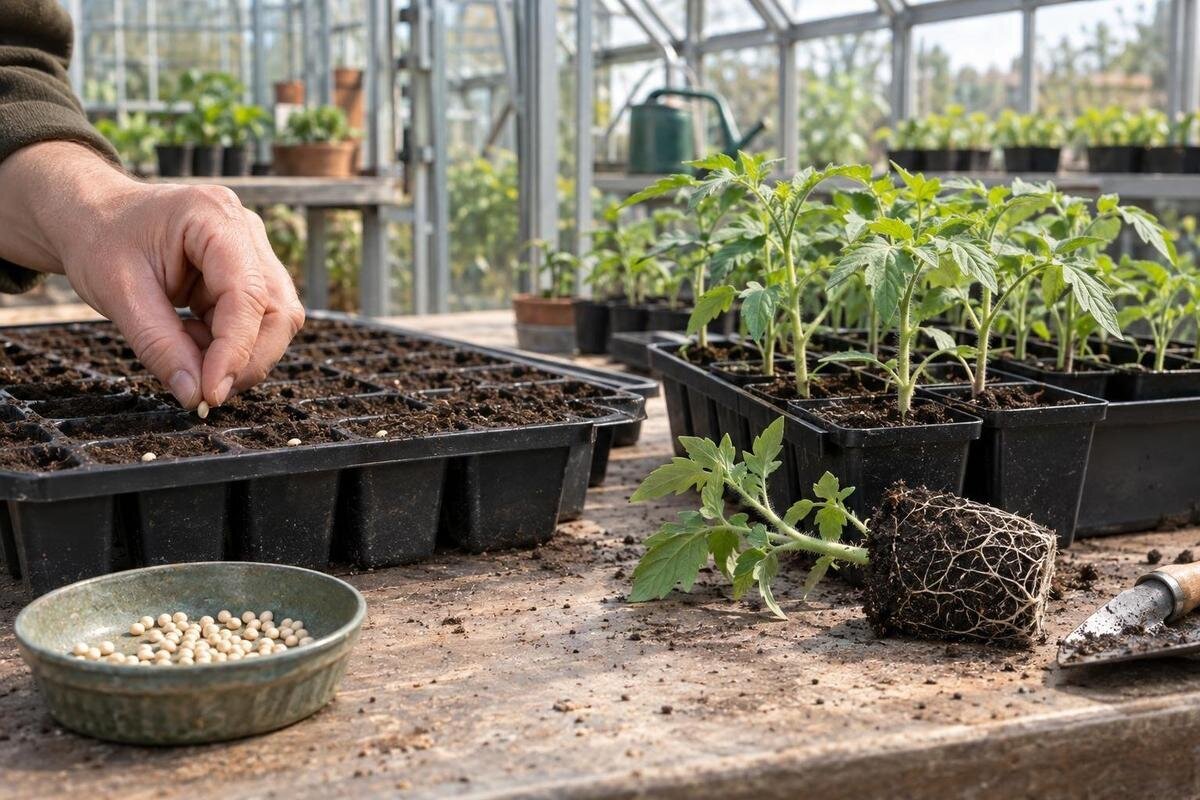
Direct sowing means placing seed in the bed or container where the crop is meant to grow through harvest. The seedling stays in that final position rather than being lifted from a cell and set elsewhere. A transplant begins in a tray, pot, or plug and later moves to its final greenhouse bed or container; a purchased nursery seedling follows the same route. Starting seed in a tray inside the greenhouse is still transplant production if the plant will move later. The distinction is not whether sowing happens under glass, but whether the seed begins in its permanent growing place. A container is a final position if the plant stays there, unlike a temporary plug.
Each route uses space at a different time. Direct sowing requires the final bed to be prepared and available from the start. Transplants use nursery space first, then need a ready destination and an additional move. That separation can help when one crop is finishing as another is started, but it does not remove the need for suitable early conditions. The Limited Edition aluminum greenhouse options are listed from 40.6 to 302 square feet; use the stated size as an initial layout check, then map beds, paths, doors, and tray areas. Listed floor area is not a measurement of usable bench or planting space. Include room to reach and water trays without disturbing established crops.
Three questions help you choose a method by crop
Use three questions for each crop. First, how does it respond when its roots are disturbed: is moving it risky, or does it establish readily after a careful transplant? Second, are its germination needs easier to meet in the final bed or in a small, closely watched batch? Third, when will its permanent position be free? A crop that tolerates either route may still be simplest to direct-sow when its bed is ready and a tray would add little. Trays are more useful when you need a known number of plants, want to separate an early batch, or must leave a bed occupied by a previous crop. Consider the factors together rather than applying one greenhouse-wide rule.
Read the growing directions for the crop and variety you plan to raise. Look for sowing depth, spacing, germination conditions, and any advice about transplanting. If the packet gives outdoor sowing dates, do not assume those dates establish when a greenhouse bed will be suitable; compare the crop’s requirements with conditions in your own growing space. Record a preferred method for each crop, along with any condition that would change your choice. This crop list also helps you compare T-Model greenhouse options, listed from 178 to 323 square feet. A plan dominated by direct-sown rows needs a different allocation of space than one with several transplant batches. Decide which growing areas you need before choosing a size.
Crops that are usually sown in their final position
Root crops are a strong case for sowing in their final position. Carrots and similar crops develop the harvestable root underground, so lifting young plants can interrupt growth or lead to misshapen roots. Radishes are also commonly sown where they will grow; because they mature quickly, several small sowings can be easier to manage than a tray-to-bed move. Prepare the bed first, remove stones or other obstructions that could interfere with root development, and follow the packet’s depth and spacing directions. Direct sowing avoids transplant handling, but it does not remove the need to thin a crowded row or keep seed-zone moisture steady while plants establish. Label rows so seedlings are easy to distinguish.
Peas and beans are often direct-sown in their intended greenhouse row or container when conditions suit them and the required support or space is ready. Sowing in place avoids moving young plants and keeps propagation trays free. For lettuce, the intended harvest matters: a bed grown for young leaves can be direct-sown, while a crop of individual heads may benefit from modules that make final spacing easier to manage. Follow the variety’s spacing guidance for the harvest you want. When considering Pyramid-type greenhouse options, listed from 60 to 203 square feet, identify where these direct-sown crops would grow. Rows need access throughout establishment, not just on sowing day: you must be able to thin seedlings, check gaps, and harvest without stepping into adjacent plantings.
When greenhouse transplants are useful
Transplants are useful when a crop benefits from a nursery phase before its final greenhouse position is ready. Tomatoes, peppers, and eggplants are commonly raised in cells or pots and moved as young plants, rather than occupying a permanent bed from sowing onward. You can raise a counted batch while another crop finishes in that bed, provided the seedlings receive suitable conditions in the meantime. Brassicas are also often started in modules when an even, known set of plants is useful. These are common patterns rather than rules: follow the variety’s guidance and allow seedlings room as they grow instead of leaving them crowded in their first cells. Trays can also make plant counts and cultivar labels easier to keep together.
A transplant route works best when the final position is ready before seedlings need to move. During transfer, handle plugs or root balls gently, keep roots from drying, and follow the planting-depth guidance for the crop. After planting, check whether water is reaching both the root ball and the surrounding growing medium rather than judging moisture only at the surface. The extra stage adds labor, so choose trays when plant counts, timing, or bed turnover justify them. When comparing the Prestige greenhouse, listed from 40.6 to 302 square feet, consider how the nursery area will be used after transplanting. A temporary tray area may become available for another batch, while permanent beds remain occupied by the first crop.

Cucumbers, squash, and crops that can go either way
Cucumbers, squash, and other cucurbits can work with either method. In a prepared final bed, direct sowing avoids moving young roots. If you start them in containers, sow individually and transplant while plants are young, taking care to keep the root ball intact; waiting until a vigorous plant is cramped makes the handover harder. The choice depends on the bed’s conditions and crop-specific guidance, so a calendar date alone does not show that direct sowing is ready. Check conditions where the crop will start, and make sure mature plants will have the planned space rather than choosing trays by habit. Trying a small batch can help you compare the routes in your own greenhouse.
Lettuce illustrates how the harvest plan can change the preferred method. Direct sowing suits a row or patch from which you will harvest young leaves; raising individual plants in modules can make it easier to arrange a crop of full-sized heads. For either route, use the variety’s recommended spacing rather than assuming all lettuce needs the same treatment. If you want successive batches of heads, modules also let you prepare replacement plants while the previous batch occupies its bed. When reviewing Classic aluminum greenhouse options, listed from 40.6 to 302.3 square feet, consider where each batch will go after harvest. A bed cleared all at once is easier to replant with a counted batch than one containing plants that mature at different times.
Match the sowing method to temperature and light
Temperature affects the two routes at different stages. A direct-sown seed must germinate in the greenhouse bed, where soil conditions may lag behind the air. A seedling in a tray is affected by conditions wherever the tray sits. Trays make a small batch easier to monitor or move to a more appropriate spot, but they do not create suitable conditions on their own. Use crop-specific germination guidance and observe conditions where seeds actually sit—at the bench or in the bed—not only at a convenient point higher in the structure. If you are unsure about the seed zone, measure it rather than assuming that a warm afternoon means the bed is ready. A brief record around sowing time may help explain uneven emergence.
Light matters after emergence as well as warmth. Crowded trays can shade seedlings, and a bright-looking greenhouse may still have darker corners or seasonal low-light periods. Direct-sown seedlings may also be shaded by established crops. Place each batch where early growth can get the light it needs, and follow instructions for covered sowing or seeds that need light exposure. The Lean-To Greenhouse options are listed from 40 to 154 square feet; for any configuration, assess light and temperature where you plan to put trays and beds rather than inferring growing conditions from a model name. Consider the season and nearby structures, and remember that a spot suitable for empty trays may be shaded once crops grow.
Compare labor, seed use, and plant counts
Direct sowing can save filling containers, caring for a separate nursery batch, and transplanting, but it puts more responsibility on the final bed. Small seeds may be difficult to space evenly, and emergence can be patchy; thin to the crop’s recommended spacing and leave room for mature plants. Sowing a few extra seeds can protect against gaps, but heavy oversowing adds thinning work and may waste seed. Individual cells make each seed easier to track when seed is limited or the desired plant count is precise, provided the crop tolerates moving and you can care for the young plants. Both methods still need labels and records. Compare the work through establishment, not just the tasks on sowing day.
Trays make plant counts visible and simplify labeling by batch, but they need a clear working surface, regular attention, and careful transfer. A quick crop may be simpler in its bed; a crop needing exact spacing or a known number may justify individual cells. Include cleanup, watering, and moving plants in your time estimate, not just sowing. Storage also affects whether benches stay clear. The aluminum greenhouse with built-in storage is one product listing to examine if keeping supplies separate from active growing areas matters. Check its details and dimensions before assuming it will hold trays or tools; storage is useful only if it fits what you intend to keep there.
Plan for bed turnover and nursery space
Plan backward from when a crop can occupy its final position, not just from the day you want to sow. Direct-sown seed needs its bed ready at sowing and takes that space from the outset. A transplant batch needs nursery area first, then a bed ready when plants can move. Track overlapping batches: one tray leaving the nursery can free room for another, while a bed still occupied by a slower crop may delay transplanting. Record the expected bed-opening date beside the sowing date so a tray does not become an extra holding area with nowhere for its plants to go. This distinction matters most when you reuse beds during the growing season.
Bed turnover includes clearing the previous crop, preparing the growing medium, and making the new planting accessible for watering. Allow for those tasks between harvest and the next sowing or transplanting date. For a larger plan, such as one being considered alongside the Large Backyard Greenhouse listings of 506 to 753 square feet, assign each bed a crop sequence rather than simply filling the interior with simultaneous plantings. Separate beds can turn over at different times. That gives you options for staggered sowings, but only if the next crop suits the conditions when its bed becomes free. Keep an alternative destination or a later sowing date in mind for batches whose planting depends on an uncertain harvest.

Common spacing and scheduling mismatches
Several mismatches can undermine an otherwise sound plan. Direct-sowing into a permanent bed too early exposes seeds to conditions they cannot tolerate; sowing a tray too early can leave seedlings waiting for space or outgrowing their containers. Crowding seeds to compensate for uncertain emergence can create a dense row that needs extensive thinning. Transplanting a root-sensitive crop may cause more disruption than the scheduling benefit justifies. Check both ends of every batch: can seeds emerge in the assigned spot, and will the plants have enough room and suitable conditions at the next stage? If either answer is no, adjust the method or timing before sowing.
Do not turn one successful result into a rule for every season. A greenhouse can vary in light, soil warmth, moisture, and occupied bed space over the year, and varieties can differ in their response to moving. Keep a brief log of crop and variety, sowing date, method, location, emergence, and transplant date if used. Note practical outcomes too: whether the bed was ready, whether seedlings became crowded, and how much thinning or handling the batch needed. After several rounds, your own records can show which method saved time for a crop in that greenhouse. Note problems without assuming the method was the only cause.
A mixed-method plan for greenhouse crops
A workable plan might direct-sow carrots or radishes into a prepared permanent bed, raise a measured batch of tomatoes or peppers in cells if the final bed will not be free at sowing, and choose direct sowing or a young transplant for cucumbers according to actual conditions and your tolerance for handling. These examples are starting points, not a calendar. Check variety directions, decide how many plants you need, and reserve their final space before beginning. If a crop can use either route, try a small batch first rather than changing the entire plan at once. That gives you a comparison without tying up every bed or tray.
Keep the plan flexible without treating the two methods as interchangeable after sowing. If a direct-sown row has gaps, decide whether to resow according to the crop’s remaining growing season and the difference in age between new and established plants. Do not automatically fill a root-crop row with transplants merely because tray-grown seedlings are available. For crops that tolerate transplanting, a small reserve batch may help replace losses, but those extra plants also need care and a timely destination. There is no need to raise backups for every crop. Use them where a full, evenly spaced planting matters enough to justify the additional nursery work.
Frequently asked questions
Which crops are usually direct-sown in a greenhouse?
Root crops such as carrots and radishes are often sown in their final position because moving young plants can disturb root development. Peas, beans, and some leafy crops are also commonly direct-sown when the bed is ready. Follow the directions for the crop and variety you are growing.
Which greenhouse crops are commonly started as transplants?
Tomatoes, peppers, and eggplants are often raised in cells or pots, then planted into their final position as young plants. Brassicas are also commonly started in modules when a known number of evenly spaced plants is useful. Make sure the bed will be available when seedlings are ready to move.
Can I transplant carrots in a greenhouse?
You can move young carrots, but direct sowing in the final bed is generally preferable because disturbing developing roots can affect their shape. Prepare the bed first, then sow at the depth and spacing recommended for the variety.
Can cucumbers be direct-sown or transplanted?
Either route can work. Direct-sow into a prepared bed when conditions suit the crop, or start seeds individually in containers and move young plants carefully while their root balls are intact. Choose based on the bed conditions and the crop’s growing directions.
Does a greenhouse mean I can sow earlier?
Not automatically. A greenhouse changes growing conditions, but the soil, air, and light may still be unsuitable for a crop’s seeds. Follow the variety’s guidance and assess conditions at the actual bed or tray location rather than relying on a calendar alone.
Direct sowing is often the straightforward route for crops that establish well in place, particularly root crops. Transplanting is useful when a nursery stage helps with timing, plant counts, or bed turnover. Many greenhouse crops allow either approach, so make the choice from their root behavior, seed requirements, and the conditions available at each stage. Plan the final position before sowing, then let your own batch records refine the method. A mixed plan can make better use of greenhouse time than applying one rule to every seed.
