
Electric vs. Fuel-Burning Greenhouse Heating
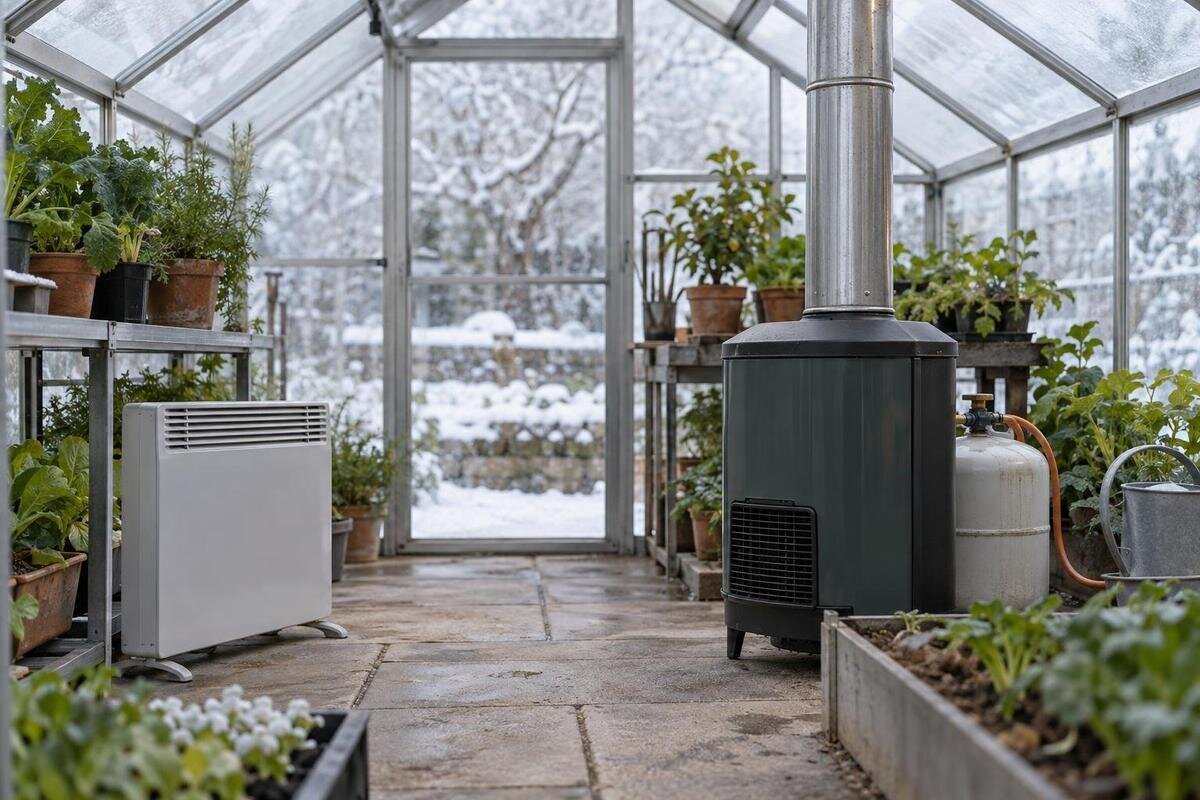
Greenhouse heating
Electric and fuel-burning greenhouse heaters both add heat, but they create different demands around moisture, exhaust, ventilation, and installation. An electric unit does not burn fuel inside the greenhouse; a fuel-fired model may send combustion products into the growing space or route them outdoors, depending on its design. That distinction affects more than humidity: it changes what air supply, venting, electrical service, fuel access, and safety checks the installation needs. Compare exact heater models against the greenhouse and site, not a broad label or an assumed cost.

What to verify before buying 1
Electric heating and fuel combustion work differently
The useful first distinction is where the heat comes from and what else the process releases. An electric heater uses electricity at the appliance and does not burn fuel in the greenhouse, so it produces no combustion exhaust or combustion water vapor there. A fuel-burning heater converts a specified fuel—often propane, natural gas, or kerosene—through combustion; the resulting gases must be managed. The label “fuel-burning” does not tell you whether exhaust enters the greenhouse or is sent outside. “Electric” also does not describe the way heat is delivered: resistance, radiant, fan-assisted, and heat-pump designs differ. Compare the construction and instructions of an actual model rather than treating either energy category as one design. Features such as a fan or thermostat do not, by themselves, identify its fuel or exhaust arrangement.
Fuel heaters differ in how they handle combustion products. An unvented, direct-fired design generally releases its combustion products into the heated space; a vented design is meant to route exhaust outdoors. Some vented units use sealed combustion and draw air from outside; other designs may take combustion air from the greenhouse. Manufacturers do not always use terms identically, so confirm the arrangement in the manual, including intended fuel, location, air supply, and exhaust route. The same fuel can be offered in different configurations, making the exact model number more useful than the fuel label. Some fuel-fired models also need electricity for ignition, a fan, or controls; do not assume fuel operation continues during an electrical outage unless the instructions say so.
Combustion moisture affects greenhouse humidity
Burning common hydrocarbon fuels creates water vapor as well as heat. With an unvented or direct-fired heater, some combustion moisture is released into the growing space; in cool weather, that added vapor can condense on colder glazing or other surfaces. A properly installed vented appliance routes combustion exhaust outside as designed, so it does not intentionally add that exhaust moisture to the greenhouse. Humidity still comes from irrigation, damp growing media, plants, and outside air. Cold surfaces may collect moisture even when a greenhouse-wide humidity reading looks moderate, so the appliance’s venting design matters more than the broad fuel label when assessing added moisture.
An electric heater has no combustion water output, but heating is not dehumidification. If the amount of water vapor stays the same while air warms, relative humidity falls even though the moisture has not been removed; cooling later can raise relative humidity again. Check condensation and humidity through day-night changes rather than taking a lower reading beside the heater as proof that dampness is gone. A sensor near a warm discharge may not represent a cooler corner. The enclosure is part of the picture: the Classic aluminum greenhouse is listed across a range of 40.6–302.3 sq ft, so identify the selected footprint before interpreting humidity or air-exchange observations. Area alone does not describe humidity, air leakage, or glazing behavior; review the exact configuration and ventilation.
What to verify before buying 2
Exhaust determines where combustion emissions go
Every fuel-burning appliance consumes oxygen and produces combustion gases, including carbon dioxide. If combustion is incomplete, carbon monoxide can also be produced; it has no reliable warning by smell. In an unvented installation those products enter the greenhouse air, making the appliance’s stated use, required air supply, and operating limits safety questions, not optional refinements. Do not use odor, leaf appearance, or a temperature controller as a way to judge combustion safety. Follow the heater maker’s instructions for any detection or shutoff equipment, and have a qualified professional assess a fuel installation when requirements are unclear. Electric heating creates no combustion exhaust at point of use; emissions from electricity generation, if relevant to a comparison, occur upstream and depend on the power source.
A vented appliance still needs its exhaust termination and any required combustion-air intake placed as specified; a flue does not make every outlet position acceptable. Planning must account for doors, greenhouse vents, nearby windows, air intakes, and adjacent structures without borrowing a clearance from another heater’s manual. With a lean-to greenhouse, include nearby openings in the exhaust site plan and have the installer check the exact route against the appliance instructions and applicable local requirements. This is especially important when exhaust could be near an opening or occupied space.
Heater ventilation is not the same as greenhouse ventilation
Combustion-air supply, exhaust venting, and ordinary greenhouse air exchange serve different purposes. A window or roof vent may help remove humidity and excess heat, but it is not automatically a manufacturer-specified exhaust route or the combustion-air opening required by a fuel heater. A flue carries combustion exhaust outside; it does not replace general greenhouse ventilation. First identify the manufacturer’s requirements for combustion air and exhaust; then consider how the greenhouse will exchange air during the hours the heater operates. Opening vents can carry heated air out and affect temperature, so ventilation has to be considered alongside—not instead of—the heater’s design.
Unvented equipment may rely on available room air and the ventilation conditions stated by its maker. Do not seal required openings to conserve warmth, and do not assume that cracking a roof vent is an adequate substitute for the specified design. An electric heater needs no combustion flue at point of use, but plants and moisture still require a suitable air-exchange plan. Stop and get advice if required openings are blocked or the installed arrangement differs from the manual. For a Limited Edition aluminum greenhouse, make the air-exchange plan from documented openings for the chosen configuration rather than inferring airflow from the model name.

What to verify before buying 3
Electrical service and fuel supply set installation limits
An electric heater is constrained first by the appliance rating and the supply serving the greenhouse. Compare the stated voltage and input, the required connection, circuit capacity with other equipment operating, and any starting or control requirements. Read the nameplate and installation manual rather than assuming that a nearby outlet can support the load. A greenhouse may expose equipment to condensation, splashing, soil, or a long cable route, so the approved location and wiring method matter too. Have a qualified electrician assess uncertain capacity, grounding, circuit protection, and local requirements; an extension cord or existing receptacle is not proof of a suitable installation. Confirm whether the thermostat and any start-up components use the same supply.
Fuel heating shifts the questions to the exact fuel, approved supply arrangement, storage or delivery access, and any regulator, piping, combustion-air, or flue requirements specified by the maker. Never substitute fuel or improvise a connection. Check whether the heater also needs electricity for ignition, a fan, or control, especially if power interruptions are likely; liquid-fuel type and handling may also be model-specific. Leave access for servicing and keep required clearances; do not place storage where it conflicts with appliance instructions. If a T-model greenhouse is among the enclosure options, use the selected layout when reviewing service routes so they do not obstruct doors, plant paths, or required clearances.
Heat distribution and thermostat placement affect readings
The heat-delivery method matters alongside the energy source. A fan-assisted heater moves warm air; a radiant unit heats nearby surfaces more directly. Electric and fuel-fired products can use different methods, so fuel alone cannot tell you whether warmth will circulate evenly. Air can stratify or be interrupted by glazing, shelves, dense plants, doors, and vents, leaving spots cooler or warmer than a thermostat indicates. Sunlight on one area and cold glazing elsewhere can also make plant-level conditions uneven. Compare the actual heater’s distribution, controls, and manufacturer guidance; a single temperature reading close to the appliance can misrepresent conditions where plants stand.
Thermostat position affects what the heater senses. Direct exposure to the heater’s outlet, sunlight, or a draft can make a sensor read differently from the air around plants, so follow its placement directions and check more than one area during normal operation. A separate thermometer at plant height can help reveal uneven readings, but it does not certify safe installation or replace heater controls. Interior shape and height can also affect circulation patterns. For a pyramid-type greenhouse, consider the enclosure’s shape when reviewing heater and sensor placement. Confirm the chosen configuration’s dimensions and openings before planning equipment locations; shape or floor area alone does not establish a preferred fuel.
What to verify before buying 4
Outages and maintenance depend on the heater model
Plan for interruptions as well as normal operation. A basic electric heater stops heating if its power supply fails; backup generation raises separate questions about rated loads, connection, and safe installation, so do not assume that any generator can run it. A fuel-fired heater may continue only if its design and supply allow it, and many models use electricity for ignition, a blower, or controls. Check the exact manual for what stops during an outage and whether operation resumes automatically after power returns. If heat continuity matters, compare the documented backup plan, not the assumption that one fuel is always more reliable.
Routine service also varies by appliance. A combustion unit may have specified checks for its burner, air inlet, flue, and fuel connections; an electric unit may use a fan or filter that needs attention. Follow the maker’s schedule, including any preparation after seasonal storage, and keep service access clear. Stop using equipment and follow its fault instructions if a cable is damaged, the flame or exhaust appears abnormal, or a warning appears. When considering a greenhouse with built-in storage, check whether the storage area is suitable for the equipment or fuel you intend to keep there and whether stored items would interfere with service access or required clearances. Follow the applicable heater and greenhouse instructions.
Check the heater’s suitability for a greenhouse environment
Greenhouse conditions can include humidity, condensation, dust, splash, and large temperature swings. Check whether the specific heater is intended for the environment and what exposure limits, clearances, and mounting conditions its manual specifies. Do not assume an indoor room heater is suitable simply because it can raise the air temperature. Nearby combustible materials, structural supports, floor placement, and protection from water all matter, but the allowed method depends on the unit. This is especially relevant near watering equipment or hoses. Ask a qualified installer when a support, enclosure, or placement question cannot be answered from the instructions; do not adapt the appliance or mount it to a greenhouse frame by guesswork.
For fuel equipment, have the full supply, combustion-air route, exhaust, shutoff, and service access reviewed by an appropriately qualified professional. For electric equipment, ask an electrician to verify the specified circuit and protection. Check any required safety listing or approval for the intended location under applicable local requirements; a store category or product name is not proof. If an alarm or other detector is called for by the manual or local requirements, treat it as an additional safeguard, not a substitute for correct venting and maintenance. When considering a Prestige greenhouse, read the heater and greenhouse instructions together before deciding on placement, support, or clearances.

What to verify before buying 5
Compare complete installations, not just heaters
Compare installed systems rather than heater-only specifications. Electric heating may call for a suitable circuit or electrical work; fuel heating can require a fuel supply, approved storage or delivery arrangements, venting, and qualified installation. Neither a limited electrical service nor convenient fuel automatically makes the other option acceptable. Ask what each installation includes, which trade must perform it, how service access is maintained, and what ongoing inspection the manufacturer requires. Availability of qualified service and practical fuel replenishment also matter in day-to-day use. This comparison is about practical fit and operating constraints; it does not produce a reliable cost estimate without site conditions, local tariffs, and specific equipment data.
Enclosure size and access also affect the plan, though floor area alone cannot size a heater. In a large greenhouse, confirm where equipment, service access, fuel delivery, cables, and unobstructed routes can fit without blocking doors, vents, or plant work. The large backyard greenhouse range is listed at 506–753 sq ft; use the exact selected footprint when planning equipment and access. That area is not a heat-loss rating. Confirm the selected greenhouse’s documented details and heater requirements before treating a power source as feasible. A heating comparison is fair only when both candidates are considered for the same space and purpose.
Compare two specific heater models on the same basis
Make the comparison between two named heater models, not between generic labels. Record the fuel or electrical input, the manufacturer’s stated heat output, approved location, venting classification, exhaust destination, combustion-air requirements, and any power needed for controls. Add circuit requirements, intended environmental conditions, clearances, thermostat guidance, and maintenance instructions. Keep input and output ratings distinct: published figures may describe different quantities, so confirm what each number means instead of comparing bare values. Note separately whether combustion moisture enters the greenhouse and what ventilation is required while the heater runs. If essential information is missing, ask the manufacturer or installer rather than borrowing specifications from a similar model.
Then test both options against the actual site: Is the required power or fuel reliably available? Can qualified trades install and service the system? Can air exchange continue without compromising specified combustion arrangements? Is there a workable response to a power or fuel interruption? Check that the heater manual permits the intended environment and that clearances fit the real layout. If a candidate fails any of these checks, its nominal heat output cannot make the installation suitable. The useful trade-off is model-specific: electric avoids combustion at the greenhouse, while fuel adds supply, exhaust, and combustion-air questions that must be answered for the exact appliance. Treat moisture management and ventilation as part of that same comparison, not as afterthoughts.
Frequently asked questions
Does an electric greenhouse heater add moisture?
It does not produce water vapor through combustion. Unless it includes a separate humidifying function, an electric heater does not add moisture—but warming the air does not remove moisture already there.
Does heating lower relative humidity?
Usually, if the amount of water vapor stays the same, warmer air has lower relative humidity. The water has not disappeared, and relative humidity can rise again as the air cools.
Can I use an unvented propane heater in a greenhouse?
Only if the manufacturer permits that exact model for the location and its combustion-air and ventilation requirements can be met. Ask a qualified installer; do not assume any propane heater is suitable.
Does a vented heater replace greenhouse ventilation?
No. Its flue handles exhaust as designed; it does not provide general air exchange for plants and humidity. Plan greenhouse ventilation separately and follow the heater’s venting instructions.
Will a fuel-burning heater work during a power outage?
Not necessarily. Some models need electricity for ignition, fans, or controls. Check the exact model’s instructions, including what happens when power returns, rather than assuming fuel means independence from electricity.
Neither category wins in every greenhouse. An electric heater avoids on-site combustion, but the site must support its electrical requirements. A fuel-burning heater is a workable alternative only when its specific fuel supply, combustion-air needs, exhaust arrangement, and maintenance requirements can be accommodated. For moisture and emissions, the key question is whether combustion products enter the growing space. Compare the exact heater requirements with the actual enclosure and choose based on suitability for the site—not on fuel labels alone.
