
External or Internal Greenhouse Shading: Which Solves Your Problem?
Greenhouse climate and equipment
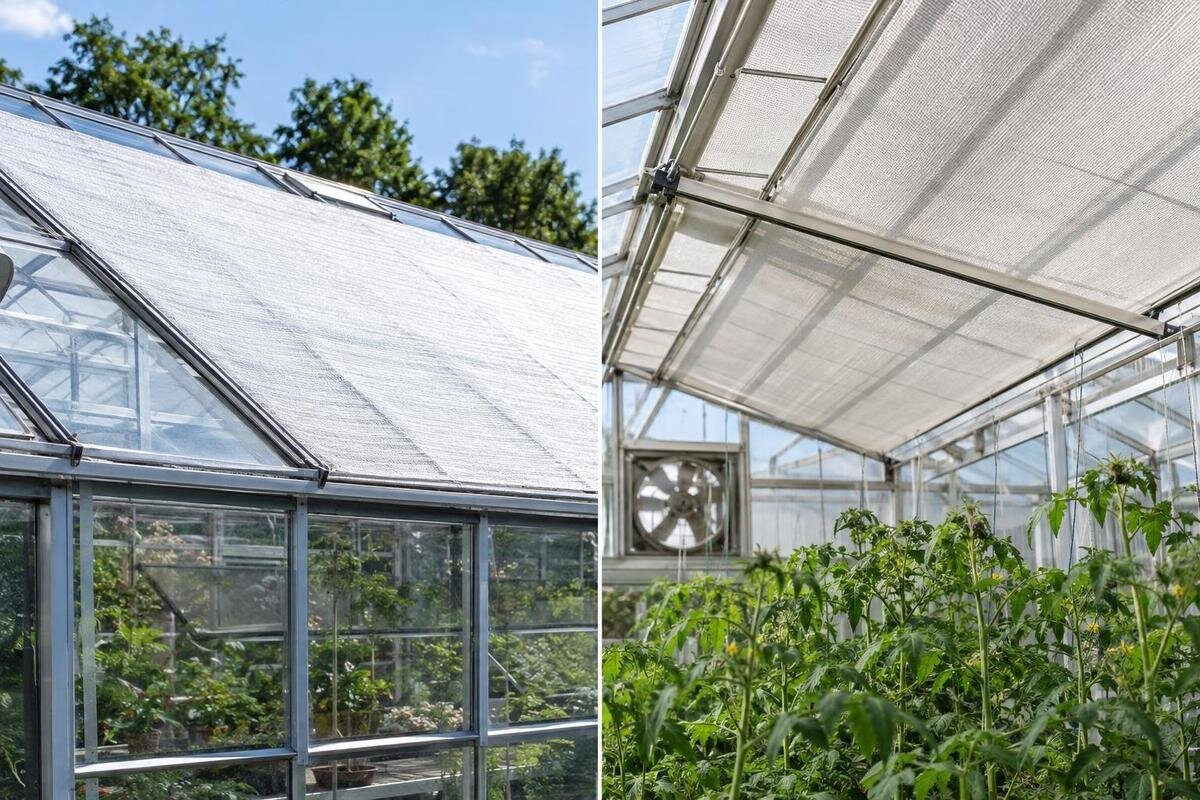
Greenhouse shade can be installed on either side of the glazing, but position changes what it can do. An exterior screen intercepts sunlight before it enters; an interior screen catches it after entry. That affects heat gain, crop exposure, access to vents, and how the shade can be attached. The useful choice depends on whether you are trying to limit heat entering the greenhouse, soften direct light over plants, or work around a particular frame and site.

Before you buy 1
How outside and inside shade affect heat gain
External and internal shading can both reduce direct sunlight reaching plants, but they intercept it at different points. An exterior screen catches sunlight before it passes through the greenhouse glazing. An interior screen catches it after it has entered. That difference matters for heat: energy intercepted outside is less likely to heat the interior, while a screen that absorbs sunlight indoors can warm the screen and nearby air or surfaces. Reflectivity, spacing from the glazing, coverage, glazing type, and airflow all affect the result. A reduction in light on plants may be noticeable even when the air temperature changes little. Exterior placement generally offers an advantage for limiting heat gain, not a guaranteed temperature reduction.
Define the problem before choosing a location. Is greenhouse air staying hot, is one bench receiving intense direct sun, or are both happening? Map the affected area and the hours when it occurs. For a comparison, keep the thermometer in the same representative place at crop height and shield it from direct sun. Record temperature, relative humidity, shade position, vent and door positions, and outdoor conditions. That makes it less likely that a changed sensor location or an open vent is mistaken for a shade effect. Photos taken from the same point can also show which glazing surface the direct beam passes through and where it lands.
When external shading helps limit solar heat gain
External shading is usually the first option to investigate when excess solar heat gain is the main complaint and direct sun reaches roof or wall glazing. Because the screen is outside the enclosure, it can intercept energy before the glazing transmits it, while leaving the growing area clear. Its position matters: a roof cover affects light entering through the roof panels it covers, but does not automatically block low-angle rays coming through uncovered side or end glazing. Match the screen to the surfaces and hours involved. Results still depend on material, spacing from the glazing, airflow around it, and coverage, so exterior placement is an advantage to test rather than a promise of a particular temperature.
Outdoor placement brings its own constraints. Wind can catch a screen, and a fixed cover may complicate roof-vent movement, gutter access, glazing cleaning, or seasonal removal. For a greenhouse such as the Bloomcabin Prestige Greenhouse, request the instructions for the exact enclosure and proposed shade system before choosing an exterior installation. Ask how the screen should be retracted or removed in adverse weather, whether its fittings allow the vents to open fully, and how you would reach it for maintenance. Distinguish a screen designed to remain installed from one that requires routine removal: the handling requirements can determine whether exterior shading is practical at your site.
Before you buy 2
When internal shading is more practical
Internal shading is often easier to reach for routine adjustment and can target a bed or section from inside, if the greenhouse has an approved internal support system. It can suit a crop-light problem, such as strong direct rays over particular plants, even when an outdoor screen is difficult to access. A movable shade may be opened when conditions change, but only if its track or control is designed for regular adjustment. Before choosing it, check whether the screen would brush foliage, narrow a working aisle, shade plants that do not need it, or interfere with watering, lights, hanging baskets, or other overhead equipment. Consider how the screen will be used throughout an ordinary workday, not just how it fits the roof.
An inside screen can change the heat balance, but it does not remove accumulated heat. Absorbed sunlight warms the fabric, which can transfer heat to the surrounding air and surfaces. A reflective screen can redirect some energy toward the glazing, though the amount that escapes depends on the screen, glazing, and installation. Ventilation still has a separate role. When planning a larger enclosure such as the Large backyard greenhouse, distinguish beds needing direct-light protection from aisles and work areas needing clear headroom. Compare whole-roof coverage with separate zones, including where each screen retracts. The enclosure listing alone does not establish that a zoned shade system is available.
Shading and ventilation do different jobs
Shade and ventilation address different parts of a hot-greenhouse problem. A shade reduces some incoming solar energy; ventilation exchanges indoor air with outdoor air when vents are open and conditions allow that exchange to remove heat. A shaded greenhouse can still become hot if vents are closed, obstructed, or inadequate for its setup. Conversely, more air movement does not necessarily stop direct sun from striking a particular crop. Identify whether the priority is lowering heat gain, improving air exchange, or both, then plan those functions separately. A screen should not be selected as a way to manage humidity or as a substitute for a ventilation system.
Check the complete movement path of roof windows, side louvers, and automatic openers before fitting either type of shade. An inside track can cross a vent opening or moving arm; an outside screen can cover an opening or limit access to its controls. When reviewing the Classic aluminum greenhouse, compare the ventilation arrangement in the exact configuration with the proposed screen layout. Check both the fabric and its supporting hardware: a clear opening is not enough if a bracket obstructs an opener. Use the vent and shade instructions together, and keep vent settings consistent when comparing shade positions. Record when vents actually open, rather than only their intended settings.

Before you buy 3
Map clearances around doors and service areas
Make a clearance sketch before shopping. Mark doors and their swing, roof windows, side vents, handles, gutters, irrigation lines, lights, shelves, work aisles, and any route needed to clean the glazing. Then mark where a shade would move when opened and where a person would stand to operate or remove it. An internal screen can occupy headroom or block an overhead system; an external screen can obstruct a vent or make work around the roof edge harder. This sketch catches conflicts that a cloth’s advertised width cannot show. Include normal use, the fully open position, and where the shade will sit when it is retracted.
Site access can decide the issue. If a lean-to greenhouse sits close to a building or fence, the wall-side roof edge may be difficult to reach, and there may be limited room for an exterior track or screen to move. For a Lean-To Greenhouse, compare the exact installation drawings with the walls, gutters, doors, and path at your site. Include space to carry a removed screen away, not just room for it while installed. If exterior operation would require awkward reaching or obstruct a doorway, an interior arrangement may be more practical, provided it fits the model. Roof coverage alone does not establish that a screen can be operated safely.
Confirm model-specific mounting requirements
Attachment compatibility is a separate question from whether a screen is in the right position. Shade systems may use tracks, brackets, or other fittings, and a greenhouse frame that looks sturdy is not automatically an approved fixing point. Confirm whether the system is designed for interior or exterior installation, which model and frame profile it fits, and what its instructions say about glazing, bars, and vents. Do not drill, clamp onto glazing, or hang a screen from an unapproved member. A wrong fixing can damage a panel or interfere with operation. If the instructions do not settle the question, ask the greenhouse manufacturer or a qualified installer before installation.
Have the exact model and variant ready, along with its assembly or maintenance manual and clear photos of the proposed installation area. For the Aluminum Limited Edition Greenhouse, identify the particular configuration rather than relying on the family name. Ask which shade systems are compatible, which measurements must match, and whether the mounting hardware is included or specified separately. Request clarification about any fitting that is unclear in the instructions. Photos should show the frame profile, nearby moving parts, and the intended screen route, not just the greenhouse exterior. Include any modifications to the enclosure, since they may affect the installation advice.
Before you buy 4
Follow the sun across roof and side glazing
Follow the sun across the actual glazing rather than guessing from the greenhouse’s shape. Record whether direct light enters through the roof, a side, or an end wall, and note the time and which beds it reaches. Morning and late-day sun can come in at a lower angle than midday sun, so a roof screen may leave a side-lit strip untouched. Trees, fences, nearby buildings, and seasonal changes in their shadows can also alter which panel matters. Photos from the same position at relevant times, marked on a simple plan, make it easier to choose a surface to shade. Note whether the same area is affected every day or only under particular conditions.
Use the exact roof and vent drawings when the enclosure has an unusual layout; a general rectangular shade plan may not follow its angles or opening sections. When considering the T-Model Greenhouse Orangery, mark the observed sun patches on the plan for the specific configuration. Include the time beside each patch so that a proposed screen can be assessed against several hours of use, not just one photograph. If direct sun shifts between growing areas during the day, compare coverage of the relevant glazing surfaces. A gap between screens may matter more than total covered area when it lies directly in the path of the unwanted light.
Match shaded area to crop-light needs
Do not shade every glazed surface just because one area gets too much sun. If the problem is a hot patch on one bench, targeted coverage may preserve useful daylight elsewhere; if the whole greenhouse receives strong sun, a wider screen may be appropriate. Remember that fixed shade also reduces incoming light during cooler or cloudier periods. Check the light needs of the plants actually grown there and consider how the screen will be opened or removed when their needs change. Shade percentage alone cannot tell you whether inside or outside placement is right, and there is no single coverage level that suits every crop and site.
Roof geometry also affects coverage. A screen fitted to one sloping surface may leave neighboring surfaces exposed, while fabric spanning several surfaces may not follow their shape. For a pyramid-type greenhouse, use the exact panel dimensions and vent locations rather than adapting a rectangular roof layout by eye. Mark the proposed screen edges on the drawing, then consider where their shadows would fall at plant level. Look for gaps over the affected bed and overlap that would unnecessarily darken adjacent plants. Do not cut or adapt a kit for a different roof shape unless its maker allows the change; a good coverage plan still needs a compatible installation.

Before you buy 5
Account for daily operation and upkeep
Think through routine handling before choosing a location. Ask who will open, close, or remove the shade, how often that will happen, and whether the intended control can be reached from a normal working position. An outside screen is exposed to weather and may need attention or removal according to its instructions; do not plan on climbing onto a roof or leaving a loose cover unsecured. An inside system may be easier to reach but can collect dust or spray, reduce headroom, or interfere with moving plants and equipment. Follow the maker’s cleaning and storage guidance. Check whether cleaning requires taking the screen down and whether you can do that without disturbing crops.
Include storage and work zones in the same sketch as beds and vents. In a greenhouse with built-in storage, check the actual assembly plan before positioning an interior screen. Retracted fabric and its controls should not block storage doors, shelves, or the route used to carry tools. Consider the largest item you routinely move through that area, since a passage that is adequate for walking may be awkward with a cart or tray. Also identify a dry storage location for a removable screen, following its care instructions. Keeping fabric and fittings together makes seasonal reinstallation easier and reduces the chance of substituting unsuitable hardware.
Choose the position that fits the measured problem
Choose external shading when your records point to substantial solar heat gain through exposed glazing and an approved outside system can be installed without obstructing vents, access, or the site. It is the more direct way to intercept sunlight before it enters, but it does not guarantee a cooler target temperature. Choose internal shading when direct light over crops is the primary concern, an approved interior fixing exists, and convenient adjustment matters more than preventing all solar energy from entering. If both conditions matter, compare an external and internal option against the same problem instead of assuming one position will necessarily solve both.
After installation, assess the result during comparable sunny periods using the same sensor location and similar vent settings. Record both the air readings and whether direct sun still reaches the affected plants. If the bench is shaded but the air remains hot, the screen may have solved the light-exposure problem without resolving the ventilation problem. If an exposed strip persists, revisit the coverage map rather than immediately buying denser fabric. Include cloudy periods in your observations too: a shade that helps at midday may remove useful light when the sun weakens. Keep or revise the arrangement based on the problem it actually solves and how reliably you can operate it.
Frequently asked questions
Is external greenhouse shading always better for reducing heat?
No. External shading often limits solar heat gain more effectively because it intercepts sunlight before it passes through the glazing. The result still depends on the screen material, spacing, coverage, airflow, glazing, and installation. Check that the system is approved for the greenhouse and does not interfere with ventilation.
Will an internal shade lower the greenhouse air temperature?
It can reduce direct sunlight on plants, but it catches that light after it has entered the greenhouse. An internal screen does not remove heat by itself, so it should not replace ventilation. Its effect on air temperature depends on the material, placement, and airflow.
Can I attach shade cloth to the greenhouse frame?
Only if the instructions for your exact greenhouse and shade system approve the attachment method and fixing points. Do not assume that glazing, frame bars, or generic clips are suitable. Ask the greenhouse manufacturer or a qualified installer if the documentation does not confirm compatibility.
Should I shade the roof or the side panels?
Follow the sun across the actual greenhouse. Roof shading can intercept light entering through covered roof panels, while lower-angle sun may enter through side or end glazing. Shade the surface that affects the problem area, and keep vents and their moving parts clear.
How can I tell whether the shade made a difference?
Compare readings from the same shaded, representative spot at crop height and note the shade position, vent settings, humidity, and outdoor conditions. Use comparable sunny periods and avoid changing several things at once. A thermometer in direct sun may not represent the surrounding air.
External shading intercepts sunlight before it crosses the glazing; internal shading controls direct light after entry and may be easier to adjust. Choose the position that addresses your observed heat or crop-light problem while preserving ventilation and access, with mounting confirmed for the exact greenhouse. Judge success by both consistent air-temperature readings and the light reaching the affected plants. Those two results may differ, and knowing which one improved tells you whether the shade is doing the job you need.
