
Gardening Trends 2027: 12 Ideas Shaping U.S. Gardens
Bloomcabin USA • 2027 Garden Forecast
Gardening Trends 2027: 12 Ideas That Will Shape American Gardens
What will American gardens look like in 2027? Probably less rigid, less thirsty and much more useful. The strongest new direction is not one fashionable flower or one landscape style. It is a broader shift toward gardens that support wildlife, produce food, cope with difficult weather, reduce maintenance and give people a genuine reason to spend more time outside.
The latest U.S. market data helps explain why this shift matters. The 2026 National Gardening Survey reports that American household lawn and garden spending reached a record $79.0 billion in 2025, while average spending per gardening household climbed to $740. At the same time, participation declined. That combination suggests that although casual participation softened, committed gardeners are investing more seriously in the outdoor spaces they choose to create.
Outdoor renovation choices tell a similar story. Houzz's 2026 U.S. outdoor research found that 73% of homeowners choosing plants selected low-maintenance varieties, 56% pollinator-friendly plants, 55% native plants and 49% drought-resistant plants. These are not isolated preferences. Together they point toward a new version of the American garden: attractive, but also practical, resilient and ecologically useful.
Trend 01
Gardening Becomes a Real Digital Detox
One of the most interesting directions entering 2027 is not a plant style at all. It is the reason people are going outside. Garden Media Group introduced its 2027 trend conversation at Cultivate'26 around the idea of “Digging for Dopamine” — a useful description of the growing desire for slower, tactile and more meaningful experiences in a world of constant digital stimulation.
Gardening fits that desire naturally. A seed does not respond instantly. A tomato needs weeks to ripen. A climbing plant takes a season to cover a trellis. The reward is delayed, physical and connected to real weather, soil and time. That is very different from the rapid cycle of notifications, feeds and screens that fills much of daily life.
In practical garden design, this can translate into spaces deliberately created for staying outside rather than merely looking attractive from a window: a bench beside fragrant plants, a shaded reading corner, a potting table that invites regular hands-on work, a path designed for wandering, or a chair inside a greenhouse where the owner can sit among plants even when the weather is unsettled.
The important 2027 idea is not to add another screen outdoors. It is to create a place worth putting the screen down for.
Trend 02
Climate-Resilient Gardening Becomes the Default
A single national formula for the “perfect American yard” makes less sense every year. A backyard in Arizona faces very different pressures from one in Vermont, Florida, Colorado or the Pacific Northwest. The strongest gardens of 2027 will begin with the conditions of the actual site rather than with a generic picture copied from another climate.
That means choosing plants for local heat, cold, humidity, rainfall, soil and wind; improving soil structure; creating shade where summer heat is intense; increasing drainage where heavy rain is the larger problem; and selecting varieties that can perform with fewer interventions. Climate resilience is not about making every garden look dry or wild. It is about reducing the amount of effort required to force unsuitable plants to survive.
Gardeners are also paying more attention to microclimates. A south-facing masonry wall may stay much warmer than an exposed bed. A low corner may remain wet for days after a storm. A fence can create a protected wind shadow. A mature tree can reduce afternoon heat dramatically. Treating those areas differently can make the garden more successful while lowering water use, plant losses and maintenance.
For vegetable growers, a protected environment is one practical way to manage variability. A greenhouse does not remove weather from gardening, but it can give the gardener more control over ventilation, water, temperature and timing. Our greenhouse gardening guide for beginners explains the basics for gardeners considering protected cultivation for the first time.
Trend 03
Water-Smart Gardens Shrink the Traditional Lawn
Water will influence more American garden decisions in 2027. The U.S. Environmental Protection Agency notes that outdoor water use accounts for roughly 30% of household water consumption nationally, with a much higher share possible in dry regions. Irrigating large areas of turf is a major reason.
The likely response is not the disappearance of lawns. It is a more selective lawn. Grass remains useful where children play, dogs run or people need an open recreation surface. But difficult edges, slopes and unused corners can increasingly become native planting, perennial beds, gravel paths, vegetable beds or drought-tolerant landscapes instead.
The tools used to manage water are also getting smarter. Drip irrigation, mulch, soil-moisture sensors, weather-based irrigation controls and rainwater storage can reduce waste without making the garden less lush. Our water-wise greenhouse gardening guide explains how the same logic applies under cover, where targeted watering and reduced evaporation can improve efficiency further.
In western and southwestern states especially, the successful garden of 2027 may contain less turf but more life: flowering perennials, shade, edible planting and soil that is protected rather than exposed.
Trend 04
Native Plants Evolve Into Keystone Plant Gardening
Native planting remains one of the strongest movements in American gardening, but in 2027 the conversation is likely to become more precise. Instead of asking only whether a plant is native somewhere in the United States, more gardeners are asking whether it is native to their region and how much ecological value it actually provides.
That is where keystone plants become important. The National Wildlife Federation's keystone plant guidance highlights plant groups that support disproportionately large numbers of caterpillars, butterflies, moths and other wildlife. Depending on region, these can include oaks, willows, native cherries and plums, goldenrods, asters and sunflowers.
The crucial word is regional. A plant recommended in New England may be inappropriate for Southern California, Texas or the Pacific Northwest. That makes local extension services, native plant societies and ecoregion-based recommendations more useful than generic “best native plants for America” lists.
For homeowners, this trend is practical as well as ecological. Plants that genuinely suit local conditions often need less correction, less water and fewer inputs once established.
Trend 05
Pollinator Gardens Become Complete Backyard Ecosystems
Planting flowers for bees is no longer the end point of wildlife gardening. It is increasingly the starting point. The next generation of pollinator gardens will be designed around the full life cycle of insects and birds, not just a few weeks of nectar.
That means combining early-, mid- and late-season flowers with host plants for caterpillars, nesting and shelter opportunities, seed heads that remain through winter, shallow water and reduced pesticide use. The U.S. Forest Service specifically encourages regionally native plants because local pollinators are adapted to them.
A successful pollinator garden can also be beautiful in a way that conventional decorative planting sometimes is not. Butterflies, hummingbirds, bees and seed-feeding birds become part of the garden experience. The planting changes week by week, and stems or seed heads left standing through winter add texture rather than looking neglected.
In 2027, the more advanced question will therefore be: Does this garden provide food, shelter and continuity? A few flowering plants are useful; a connected mini-ecosystem is better.
Trend 06
Prairie, Meadow and Naturalistic Planting Keeps Growing
Perfectly spaced shrubs surrounded by large areas of mulch are giving way to something softer. One of the clearest landscape directions heading toward 2027 is naturalistic planting inspired by meadows, prairies, woodland edges and other plant communities.
Instead of treating every perennial as an isolated object, gardeners combine compatible plants so that foliage, flowers and grasses weave together. Depending on the region, that might include coneflowers, native asters, black-eyed Susans, switchgrass, little bluestem, goldenrod or completely different locally appropriate species.
Naturalistic does not have to mean chaotic. A clipped edge, gravel path, greenhouse, terrace or clearly defined seating zone can provide enough architectural structure to make looser planting feel deliberate. This contrast is especially effective in contemporary gardens: cleaner structures, softer planting.
The maintenance pattern also changes. Instead of replacing annual displays repeatedly, the gardener manages a living plant community that becomes more established over time. That can reduce labor while increasing seasonal interest and wildlife value.
Trend 07
Low-Maintenance Gardening Becomes a Design Requirement
Sustainability receives plenty of attention, but one of the most revealing figures in Houzz's latest outdoor research is that 73% of renovating homeowners selected low-maintenance plants. People still want beautiful gardens. They simply do not want every free Saturday to disappear into mowing, pruning, watering and replacing plants that never really suited the site.
In 2027, lower maintenance will increasingly be designed into the garden from the beginning. That means using longer-lived perennials, mulching exposed soil, grouping plants by water needs, reducing unnecessary lawn, installing efficient irrigation and choosing durable structures.
The most successful low-maintenance garden is not necessarily the garden with the fewest plants. Often it is the garden where the right plants have been placed in the right conditions and allowed to mature. A dense perennial bed can suppress weeds better than an empty bed with scattered specimens, while established shrubs can provide structure without repeated seasonal replacement.
This approach also changes purchasing behavior. Gardeners are more likely to value reliability, local suitability and long-term performance over short-lived novelty.
Trend 08
Foodscaping Blurs the Line Between Flowers and Vegetables
One of the most useful gardening trends for 2027 is foodscaping: integrating edible plants into the wider landscape rather than hiding every vegetable in a separate utility plot. A blueberry shrub can be productive and attractive. Rosemary can provide evergreen structure in suitable climates. Chives can flower beside ornamental perennials. Strawberries can spill over the edge of a raised bed.
The idea is simple: if a plant can be beautiful and edible at the same time, there is no reason it cannot participate in the design of the garden.
This trend fits a broader desire for practical self-sufficiency. Most households are not trying to grow all their food, but harvesting tomatoes, salad greens, herbs, berries, peppers or cucumbers creates a tangible connection between the garden and everyday life.
Protected growing makes that connection even stronger by extending the productive season. Gardeners starting from zero can use our beginner greenhouse guide, while experienced growers can combine outdoor beds with a greenhouse to stagger sowing and harvesting throughout the year.
Trend 09
Greenhouses Become Part of the Climate-Resilient Garden
Several of the strongest 2027 trends converge around protected growing. A greenhouse gives gardeners a more controlled environment for seedlings, vegetables, herbs and ornamentals while still working with natural light and seasonal conditions.
For northern states, it can help start crops earlier and continue harvesting later. In regions with intense summer sun, ventilation and shading become more important. In places where heavy rain, wind or rapid weather changes create problems, a protected environment can reduce exposure and give the gardener more control over timing and watering.
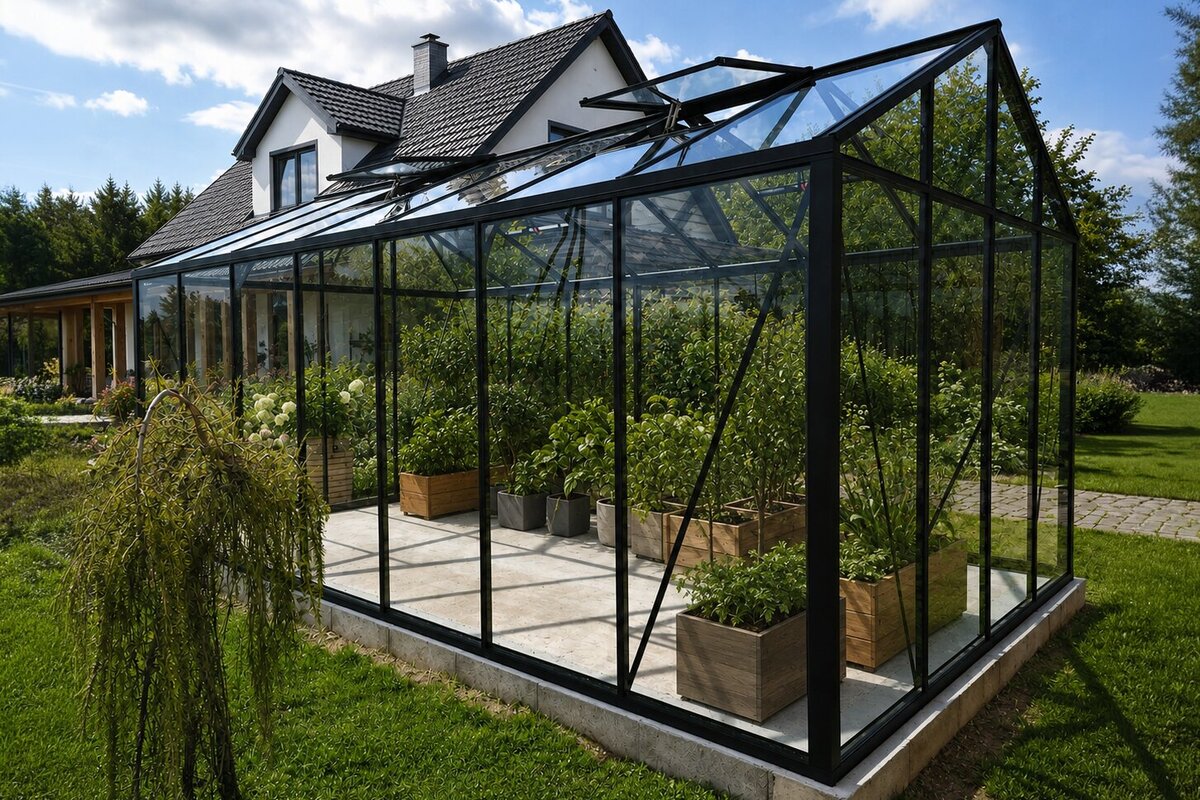
That is why we expect greenhouses increasingly to be planned as part of the whole backyard rather than positioned as an afterthought. Bloomcabin's U.S. greenhouse and conservatory collection includes compact wall-mounted designs, freestanding aluminum greenhouses and larger growing structures.
For gardeners primarily focused on crop production, the Bloomcabin High Tunnel Greenhouse provides a different style of protected growing. Those planning a more architectural backyard feature may prefer a traditional aluminum greenhouse that becomes a permanent visual element of the landscape.
To understand how protected cultivation changes through the seasons, see our month-by-month U.S. greenhouse growing guide.
Trend 10
Small-Space Gardening Gets Smarter
The future of gardening is not limited to large suburban backyards. Recent U.S. search behavior reported by Houzz shows growing interest in small yards, courtyards and patio gardens. That is likely to push even more creativity into compact spaces during 2027.
Vertical trellises, narrow raised beds, wall-trained fruit, compact vegetable varieties, containers and multi-purpose structures can make a surprisingly small area productive. The key is to use height, walls and edges rather than relying only on horizontal ground space.
A sunny house wall can become especially valuable. A Bloomcabin Mini Wall Greenhouse uses very little footprint, while a lean-to greenhouse can connect protected growing more closely to the house.
The important psychological change is that a small yard is increasingly treated as a design opportunity, not a gardening limitation. When every square foot has a clear role, a compact garden can feel more intentional than a much larger but undefined space.
Trend 11
The Garden Becomes Another Room of the House
The separation between “home” and “yard” continues to weaken. Houzz's 2026 outdoor research found that homeowners undertaking outdoor projects frequently create dedicated areas for sitting, dining, quiet retreat, gardening and cooking. The backyard is increasingly planned almost like an interior floor plan.
A large garden might therefore contain several distinct zones: a dining terrace close to the kitchen, a greenhouse or vegetable-growing area, lawn for play, a shaded reading spot, a pollinator garden and a social area for evenings. Each space has a purpose, but paths and planting connect them visually.
Pergolas fit this approach especially well because they define an outdoor room without completely separating it from the garden. A bioclimatic aluminum pergola can create a more adaptable dining or lounge area using adjustable louvers to manage sun and shade, while a wall-mounted pergola can strengthen the transition between the house and garden.
The result is an outdoor area that is not simply viewed through windows. It becomes usable living space.
Trend 12
Precision Gardening Brings Data Into the Yard
This trend may appear to contradict the digital-detox idea, but useful garden technology can actually reduce attention rather than demand it. Precision gardening means making decisions based on the conditions in the specific garden instead of using broad assumptions.
Simple examples include testing soil before adding fertilizer, measuring actual hours of sunlight, using moisture sensors before irrigating, applying local weather data to watering schedules and automating greenhouse ventilation where appropriate.
AI-assisted plant identification and garden planning tools will probably become more common, but the real value is not the novelty of the technology. It is avoiding bad decisions: watering when the soil is already wet, planting a sun-loving crop in shade or adding fertilizer without knowing what the soil actually lacks.
The best garden technology of 2027 may therefore be technology the gardener barely notices because it quietly saves water, time or repeated work.
Bonus Trend
The Modern Cottage Garden Returns — With American Plants
Another trend worth watching is the revival of romantic, character-rich gardens. Houzz search data shows rising American interest in French courtyards, Italian courtyards and cottage-style outdoor spaces after years dominated by very clean minimalist landscapes.
The 2027 version does not need to copy an English cottage garden literally. It can combine the informal feeling of abundant flowers, herbs and layered planting with plants that genuinely suit the local American climate. Native asters can replace difficult imports, regional grasses can sit between flowering perennials, and edible herbs can grow along paths.
The result is more interesting than imitation: a garden that feels established and romantic while remaining adapted to its place.
Other Garden Trends to Watch in 2027
Micro water gardens
Small ponds and container water features add movement, sound and wildlife value without requiring a large landscape.
Small ponds and container water features add movement, sound and wildlife value without requiring a large landscape.
More expressive color
After years of restrained neutrals, many gardens are becoming more personal, playful and emotionally expressive.
After years of restrained neutrals, many gardens are becoming more personal, playful and emotionally expressive.
Pet-friendly design
Shade, durable planting, secure boundaries and pet-safe plant choices are becoming more deliberate parts of landscape planning.
Shade, durable planting, secure boundaries and pet-safe plant choices are becoming more deliberate parts of landscape planning.
Nostalgic gardening
Traditional flowers, natural materials and slower outdoor activities fit the wider move away from highly polished minimalism.
Traditional flowers, natural materials and slower outdoor activities fit the wider move away from highly polished minimalism.
What Does the Ideal 2027 American Garden Look Like?
There is no single answer, and that may be the most important trend of all. The ideal garden in Arizona should not look exactly like one in Vermont. A city courtyard should not be designed like a two-acre property. A household primarily interested in growing food has different needs from someone who wants a wildlife garden or an outdoor entertaining space.
But if we combine the strongest directions, a forward-looking 2027 garden might include a smaller but useful lawn, regional native and keystone plants, flowers supporting pollinators across several seasons, edible plants mixed into ornamental beds, soil protected by plants or mulch, water-efficient irrigation, a greenhouse or productive growing area, a defined outdoor room and technology used selectively to save water and labor.
Most importantly, the garden would be designed around how its owners actually want to live. A trend is useful only when it solves a real problem or makes the garden more enjoyable.
How to Start Updating Your Garden for 2027
- Observe the site first. Note sun, shade, drainage, wind and the areas you genuinely use.
- Replace plants that constantly struggle. Choose varieties better adapted to the actual conditions.
- Add locally native plants. Prioritize species with strong wildlife value rather than choosing only for appearance.
- Improve water management. Mulch, repair inefficient irrigation and consider drip systems where practical.
- Grow something edible. Even a container of herbs is enough to make the garden more productive.
- Create somewhere to sit. A garden becomes more valuable when you actually spend time in it.
- Consider season extension. A greenhouse, cold frame or high tunnel can expand what and when you grow.
- Reduce maintenance strategically. Design areas that can mature with less intervention rather than simply removing plants.
If a greenhouse is part of your plan, our greenhouse layout, planting and care guide can help you plan the inside of the structure as carefully as the garden around it.
Gardening Trends 2027: Frequently Asked Questions
What is the biggest gardening trend for 2027?
The strongest overall movement is toward purposeful gardens: outdoor spaces that improve wellbeing, support wildlife, respond to local climate, produce food or create useful living space instead of existing only as decoration.
Are native plants still trending in 2027?
Yes. Native planting is likely to become more sophisticated, with increased attention to locally native and keystone plants that provide particularly strong habitat value to insects, birds and other wildlife.
Are lawns going out of style?
Lawns are not disappearing, but large areas of high-maintenance turf are increasingly being reconsidered. Many gardeners are retaining grass where it serves a purpose while converting unused areas to native planting, perennial beds, vegetable gardens, paths or drought-tolerant landscapes.
Will vegetable gardening be popular in 2027?
Yes. Edible gardening fits major trends such as self-sufficiency, foodscaping, healthier outdoor lifestyles and climate-conscious gardening. Expect more herbs, vegetables, berries and fruit plants to be integrated into ornamental gardens.
Are greenhouses becoming more relevant?
Yes. Greenhouses fit particularly well with productive and climate-resilient gardening because they can help gardeners start crops earlier, harvest later and create a more protected environment for seedlings, vegetables, herbs and ornamental plants.
What garden style will be popular in 2027?
Naturalistic gardens, modern cottage gardens, meadow-inspired planting and regional native landscapes are all likely to gain ground. The common theme is a softer, more layered appearance rather than highly rigid planting schemes.
Is smart gardening worth it?
Technology is most useful when it solves a real problem. Moisture sensors, smart irrigation, soil testing and automated greenhouse systems can reduce waste and repetitive work. The goal should be better decisions, not more devices.
The 2027 Garden Is More Personal, Productive and Alive
Perhaps the most encouraging part of the gardening trends for 2027 is that they do not require everyone to create the same fashionable backyard. Quite the opposite. American gardening is becoming more regional and more personal.
Homeowners are learning to work with their climate instead of fighting it, choose plants that support local wildlife, grow at least some of their own food and create outdoor spaces that provide a genuine reason to spend time outside.
Some gardens will become wilder. Others will become smarter. Some will contain a productive greenhouse, while others may use a pergola to turn an unused patio into an outdoor room. Many will do several of these things at once. The best garden of 2027 will not simply look good in a photograph. It will work better for the people, plants and wildlife that actually live there.
Planning Your Own 2027 Garden?
If extending your growing season, creating a dedicated growing area or adding a more usable outdoor-living space is part of the plan, explore Bloomcabin's U.S. greenhouse and outdoor structure collection.
Explore Bloomcabin Greenhouses & Outdoor StructuresSources & Further Reading
- National Gardening Survey 2026 Edition — National Gardening Association / Garden Research
- 2026 Houzz Outdoor Trends Report
- 2026 U.S. Houzz Emerging Summer Trends Report
- How We Use Water — U.S. EPA WaterSense
- Keystone Plants by Ecoregion — National Wildlife Federation
- Gardening for Pollinators — U.S. Forest Service
- Garden Trends Reports — Garden Media Group
Note: 2027 gardening trends are forecasts based on current U.S. consumer behavior, horticultural research, design data and industry signals available in 2026. Appropriate plant choices and growing methods vary by climate, ecoregion and individual site conditions.
