
Buying a Glass Greenhouse on Black Friday: Specs to Compare
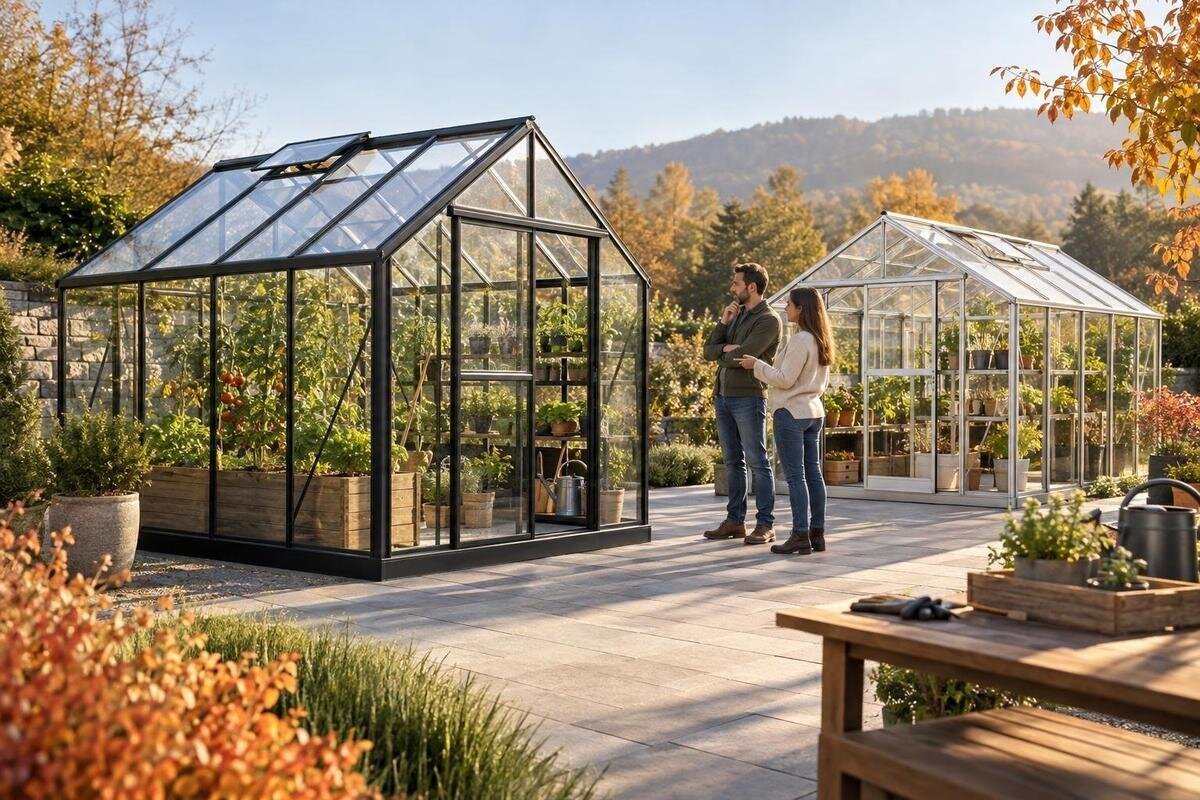
Seasonal greenhouse buying guide
Black Friday can make the price tag the easiest thing to compare—and the least useful on its own. For a glass greenhouse, the meaningful differences are in the glazing itself, how each pane is held in the frame, the working space inside, the ventilation layout, and what arrives with the order. Compare complete specifications before considering a promotion. A discount matters only if the model fits the site and growing plan you already have. No verified offer terms are supplied here, so this guide does not assume any model is discounted or in stock; check the live listing and checkout terms before ordering.
01
Compare the offer against a complete specification
Before comparing Black Friday prices, build a shortlist and record the same fields for every glass greenhouse: glazing type and thickness, frame material and finish, outside dimensions, door opening, vent arrangement, included parts, and assembly scope. Add the displayed base price, then list delivery, foundation or base work, shelving, vent openers, and other accessories separately if your plan needs them. Mark each item as included, optional, or not stated, and note which configuration the price describes. Keep a dated note of the page and chosen options, especially if a listing offers different sizes or glazing choices.
Read the terms attached to the price, including the stated comparison price, eligible configuration, promotion conditions, taxes, shipping, and return details. Do not assume a banner applies to every greenhouse or option; check the product page and checkout summary before treating any saving as final. If the offer information changes during the event, compare the exact model, options, and total you are considering rather than relying on a percentage alone. A title such as aluminum limited edition greenhouse does not prove that a Black Friday markdown is active or that stock is scarce; only current listing terms can establish that.
Confirm the exact glass and glazing data
Confirm that the panels are glass, not merely transparent glazing, and find the exact glass type stated by the seller. Ask for thickness, pane dimensions, and whether the greenhouse uses single panes or layered glazing. If light-transmission or thermal figures are supplied, note what they measure: glass alone and a complete glazed assembly are not the same basis for comparison. Terms such as horticultural, tempered, and laminated identify different products; do not infer particular breakage behavior or insulation from a broad label. Even a listing titled aluminum classic greenhouse does not establish that its product is glazed with glass; verify the explicit glazing specification before treating it as a glass model.
Match those details to your growing plan rather than assuming thicker or multiple glazing is automatically preferable. Extra layers can affect light transmission, heat retention, frame requirements, maintenance, and total cost, so compare the maker's documented figures and the exact assembly. If you plan to extend the growing season, ask for relevant thermal information; if maximizing daylight matters, ask for stated light data. Site exposure, vent area, and shading also affect the growing environment, so the glass specification is only one part of the choice. Where safety glazing matters at your site, request the named glass type and supporting documentation, and confirm suitability with an appropriate professional rather than relying on a photograph.
02
Check how each pane is fitted and replaced
Once the glass is identified, check how it is retained. Look for details about glazing bars, clips, gaskets, seals, or another stated system for keeping each pane in position, and confirm which parts come in the kit. A diagram or panel schedule is more useful than a promotional photo: roof, wall, door, and corner panels may not share the same shape. A clear breakdown helps you understand how the glazing meets the frame and whether an individual piece can be identified if it later needs attention. Note any gaps between the illustrated package and the written parts list.
Ask how replacement panes and small glazing components are identified and sourced. Are individual panes listed by size or part number? Are they specific to the greenhouse model? What should you do if glass arrives broken or is damaged later? Do not assume a standard pane will fit every greenhouse, or that a locally cut piece will match the stated retention system. Keep the model name, part identifiers, and seller's guidance with your order records; confirm how support handles a request before you need one. Those details matter in a kit with many separately packed pieces, because they make a later question or repair more precise.
Assess the frame and its connections
Compare the frame material, finish, profile, joints, and fasteners as one assembly. The material name alone does not tell you how the frame is built or how it holds the specified glass. Look for a manufacturer's description of member profiles, connection method, base attachment, and protective finish; note any stated cleaning or upkeep requirements. Wood, metal, and composite components may have different care needs, so use the exact instructions rather than assuming any frame needs no maintenance. Check whether the stated material applies to all members or only some components, and whether required hardware and glazing retainers are included.
Do not judge a frame's suitability from a photograph or a premium-sounding label. Frame and glazing must be specified together, and the manufacturer's assembly and site guidance applies to the particular kit. A title like Prestige Premium greenhouse does not replace published information on frame material, connection details, finish, or pane retention. Compare any stated support or installation conditions, and ask the seller or a qualified installer if the proposed base or exposure raises questions. Avoid trying to calculate capacity from profile dimensions or appearance; use the model's documentation and professional advice where needed. Record any stated maintenance guidance as part of the comparison.

03
Measure usable space, not just the footprint
Start with the greenhouse's outside length and width to see whether it fits, then look for usable interior dimensions. Compare eave height, ridge height, and the clear opening of the door, not just total floor area. Sketch the footprint to scale or mark it in the yard; add the door's opening space, an aisle, benches, shelving, and any route for carrying pots or trays. This reveals whether the listed size leaves enough working room, or whether a seemingly generous footprint becomes crowded once fixtures are in place. Check the clear door opening against the widest item you intend to move inside.
Choose dimensions around the plants and tasks you expect. Tall crops need vertical clearance, while staging and storage take away floor area; leaving a path affects how easily you can reach plants and move equipment. Check whether interior fittings are included or optional, and plan for likely changes in your planting mix without buying space you cannot use. For a less familiar layout, use the dimensioned plan instead of its name: Garden View T greenhouse is a title, not a measurement, so compare the published footprint and clearances with your own site drawing. If the page gives only exterior dimensions, ask what interior space remains after framing.
Compare vent locations and opening controls
Compare ventilation by the location and opening size of each vent, not by vent count alone. The specification should say which roof or wall vents are included, their dimensions, whether they are manually operated or paired with an automatic opener, and how they are reached. A vent placed within easy reach of the aisle may be simpler to use than one that is awkward to access, but the model drawing should confirm the arrangement. Ask for a roof or side-view plan and separate included parts from optional controls. If opening size is not published, request it rather than trying to estimate from a photograph.
Think about how you will manage the greenhouse during a typical day and when you are away. Check whether doors are the only practical openings, how the selected vent layout supports the airflow you want, and whether screens or shade accessories are available and compatible if you need them. Those details differ by kit and cannot be read reliably from a photograph. A label such as pyramid greenhouse listing does not tell you the vent count, location, opening area, or controls; compare those published details directly. Verify any automatic opener against the exact vent and greenhouse model instead of relying on a general compatibility claim.
04
Check the greenhouse site and base requirements
Measure the actual site, including the route to reach it. Note the level area, door swing, access around the greenhouse for cleaning or maintenance, and nearby fences, paths, trees, or overhead branches. Watch how sun and shade move across the intended location at different times; a single snapshot can overstate the available light. Look at drainage and where water, potting materials, and tools will be used. This site sketch lets you test the advertised footprint, approach, and door position against the way you intend to work, and can expose obstacles not visible in an online product image.
Read the manufacturer's requirements for the base, anchoring, clearances, and site preparation for the exact model. Do not assume that an existing patio, a level-looking patch, or a generic base will meet them. If the surface is sloped, soft, or exposed to conditions you are unsure about, have a qualified installer assess the appropriate base and attachment approach rather than improvising an engineering solution. A listing titled aluminum lean-to greenhouse still needs actual dimensions, mounting details, and glazing specifications; a format label alone cannot confirm fit or show that it is a glass model. Check any applicable local requirements with the relevant local office or a qualified professional.
Understand assembly and handling before ordering
Look for the assembly manual before ordering, and read the requirements for the exact greenhouse rather than relying on a generic video. Check whether the kit includes an itemized parts list, how glazing is identified, and what tools, helpers, site preparation, or specialist services are expected. If a time estimate appears, see whether it assumes a prepared base or additional people. Find out whether installation is included in the offer or must be arranged separately; an attractive price can omit work needed to reach a usable, fully assembled structure. Ask who is responsible for resolving missing or damaged components during assembly.
Glass panels require careful handling, so understand the maker's handling instructions and where a delivery can be kept until assembly. Confirm what the manual says about staging, sequence, and conditions for work; do not begin if supplied parts or the site differ from the instructions. A product page titled Bloomcabin Orangerie should be assessed using its own manual and package list, just like any other greenhouse: a name or photograph cannot establish how difficult assembly will be. If the work is beyond your experience or the specified process is unclear, ask the supplier or a qualified installer before committing.

05
Review delivery, damage, and return terms
Check delivery details for your address, not only the general event page. Confirm how the greenhouse is shipped, whether the carrier needs a suitable access route, whether unloading is included, and what appointment or delivery information is stated. A large kit may need a planned place for packages, so make sure the drop-off arrangement works for your household and the site. Ask how to report a damaged outer package, what to inspect on arrival, and which documents or photos the seller needs. Keep the order confirmation and packing information until every listed package is accounted for, and follow the seller's guidance for storing the glass.
Read the current return, cancellation, and damage terms before ordering. For a large or fragile kit, find out who arranges return transport, whether packaging must be retained, how missing or broken panes are handled, and whether a replacement part can be requested separately. Do not assume rules for an ordinary parcel apply. Check the terms before unpacking or discarding packing materials, and seek clarification in writing if a step or deadline is unclear. No delivery date, return arrangement, or replacement service should be inferred from Black Friday timing; rely on the terms attached to your order. Note whether conditions differ for damaged, opened, or incomplete goods.
Compare the complete cost and shortlist
Finish with a side-by-side comparison that separates must-haves from optional upgrades. Put the glass type and thickness, frame details, footprint, height, door opening, vent layout, package contents, assembly scope, and delivery terms on the same sheet. Add the cost of any base work, shelving, shade, vent controls, or installation only if your plan needs those items, marking each as included, optional, or not stated. Compare the amount needed to achieve the setup you want, not a headline price attached to a different configuration. Use the final checkout total, including listed shipping and taxes, when available.
Decide on minimum acceptable requirements for glazing, working space, ventilation, and site fit before choosing a promotion. Keep unknowns visible and ask for exact model information instead of filling gaps from a photo or title. A label such as greenhouse listing with built-in storage should prompt you to check which components, storage dimensions, and fittings are actually described, not assume every pictured item is part of the package. Recheck the chosen configuration, delivery, and terms at checkout; save the specification and total you used for the comparison. If a key detail remains unconfirmed, keep it off your shortlist until it is resolved.
Frequently asked questions
Does Black Friday guarantee a lower greenhouse price?
No. Treat the event as a time to compare listings, not proof that a particular model is discounted or that its price is the best available. Check the current product page and checkout total, including any delivery charges and required options. A percentage off is useful only when you know which configuration and reference price it applies to.
How can I confirm a greenhouse really uses glass?
Look for an explicit glazing specification that names the material and glass type. Then check thickness, pane dimensions, and whether the panels are single or layered. A clear product title or photograph is not enough to verify glazing. If important information is missing, ask for the product documentation before comparing the greenhouse with other glass models.
Is thicker glass always better?
Not automatically. Glazing choices can affect light transmission, thermal performance, frame requirements, maintenance, and cost. Compare the manufacturer's data for the complete glazing arrangement rather than choosing by thickness alone. Consider the growing conditions you want and the ventilation and site conditions too; the glass specification is only one part of how the greenhouse will work.
How do I choose a frame material?
Compare the stated material, finish, connections, pane-retention system, and care requirements together. Different materials can have different upkeep needs, so use the instructions for the exact model rather than assuming from appearance. Also confirm that the frame is specified for the glazing package and that the manufacturer's base and installation guidance suits your site.
What should I confirm before checkout?
Verify the glass and frame specifications, dimensions, vent details, package contents, assembly scope, delivery arrangements, and current return terms. Check which accessories or site work are included and which would be additional. Compare the final total for the configuration you actually want, and resolve any essential specification that remains unclear before placing an order.
A sound Black Friday purchase is a glass greenhouse whose documented glazing and frame fit your site, whose dimensions suit your plants and working space, and whose ventilation, assembly, and delivery requirements are manageable. Compare complete configurations and final order totals, and treat missing information as an open question rather than a discount. If a model cannot be assessed against your non-negotiables, it is not ready for your shortlist, however appealing its event label may look.
