
Greenhouse Fans: Circulating Air or Extracting It?
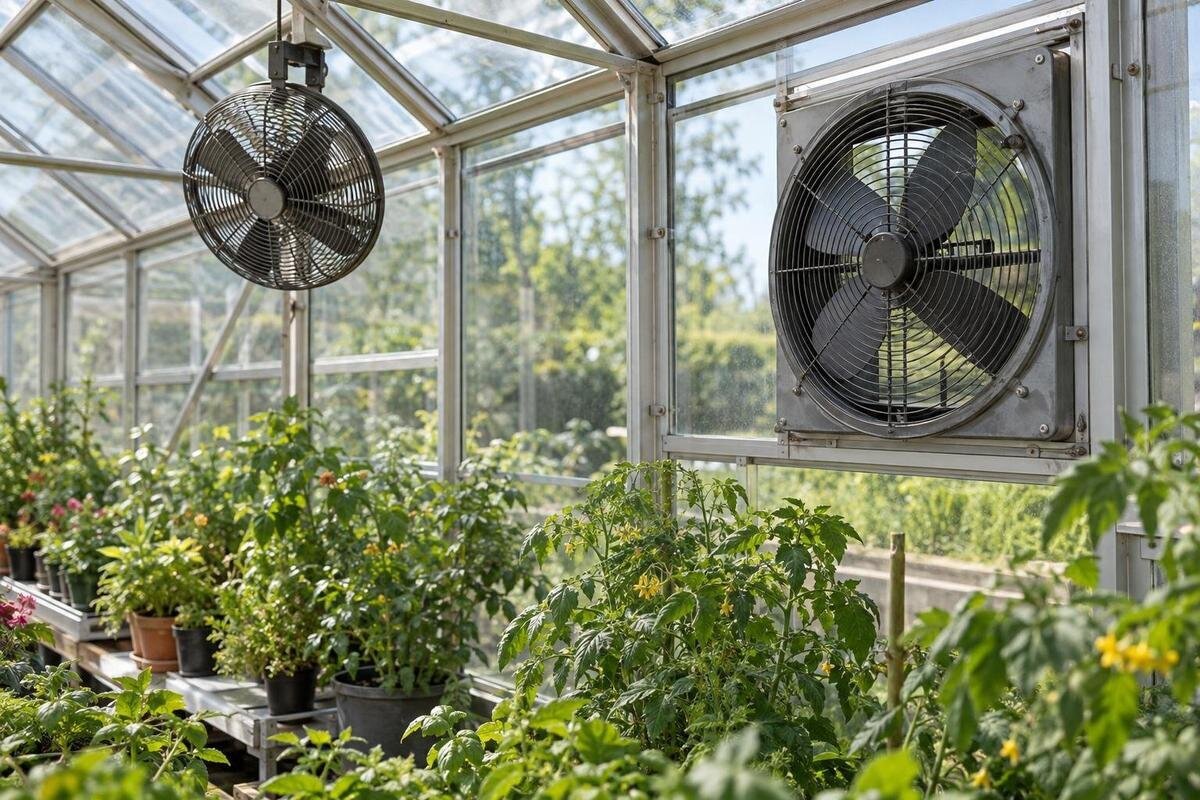
Greenhouse ventilation
Greenhouse fans are often described as ventilation equipment, but circulation and exhaust do different work. A circulation fan moves air around inside the structure; an exhaust fan carries indoor air outside and relies on replacement air entering. One can reduce stagnant pockets without taking heat or moisture out of the greenhouse. The other can exchange heat and moisture only as outdoor conditions and the intake path allow. Reading those functions separately makes fan selection, layout, and troubleshooting much clearer.

01
Circulation and exhaust solve different airflow problems
Think about where the air goes, not whether a product is simply called a greenhouse fan. A circulation fan recirculates air already inside: it pushes a stream through part of the growing space, and that air remains indoors. Its purpose is to make movement more consistent from one area to another. An exhaust fan sends indoor air outdoors. For that to continue, outdoor air needs a route in through suitable vents or designed inlets. In shorthand, circulation changes distribution; exhaust changes the air supply. The two functions can share a greenhouse, but one fan’s movement should not be counted as the other’s work. A floor-plan sketch makes the difference easier to see.
Trace the intended movement with arrows. A circulation arrow loops within the greenhouse; an exhaust arrow crosses the boundary, while a separate arrow shows incoming air. A fan can make leaves move and still leave the same warmed air inside. An exhaust fan can discharge air while leaving still pockets if incoming air takes a short route straight to the outlet. Neither spinning blades nor visible movement proves the intended whole-space effect. Label each unit by its job—recirculate or discharge—then check whether its airflow reaches the growing area rather than bypassing it. This basic map can also prevent buying another circulation fan when the underlying issue is poor air exchange.
What a circulation fan changes inside the greenhouse
Circulation helps when conditions vary from one part of the growing area to another: a still corner, a bench sheltered by foliage, or a noticeable difference between canopy-level air and the space above it. Moving air can mix those zones and reduce local contrasts, though it may also bring warmer upper air down toward plants. The result is more even movement, not necessarily a lower average temperature. With doors and vents closed, recirculation alone cannot carry accumulated heat or water vapor out. It can move air through more of the canopy, but it does not create an outdoor exchange path. That distinction matters when readings are taken at only one height.
Direction matters as much as location. A fan stream that travels over the crop may support broader circulation, while a unit aimed directly at one row can leave areas behind benches or dense foliage with little movement. Strong direct airflow may dry leaves or growing media faster under some conditions, so more speed is not automatically better. Use the fan maker’s guidance for orientation and settings, then consider the whole planted area rather than one moving leaf. Benches, hanging baskets, trellises, doors, and stored supplies can interrupt a circulation loop. There is no universal spacing or angle for every structure; plan around the greenhouse’s actual layout and what will be inside it.
02
What an exhaust fan can remove
An exhaust fan discharges indoor air through an outlet and relies on outdoor air entering elsewhere. If the outdoor air is cooler than the greenhouse air, that exchange can carry heat away. If outdoor air is hotter, ventilation alone cannot cool the greenhouse below outdoor-air temperature. Water vapor can leave with the exhausted air, but the humidity result depends on what replaces it and on moisture added indoors by plants, wet surfaces, or watering. Relative humidity also shifts when temperature changes, so an RH reading by itself does not show whether the greenhouse has actually lost moisture. Compare indoor and outdoor conditions at the same time when judging what exhaust ventilation is doing.
When comparing exhaust fans, look for published airflow information that accounts for resistance from the intended inlet, screens, louvers, and other components. An airflow figure measured without those restrictions may not describe the installed system. The Large backyard greenhouse listing spans 506–753 sq ft across its options, but floor area alone is not enough to select a fan. Interior height and volume, the replacement-air route, and the conditions you want to manage also matter. Ask the equipment supplier to explain which performance data apply to your proposed arrangement, including whether required accessories are included in the quoted package.
Replacement air determines whether exhaust works
Every volume of air exhausted has to be replaced. If the intended inlet is too restricted, the fan may draw air through gaps or from whichever opening offers the easiest route. That can mean less useful exchange through the growing area. An inlet close to the exhaust can also let incoming air go straight back outside, leaving distant corners with little change. An operable window is not automatically an effective inlet: its position, clear opening, screens, and relationship to the exhaust all matter. Treat the complete route—from the outdoor opening, through the crop area, to the exhaust outlet—as one system, not as separate fan and window decisions.
For an exhaust system, establish which opening will admit replacement air and whether it will be available whenever the fan runs. A plan that depends on a door being open is different from one with a dedicated inlet; it also depends on someone remembering to open that door. When considering the Classic aluminum greenhouse options, compare the documented openings for the selected configuration with the fan supplier’s inlet requirements. Ask how any inlet shutter or vent is intended to operate with the fan. Include screens in that discussion, because the opening’s outside dimensions do not necessarily describe its effective airflow.

03
Plan circulation around crops and obstructions
A useful circulation layout considers the entire planted zone, not just a convenient mounting point. Think in terms of an indoor loop that moves air through the growing area and back around, while allowing for benches, tall crops, shelving, and the route people use to enter. In a long or divided greenhouse, one unit may leave a sheltered pocket even when the air near the fan feels brisk. Some layouts use more than one fan to maintain movement across separate areas, but the required number and placement depend on the greenhouse and the equipment. Follow the fan manual rather than applying a universal distance or aiming rule.
Draw the circulation route on a floor plan with plants at their expected mature size, not just as small pots at planting time. For a Lean-To Greenhouse, include the adjoining wall, benches, and aisle so the proposed route reflects the space you will actually use. A clear aisle may carry a noticeable stream while dense foliage beside it remains sheltered. Consider both the fan’s outgoing stream and the path air can take back through the greenhouse. Leave room to reach plants and equipment without placing supplies in that return path. Seasonal changes in crop height or hanging baskets can justify reassessing coverage even when the fan has not moved.
Map the route from air inlets to exhaust outlets
Plan exhaust around a route that crosses the greenhouse, rather than placing an outlet wherever installation seems easiest. In some designs, higher exhaust points are considered because warm air tends to rise, but that is not a universal placement rule. Existing roof vents, side openings, greenhouse geometry, crop height, screens, and nearby walls can all affect the path. Keep the intended inlet and outlet far enough apart in the route that incoming air can pass through the growing area rather than taking the nearest exit. Follow the greenhouse and equipment manuals for approved locations; a qualified professional can assess a plan that requires new or modified openings.
Mark the intended inlet and exhaust outlet on the selected plan, then identify any competing openings between them. A nearby open door or vent may create an easier route than the one you intended through the crop area. If you are comparing Limited Edition aluminum greenhouse configurations, use the opening locations documented for each option to discuss those possibilities with the supplier. Ask which openings the proposed exhaust arrangement relies on and how other vents affect its operation. Keep a copy of that agreed layout: it gives you a useful reference when a later change to shelving, doors, or vent operation alters the airflow.
04
Use temperature and humidity readings to find the problem
A few readings across the greenhouse are more useful than one measurement beside a fan. Record temperature and relative humidity at crop level in the area of concern, in a second part of the growing space, and at a higher point if you suspect a vertical difference. Compare them with outdoor readings taken at the same time. Keep sensors out of direct sunlight, direct water, and the immediate blast of a fan, and follow the logger’s placement instructions. Note whether exhaust fans, circulation fans, vents, doors, or shade are in use. Consistent locations and timing make it easier to tell a persistent pattern from a one-off reading.
Look for the shape of the pattern. Similar high temperatures throughout the greenhouse suggest a different problem from one warm corner surrounded by more moderate readings. To distinguish a location difference from a sensor difference, compare the instruments side by side first, following their instructions. Then label measurement positions on your plan and use those positions consistently. For a T-Model Greenhouse Orangery, choose points from the actual growing layout rather than assuming one central reading represents every area. Record temperature with RH, since temperature changes can alter RH without an equivalent change in water vapor. Photos of sensor locations help make later comparisons repeatable.
Match the fan arrangement to the pattern you observe
If the main issue is uneven movement or a localized still area, consider whether circulation can reach that part of the crop without creating an uncomfortable direct stream elsewhere. If the greenhouse is broadly hot and outdoor air is cooler, an exhaust route with suitable replacement air may help remove heat. When both patterns occur, circulation and exhaust can do separate jobs in the same setup. If outdoor air is also warm, an exhaust fan cannot by itself create cooler-than-outdoor conditions. These are diagnostic clues, not guarantees: check readings, the intake route, and the fan documentation before changing equipment or controls.
Turn the observed pattern into a specific question before shopping. If a sheltered bench differs from nearby areas, ask whether a circulation arrangement can reach it without concentrating airflow on another crop. If readings are broadly high, compare indoor and outdoor temperatures before treating exhaust as the cooling solution. When considering Pyramid-type greenhouse options, discuss your planned crop positions and observations rather than choosing a fan from the model name. If temperatures climb with strong sunlight despite an effective exchange route, reducing solar heat gain may also deserve attention. Shading addresses incoming solar energy; circulation redistributes air, and exhaust exchanges it with outdoor air.

05
Controls and installation need to match the layout
A controller can decide when a fan runs, but it cannot correct a blocked intake, a short route from inlet to exhaust, or poor circulation through the crop area. If a sensor controls exhaust, place and configure it according to the controller instructions so it represents the conditions you intend to manage. There is no single operating threshold or schedule that suits every greenhouse. Where vents and powered fans are controlled separately, check how their instructions describe coordinated operation. Keep a record of the fan, vent, and shade settings during observations; otherwise, it can be difficult to connect a changed reading with the change that produced it.
Before installation, have a qualified installer or electrician assess mounting, electrical supply, required clearances, and any changes to the structure against the equipment and greenhouse documentation. This article is not an installation guide. If you are considering a greenhouse with built-in storage, include the storage section, its access, and any internal separation in that review. Identify where controls can be reached and where equipment will need cleaning or servicing without moving plants or blocking an aisle. Confirm whether the proposed airflow route passes through a doorway that might be closed during normal use. These practical details belong in the equipment plan, not just in the final placement of benches.
Fan specifications and performance checks
A useful equipment comparison separates the fan’s function from its accessories and operating requirements. Request the model-specific airflow data, control compatibility, noise information, maintenance requirements, and a clear list of included components. For exhaust equipment, establish whether the proposal includes the required inlet and outlet components; for circulation, ask how the recommended arrangement covers your planted area. The Prestige Greenhouse options span 40.6–302 sq ft, so identify the selected option in any equipment inquiry. Give the supplier its documented dimensions and openings along with your crop layout. That creates a concrete basis for comparing proposals rather than assuming two fans with similar descriptions will do the same job.
Once equipment is in place, assess the result without changing several things at once. Following the manuals, compare readings at the same locations under similar outdoor conditions, and note which fans and openings are operating. If circulation improves a local pattern but the greenhouse remains broadly hot, that points to a separate heat-removal question. If air seems to move only near the exhaust, revisit the replacement-air route. If outdoor air is warmer, ventilation may not deliver the cooling you expect. A clear plan and repeated observations help distinguish those outcomes without treating circulation and exhaust as interchangeable.
Frequently asked questions
Can a circulation fan lower the temperature in a greenhouse?
A circulation fan moves existing greenhouse air; it does not exhaust heat outdoors. It can make local conditions more even, but that may not lower the average temperature. To exchange heat, the greenhouse needs an exhaust route and replacement air, and ventilation works differently when outdoor air is warmer than the air inside.
Does an exhaust fan need an open vent or inlet?
Yes. Exhausting air requires replacement air to enter through a suitable opening. If the intake route is restricted or too close to the outlet, the fan may not exchange air effectively across the growing area. Check the greenhouse and fan manuals for the required openings and have a qualified professional review changes to the structure.
Should I use circulation and exhaust fans together?
They can complement each other when the greenhouse needs both air exchange and more even movement around plants. The exhaust fan moves air outside; circulation fans move air within the structure. Their arrangement and controls should suit the actual greenhouse layout and follow the equipment manuals.
Will an exhaust fan reduce greenhouse humidity?
It can remove water vapor with the air it exhausts, but the result depends on the moisture in the incoming air and on moisture added inside. Relative humidity also changes as temperature changes, so compare humidity readings with temperature and outdoor conditions rather than relying on one reading.
Where should I place greenhouse fans?
There is no universal position. Map the growing area, openings, obstacles, and intended airflow route; avoid a layout where incoming air goes straight to the exhaust outlet. Follow the manuals for approved locations, and ask a qualified installer to assess mounting or electrical work.
The clearest distinction is where the air ends up: circulation keeps it inside, while exhaust carries it outside and depends on replacement air. Use a floor-plan sketch and readings from more than one area to identify whether the problem is uneven movement, inadequate exchange, or heat gain. Once the job is clear, fan layout and selection can follow the actual greenhouse rather than a guess based on the word ventilation.
