
Keeping a Greenhouse Growing Diary That Improves Next Year’s Plan
Greenhouse planning
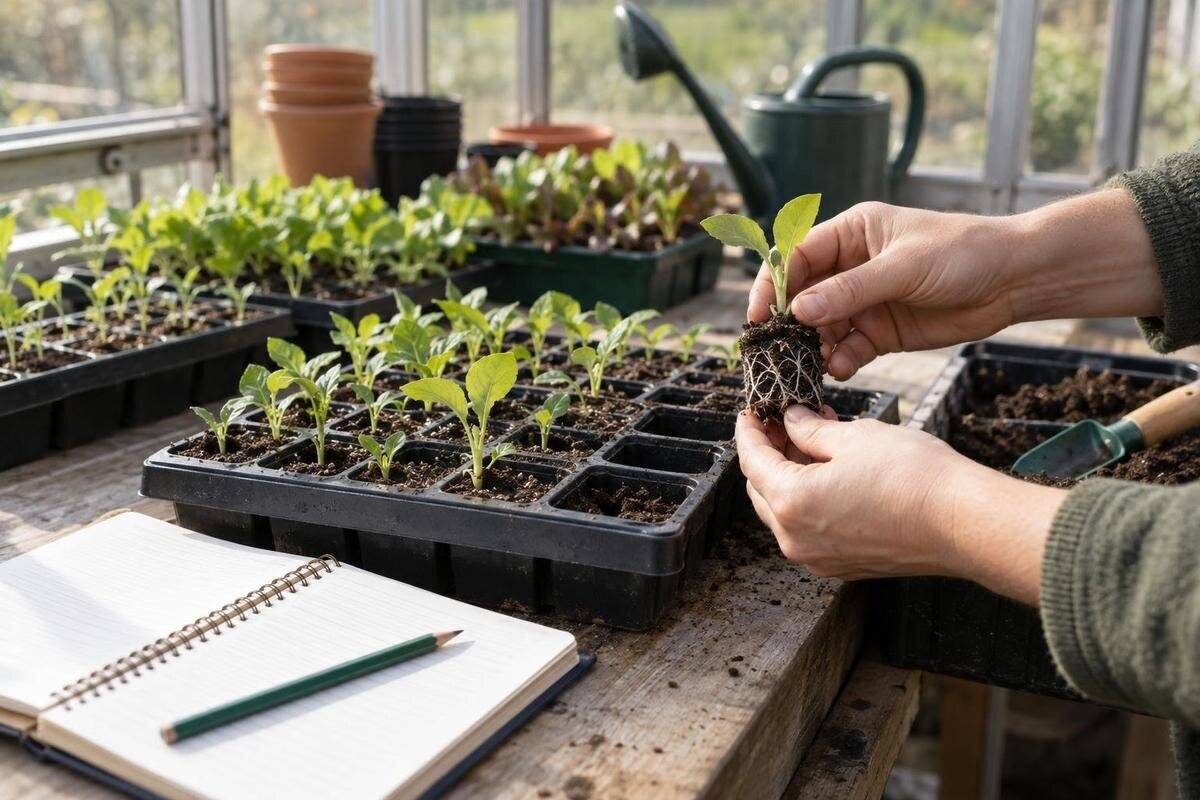
A greenhouse growing diary is not a day-by-day account of everything you did. It is a repeatable record of sowing, growing conditions, harvest, and labor that helps answer practical questions before next season: which batches succeeded, how long they occupied space, what work they required, and what might change. A simple log is more useful than a detailed one you stop maintaining. Record observations consistently, mark uncertainty, and separate measured facts from explanations you are still testing.
Decide what the diary should help you change
Start with the decisions you want next season’s plan to improve. You might want to refine sowing dates, choose which varieties to grow again, estimate how many plants to start, or find out which task repeatedly took longer than expected. Choose two or three questions so the fields in your diary serve a purpose. Define its scope too: crops grown in the greenhouse through harvest, seedlings started there and moved outdoors, or both. If plants leave for a bed or container, record their destination so early greenhouse progress is not mistaken for the full crop result.
Set a clear season boundary and decide what counts as one batch. A batch could be one sowing of a named crop and variety; a later sowing gets a new ID even if it is only a few days apart. Use stable labels for the year, greenhouse, and growing zone. Decide whether you will close the season at the last harvest or when the growing space is cleared, then use that definition consistently. Your recorded dates describe your own season, not a universal calendar. Conditions and timing vary, so keep relevant observations with the dates you plan to compare.
Choose a record format you will keep using
A notebook, spreadsheet, or digital notes app can all work. Choose the format that is easiest to reach while you are sowing or checking plants, and keep the first version simple. A useful arrangement is one list of sowing batches and a separate event log that refers back to each batch ID. You can add harvest and labor records in the same table or in linked tables. Use one date format and one set of units throughout. If a record takes so long that you regularly postpone it, remove fields that do not help answer your chosen questions.
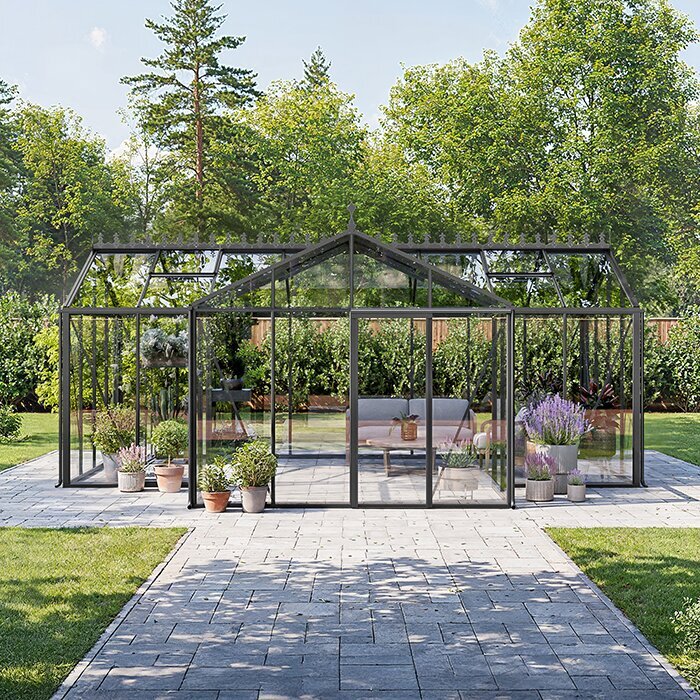
Include a location field that stays meaningful when trays or tools move: greenhouse ID, zone, shelf or bench, and any shared-use notes. Give each batch a matching label in the diary and on its container, and date changes to the layout. Keep a simple key explaining abbreviations so you can interpret them next winter. Record where supplies are kept if retrieving or moving them interrupts your work. These notes can also inform a future purchase: when comparing the Limited Edition greenhouse with built-in storage, use your record of stored items and workspace needs to frame questions about the available layout. The product name alone does not establish how your equipment will fit. In a digital diary, store the layout sketch with the season’s records; in a notebook, reserve a page for it and refer to that page in location entries.
Capture the details of each sowing
For every batch, record the crop and variety, seed source or lot if known, sowing date, number of seeds or cells, and the method you used. Add the container or tray description, growing medium if relevant, intended destination, and greenhouse location. Note whether the sowing was direct in a bed or made in a container. If you are following a crop-specific schedule, use a reliable growing guide for the recommended conditions; your diary’s job is to record what you did and observed, not to replace that guidance.
Keep planned dates separate from actual events. Record when emergence was first noticed, how many plants emerged by a chosen check date, and when you potted up or moved the batch. Use counts as well as percentages when possible, because a percentage without the starting number can hide a small sample. Illustrative example only, not a sowing recommendation: a fictional batch of 36 cells is logged as sown March 12, with 24 emerged by March 20 and 21 moved outdoors on April 8. The dates simply show how a sequence can be recorded.
Record conditions in context
Write down conditions that relate to your questions, using observations you can collect consistently. Depending on your setup, that might include a minimum and maximum temperature, the time of a reading, approximate watering, cloud or shade changes, or when ventilation was adjusted. Record where a sensor or observation was located; a reading from one bench may not describe another area. Mark whether a value was measured, estimated, or unavailable. Do not add numbers just because a blank column looks unfinished.
Keep condition notes connected to the crop and place. A log entry should say which zone or bench it describes and when you checked it. If you change the greenhouse, equipment, or routine during the season, date that change. When considering a Classic aluminum greenhouse, your existing diary can help identify the observations you will need to continue in a new setup; a model name cannot tell you what conditions plants will experience. Record changes in sensor location as well, since readings taken in different places may not be directly comparable. Distinguish a spot reading from a recorded daily minimum or maximum, and note missing observation periods rather than filling them with estimates. A brief entry such as “reading taken at bench height after the door opened” preserves context that a temperature alone would lose. Record the observation first and leave interpretation for your review.
Follow each batch through its growing stages
Track a batch from sowing through its next destination using a small number of repeatable checkpoints. Note emergence, potting up or other moves, visible losses, and the date plants left the greenhouse. Record how many started, how many remained, and how many were transferred. If you use a readiness measure, choose one you can describe consistently, such as a recorded size or visible stage, rather than writing only that plants looked ready. A brief note about uneven growth is more useful when linked to the batch and date.
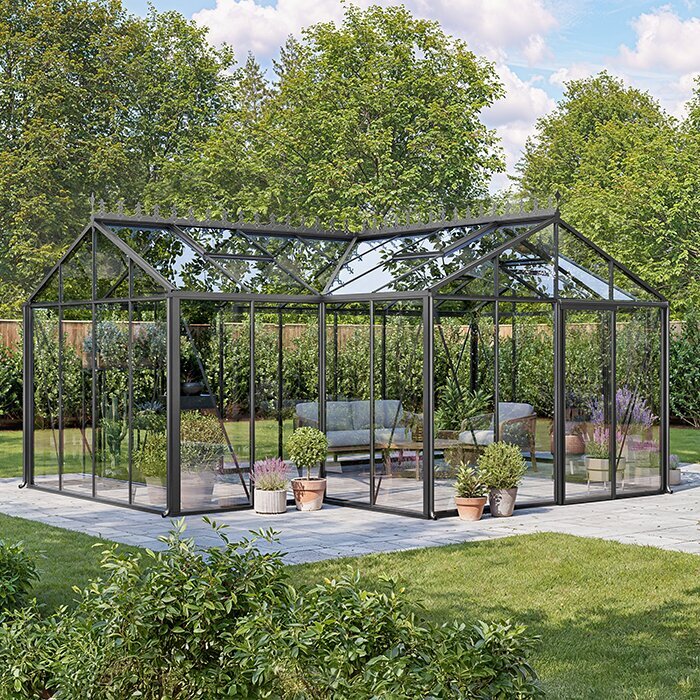
For plants moved between areas, record both the move-out and move-in dates, along with the new location. If seedlings go outdoors, note the bed or container they enter and any follow-up observation you intend to use. If you split a batch between destinations, retain its original ID and add a destination suffix so the starting counts still reconcile. Record transfers separately from losses: a tray that is empty because plants moved is not a failed batch. These records also show how many plants remained in the greenhouse at the busiest point. If you are comparing a lean-to greenhouse with your current space, use that peak occupancy and your measured container sizes to prepare layout questions, rather than assuming the same number of trays will fit. Keep greenhouse-stage results separate from later outdoor harvests, while preserving the connection between them through the batch ID.
Measure harvest and crop losses consistently
For each harvest, record the date, crop batch, amount, and measurement method. You might count individual items, weigh them, or use another method that suits the crop. Keep usable harvest separate from damaged or discarded produce if that distinction matters to your plan, and note the reason only when you know it. For crops picked repeatedly, log each harvest as it happens and calculate a season total later. If you change from counting to weighing halfway through, mark the change instead of combining unlike measures without explanation.
Link harvest records to the number of plants and the area they occupied. A total from a larger planting should not be compared directly with one from a small bench as if the setups were identical. Use the actual planted or bench area when comparing yield per area, and record how you measured it. Illustrative arithmetic only: 12 pounds of usable harvest from 6 square feet equals 2 pounds per square foot for that recorded period; it is not an expected crop yield. Include the harvest period and whether plants occupied the space throughout it. If these results lead you to compare a Limited Edition aluminum greenhouse, distinguish the listed structure area from the crop area used in your records. Keep crop failures and partial harvests in the same system so the review includes the full season, not just the most productive batches.
Track labor and greenhouse space
A diary that records only harvest can miss the work behind it. Add approximate minutes for recurring tasks such as sowing, watering, potting up, cleaning, or harvesting when labor is one of your planning questions. You do not need a stopwatch for every visit; use a consistent estimate and label it as approximate. Separate one-off jobs from tasks repeated through the season, and note whether time covered one batch or several. The purpose is to see where effort went, not to create an exact timesheet.
Record how much space a batch occupied and when it became available for another use. Measure the outside dimensions of trays and pots, including any part that extends beyond their bases, and note the number present at peak occupancy. A simple sketch can identify beds, benches, storage, and circulation space; annotate it with batch IDs and dates. Include temporary uses, such as an area needed for potting up, rather than counting every clear surface as permanent growing space. If your diary suggests a different layout, compare those measurements with the layout information available for the T-Model Greenhouse Orangery and verify usable dimensions before drawing conclusions about capacity. Record when a batch leaves and when its space is actually ready for reuse; clearing and cleaning may happen later. That distinction helps explain why two sowings overlapped even when their planned transfer dates did not.
Separate observations from explanations
When something goes wrong, write down what you saw before deciding why it happened. Record the date, crop and batch, number of plants affected, visible change, conditions you noted, and any action you took. Then record what happened afterward. If the cause is uncertain, label it as a possibility rather than a fact. For example, a note that leaves changed after a warm afternoon is an observation about sequence; it does not establish that the afternoon caused the change.
At review time, look for repeated patterns rather than treating one event as proof. If sowing date, variety, location, and watering all changed together, the resulting difference cannot be assigned confidently to just one of them. Note structural changes too. If you move to a Pyramid-type greenhouse, begin a new setup record and carry forward the same observation methods where practical, without assuming results will match the previous structure. For a small comparison within your existing setup, write down the question beforehand, identify the one planned difference, and keep other recorded practices as consistent as you can. Preserve results that contradict your expectation. A photograph can document a visible change, but label it with the date, batch, and location so it remains interpretable. Your diary should preserve enough context to form a better question next year, even when it cannot settle the cause this year.
Turn season records into next year’s plan
Set aside time at the end of the season to review records by crop, batch, location, and date. Look for repeated outcomes: sowings that overlapped, plants that occupied a bench longer than expected, harvests that justified the space, or tasks that caused a bottleneck. Compare like with like where possible and flag differences in weather, varieties, planting area, or routine. Sort each idea into one of three decisions: repeat it, change it, or test it. Keep uncertain observations on the test list rather than treating them as established rules.
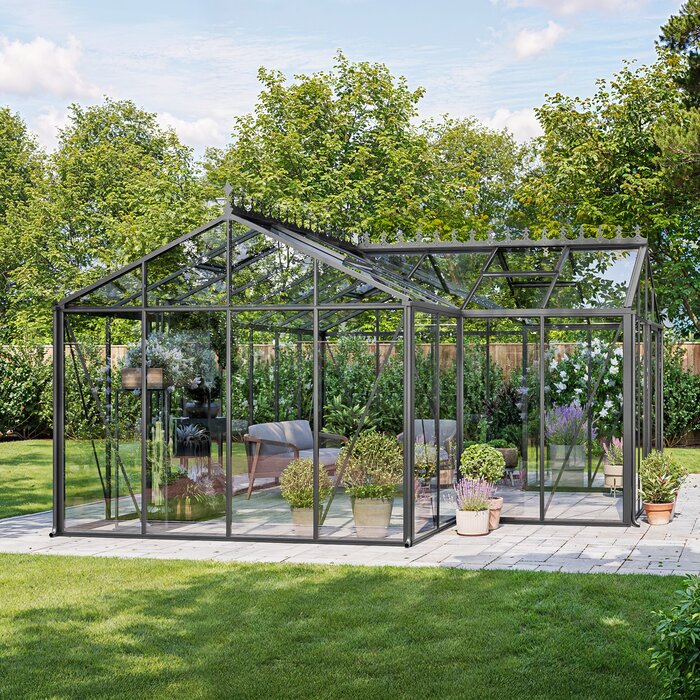
Translate each decision into a specific note for next year: what you will change, which batch or area it affects, and what result you will record. Include the evidence behind it, such as a batch ID or a weekly occupancy total, so you can revisit the reasoning. If your notes raise a question about greenhouse capacity, compare your actual bench, bed, storage, and circulation needs with catalogue information. The Large backyard greenhouse listing gives a published floor-area range of 506 to 753 square feet, which is not the same as the growing area you will use. Before deciding that more space is the answer, check whether rescheduling overlapping batches would address the recorded bottleneck. Keep that scheduling option beside any expansion proposal. This makes the diary useful for evaluating both changes to your planting calendar and a possible purchase, without treating listed area as a prediction of yield.
A reusable template and review schedule
A reusable batch record can begin with these fields: season and year; greenhouse and zone; crop and variety; batch ID; seed source or lot; sowing date; starting quantity; container or bed; growing location; and intended destination. Add fields that answer your chosen questions, such as condition readings or approximate task time. An event entry can use this sequence: date; batch ID; event; quantity affected; location; observation; action; result; and confidence or uncertainty. Keep the order stable so entries are easy to scan or sort.
Enter events close to when they happen, then set a brief recurring review to fill obvious gaps and check batch labels. At season’s end, total harvests, compare labor and space, and write next year’s decisions beside their supporting records. Save an unchanged copy of the completed season before creating the next one. Copy field names and units, but clear actual dates, counts, and results so old values cannot be mistaken for new observations. If you are considering the Prestige greenhouse, carry your diary’s peak tray counts, measured footprints, and workspace needs into the comparison, then verify the relevant dimensions in the product information. Leave room in the new diary for questions to test, including any unresolved capacity issue. You do not need a complete account of every visit; you need consistent records that let you explain why next year’s plan differs from this year’s.
Frequently asked questions
How often should I update a greenhouse growing diary?
Record sowing, moving, harvesting, and other important events when they happen or soon afterward. Add condition readings on a consistent schedule that fits your setup, plus a brief weekly summary if useful. An event-based log is usually easier to maintain than a detailed account of every greenhouse visit.
What should I do if I forgot to record a date?
Enter what you know and mark estimates clearly. You might write that a task happened between two dated observations rather than assign it a precise day. A visible gap is more useful than a guessed date that could make next season’s comparisons misleading.
Do I need to measure every greenhouse condition?
No. Choose a few observations that relate to your planning questions, such as a temperature reading, watering event, or change in shade or ventilation. Record where and when you observed them, and use the same method when comparing batches. Consistency matters more than collecting numbers you will not use.
How can I compare results from one year to the next?
Use the same batch labels, units, and definitions where possible. Compare similar crops, growing areas, and measures, such as usable harvest per planted area. Note differences in weather, sowing dates, greenhouse location, and routines; those details help explain why two seasons may not be directly comparable.
Should I record crops that failed or produced very little?
Yes. Note how many plants or seeds you started, what you observed, and what remained at each stage. Record a known cause separately from a possibility you want to investigate. These entries help you avoid repeating a plan that used time and space without giving the result you wanted.
A useful greenhouse diary will not predict every season. It gives you a dependable record of what you sowed, where it grew, what you harvested, and what the work required. Review those facts before setting dates or quantities for next year. Change only what you can evaluate, and keep enough of the previous routine to make the comparison meaningful. Over time, your planting plan can reflect the conditions and limits of your own greenhouse rather than relying on memory.
