
How Much Does It Cost to Heat a Greenhouse?
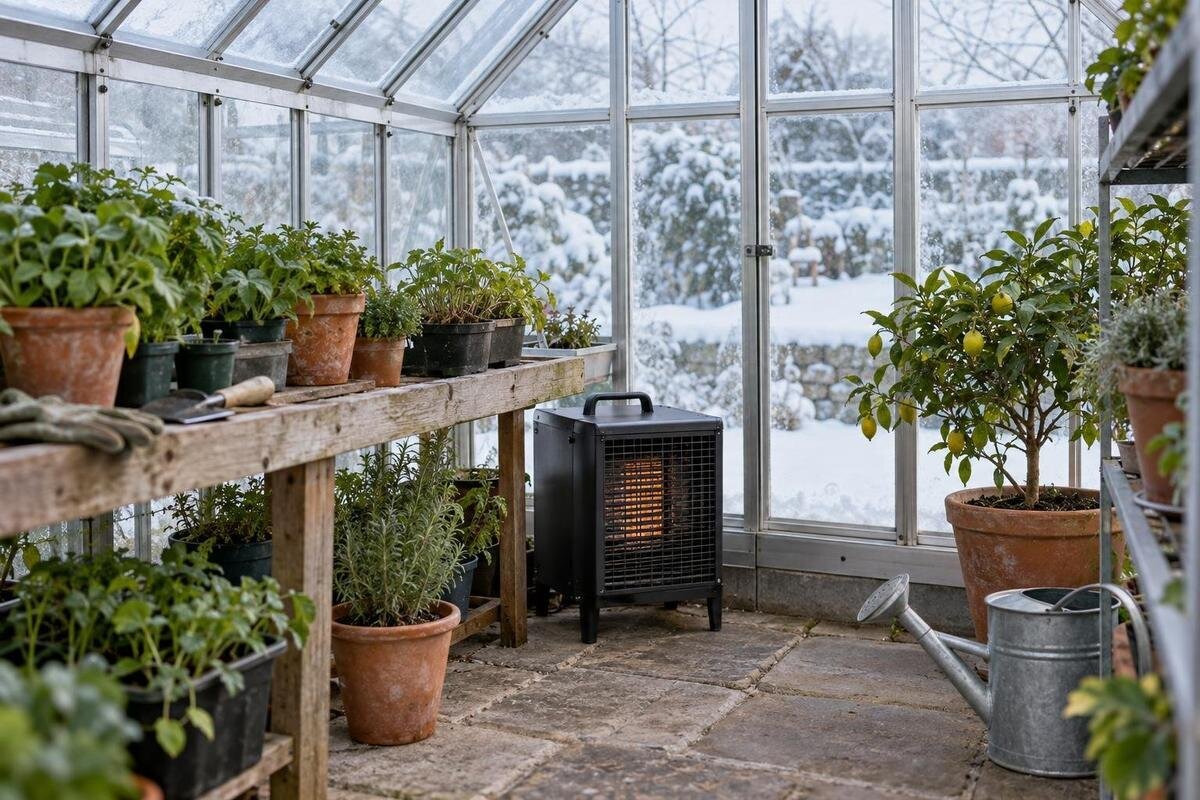
Greenhouse energy costs
Greenhouse heating has no dependable price per square foot: the bill depends on the temperature schedule, local winter weather, the enclosure’s heat loss, heater operation, and your electricity rate. This guide builds a monthly estimate from those inputs. The worked example uses hypothetical numbers, so replace them with your site’s weather, equipment information, and current utility tariff. Treat the result as a planning range, not a guaranteed bill or temperature.

The inputs behind a heating bill
First decide what the estimate covers: a representative winter month, the coldest month, or the entire heating season. List the target temperature by time of day, the outdoor temperatures during that period, a heat-loss assumption for the full enclosure, and the price per kilowatt-hour. Those values interact: a colder hour widens the indoor–outdoor gap, a structure that loses heat faster requires more energy, and a longer heating schedule increases consumption. State whether you are estimating only heater electricity or also other greenhouse loads, such as fans or lights; otherwise, two cost figures may not be comparable.
Floor area helps identify the greenhouse, but it does not describe every exposed surface, air exchange, target, or heater schedule. Use the exact configuration rather than assigning one bill to an entire model family. The Bloomcabin Prestige Greenhouse is listed in sizes from 40.6 to 302 sq ft; those figures identify footprint options, not heat-loss performance. Note the size actually selected and the part of the structure that will share the setpoint. Keep one-time equipment or installation costs separate from recurring energy use. If your heater or meter is not yet chosen, mark those inputs as provisional and keep a range instead of reporting false precision.
Set the temperature schedule first
Choose the temperature you intend to maintain for the plants and your greenhouse use rather than borrowing a generic setting. A frost-protection target, a cool overwintering target, and a target for active growth produce different heat loads. If the controller is set lower overnight than during the day, use both targets and their hours. A constant 24-hour setpoint is easy to calculate, but it may overstate energy use if the real schedule allows a lower temperature for part of the day—or understate it if the target is raised during the coldest periods. Record why you chose the target so the assumptions remain clear.
Also define what is being heated. A bench area, a separate enclosed zone, and the full greenhouse do not represent the same heated space; do not count unheated areas as though they share the setpoint. The large backyard greenhouse listing covers 506 to 753 sq ft, so the selected configuration and heated portion matter more than the category label. Record the thermostat target and sensor location, too. A displayed setpoint is an input to your estimate, not proof that every part of the greenhouse stays at that temperature.
Use local outdoor temperatures
Use hourly outdoor temperatures for the month or season you want to budget. For each hour, subtract the outdoor temperature from the scheduled indoor target and count only positive differences; when outside is warmer than the target, the basic heating model assigns no heat for that hour. Add the differences to get degree-hours. If the setpoint changes during the day, compare each outdoor hour with the target scheduled for that same hour. A monthly average can hide both cold nights and warm afternoons, so hourly data is more useful when you need a closer estimate.
Choose weather data from a station or sensor reasonably representative of the site, and test a colder period as a separate case. Wind exposure, shelter, elevation, and nearby surfaces can make conditions at the greenhouse differ from those at a distant station. The Classic aluminum greenhouse is listed in sizes from 40.6 to 302.3 sq ft; whichever configuration you compare, pair it with the intended site’s weather rather than a nationwide winter average. When preparing hourly data, use Fahrenheit consistently and match the timestamps to the local thermostat schedule. Check for missing readings rather than silently treating them as hours with no heating demand. Historical records describe the period you selected, not the coming winter, so label the year and dates alongside the estimate.
Set a defensible heat-loss assumption
The heat-loss input should describe the whole greenhouse: how much heat it loses per hour for each degree Fahrenheit between inside and outside. Call that aggregate value H, measured in Btu per hour per °F. It is not the heater’s wattage and not a floor-area figure. Use published thermal data for the exact enclosure and its components where available, and ask the manufacturer or a qualified greenhouse professional what the stated value includes. Avoid treating a product image, model name, or footprint as evidence of thermal performance.
Air exchange, glazing, frame, exposed area, and the installation can affect a whole-structure estimate, but a catalog name and floor-area range do not quantify those factors. The Lean-To Greenhouse listing covers 40 to 154 sq ft; its name and footprint alone do not establish the heat loss of a particular installation. Check the documented boundaries and exact configuration before assigning H. A value for glazing alone is not a whole-greenhouse coefficient: it does not automatically include the frame, other surfaces, or air exchange. Ask which losses are included so you neither omit them nor count them twice. If a reliable value is unavailable, show low, central, and high assumptions rather than presenting a guess as a verified specification. Label those cases as sensitivity tests, not a measured range of performance. Energy records from comparable weather and setpoints can inform a planning estimate, but sun, controls, and heater behavior can distort a value inferred from use.

Convert heat demand into electricity use
Once H is stated, the simplified heat demand is H multiplied by the sum of positive degree-hours. The result is Btu for the period. For electric resistance heat, divide the estimated Btu by about 3,412 to get idealized kilowatt-hours, since one kWh is about 3,412 Btu. This conversion assumes the electrical input becomes heat in the greenhouse; it does not account for equipment behavior or uncertainty in H. Keep the result separate from heater capacity: this article estimates operating energy, not the power needed to select or size equipment.
Do not turn a listed greenhouse size into an assumed H or heater draw. The Limited Edition aluminum greenhouse is listed in sizes from 40.6 to 302 sq ft, but those figures do not document its thermal performance or a heater’s kW. If you use a heat pump, use the manufacturer’s documented efficiency for the relevant conditions rather than applying the resistance-heater conversion. For an existing setup, measured electricity use from an appropriate meter used according to its instructions can help check your estimate. Use equipment documentation for the actual heater’s input and operating characteristics.
Apply the electricity rate you actually pay
Use the variable price you pay for each kWh during the heating period. A utility bill or current rate schedule may separate supply, delivery, and per-kWh taxes; include the charges that rise with use. A fixed monthly customer charge usually does not result from greenhouse heating, so adding the entire bill or dividing it by total kWh can overstate the extra cost. If your plan has time-of-use rates or usage tiers, split the estimated kWh into the relevant periods or tiers and apply the matching rate rather than using one flat price.
Keep demand charges or minimum-bill effects separate if your tariff includes them, because they may not move in proportion to each extra kWh. When comparing configurations in the T-Model Greenhouse Orangery range, listed at 178 to 323 sq ft, use the same tariff assumptions so differences in the estimates reflect the modeled energy use. The footprint alone does not establish that use. For a tiered plan, consider the household electricity you would already consume without greenhouse heating: additional heater use may fall into a higher tier rather than starting at the lowest rate. For time-of-use pricing, the timing of heating matters as well as the monthly total. In the worked example, $0.20 per kWh is only an arithmetic placeholder, not a claimed U.S. average or a price offered by Bloomcabin. If your rates change by season, use the rate that applies during the month being estimated.
Check the estimate against heater runtime
An operating log offers a useful second estimate. Multiply the heater’s documented electrical input in kilowatts by the hours the heating element actually runs to estimate kWh. A thermostat’s elapsed on-time is not always the same as full-power operation. As a hypothetical example, a 1.5 kW heater drawing full power for eight hours each day over 30 days would use 360 kWh. At $0.20 per kWh, that comes to $72 before any separate bill charges. This arithmetic is not a heater recommendation or a specification for a particular product.
For an existing greenhouse, compare logged kWh with outdoor temperatures and the setpoint over the same dates. A difference from the heat-loss model may point to an inaccurate H assumption, solar gain, a changed thermostat schedule, or incomplete runtime records; it does not identify the cause by itself. Check energy use first and the dollar conversion separately: an incorrect electricity rate changes the estimated cost, not the kWh. Also confirm what the meter measures. A reading that includes lights or circulation fans cannot be compared directly with a heater-only estimate unless those loads are separated. The Pyramid-type greenhouse is listed in sizes from 60 to 203 sq ft, but size alone cannot predict runtime. Use the selected heater’s label and instructions, and have a qualified professional check electrical compatibility if you are unsure about the supply or monitoring equipment.
Account for sunlight, air exchange, and heated space
The basic calculation deliberately leaves out solar gain, heat stored in soil or other mass, and changes in ventilation. Daytime sun may reduce the hours a heater runs, while cold snaps, wind-driven leakage, frequent door opening, or a higher target can increase demand. Thermal mass can shift when heat is needed, but it does not guarantee that stored warmth will cover an overnight period. Treat these effects as reasons to widen the estimate, not as guaranteed savings. When comparing records from previous winters, use periods with similar weather and operating schedules; mixing sunny and overcast weeks can make the comparison misleading.
Define the heated boundary before counting any connected or built-in space. The greenhouse with built-in storage is listed in sizes from 59.4 to 302 sq ft, but the product name alone does not say whether storage is within the heated zone or how that space is separated. Use the exact drawings and product details to decide what is included. If you are considering documented glazing, insulation, or ventilation options, ask whether they apply to that configuration and how they affect the estimate. Do not assume an option exists or treat ventilation as something to block.

Worked example: a hypothetical 30-day month
Assume a whole-greenhouse H of 100 Btu per hour per °F. This is a placeholder for the example, not a Bloomcabin specification or a typical value for greenhouses. Assume a 50°F target every hour and an outdoor temperature of 35°F for all 720 hours in the month. The difference is 15°F, so the period contains 15 × 720 = 10,800 degree-hours. Estimated heat is 100 × 10,800 = 1,080,000 Btu. Dividing by 3,412 gives about 316.5 kWh for idealized electric resistance heat.
At the hypothetical rate of $0.20 per kWh, the variable energy cost is 316.5 × $0.20, or about $63 for the month. The example includes no warm daytime hours, sunlight, heat storage, or rate variation, so it is not a forecast. If H were 150 instead of 100, the estimate would rise to about $95 at the same rate. If the rate were $0.22 instead of $0.20, the original estimate would be about $70. In this example, raising the target by 5°F for all 30 days would add roughly $21. These comparisons show why assumptions belong beside the dollar figure.
Build a useful budget range
Run at least three cases: a typical local month, a colder period, and a less demanding case with a lower heat-loss assumption or fewer heating hours. Keep the variables visible—target schedule, degree-hours, H, conversion method, and tariff—so you can see which input drives the spread. First change one input at a time to understand its effect; then combine plausible inputs into your budget cases. Do not call the highest result a maximum bill, since actual conditions could exceed the assumptions. A simple spreadsheet can keep each month’s weather period, calculated kWh, applicable rate, and estimated cost in separate columns. Add the monthly costs for a seasonal total rather than multiplying one cold-month number across the winter. Round the final amount to reflect the quality of your inputs, and update the assumptions when you have comparable meter and weather records.
Before relying on a pre-purchase estimate, ask for documentation that applies to the exact greenhouse configuration and explains any available heat-loss or component performance data. Product identity and floor area alone are not enough. For a heater, use its manual and rated electrical input, confirm that the manufacturer permits the intended greenhouse environment, and consult an electrician about supply suitability if needed. Keep recurring energy costs separate from equipment purchase, installation, and heater-sizing decisions. This makes the estimate useful without suggesting it guarantees a particular winter temperature or bill.
Frequently asked questions
Does greenhouse floor area determine heating cost?
No. Floor area helps describe the greenhouse, but heating cost also depends on the exposed enclosure, heat loss, outdoor temperatures, target temperature, heater operation, and electricity rate. Use the selected configuration’s area as one input, not as a cost formula.
How do I estimate the cost of running an electric heater?
Multiply the heater’s power in kilowatts by the hours it actually runs to estimate kWh, then multiply by your variable electricity rate. A heater’s rated power does not mean it draws that amount for every clock hour if its thermostat cycles.
Should I use my total electric bill to find the rate?
Use the current per-kWh charges that increase with consumption, including applicable delivery and usage-based taxes. Fixed monthly charges usually do not rise because you heat the greenhouse. Account separately for time-of-use rates, tiers, or demand charges if your plan has them.
Can I estimate heating from the monthly average outdoor temperature?
You can use an average for a rough illustration, but it may hide cold nights and warmer hours when heating is not needed. Hourly temperatures give a more useful estimate because they show the positive difference between the target and outdoor temperature at each time.
Will this calculation guarantee a winter temperature or bill?
No. It is a planning estimate based on stated assumptions, not a temperature guarantee or heater-sizing calculation. Actual weather, heat loss, sunlight, controls, equipment, and utility rates can all differ from the inputs.
A useful heating budget comes from matching your target schedule and local weather to a clearly labeled heat-loss assumption and the rate on your utility plan. Keep uncertain inputs visible, compare the estimate with actual use where possible, and avoid treating a catalog size or hypothetical example as a promise about winter performance.
