
Setting Up Greenhouse Irrigation for a Two-Week Trip
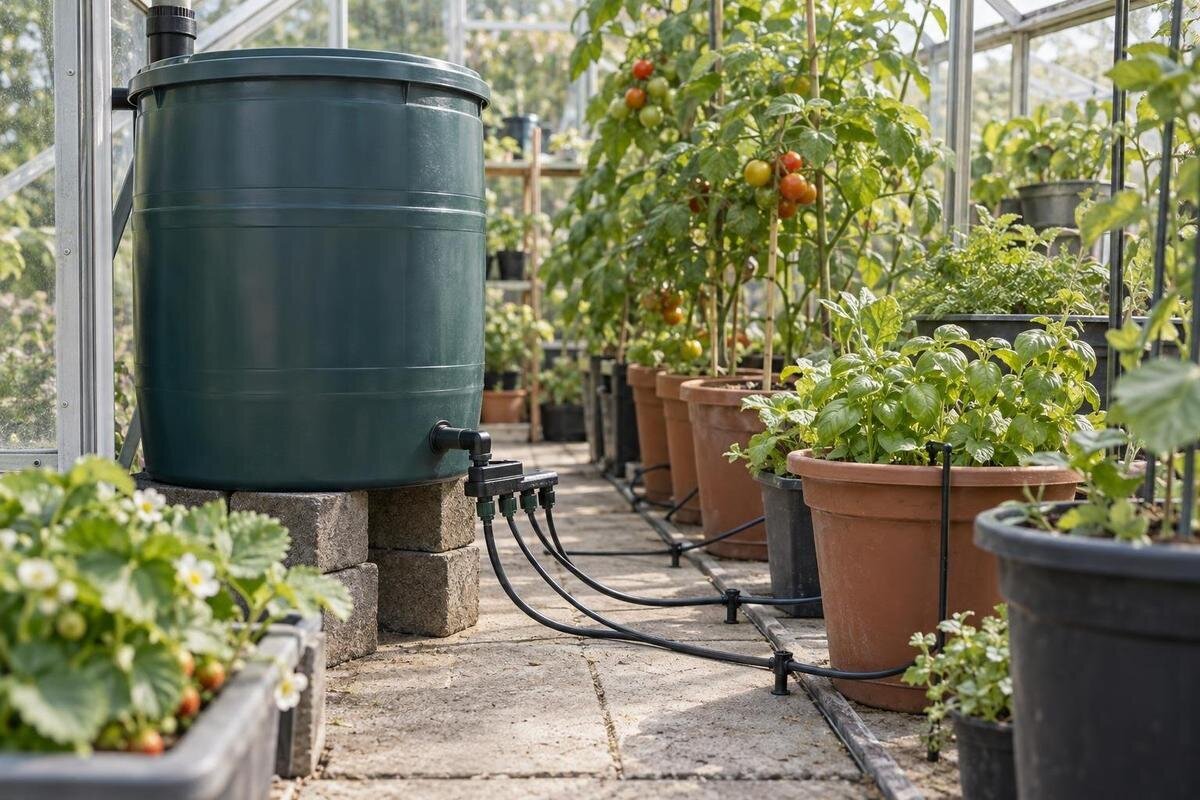
Greenhouse irrigation guide
A greenhouse can go two weeks without you only if its water plan is sized and tested for the plants, the weather, and the installed system—not simply programmed on a timer. Start with measured daily use during demanding conditions, then compare that demand with the water you can actually draw from your source or reservoir. Before leaving, confirm that each planted area receives its normal amount, that the system can cover the full absence with a chosen reserve, and that someone can respond if something fails. A reliable plan combines a water calculation, a realistic trial, useful alerts, and a backup visitor. If the system does not pass its trial, arrange more hands-on care instead of treating automation as a guarantee.

01
Measure how much water your plants use
For a two-week trip, calculate the gallons actually delivered to plants on an ordinary day, preferably during warm, bright weather. Inventory beds, containers, seedlings, and newly transplanted crops, and mark which areas the system waters. Record volume by group rather than relying on timer minutes: flow, emitter output, line pressure, and run time all affect the amount. Use clearly marked reservoir levels, a measured container, or another dependable volume reading, and note the date, weather, and schedule. If you do not have volume markings, use a container with a known capacity and count refills consistently.
Repeat the measurement across several representative days and use a high, plausible daily amount rather than the most favorable reading. A cool, cloudy test may not reflect a sunny stretch; if trip conditions could be more demanding, increase the reserve or arrange a check-in instead of treating the estimate as exact. When comparing structures such as the T-Model Greenhouse Orangery, listed at 178–323 sq ft, sketch your intended planting rather than estimating water use from floor area. Label beds, benches, and individual containers on that sketch. Give each watered group a name that also appears in your measurement record, so you can trace an unexpected change in consumption to a particular area. Include empty spaces you expect to plant before departure, but measure again once those plants are in place. A layout drawing helps organize the estimate; it does not replace observing the actual planting.
Include every plant group in the watering plan
Mixed plantings can make a single average misleading. Containers may dry at a different rate from deeper beds, while seedlings and mature plants may follow different routines. This is an accounting step, not a prescription to change a working schedule before you leave. During your measurements, keep each group distinct even if one controller waters them all. If you water some pots by hand, include that water in the daily total; otherwise, the reservoir calculation may cover the automated line but quietly omit plants at the door.
Use a simple record for each group: its name or location, normal watering days, gallons delivered per cycle, and daily total. For groups watered less often than daily, count the cycles that will actually fall within your departure and return dates. An average is useful for estimating storage, but the visitor needs the specific dates for any manual watering. If you are considering a Pyramid-type greenhouse, use its listed 60–203 sq ft range to compare space, then make a separate inventory of what you will grow inside. Mark hanging containers, pots behind larger plants, and anything outside the main beds so they are not overlooked. Assign each group either to a tested irrigation line or to the visitor’s instructions. A plant marked as needing manual care should have a named person responsible for it, not simply appear as an extra gallon allowance in the reservoir total.
02
Calculate usable reservoir capacity and a reserve
Use a straightforward calculation: measured gallons per day multiplied by 14, plus a chosen contingency amount. Make the reserve explicit in gallons or extra days so you can see what it covers. For example, if measured use is 6 gallons a day, 14 days requires 84 gallons; a three-day reserve adds 18 gallons, for 102 gallons of usable water. This is an arithmetic example, not a universal reserve recommendation. Choose your margin based on how warm conditions might get, the reliability of the supply, and how quickly your backup visitor can arrive.
Plan around water you can actually draw, not a tank’s nominal capacity. Some water may sit below an outlet or otherwise remain unavailable to the irrigation system; follow the equipment instructions and use the system’s tested low-water level. Keep a clear reference for the full level and the point at which someone should refill or intervene. Set that intervention point early enough to leave water for the period before the visitor can arrive, rather than waiting until the supply is exhausted. The Aluminum Greenhouse with Built-In Storage offers a storage section, but the listing does not establish a reservoir location, tank capacity, or support for a filled tank. Plan those separately, with professional advice about placement and support where needed. Make the level indicator easy to read without moving stored items, and keep the refill route accessible. A reserve is useful only if it is available to the system and someone can recognize when it is being used.
Verify the water source and delivery together
Identify whether the system draws from a reservoir, a pressurized supply, or both, and note what relies on electricity. Confirm how much water will be available throughout the trip and whether any refill requires a person. A full tank on departure does not solve a shortage if it needs manual replenishment before day 14. For a supply-fed system, confirm that nobody will shut off the source while you are away and that other planned water use has been included in your trial. When planning irrigation for a structure such as the Prestige Greenhouse, compare the greenhouse layout with the routes needed for your separately selected watering equipment. Its listed 40.6–302 sq ft range does not establish irrigation compatibility. Keep source access, hose routing, and the visitor’s walking route visible on your plan. If you intend to connect irrigation to a household water supply, have a qualified professional verify the appropriate connection and backflow protection for your setup.
Use a simple diagram to record the source, controller, valves, filters if present, and the areas each line serves. Follow the manufacturers’ requirements for the installed components, then check actual pressure and flow in that setup, including at the farthest outlet while the schedule is running. A system that works at one outlet may behave differently when several run together. If a pump or electrical component needs adjustment, follow its instructions and ask a qualified professional where appropriate; do not guess at a specification.

03
Run the full watering schedule before departure
Test the system in its normal configuration, with the plants and lines in place, rather than relying on a brief manual run. Let the controller complete the full interval between scheduled waterings and repeat the cycle several times. Check that each mapped area receives water, that the reservoir level changes as expected, and that plants look consistent with their usual care. A single short run can miss a slow leak, a line that delivers unevenly, or a schedule that does not match the real planting.
Record the starting and ending reservoir levels for each test and compare them with your daily-use estimate. Confirm that any automatic refill behaves as expected, if your setup has one, and that the lowest tested water level still supports delivery. For a larger planting, including one planned for the large backyard greenhouse listed at 506–753 sq ft, divide the inspection route into clearly labeled areas so every outlet gets checked. Where the equipment allows it, collect water from selected outlets in matching containers for the same measured interval, including outlets near the source and at the far end. Compare the results with the intended delivery for those plants; different emitter types may intentionally deliver different amounts. Check soil or potting mix as well as outlet flow, because water leaving a line does not confirm that it reaches the intended root area. Record any adjustment and repeat the trial before accepting the schedule.
Inspect common points of failure
Walk the entire water path while the system runs. Look for drips at connections, kinked or displaced lines, blocked outlets, and water collecting where it should not. Check filters or screens if your system has them, and inspect the reservoir outlet and valve for visible debris or obstruction. Notice whether delivery changes between the beginning and end of a cycle. Fix and retest any problem while you are still home; a repair that has not been tested can introduce a new failure just before the trip.
Check the controller’s clock and schedule, its power source, and any pump or other component your system depends on. Replace or recharge batteries only as directed by the manufacturer, and keep relevant instructions and compatible replacement items where your visitor can find them. If you are planning a Classic aluminum greenhouse, include a convenient place for the irrigation records and small maintenance supplies in your layout. Select replacement parts from the watering equipment’s documentation, not from the greenhouse model name. Label supplies clearly so the visitor can distinguish a spare connector from a part already removed because it failed. Also check what the controller does after a power interruption: whether it retains the schedule, needs its clock reset, or requires a manual restart. Verify that behavior through the manufacturer’s instructions and approved test procedure. Put any necessary recovery steps in the handoff, and reserve unfamiliar repairs for someone qualified to perform them.
04
Set alerts that reveal a watering problem
A useful alert reports a failure or an abnormal condition, not merely that the timer has started. If the installed equipment supports them, consider notifications for a low reservoir, no flow during a scheduled run, unexpected continuous flow, or controller and power loss. These features are not available on every setup, so check what your specific devices can detect and what each notification means. A timer log that records a run does not prove that water reached the plants.
Test each notification before leaving and confirm that it reaches your phone and a second contact if possible. Follow the device instructions for testing rather than creating a risky interruption. Check connectivity at the controller and sensor locations, not just where you usually use your phone. When planning equipment placement for a Lean-To Greenhouse, test the signal at the actual installation points; the greenhouse listing cannot establish network coverage. Check phone notification permissions and whether the service requires an active account or subscription. Agree on who responds first, how soon they should acknowledge an alert, and who takes over if that person is unreachable. Give the visitor a plain-language explanation of each message rather than expecting them to interpret a device code. If alerts depend on a network or power source, keep scheduled visits as a separate fallback. Silence from an app is not evidence that the plants are receiving water.
Give a backup visitor a clear, limited role
Choose someone who can access the greenhouse on the dates you are away, and show them the reservoir, water source, controller, and any shutoff they may need to find. Explain which plants are on the system and which require hand watering. Agree in advance on how they will contact you and what to do if water is leaking, the reservoir is unexpectedly low, or a scheduled cycle appears not to have run. Do not leave the visitor to guess at settings or make unfamiliar repairs.
Write a short handoff with the normal water level, what to inspect, which plants to water manually, and when to send an update. A photo of the reservoir gauge and a few representative plants can make a check-in easier to compare with the trial period. If selecting a Limited Edition aluminum greenhouse for a new setup, plan visitor access alongside the planting layout rather than leaving it until the system is installed. Walk the route together and have the visitor locate the water source and identify each manual-watering group without prompting. Confirm access arrangements, including keys or gate codes, before departure. Schedule visits at times when the visitor can observe a normal watering cycle when practical, but do not rely solely on alerts to trigger a visit. Leave a marked watering container and clear amounts for manual tasks, plus instructions about whom to contact before changing the controller. The handoff should make routine care straightforward without asking the visitor to diagnose unfamiliar equipment.

05
Prepare plants without making last-minute changes
Keep the planting and schedule as close as possible to the conditions you tested. Avoid adding a batch of seedlings, moving containers into a new location, or changing the watering routine just before you leave; those changes can alter demand or make it harder to spot a problem. Water plants according to their normal needs rather than soaking them to compensate for your absence. Harvest produce that is ready and remove plants or material you already know should not remain, so the visitor is not asked to make those decisions.
Think about greenhouse heat and ventilation as separate parts of the absence plan. Irrigation cannot correct excessive heat, and hot conditions can change water demand. Check that the greenhouse is operating as it normally does and that the visitor knows what conditions are unusual for your plants. If the trip overlaps with a growth stage or a weather change that your trial did not cover, increase check-ins or add reserve water rather than assuming the previous test guarantees the same demand.
Use a departure-day check and a clear fallback
Before leaving, confirm the controller’s date and schedule, start the system through a normal cycle, and check that water reaches the expected locations. Fill the reservoir to its planned level, confirm that the usable reserve remains available, and make sure the visitor knows where to check it. Compare the setup with your written map, including plants that need manual care. Avoid last-minute changes to run times or equipment unless you can test them again; a familiar, proven schedule is more useful than an unverified adjustment.
Set a practical no-go threshold before the trip: for example, a failed outlet, an unexplained reservoir loss, insufficient usable water, or an alert that cannot reach anyone. If a problem remains, arrange more frequent hands-on watering or shorten the time the greenhouse will be unattended. Leave the visitor your contact details and a clear way to report an urgent issue. The aim is not to promise that nothing can fail, but to make a failure visible while there is still time to protect the plants.
Frequently asked questions
How much water does a greenhouse need for a two-week trip?
Use your measured daily greenhouse demand, multiply it by 14, then add a reserve that reflects hotter weather, possible delays, and how quickly someone can respond. For example, a measured 6 gallons a day equals 84 gallons for 14 days; adding a three-day reserve makes 102 gallons of usable water. That is an arithmetic example, not a recommendation for every greenhouse.
Can I rely on a timer by itself?
No. A timer can run on schedule while a reservoir is empty, a line is blocked, or a connection is leaking. Test that water reaches the plants, check the source and controller, and arrange a person who can respond if the system stops.
How long should I test the watering system before leaving?
There is no universal number of test days. Run the installed system through its full watering interval and several scheduled cycles, including the longest gap between runs. Check water use and plant condition each time. If weather or plant growth changes significantly, allow more time or increase visitor checks.
Which irrigation alerts are useful while I am away?
If your equipment supports them, consider alerts for low reservoir water, no flow when watering is scheduled, unexpected continuous flow, and controller or power loss. Test that each alert reaches you and a backup contact. An app notification is not a substitute for a visitor if connectivity or power can fail.
What if I cannot store enough water for the full trip?
Do not count on an unconfirmed refill or rainfall to close the gap. Arrange a visitor to water on a defined schedule, reduce the number of plants that need watering if practical, or shorten the unattended period. The plan should cover the measured demand even if the water source does not replenish as expected.
A dependable two-week greenhouse watering plan is built from evidence: measured demand, enough usable water, a system that has passed repeated runs, alerts that reach someone, and a visitor who knows what to do. Keep the test conditions and handoff details written down. If any part remains uncertain, add human check-ins or reduce the time the greenhouse will be unattended.
