
Why Are My Greenhouse Peppers Dropping Flowers?
Greenhouse crop troubleshooting
Pepper flowers can fall for several reasons, and a bare flower stalk does not identify which one. A few losses deserve observation, while repeated whole-flower drop after a heat spell, a dry period, or another change calls for a closer look. First distinguish flower drop from normal petal fall, then compare temperature, root-zone moisture, plant growth, and visible damage. A short record of the pattern is more useful than changing several things at once.

Growing-area checks 1
First, distinguish dropped flowers from normal petal fall
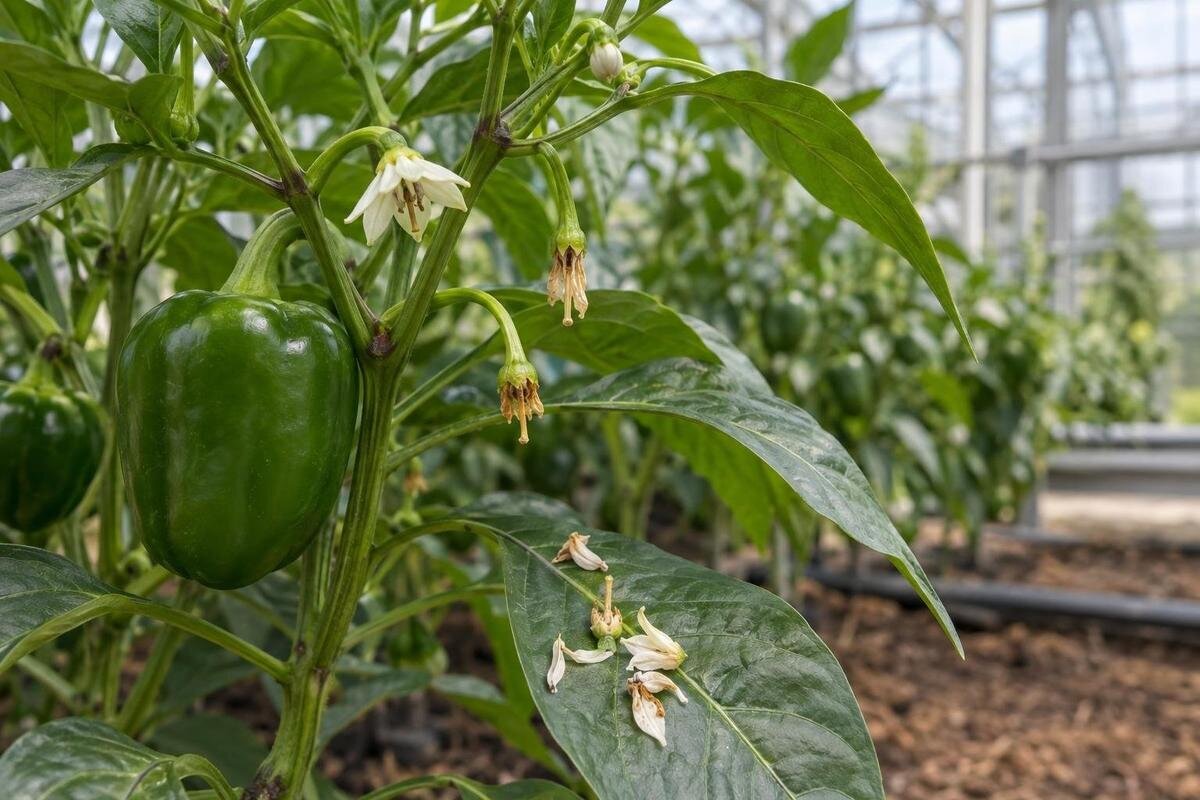
Pepper petals can shrivel and fall after pollination while the small green ovary at the flower's base stays attached and begins to enlarge. That is fruit set, not blossom drop. Look at the junction between the flower and its stem: if the green base remains and starts to swell, a tiny pepper is developing, even if the petals are gone. On a plant carrying many blooms, a close look—or a photo before you tidy up—can help you tell the difference.
If the whole flower has detached, note whether it was an unopened bud or an open bloom, and whether its green base came away too. Look for a pattern across the plant: are several flowers falling at once, or only a few? Are affected plants in one part of the greenhouse? Also distinguish a shed blossom from a tiny pepper that had already started growing and then fell. Both deserve attention, but recording them separately gives a clearer picture of when development stopped. Inspect a few flowers that are still attached rather than relying only on fallen material, which may have dried or been damaged on the ground. A fallen flower by itself cannot reveal the cause. The timing and other symptoms are more useful clues than the number of petals on the floor.
Compare early flower loss with the plant's growth
On a young or recently moved pepper, record the planting date and the condition of the whole plant rather than judging its prospects by one flower. Was it already flowering when you bought it? Were buds present before it entered the greenhouse? These details establish a timeline, but they do not prove why a blossom fell. Look for continuing growth, healthy new leaves, and developing fruit, as well as persistent wilting, discoloration, or visible damage. A plant producing new leaves and retaining later fruit presents a different picture from one that repeatedly loses flowers while growth stalls. Photograph the whole plant as well as the affected flower cluster so you can compare both over time. Early flower loss alone is not enough to establish that the plant is unhealthy, nor does a healthy-looking leaf rule out unsuitable conditions around the flowers.
List changes that preceded the loss, including transplanting, moving pots, pruning, or a change in watering. Treat these as events to investigate, not automatic explanations. Compare plants of similar age and variety, and note whether the same pattern appears on plants that were not moved. If only a few blooms are affected and growth continues, watch the next flowers before making a major change. Repeated losses accompanied by declining growth call for a closer inspection. Removing flowers or adding fertilizer immediately would not establish what caused the original problem.
Growing-area checks 2
Heat and cold can disrupt pepper fruit set
Peppers need warmth to grow and crop well, but excessive greenhouse heat can reduce fruiting. The Royal Horticultural Society's sweet pepper guide recommends ventilation and shading to manage hot conditions. Cool conditions also deserve attention because peppers are warmth-loving plants. Neither a hot afternoon nor a cool night, however, identifies the cause of a particular fallen flower. Review the duration and pattern of exposure rather than relying on one reading. Several hot days are different from a brief peak, and a mild daily average can conceal uncomfortable extremes. Check conditions before the flowers fell as well as on the day you noticed the loss. A comfortable reading taken afterward cannot tell you what the plant experienced earlier. Use the record to identify a growing condition worth correcting, not to claim a diagnosis from temperature alone.
Use a min-max thermometer at canopy height, protected from direct sun and away from hot glazing, and record both daytime highs and overnight lows. Sun striking an exposed sensor can distort the reading, so follow the instrument's placement instructions. Compare the warmest-looking plant location with a second location rather than assuming conditions are uniform. In an existing greenhouse, use available ventilation or temporary shade as conditions allow and check the resulting readings. For a future growing-space comparison, the Lean-To Greenhouse listing offers area options from 40 to 154 sq ft. Draw the plant positions and thermometer locations on the proposed footprint, then verify the available ventilation separately. That comparison should address a documented temperature-management need; replacing a greenhouse is not an established remedy for flower drop.
Check fruit development before trying hand pollination
Flower drop does not establish that pollination failed, and fallen petals alone do not establish that fruit set failed. Inspect several attached flowers and identify which green bases remain and enlarge. Compare these with flowers that detach completely. If some flowers are developing into peppers under the same conditions, record that success alongside the losses. It gives a more useful picture than counting every petal as a failed flower. Do not assume that a lack of visible bee visits explains the problem or that a pollination treatment will correct it.
Before trying hand pollination, check the growing instructions for your pepper variety or ask a horticultural adviser whether assistance is warranted. Explain whether whole flowers are falling, whether other flowers are setting fruit, and what temperature and watering records show. Avoid forceful shaking or repeatedly handling delicate blooms while investigating. A flower that loses its petals immediately after handling has not necessarily set fruit; look for its green base to enlarge afterward. For layout comparisons, the Limited Edition aluminum greenhouse listing includes area options from 40.6 to 302 sq ft. Sketch where mature plants would stand and whether you could inspect their flower-bearing branches without leaning through neighboring foliage. The useful comparison is access to the crop, not a promise of better pollination from a particular greenhouse model.

Growing-area checks 3
Keep root-zone moisture reasonably even
Peppers can struggle when their root zone swings between very dry and waterlogged. A dry spell may limit water uptake just as flowers are developing; soil that stays saturated can deprive roots of air and weaken the plant. Containers can dry faster than greenhouse beds, especially as plants grow or weather turns warm, so do not assume yesterday's moisture reading still applies. Plants in apparently identical pots may also use water at different rates because their leaf area, fruit load, or sun exposure differs. Compare the moisture around affected and unaffected plants before changing the schedule for the entire crop. A dry surface with moist material underneath is different from a pot that is dry throughout, and both require more information than a glance at the top layer.
Check below the surface near the roots rather than judging by the top layer alone. Water in response to the condition of the soil or potting mix, then allow excess water to drain. Check drainage openings and whether pots are standing in collected water. If a plant wilts while its medium is wet, adding more water may make the problem worse. For a future pot or bed layout, the T-Model Greenhouse Orangery listing offers options from 178 to 323 sq ft. Map watering access to each plant, including those behind a mature canopy, and leave drainage outlets accessible. A workable route matters more to consistent care than the total floor area.
Check nutrition and roots before adding fertilizer
Flower drop alone does not identify a nutrient deficiency or justify an extra fertilizer dose. Feeding needs depend partly on how the peppers are grown: the RHS distinguishes container plants from plants in enriched soil, which may not need regular feeding. Review the existing routine before adding anything. Include fertilizer already incorporated into a potting mix, not just products you apply afterward. The useful question is whether the routine suits the crop and growing medium, rather than which nutrient might stop flowers from falling.
Look at the whole plant and the growing medium before changing a feeding routine. Write down the fertilizer product, dilution, application frequency, and any recent changes. Check container size, drainage, and visible root condition where you can do so without pulling apart the root ball. If growth remains poor or leaf symptoms accompany the flower loss, ask a horticultural adviser whether a soil or substrate test would be useful. Follow the laboratory's sampling directions and identify the crop and growing medium; garden soil and container mixes may require different testing methods. Keep samples from separately managed areas distinct. When comparing bed layouts in the Pyramid-type greenhouse, listed in area options from 60 to 203 sq ft, keep individual beds or container groups identifiable on the plan. That makes it easier to connect any test results with the plants receiving a particular feeding routine. Use evidence about the plant and medium before choosing a targeted nutrient treatment.
Growing-area checks 4
Light, canopy density, and fruit load affect flowering
A shaded or crowded plant may not have the light it needs to sustain healthy growth and fruiting. Nearby plants, dense foliage, or a change in seasonal shade can reduce light around the crop. Look beyond the flowers themselves: a bloom hidden beneath leaves does not automatically mean the whole plant is short of light. Check the canopy at different times of day and note shade from taller crops, structures, or trees. A single midday inspection can miss a long shaded morning or afternoon. Leaves supply the plant's growth, so stripping foliage to expose every bloom is not a sound first response. If crowding is evident, consider whether movable pots can be spaced more evenly without disturbing roots or abruptly exposing previously shaded plants to much stronger sun.
A plant already carrying developing peppers may produce new flowers more slowly, particularly if it is also short of light or under other stress. That does not mean a heavy fruit load explains every flower that falls, or that healthy developing peppers should be removed automatically. Record whether fruit is enlarging normally and compare plants of the same variety with different loads. For future planning, the Limited Edition greenhouse with built-in storage listing has area options from 59.4 to 302 sq ft. Use the actual plan to distinguish storage, aisles, and planting space before estimating crop spacing. Allow room for the mature canopy rather than filling the footprint according to the size of young transplants.
Inspect flowers and leaves for pests or damage
Inspect for pests and damaged tissue without assuming that either explains the flower loss. The RHS identifies aphids and other sap-feeding pests as potential problems on sweet peppers and recommends checking shoot tips and leaf undersides. Look at flowers too, recording torn or discolored petals and any insects you find. Note distorted new growth, sticky residue, mottling, or other changes elsewhere on the plant. These observations help describe the problem for identification; none proves that a particular insect caused every fallen flower.
Examine both sides of leaves and several flowers with a hand lens if possible, and take a clear close-up of anything unusual. Check an unaffected plant too; finding a small insect on a pepper does not by itself establish that it is harmful or responsible for blossom loss. Photograph insects and damage separately when possible, keeping the original images for identification. If symptoms spread or the plant develops persistent mottling, distortion, or decline, seek an identification before applying a treatment. Broad action can affect beneficial insects without addressing the cause. In a proposed Bloomcabin Prestige Greenhouse layout, whose listed area options run from 40.6 to 302 sq ft, check whether aisles would let you inspect both sides of the crop. Plants against an inaccessible boundary can make early damage harder to notice.

Growing-area checks 5
Keep a brief record so patterns become clearer
Flower drop is easier to assess when you can connect it to conditions. Record the date, the plant or greenhouse area affected, recent watering, and any fertilizer or pruning changes. Add daily high and low temperatures from the plant zone, including overnight readings. Note whether buds, open flowers, or flowers with a visible swelling at the base were involved. A record helps distinguish a one-time loss from a repeated response to particular conditions.
Take photos of the whole plant, a flower cluster, and any unusual leaves or damaged blooms. Include the date and keep the camera view similar over time; a close-up without the plant's overall condition can omit useful context. Label individual plants or rows so observations do not become mixed together. Photos can document change, but they cannot establish a cause by themselves. For a larger proposed growing area, the Large backyard greenhouse listing includes area options from 506 to 753 sq ft. Mark separate monitoring zones on the layout and match each temperature reading to its location. Whether your greenhouse is small or large, keep observations from different locations separate until the records show that their conditions are comparable.
Change one likely cause at a time
Use the strongest pattern to choose what to adjust. If losses follow hot afternoons, review the readings and make appropriate use of existing ventilation or shade. If the root zone repeatedly dries out, improve the consistency of watering; if it stays wet, investigate drainage before adding water. If conditions look suitable, continue observing attached flowers and seek crop-specific guidance before trying a pollination treatment. Changing several factors at once makes it difficult to tell what helped.
Judge the next flowers, not the ones already shed: a fallen bloom will not recover, and improvement may only appear in later flowers. Mark or photograph a new flower cluster after making an adjustment, then note whether its green bases stay attached and enlarge. If loss continues alongside widespread wilting, damaged roots, spreading leaf symptoms, or an obvious pest problem, seek help from a local Cooperative Extension office or plant diagnostic service, if available. Share dated photos, care records, and the variety name. If those records eventually identify a limitation in the existing growing space, the Classic aluminum greenhouse listing provides area options from 40.6 to 302.3 sq ft for comparison. Evaluate a proposed replacement against that specific limitation, using its actual specifications; a different footprint alone is not evidence that peppers will set fruit more reliably.
Frequently asked questions
Is it normal for a pepper plant to drop its first flowers?
A few early losses do not, by themselves, establish a serious problem. Record whether the plant was already flowering when purchased or transplanted, then watch its new growth and later flowers. Continued growth and fruit set are more reassuring than repeated whole-flower drop accompanied by wilting, discoloration, or stalled growth.
Do greenhouse peppers need hand pollination?
Flower drop alone does not show that hand pollination is needed. First check whether other flowers are setting fruit and whether heat or dry growing medium could be affecting the crop. Before trying a technique, consult growing guidance for your pepper variety or a horticultural adviser. Judge fruit set by the green flower base enlarging, not by petals falling.
Can hot greenhouse temperatures make pepper flowers fall?
Excessive heat can reduce pepper fruiting, so it is an important condition to investigate. Compare canopy-level readings, including overnight lows, with the timing of flower loss. Review cool periods too, since peppers need warmth to grow well. A single high reading is a clue to investigate, not proof of the cause.
Should I fertilize peppers when the flowers drop?
Not solely because flowers are dropping. Review the current feeding routine, including nutrients already present in the growing medium. Container peppers and plants in enriched soil may have different feeding needs. If poor growth or leaf symptoms accompany the loss, ask whether a suitable soil or substrate test would help before adding a targeted nutrient.
How can I tell flower drop from fruit set?
After fruit set, the petals may wither and fall while the small green ovary at the flower's base stays attached and begins to enlarge. With blossom drop, the whole flower, including its green base, detaches before a pepper starts developing.
Flower drop is a symptom, not a diagnosis. An occasional loss may be part of a pepper's development, but repeated whole-flower drop is a reason to examine the pattern. Confirm that the green base of the flower is falling, compare canopy temperatures with root-zone moisture, and note whether the problem affects one plant or a whole area. Correct one plausible stressor and watch the next flowers; if other symptoms spread, use clear photos and records to help identify what is happening.
