
Greenhouse Tomato Flowers but No Fruit: What to Check
Greenhouse crop troubleshooting
Tomatoes can produce plenty of flowers in a greenhouse and still set little or no fruit. The cause is often a mismatch between flowering conditions and the plant’s needs: heat or cool nights can impair pollen, humid still air can limit pollen release, and water or root stress can interrupt the process. But a wilted petal alone is not proof of failure. Follow a clear sequence: confirm whether the ovary is swelling, compare flowers with logged temperature and humidity, then inspect pollen movement and the whole plant. That narrows the possibilities without treating fertilizer or hand pollination as a universal fix.

Confirm that fruit set has actually failed
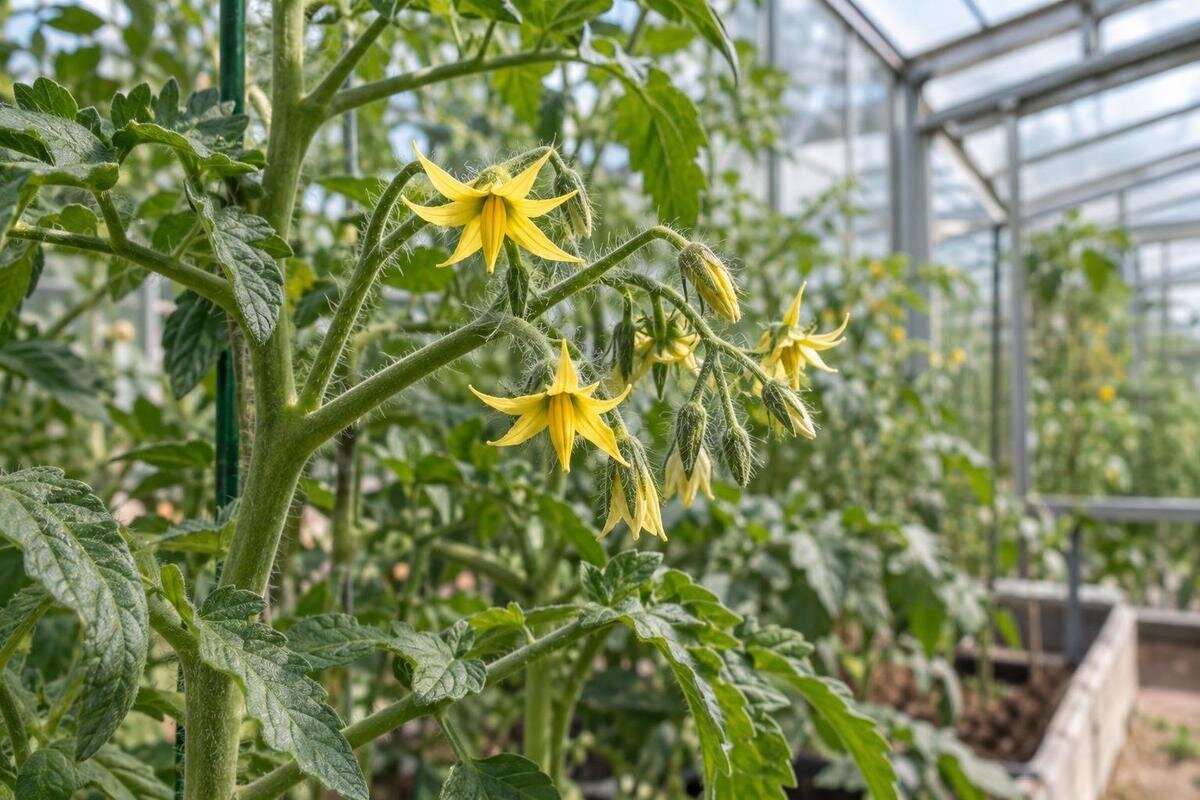
Tomato flowers can fade without producing an obvious fruit even when pollination has started, so inspect the base of each flower before calling it blossom drop. The ovary is the small green swelling immediately behind the petals; after successful set, it enlarges into a tomato, while petals usually wilt and fall. A tiny fruit may be hidden by the calyx or leaves, especially on a vigorous plant. One newly opened blossom is not enough evidence: flowers on a truss open in sequence, and an individual bloom can fail while others set. Check several blossoms on the same truss over a few days. Early flowers on a recently transplanted plant may also be affected by the stress of settling in.
True failure is more likely when a flower withers and drops while its ovary stays small, or when the flower stalk dries before the base swells. Buds that never open indicate a different stage from open blossoms that abort. Record the truss number, the date flowers opened, whether petals or the whole blossom fell, and where the plant sits in the greenhouse. Take dated close-ups and a whole-plant view; photos show progression but cannot establish a cause by themselves. If trusses are difficult to reach, record that as a layout issue too. When comparing the T-Model Greenhouse Orangery, offered in sizes from 178 to 323 ft², examine proposed aisle and bench placement: the floor-area range alone does not tell you whether flowers will be within easy reach.
Measure temperature at flower height
Use a minimum-maximum thermometer or logger at flower height, in shade and away from glazing, metal frames, or direct sun. A sensor in sunlight can measure its own heating rather than the surrounding air; one left near the roof may also miss cooler conditions lower in the canopy. If plants occupy separate beds or corners, take readings at representative points. Reset the instrument at the same time each day and note its exact position so the maximum and minimum can be compared. Outdoor forecasts are useful background, but sunlight, enclosure, and ventilation can make greenhouse air depart substantially from the reported outdoor temperature.
Keep a short log for the period when flowers open: date, daytime high, overnight low, approximate relative humidity if available, watering, vent or door changes, and which trusses set. Record conditions in the days before a flower fades, too; a reading taken afterward may miss the period of stress. For a future layout comparison, the Pyramid-type greenhouse listing covers options from 60 to 203 sq ft. Use the proposed bed and canopy arrangement to identify representative sensor positions. Plan to compare readings across those locations rather than relying on a single thermometer near the entrance.
Look for heat during the flowering period
Heat is a common cause of flowers that fail even when a vine looks vigorous. Repeated daytime readings above about 85°F, especially peaks near 90°F or higher, together with nights that stay above roughly 70°F, can impair pollen viability or flower retention. These are warning ranges, not switch-like limits: cultivar, exposure time, humidity, and water status all matter, and a brief spike does not identify the cause. A greenhouse can become much warmer than the outdoor forecast on bright, still days. Look back over the period when the flower was developing and opening, not only the day its petals fall.
If new blossoms abort after several hot days, note that pattern before changing fertilizer or pollination practices. During suitable weather, use existing doors and vents according to their design, and avoid leaving the greenhouse closed through intense sun. Shade may help manage heat, but too much can reduce light needed by the crop; avoid abrupt changes that trade trapped heat for cold drafts. If persistent heat prompts you to compare another structure, the greenhouse with built-in storage listing spans 59.4 to 302 sq ft. Use your temperature log to frame specific questions about its ventilation and shading options, including how those options would work with your planned tomato rows.
Check cool nights and temperature swings
Cold can interrupt fruit set too, especially when nights remain near or below about 55°F while flowers are forming. Cool days can slow pollen release and development as well. A chilly spell may delay set rather than permanently prevent it, so note how long it lasts and whether later trusses recover. Measure near affected flowers instead of assuming that a location is cold because it is beside a door or glazing. A plant can experience different conditions from another only a few feet away, particularly when the greenhouse is opened or closed at different times.
Compare plants exposed to the same outdoor weather. If blossoms near a door repeatedly fail while flowers in a warmer area set, record the locations and check whether the pattern recurs. Day-to-night swings can also affect plants when the growing medium around their roots remains cold or wet. If you are comparing the Prestige Greenhouse, listed in sizes from 40.6 to 302 sq ft, use your overnight readings to frame questions about its documented construction details. Include where you intend to place plants relative to doors and glazing, rather than drawing conclusions from the model name.

Inspect flowers and developing ovaries
Tomato flowers contain both male and female parts, and most commonly grown tomatoes are self-fertile: a second plant or an insect visit is not required for each fruit. Pollen still has to leave the anther cone and reach the stigma. Inspect newly opened blooms for intact petals and a normal central structure. Browning, deformation, premature drying, or damage around the flower stalk may interfere with function, but none of those signs is a diagnosis by itself. Flower shape can vary by cultivar, so compare several blooms on the same plant rather than treating one unusual flower as proof of a wider problem.
Use a hand lens if available, but photograph flowers before pulling or handling them. Look at whether each flower opens fully, whether the center appears intact, and whether the ovary grows after the petals fade. A sequence of dated photos—bud, open flower, fading petals, and the base a few days later—offers more evidence than a single close-up. If rows are difficult to inspect, include inspection access in any future growing plan. The large backyard greenhouse listing gives an area range of 506 to 753 ft². On a proposed floor plan, check whether you could reach flower trusses along each row without pushing through neighboring plants.
Consider pollen release, humidity, and movement
Even a self-fertile flower needs some vibration for pollen to fall inside the bloom. In still greenhouse air, pollen may remain in the anther cone; very humid conditions can make pollen clump, while very dry, hot air can shorten its useful window. These factors overlap with temperature stress. Check relative humidity near the plants if possible; condensation on the roof or walls signals moisture but does not give an exact reading at a flower. Note whether poor pollen release coincides with particularly humid mornings or hot, dry afternoons rather than relying on one observation.
Try a small comparison instead of shaking every plant. When flowers are dry, lightly tap a supporting stem or truss so it vibrates, then compare a few treated blossoms with nearby ones over the next several days. Do not yank stems or strike individual flowers; damage would confuse the result. Air movement can provide vibration, but an open vent does not prove that conditions are uniform across the house. When comparing the Classic aluminum greenhouse, listed in sizes from 40.6 to 302.3 sq ft, examine the actual opening locations alongside your planned planting arrangement. Use observations from your current crop to identify where airflow needs closer attention.
Check moisture, roots, and fertilizer balance
Water and root conditions can interrupt flowering and fruit set even when an individual bloom looks normal. Check moisture below the surface, not just the top layer: a root zone that cycles from very dry to saturated, a container that stays waterlogged, or roots crowded in a small growing volume can all stress plants. Heat raises water demand, so an afternoon wilt may follow a hot spell even if the plant looked firm that morning. Compare plants sharing an irrigation zone with those elsewhere. If the problem follows a pot, bed, or line rather than all flowers at once, examine the root-zone conditions there.
Aim for consistent moisture suited to the growing medium and container; do not compensate for a dry interval by keeping roots saturated. Excess nitrogen can produce abundant leafy growth while delaying or reducing reproductive growth, but yellow leaves or poor set do not identify a fertilizer shortage by themselves. Avoid adding fertilizer, calcium, or trace elements on the basis of blossom drop alone; use a soil or growing-medium test to guide adjustments. If you compare layouts for watering access, lean-to greenhouse listings cover 40 to 154 sq ft. Sketch the beds, containers, and water points in the proposed space, including how you would reach each root zone to check moisture and water consistently.
Compare plants and look for flower damage
Compare affected and unaffected plants before treating the whole greenhouse as one problem. Blossom loss on all vines at roughly the same time makes a shared temperature or humidity event more plausible; one weak row points attention to its shade, moisture, roots, crowding, or exposure to a draft. Dense foliage can shade lower flower trusses and restrict air movement, while recently transplanted or immature plants may not yet have enough capacity to hold fruit. Cultivars also differ in how well they set under stress; check the seed packet or supplier information for the variety rather than assuming every tomato responds alike.
Inspect blossoms and newest leaves for physical damage: browned or torn petals, distorted blooms, dark specks, or tiny insects are clues to investigate, not proof of a particular pest. Examine several flowers with a hand lens and compare them with healthy plants. Sticky traps can show that flying insects are present, but cannot by themselves establish that those insects caused failed set. Take dated close-ups and a wider photo showing the plant's location. If symptoms spread or remain unclear, ask a local extension service or qualified horticulture professional. When planning a different growing space, the limited-edition aluminum greenhouse offers sizes from 40.6 to 302 sq ft. Compare a proposed planting plan with the crowding and shade patterns you observed, rather than treating total area as a plant-capacity rating.

Test one likely cause at a time
Once a pattern points to a likely factor, adjust one manageable condition at a time and keep a record. If the log shows repeated heat, use suitable existing ventilation or shading practices; if nights are cold, review when doors and vents are opened and which plants are exposed. If flowers look normal but pollen does not release well, try gentle vibration on selected trusses. If moisture varies widely, correct the watering pattern rather than changing fertilizer at the same time. Changing heat management, shade, irrigation, and feeding together can obscure the cause, and a new adjustment may create another stress.
Judge the response on flowers that open after the adjustment, not only on older blossoms already affected. Mark several fresh flowers, note their opening dates and conditions, then check whether their ovaries enlarge over the following days. Trusses flower in sequence, so new flowers may give a different answer from the first cluster. A successful test supports a working explanation but does not rule out a second factor. If the same symptom continues after conditions have been stable long enough to observe another group of flowers, return to the log, compare locations, and reassess instead of escalating fertilizer or handling.
Decide whether greenhouse layout is part of the problem
Layout becomes a plausible part of the diagnosis when readings and symptoms repeatedly cluster in one area. Sketch the rows, doors, vents, thermometer positions, and affected trusses; note when openings are used and how shade changes during the day. This may reveal a hot corner, a cold draft, or a row that is difficult to reach without assuming that the structure itself is defective. Use existing ventilation controls according to their design and the weather. If you are considering changes to ventilation, glazing, or the structure, ask the supplier or a qualified professional about the actual specifications and appropriate options.
Do not judge a greenhouse by its name, floor area, or the fact that tomatoes are growing inside it. A listed area cannot guarantee a particular temperature, air exchange, humidity, or crop capacity; those depend on the full design, site, operation, and planting arrangement. When comparing a future setup, match documented details to the problem shown in your log and make sure the layout allows routine access to flowers and plants. For the current crop, the clearest evidence is still whether an ovary enlarges under measured, reasonably stable conditions.
Frequently asked questions
Do greenhouse tomatoes need hand pollination?
Usually not: tomato flowers contain both male and female parts and are generally self-fertile. They still need pollen to move inside the flower, and gentle vibration can help in still greenhouse air. Try it on a few dry, open flowers and compare their progress with nearby blooms before handling every truss.
What temperatures can interfere with tomato fruit set?
Repeated daytime temperatures above about 85°F, especially near 90°F or higher, and nights that remain above roughly 70°F can interfere with pollen and flower retention. Prolonged nights around or below 55°F can also reduce set. These are warning ranges, not exact cutoffs; cultivar, exposure duration, humidity, and plant condition matter.
Why are my tomato flowers falling off without forming fruit?
Heat, cool nights, poor pollen release, very humid or dry conditions, and water or root stress can all contribute. Compare several flowers and plants, then check whether the ovary at the base of each bloom enlarges. A fallen petal by itself does not show that fruit set failed.
How soon should I see a small tomato after a flower opens?
After successful set, the ovary behind the petals begins to enlarge over the following days, though timing varies with conditions. Petals may wilt and fall normally. Watch the green base of the flower rather than waiting for the petals to remain attached.
Will extra fertilizer stop blossom drop?
Not necessarily. Blossom drop alone does not establish a nutrient shortage, and excess nitrogen can encourage leafy growth at the expense of fruiting. Check moisture, temperature, and plant condition first; use a soil or growing-medium test to guide any fertilizer adjustment.
Start with what the flowers show, then match that evidence to conditions measured where the trusses grow. Temperature logs, careful inspection, and comparisons between affected and unaffected plants are more useful than changing several things at once. Once a likely cause emerges, test a modest adjustment on the next group of blossoms and watch the ovaries—not just the petals—for signs of fruit set.
