
Tomato Leaves Curling in a Greenhouse: Stress or Disease?
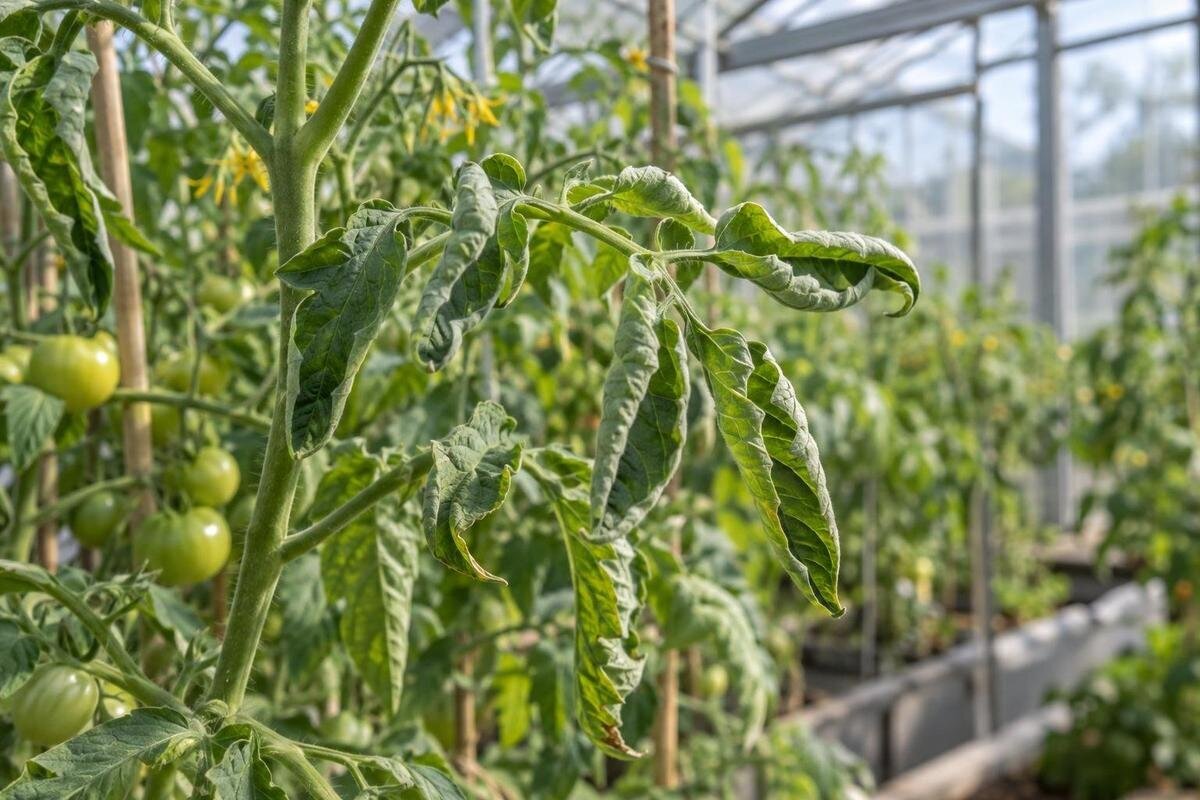
Greenhouse tomato care
Tomato leaves curling in a greenhouse can reflect a response to growing conditions, but similar changes can also result from a virus infection, pest feeding, herbicide injury, or root stress. A single curled leaflet rarely settles the question. Look at which leaves changed, whether new growth is affected, what else is happening to color and vigor, and whether symptoms are spreading across the greenhouse. The pattern and its timing can narrow the possibilities; photographs and a growing-history record help a plant-diagnostic expert assess what a picture alone cannot show.

Possible causes of tomato leaf curl
Leaf curl describes how a leaf bends; it does not name a cause. A tomato leaflet may roll lengthwise, cup upward or downward, twist, or look puckered. Heat and water stress can alter leaf posture, while viruses, insect feeding, chemical exposure, and root problems can create overlapping shapes. Even a dramatic roll is not, by itself, proof of infection. Also distinguish a curled margin from a leaf that simply hangs limp: drooping can reflect water stress without the leaf edges rolling. Note whether the change affects mature leaves, the growing tip, or a whole shoot, then check color, size, texture, and overall vigor.
Direction alone is a weak clue. Upward cupping can occur in physiological leaf roll and in some virus symptoms; downward curling or twisting also has several possible causes. A uniform roll in older leaves differs from narrow, distorted new leaves, but neither pattern is conclusive by itself. Yellowing, mottling, or stunting raises concern, yet those signs also overlap with root, nutrient, pest, and chemical problems. Combine leaf age, accompanying symptoms, timing, and spread before acting. This helps prevent a common mistake: spraying, fertilizing, pruning, or sharply changing irrigation based on one curled leaflet.
Compare affected leaves with healthy growth
Compare the oldest affected leaves with the newest growth at the top. Record whether mature leaves are rolling or young leaves are emerging small, tightly cupped, twisted, or misshapen. These are different observations to include in a diagnostic history, not a reliable way to rule disease in or out. Check whether new leaves expand normally and whether stems or internodes are shortening. If possible, compare plants of the same variety and similar age. Leaf size and orientation can vary naturally with maturity, pruning, and position in the canopy, so one unusual leaflet is less informative than a repeated pattern across several leaves.
Map where symptoms first appeared: one plant, one row, one side facing strong sun, or plants beside a vent, door, or irrigation line. Give each affected plant a simple identifier so later notes refer to the same plant. Include apparently healthy plants in the map; otherwise, it is easy to overlook a pattern shared by one variety or planting date. Mark affected plants without tightly tying anything around their stems, and note whether the number increases. A shared location can suggest a common exposure without proving its cause. Inspection access also belongs in a greenhouse buying plan. The Bloomcabin Prestige Greenhouse listing offers areas from 40.6 to 302 sq ft. Sketch mature tomato rows, supports, and aisles within the selected footprint so you can examine plants without reaching through neighboring foliage.
Growing conditions that can cause leaf curl
Physiological leaf curl describes a response to growing conditions rather than an infection. The Royal Horticultural Society identifies temperature fluctuations as a cause of tomato leaf curling and notes that variable light and temperature can also cause mild distortion. This makes the greenhouse's recent conditions important, even when the leaf shape looks alarming. Compare daytime and nighttime readings instead of assuming that one hot afternoon explains everything. A plant's continued growth is useful to record, but green leaves or an otherwise vigorous appearance cannot rule out an early pest or disease problem. Assess the whole plant and follow the development of new leaves.
Review the days before the curl appeared. Were nights markedly cooler than days? Did watering become irregular, or did sunlight reaching the crop change? Include transplanting, pruning, and other recent work in the history without assuming that the last task caused the symptoms. Separate plants by variety and planting date in your notes so you can make meaningful comparisons. Record whether the change followed a greenhouse-wide event or affected only one bed. Conditions may also vary within a larger structure. The large backyard greenhouse listing covers 506 to 753 sq ft; when considering that much growing space, plan observation points in several beds instead of relying on one thermometer or moisture check. Comparing those locations gives a more useful record than a single description of the entire greenhouse.
Check greenhouse heat and ventilation
Heat stress is more plausible when curling or slight drooping becomes noticeable on sunny afternoons and is less marked during cooler periods, especially among plants near direct sun or with weak air movement. Greenhouse air can warm faster than the garden outside, so an outdoor forecast is not a substitute for an indoor reading. A maximum-minimum thermometer or data logger near the foliage can reveal repeated hot periods; follow the instrument's directions and remember that one reading does not represent every bed. Note the time, location, vent and door positions, and whether neighboring plants show the same response. A warm reading alone still cannot distinguish heat stress from disease.
Compare the affected row with a more shaded area and note whether the newest leaves remain distorted the next morning. Record where sunlight reaches the crop and whether doors or vents were open during the hottest part of the day. Avoid placing a thermometer against glazing or in direct sun unless the instrument is designed for that placement; use its instructions to obtain a meaningful air-temperature reading. Improve air exchange or reduce excessive direct sun when appropriate for the structure and crop, without changing several growing conditions at once. If shopping for the Classic aluminum greenhouse, ask about the vent locations and operation in the configuration you are considering. Its listed area range of 40.6 to 302.3 sq ft does not establish ventilation performance. Include access to vent controls in the layout, especially once tomato supports and foliage occupy the space.

Inspect root-zone moisture and watering history
Water stress can follow too little available moisture or roots kept overly wet and short of oxygen. A dry surface does not prove the root zone is dry; check moisture at root depth in several places and compare containers or bed sections. Inspect emitters, drainage, and any standing water if plants in one area curl more than others. Wilting, slowed growth, or yellowing can accompany root trouble, but none identifies the cause on its own. Avoid pulling up healthy plants just to inspect roots; first review the growing medium and watering pattern, then seek expert help if root disease seems possible.
Write down recent watering, changes to irrigation, pruning, transplanting, and any root disturbance. Compare moisture before watering as well as afterward; a reading taken immediately after irrigation may hide differences between plants. For containers, record pot size and growing medium so you do not compare unlike root zones as though they should dry at the same rate. Aim for reasonably even moisture in the medium instead of alternating very dry and very wet conditions, and do not add fertilizer just because leaves curl. In a compact greenhouse, irrigation access deserves space in the floor plan. The Lean-To Greenhouse listing ranges from 40 to 154 sq ft. Lay out containers, tubing, and a reachable water connection on the chosen plan, allowing room to check emitters without moving or damaging tomato plants.
Signs that make disease more concerning
Tomato viruses can cause distorted leaves, mosaic patterns, and stunted growth, but their symptoms overlap with other problems. The Royal Horticultural Society describes lighter-green mosaic patterns associated with several tomato viruses, including tomato mosaic virus. Some infections can also reduce the leaf blade or produce puckered growth. These descriptions are reasons to investigate, not a visual identification key: herbicide injury can also cause distortion and stunting. Check whether the plant has several changes together and document how they develop. Neither an upward curl nor a mottled leaf, considered alone, confirms a particular virus.
Concern rises when fresh leaves keep emerging malformed, several symptoms occur together, the plant becomes stunted, or additional plants develop similar symptoms. Record when each plant first changed: several plants affected at once may share an exposure, while a sequence over time needs a different investigation. Neither sequence proves infection. Insects are worth documenting because some tomato viruses have insect vectors, but finding insects does not establish that a virus is present. Avoid choosing a pesticide or fertilizer from a guessed diagnosis. Ask a diagnostic service about handling suspect plants and cleaning tools. When comparing the limited-edition greenhouse with other layouts, consider how you would label and inspect individual plants without brushing through an entire row. Its listed 40.6-to-302-sq-ft area range does not show the aisle space available after beds and supports are installed.
Pests and herbicide injury can look similar
Inspect leaf undersides and growing tips in good light. Whiteflies, aphids, and mites can feed or reproduce on tomato foliage; look for insects, eggs, sticky residue, fine stippling, or webbing. Some pests are difficult to identify without a hand lens. Their presence does not prove a virus, but it is useful evidence to record. Check a few leaves from both new and older growth, and note whether pests appear on curled leaves as well as apparently healthy plants. Do not diagnose by leaf shape alone when insects are present.
Chemical injury can also distort young tomato growth. Some herbicide exposures cause twisted, cupped, or unusually narrow leaves, sometimes affecting several plants in a similar part of the greenhouse. Consider recent spray use nearby, possible drift through openings, or contaminated growing materials if the timing fits, but do not infer the source from shape alone. Keep product names, application dates, and the source of newly added compost or other growing materials for the diagnostic history. Include any affected plants outside the greenhouse in your photographs. An exposure map can also identify openings worth documenting. If evaluating the T-Model Greenhouse Orangery, use the selected floor plan to mark doors, vents, nearby planting areas, and proposed tomato beds. The listed 178-to-323-sq-ft area range cannot establish how those locations relate to one another or whether a particular exposure will occur.
Photographs help track patterns, not prove a cause
Photograph the whole plant first, then the affected shoot and both sides of a representative leaf. A useful visual comparison includes the plant's position in its row, nearby healthy foliage, the youngest leaves, and an older curled leaf. For example, mature leaflets rolled upward while the growing tip stays green and flat look different from new, small, yellowing leaves that are cupped and accompanied by shortened growth. Another useful detail to capture is light-and-dark mottling with distortion. These images show patterns to investigate, not proof of a specific virus.
Take repeat pictures from the same angle and at the same scale, in ordinary light without filters or color edits. Label each image with the plant identifier and date; keep the original files so details are not lost through repeated cropping or compression. Add the variety if known, greenhouse row, recent temperature and moisture observations, pruning, and any possible pesticide exposure. Include a clear close-up of insects or webbing, but retain the whole-plant view as well. Before submitting images, ask the diagnostic service which views it needs. If considering the Pyramid greenhouse, think about access for documenting the crop at its mature size, not just when seedlings are small. Its listed 60-to-203-sq-ft area range does not show sightlines. Place beds and supports on the actual plan to see whether plants can be photographed without bending or moving their shoots.

What to do while the cause is unclear
Avoid making several changes at once. Correct an obvious issue, such as a blocked irrigation line or excessive midday heat, then keep other care steady and note how new growth develops. Do not remove every curled leaf, add extra fertilizer, or apply a broad pesticide as a test; those steps may add stress or hide useful clues without addressing the cause. Mark affected plants, check their neighbors, and minimize moving from suspect foliage to healthy plants if a virus is possible. A simple written record can show whether the problem is stabilizing or continuing to spread.
If the pattern is confined to older leaves and new growth remains normal, observation after a clear environmental correction can help show whether stress is involved. Record the correction and date, then distinguish changes in existing leaves from the appearance of newly expanded leaves. If symptoms progress, develop yellowing or mottling, or reach additional plants, seek a diagnosis rather than waiting for the entire crop to change. Keep tools and records organized so your observations remain consistent while the cause is uncertain. For buyers considering the greenhouse with built-in storage, verify the storage layout and what the selected configuration includes. Its listed area range is 59.4 to 302 sq ft. Decide where clean tools, irrigation supplies, and plant-care products would go without obstructing crop access; a storage feature should not be treated as a separate plant-isolation area.
When to seek a plant diagnosis
Contact a local Cooperative Extension office, university plant clinic, or qualified crop adviser when young growth stays distorted, plants become stunted, unusual color patterns appear, symptoms spread, or you find pests you cannot identify. Ask for help promptly if several plants change quickly or herbicide exposure is possible; an assessment may affect how you handle neighboring plants. A photo can support the diagnosis, but an expert may need more information or a submitted sample. Follow the diagnostic service's instructions before cutting, packaging, or sending plant material.
Prepare a short history: tomato variety, when symptoms began, which leaves changed first, watering changes, greenhouse heat readings, pruning or transplanting, recent fertilizer or spray use, and whether similar plants elsewhere are affected. Share clear images of the whole plant, young growth, leaf undersides, and any visible pests. If a service requests a sample, follow its directions on what to send; practices differ. This gives the expert a symptom sequence and growing context, rather than asking one photograph to carry the whole diagnosis.
Frequently asked questions
Can stress cause tomato leaves to curl without disease?
Yes. Tomato leaves can curl in response to growing conditions rather than infection. Temperature fluctuations are one recognized cause, and irregular watering is also worth checking. Review the greenhouse conditions, but keep looking for pests, distorted new growth, unusual color, or stunting rather than assuming the curl is harmless.
Does upward curling mean tomato yellow leaf curl virus?
No. Upward curling alone cannot identify tomato yellow leaf curl virus or any other disease. Temperature-related curling, pest damage, chemical injury, and virus symptoms can overlap. Photograph the whole plant and new growth, record accompanying symptoms, and ask a plant-diagnostic service whether testing is needed.
Should I water more when tomato leaves curl?
Not automatically. Both a dry root zone and roots kept too wet can stress a plant. Check moisture below the surface in several places, along with drainage and irrigation, before changing how much or how often you water.
Should I remove curled leaves?
Not just because they are curled. Removing leaves will not correct heat, water, or root stress, and unnecessary pruning can add stress. If disease is suspected, ask a plant-diagnostic service how to handle the plant before removing material.
When should I ask an expert to diagnose the problem?
Seek help when young growth stays distorted, leaves develop mottling or unusual yellowing, plants become stunted, symptoms spread, or you find pests you cannot identify. A local Cooperative Extension office or university plant clinic can advise whether photos or a sample are needed.
Greenhouse tomato leaf curl is best assessed through the whole pattern: which leaves changed, whether their color and size changed too, and how symptoms developed across the crop. Temperature fluctuations and other growing conditions can explain curling, but persistent distortion, stunting, mottling, or spread deserve closer investigation. Record greenhouse conditions and use photographs to show the whole plant as well as leaf detail. When clues overlap, a local Extension or plant-diagnostic service is more reliable than treating by appearance alone.
