
Growing Celery in a Greenhouse
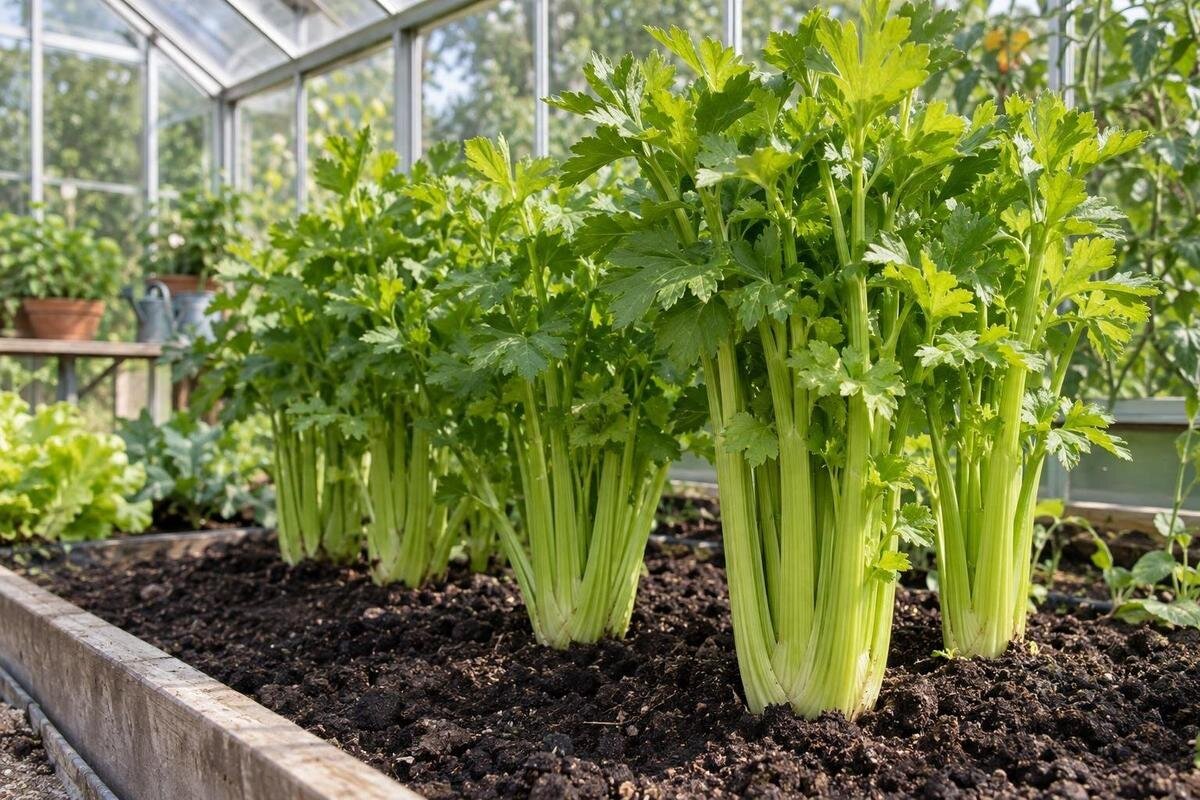
GREENHOUSE CROP GUIDE
Celery is a slow, moisture-sensitive crop that can occupy greenhouse bed space for much of a growing season. Cover may help in a cool, short season, but it does not automatically supply the steady temperatures or water celery needs—and a sunny greenhouse can overheat quickly. Plan around a suitable planting window, an evenly moist root zone, and enough bed and path space for months of care. This guide focuses on those celery-specific demands, not a one-size-fits-all greenhouse calendar.

Greenhouse planning considerations 1
When greenhouse growing makes sense for celery
Celery is a long-season crop, not a quick filler between faster plantings. After transplanting, it can occupy a bed through much of the growing window, and stalks develop best when moisture stays steady and temperatures avoid extremes. Cover may help where a short season, wind, or changeable weather disrupts outdoor growing, but it does not automatically create ideal conditions. An unheated structure can warm sharply in sun and cool after dark, so both heat and cold remain part of the plan. A greenhouse is most useful when it addresses a specific local constraint; it is not inherently better for celery than an outdoor bed.
Compare that benefit with the months of floor space celery will use. If outdoor conditions already provide mild weather, a greenhouse bed might be more valuable for a crop that benefits more from shelter. When comparing structure sizes, Bloomcabin Prestige Greenhouse is listed in sizes from 40.6 to 302 square feet. Treat the stated area as a broad comparison, not proof of climate control or uninterrupted planting space. Draw beds, paths, door access, and any staging area before assigning a long-term crop; the remaining space, rather than the model name, determines whether the layout is workable.
Choose the planting window by temperature
Celery grows best in cool, relatively even conditions, so use a local planting calendar as a starting point and then compare it with the conditions inside your greenhouse. A sunny enclosure can become much warmer than the air outside, while an unheated structure may cool close to outdoor temperatures after dark. Check daytime highs and overnight lows at plant height on both sunny and cloudy days. A thermometer in a growing area gives a more useful picture than an outdoor forecast alone. These observations help you decide whether cover is extending a suitable season or simply adding another place where temperatures need attention.
Count backward from the part of the season when your greenhouse is likely to stay mild, using the variety’s seed-packet guidance as an estimate. Check whether its days-to-maturity figure starts at sowing or transplanting; the distinction affects how early you need to begin. Celery seed can be slow to establish, but sowing too early may leave seedlings cramped in trays while the bed is still too cold. Prolonged cold when plants are young can contribute to bolting, while later heat can interfere with steady stalk development. If your likely growing window is too hot or too cold, consider a different planting period rather than assuming an unheated greenhouse will control the climate.
Greenhouse planning considerations 2
Start celery seed with steady moisture
Celery seed is tiny and can germinate slowly or unevenly, so handle the surface gently. Use a fine seed-starting mix, moisten it first, press the seeds onto the surface, and cover them no more than very lightly; light helps celery seed germinate. Keep the top of the mix evenly damp until emergence, since the surface can dry while the deeper mix remains moist. A fine mist or careful bottom watering can keep seeds in place, but drain excess water from the tray. Follow the packet’s temperature guidance: cool mix can delay emergence, and excessive heat is not a substitute for consistent moisture. Allow for a longer wait than you would for quick-sprouting crops rather than disturbing the seed repeatedly.
Once seedlings emerge, give them bright light and enough space that foliage can dry; crowded, weak transplants are harder to settle into a final bed. Small cells dry faster than greenhouse soil, so check trays often and avoid leaving roots in standing water. Move plants to the bed when they are established and conditions suit the next weeks, acclimating them gradually to stronger light and changing temperatures. If trays and mature celery will share one structure, count both areas in the layout. The T-Model Greenhouse Orangery is listed in sizes from 178 to 323 square feet, but those figures cannot show how much bench or clear bed space a particular floor plan provides.
Keep the root zone evenly moist
After transplanting, maintain even moisture around the roots rather than waiting for leaves to wilt. Celery has many fine roots in a relatively shallow soil layer, which can dry quickly in a warm greenhouse or near an exposed bed edge. Check below the surface, not just by looking at the soil: feel a couple of inches down in several places, including the center and edges of the planting. If the upper root zone is beginning to dry, water rather than waiting for visible stress. The right interval changes with the weather, soil, and size of the plants, so a fixed schedule is less useful than regular checks.
Apply water slowly enough to wet the planted strip evenly, then check more than one spot; a dry patch can persist beside soil that looks damp. Drip lines can deliver water at soil level, while a watering can or hose can work if you reach the full root zone gently. Check delivery along the entire row rather than judging coverage by the soil nearest the water source. As foliage fills in, keep watering equipment accessible without disturbing the plants. The aluminum Classic Greenhouse listing covers 40.6 to 302.3 square feet. When planning a planting area within that range, map the water supply and hose route as well as the beds.

Greenhouse planning considerations 3
Use moisture-retentive soil with good drainage
Good irrigation depends on soil that can hold moisture while letting excess water drain. Celery needs a consistently moist, fertile bed, not permanently saturated soil; compaction or standing water reduces air around roots and can contribute to root and crown problems. Prepare the bed before planting by loosening compacted ground and adding mature organic matter if needed, while keeping the soil structure open. Because the crop stays in place for months and produces substantial leafy growth, check fertility before planting. Use soil-test results to guide amendments and follow label directions for fertilizer. Weak growth alone is not a reason to keep adding feed, especially if the roots are too wet or the plants are heat-stressed.
Containers can work for a small crop, but their limited soil volume makes moisture swings faster than in a bed. Choose a container with unobstructed drainage and enough soil volume for the variety; do not leave it sitting in runoff. A light mulch can slow evaporation, but keep it clear of the celery crown so damp material does not sit against the stems. If storage is part of your greenhouse plan, count it as space that is not growing bed. The aluminum greenhouse with built-in storage is listed in sizes from 59.4 to 302 square feet, but the growing area available depends on the actual layout.
Plan spacing, beds, and access
Celery leaves spread as the plant grows, and the crop needs room for watering, inspection, and harvest as well as space in the bed. For self-blanching and green varieties, the RHS recommends planting in a block with plants about 9 inches apart in each direction. This arrangement lets neighboring plants shade the stalks. Follow variety-specific instructions if they differ, especially for traditional trench celery, which needs a different layout. Mark the planting positions before transplanting and make sure you can reach every plant from a path. Access that seems generous while plants are small can disappear once their foliage fills in.
Reserve paths and door clearance first, then use your chosen plant spacing to estimate how many celery plants each bed can accommodate. Measure bed width separately from path width: wider rows within a planting do not replace a clear route for carrying water or harvested plants. Keep the farthest row within comfortable reach so you can inspect crowns without stepping into the bed. The Large backyard greenhouse listing ranges from 506 to 753 square feet. For a larger growing plan, group celery in an accessible block rather than scattering plants among crops that need different watering routines or will be removed much sooner.
Greenhouse planning considerations 4
Control heat and air movement
Daytime heat is a major constraint for a cool-season crop inside a sunlit enclosure. Take readings at celery height on bright days and compare them with outdoor conditions; a forecast cannot show the greenhouse’s peak temperature. Ventilation can release excess heat and reduce stagnant air, while temporary shading may help during intense sun, but too much shade can limit growth. Adjust according to observed conditions and the structure’s operating guidance rather than choosing one calendar date for opening or covering. If summer heat is unavoidable, shift planting so the crop grows in a milder window instead of assuming the greenhouse will extend the season in both directions.
Air circulation matters as leaves fill the bed: still, wet foliage is harder to inspect and may stay damp longer. Keep plants from blocking openings and leave enough reach around the bed for regular care. The layout needs to work when plants are mature, not only when transplants are small. The Pyramid Greenhouse Bloomcabin Oasis listing spans 60 to 203 square feet. The listed area and model name do not establish ventilation or temperature performance; review the actual floor plan and opening details for any greenhouse before deciding whether its growing environment suits celery.
Check for pests and disease throughout the season
Greenhouse shelter does not remove pest pressure, and steady moisture becomes a problem if leaves remain wet or the crown stays soggy. Inspect the undersides of leaves and the base of plants regularly for aphids, slugs, or new leaf damage. Water at soil level when practical, remove dead foliage and plant debris, and space plants so you can see the lower stalks. If damage spreads, identify the cause before treating it: water stress, nutrient problems, insects, and disease can look similar, and a general treatment may not address the issue. Regular checks are easier when the bed is accessible.
Keep a brief record of affected plants and when symptoms first appeared; this can help distinguish an isolated problem from damage spreading through a row. For persistent or unfamiliar symptoms, seek identification from a local extension service before choosing a treatment. Clear residues after harvest, especially if plants showed signs of disease, and consider rotation when planning the next crop. The aluminum Limited Edition Greenhouse is listed in sizes from 40.6 to 302 square feet. In your proposed layout, identify where harvested material and removed leaves will go so routine cleanup does not mean carrying debris through dense celery foliage.

Greenhouse planning considerations 5
Blanching depends on variety and preference
Blanching is a growing choice, not a requirement for every celery variety. It limits light reaching the stalks, producing paler stalks that are often milder in flavor. Some cultivars are selected to self-blanch, while others remain greener. Check the seed label before planting if stalk color or flavor is a priority, because the variety affects whether blanching is useful and how to do it. If you choose to blanch, follow the cultivar’s directions and begin only when plants have enough growth to handle the method. Avoid wrapping wet foliage or covering the crown in a way that traps moisture.
Greenhouse-grown celery may receive less direct rain, but the air can still be humid. Make sure any blanching material does not create a damp, hidden pocket around the base, and keep the plants inspectable. Continue watering the root zone evenly; deliberately drying the soil is not a substitute for blanching. Some gardeners prefer green stalks and skip the extra work, particularly when appearance is less important than a home harvest. Judge the result by the variety and what you want to eat, rather than assuming that every stalk must be white to be mature.
Harvesting stalks and planning bed turnover
Harvest individual outer stalks or the whole plant, depending on the variety and how you plan to use it. To extend the harvest, remove outer stalks cleanly while leaving the center intact; continued production depends on healthy growing conditions and is not guaranteed. For a whole plant, cut near the base when the stalks have reached the size and texture you want. Keep the bed evenly moist as harvest approaches. Stopping water to force maturity can stress a crop whose growth depends on steady moisture, and it does not solve a timing problem created by unsuitable temperatures.
Record sowing, transplant, and first-harvest dates, along with any periods of heat or drying. Those notes help show whether growing celery under cover actually improved your season. Distinguish the first outer-stalk harvest from the date the bed becomes empty; picking a few stalks does not release space for another crop. The Lean-To Greenhouse listing ranges from 40 to 154 square feet. When planning a crop calendar for a structure in that range, allow for celery to remain in place through repeated harvests. Clear plant remains once the crop is finished, and use the actual removal date to refine the following season’s schedule.
Frequently asked questions
Can I grow celery in an unheated greenhouse?
Yes, if you time the crop for a period when temperatures suit it. An unheated greenhouse can shelter plants, but it may still freeze on cold nights and overheat on sunny days. Track temperatures where the plants grow instead of treating the structure as a substitute for heating or cooling.
How often should I water greenhouse celery?
There is no reliable fixed interval. Check the soil a couple of inches below the surface and water when the root zone is beginning to dry. Sun, ventilation, soil type, and bed depth all affect how quickly that happens. Keep moisture even, and make sure excess water can drain.
How much room does a celery plant need?
For self-blanching and green celery, about 9 inches between plants in each direction is a useful starting point for a block planting, following RHS guidance. Check the seed packet for variety-specific spacing; traditional trench varieties need a different arrangement. Allow separate path space so you can water, inspect, and harvest without stepping into the bed.
Does greenhouse-grown celery need blanching?
No. Blanching is optional and depends on the variety and the stalk color and flavor you prefer. Some varieties are selected to self-blanch; others stay greener unless light is kept from the stalks. Check the seed label and keep any blanching method from trapping moisture around the crown.
Can a greenhouse prevent celery from bolting?
Not by itself. Prolonged cold while plants are young can contribute to premature flowering, and heat can disrupt steady growth. A greenhouse may buffer some weather, but its temperature can still swing widely. Choosing a suitable planting window matters more than assuming cover will prevent bolting.
Celery works under cover when the greenhouse makes its long, cool growing season easier to manage, with steady soil moisture and room for mature plants. Its value depends less on shelter alone than on whether you can maintain those conditions until harvest. If summer heat, cold nights, or limited bed space make that difficult, an outdoor bed or a different planting window may be the more practical choice.
