
Growing Cucamelons in a Greenhouse
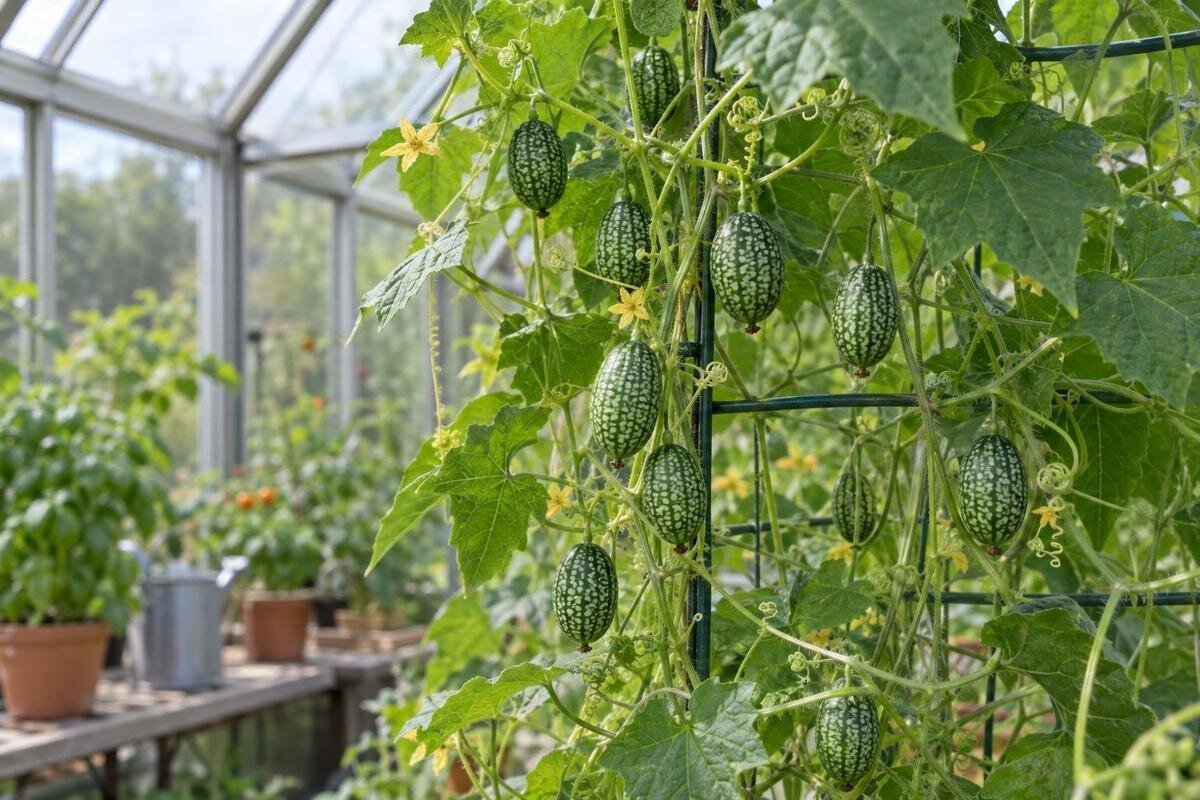
GREENHOUSE GROWING GUIDE
Cucamelons, also called mouse melons or Mexican sour gherkins, are compact fruits on a vine that can climb rather than sprawl across a bed. That makes them appealing in a greenhouse, but vertical growth does not remove the need for warmth, a clear walkway, or room to inspect the plants. A good plan treats the greenhouse as seasonal shelter—not guaranteed overnight heat—and puts the trellis in place before the plants start climbing. Here is how to time sowing, guide the vines, and pick fruits while they are crisp.

Is a greenhouse suitable for cucamelons?
Cucamelons (Melothria scabra), also called mouse melons or Mexican sour gherkins, are warm-season vines, not cold-tolerant greenhouse crops. They need a long enough frost-free stretch to flower and ripen fruit. A greenhouse can shelter seedlings and reduce exposure to wind, while sunlight warms it during the day, but an unheated structure can cool quickly after sunset. Check nighttime readings near the intended planting position instead of relying on the calendar or the daytime high; a thermometer at plant height is more useful than a reading in another part of the greenhouse. If nights still run cold, keep seedlings indoors or delay transplanting. Allow space to keep them in their protected starting area until conditions improve.
Light and ventilation matter alongside warmth. Choose the brightest practical spot and watch how shade from nearby trees or structures shifts through the day; a dim corner can support leaves without giving flowers and fruit the conditions they need. A greenhouse can heat quickly in direct sun, so use available doors and vents as appropriate and monitor conditions rather than closing everything to preserve warmth. In a short-season climate, protection may help the crop get started, but an unheated house does not make the season unlimited. For a footprint comparison, the Prestige greenhouse range is listed from 40.6 to 302 sq ft. That area range does not tell you overnight temperatures, so check the selected model's details and your site's nighttime lows before planning the crop.
Plan the planting area and walkway
A climbing habit saves floor space, but it does not eliminate the plant's footprint. Each vine needs a planting point, a vertical support, room for leaves to spread, and a path where you can water, inspect, and pick. Draw the layout from above before choosing how many plants to grow: mark the door, benches, water access, other crops, and a walking lane, then fit the vine into the remaining space. In a very small greenhouse, one well-trained plant is a reasonable first trial; add another only if its canopy will not merge with neighboring crops or block access. A container should not sit where it narrows the only route.
Compare usable interior space, not just a product's headline floor area. The Classic aluminum greenhouse range is listed from 40.6 to 302.3 sq ft, but any footprint still has to accommodate your trellis, aisle, door clearance, and existing equipment. A tape-measure sketch can show whether you can reach the vine's base without stepping into a bed and carry a basket through when leaves spread. Leave access to vents or glazing you may need to maintain, and avoid placing a tall vine where it will shade a neighboring crop. If choosing between beds and pots, draw their final sizes rather than the smaller spaces they occupy while empty.
Set up a trellis before planting
Install support before transplanting so you do not have to work around seedlings or risk damaging roots later. Cucamelon tendrils can grip trellis mesh, netting, or narrow horizontal supports; choose an arrangement that offers regular handholds and lets you see where new growth is going. Set the trellis where stems can climb without crossing a doorway, vent, or neighboring crop. A freestanding support is a sensible default unless the greenhouse manufacturer identifies approved attachment points. Do not assume a glazed panel or any frame member is designed to carry a plant support. Follow the trellis and greenhouse instructions for anchoring.
Measure the clear height and access in the actual growing bay, not just its footprint. The Lean-To Greenhouse range is listed from 40 to 154 sq ft; those area figures alone do not show usable trellis height or approved attachment locations. Set the support so its length can be reached from the aisle, with the base out of the walking line. Choose a trellis surface that lets you see and reach developing fruit rather than trapping it in tight mesh. Plan where the vine will go if it reaches the top: redirect it along a support you can still inspect instead of letting it tangle around greenhouse hardware.
Start seeds at the right time
Work backward from transplant conditions instead of sowing at the first sign of spring. The Royal Horticultural Society recommends warm germination conditions of about 72–75°F and planting out only after all risk of frost has passed. Use your seed packet's sowing guidance alongside your local frost outlook rather than applying a fixed calendar date across the United States. A sun-heated greenhouse may still be cold at night, even when afternoons feel comfortable. An indoor start gives you a protected place to raise seedlings, but sowing too far ahead can leave them crowded before their greenhouse bed is ready. Plan where they will stay if transplanting has to wait.
Sow in individual pots filled with seed-starting mix, at the depth stated on the packet, and keep the mix evenly moist and warm rather than saturated. Seeds can be slow to emerge when conditions are cool, so avoid repeatedly disturbing the pot to look for a sprout. If several seedlings emerge in one pot, snip out the weaker ones rather than pulling around tangled roots. Once seedlings appear, provide strong light and enough room for leaves. If the greenhouse will hold seed trays as well as mature vines, include a temporary staging surface in your layout. The Limited Edition aluminum greenhouse range is listed from 40.6 to 302 sq ft; check the specific product plan for space at both stages instead of treating the area range as bench capacity.

Transplant into a warm bed or container
Move seedlings only after frost danger has passed and the root zone is warm; a bright afternoon by itself is not enough. Harden them off gradually over several days, giving them increasing exposure to the greenhouse's light and daily conditions. A sudden move from indoor light to full sun behind glass can scorch tender leaves, and a sharp cold night can stall a young plant. Plant at the same depth as in its pot and handle the root ball gently. Installing the trellis first and watering after planting makes it easier to settle the plant without tugging on its stem. Keep seedlings protected if conditions turn unexpectedly cold.
Both a garden bed and a large container can work if the growing medium drains well and stays evenly moist. In a bed, loosen the planting area and add mature compost if the soil needs organic matter; avoid a spot that stays waterlogged. For containers, choose a substantial pot with drainage and good-quality potting mix, since a small volume dries quickly and leaves little room for roots. Space plants according to the seed packet rather than packing them tightly because they climb. The T-model greenhouse listing shows options from 178 to 323 sq ft; use the product plan to check bed or pot placement, aisle space, and access for watering. Set each container beside its assigned support so stems do not cross the walkway.
Guide the vines without tangling the canopy
Guide the vine while stems are flexible. As tendrils take hold, direct new growth through the trellis instead of letting it weave into nearby crops; use soft ties loosely only where the plant needs help. Check often during active growth, because a few days can turn an accessible stem into a tangle around another plant or a vent. Do not pull hard on an anchored tendril or twist a thicker stem back through the mesh. Redirect a growing tip along an open section of support, where you can still see both leaves and developing fruit. Keep stems from crossing the path you need for watering and picking.
Pruning should solve a specific access or airflow problem, not remove healthy leaves wholesale. Remove dead or badly damaged foliage and guide stems away from doors, vents, and other crops; keep enough leaf cover to support fruit development. The Pyramid greenhouse range is listed from 60 to 203 sq ft, but floor area does not establish usable trellis height. Check the selected model's interior dimensions at the intended planting position, including clearance above and beside the support. Leave enough room to reach behind the canopy for inspection. If growth becomes dense, redirect individual stems into unused parts of the trellis before cutting back large sections. Keep new growth within reach so you can inspect leaf undersides and find fruit without pulling the canopy apart.
Water consistently and manage heat
Keep soil moisture reasonably even while the vine grows and fruits. Water at the base, then check the mix or soil below the surface; a dry-looking crust does not always mean the roots are dry, and saturated ground can deprive roots of air. Pots usually need more frequent checks than beds, especially during bright, hot weather. Rather than following a fixed daily schedule, adjust after checking the root zone and how quickly the growing medium dries. A light mulch over bed soil can slow evaporation, but leave the stem base clear. Try not to splash foliage during watering, particularly once the canopy is dense.
Use fertile soil or a balanced feed according to its label, and account for fertilizer already included in potting mix before adding more. Do not use extra feed as a general response to every change in growth; first check moisture, light, and the plant's overall condition. Heat management is equally important: check the greenhouse on sunny days and use its available ventilation so temperatures do not climb unchecked. Keep vents accessible as the canopy develops, and avoid directing vines across their openings. Make small changes and observe the vine before changing watering, feeding, and ventilation all at once; this makes it easier to tell what helped.
Check flowering and inspect for pests
Look for the small yellow flowers as you inspect the vine, then check for developing fruit rather than assuming that flowering guarantees a harvest. Keep a section of the trellis easy to examine so you can follow changes without pulling stems apart. If flowers appear but you cannot find fruit, look carefully beneath nearby leaves and check again on later visits. Review temperature readings, soil moisture, and shading before changing the growing routine. If the pattern continues, ask the seed supplier or a local horticultural service for crop-specific advice, including whether pollination needs attention. Note when flowering began and describe what happens afterward so the advice can address the actual problem.
Inspect leaves, stems, and flowers regularly, particularly the undersides where small pests can be easy to miss. Aphids, whiteflies, and spider mites are among the pests that may appear in protected spaces; identify the problem before choosing a control, and use only products labeled for the crop and setting, following their directions. Remove dead leaves and keep the area around the plant clear. If comparing a larger growing area, the Large backyard greenhouse range is listed from 506 to 753 sq ft. Whatever size you consider, arrange vines so flowers and leaf undersides remain reachable for inspection. More floor area alone does not make a dense canopy easier to examine.

Pick cucamelons while they are firm and small
Cucamelons remain small: the Royal Horticultural Society describes typical fruits as about 1 inch long, with dark green skin and pale green mottling. Their edible flesh has a crunchy texture and an acidic cucumber flavor. Use those characteristics as your starting point for picking rather than waiting for a standard cucumber's size. Check beneath leaves as well as along the outer edge of the trellis; hidden fruits are easy to overlook. Taste a few firm fruits at slightly different sizes during the first harvest to learn which stage you prefer. Keep damaged or deteriorating fruit separate from the sound harvest. Color patterns alone do not tell you whether a fruit has the texture you want.
Snip fruit from the stem with clean scissors or pruners rather than pulling the vine; a gentle cut helps avoid damaging tendrils and nearby flowers. During a productive spell, make short, regular picking rounds instead of waiting until the canopy is overloaded. Use the crisp fruits fresh or try them in pickles, and keep a small harvest container within reach without blocking the aisle. If storage is part of your greenhouse plan, the greenhouse with built-in storage listing offers options from 59.4 to 302 sq ft; review its product layout to see how storage, crop access, and a path for carrying produce fit together.
Troubleshoot growth and plan for next season
Use several observations to decide what needs attention. If a seedling has stopped growing, check nighttime temperatures, available light, and root-zone moisture before increasing feed. If leaves fill the trellis but fruit is scarce, inspect beneath the canopy and note whether flowers are present; describe those observations when seeking crop-specific advice. Yellowing leaves can have several causes, so look for wet soil, visible pests, or changes confined to older leaves rather than treating every yellow leaf as a nutrient shortage. Compare the affected plant with its earlier condition and any neighboring plants. Make one adjustment at a time, then allow time to observe the response instead of repeatedly changing the growing routine.
At season's end, remove the spent vine and clear fallen leaves so pests and disease are less likely to linger in the growing area. In a colder climate, an unheated greenhouse still cannot promise a crop through cold nights, so decide whether an earlier indoor start or a different warm-season crop better fits the available season. If you consider adding heat, account for the equipment, monitoring, and ongoing effort rather than assuming a larger house fixes the climate. Note when flowering and the first fruit began; that information can help you adjust next season's sowing date and plant count to your own conditions.
Frequently asked questions
Can cucamelons grow in an unheated greenhouse?
Yes, if your local season is warm and long enough. An unheated greenhouse offers shelter but can still become cold at night. Check temperatures near the plants and wait until frost risk has passed before transplanting.
When should I sow cucamelon seeds?
Use your seed packet's timing and work backward from when your greenhouse will be frost-free and reliably warm. The Royal Horticultural Society recommends about 72–75°F for germination. Start indoors if necessary, and allow room to hold seedlings if cold weather delays transplanting.
Do cucamelons need a trellis?
A trellis helps keep the climbing vines off the floor and easier to reach in a compact greenhouse. Install a stable support before transplanting, guide stems as they grow, and do not attach it to glazing or framing unless the manufacturer approves.
Why are my cucamelon flowers not producing fruit?
First check beneath the leaves for small developing fruits and note how long the plant has been flowering. Review nighttime temperatures, moisture, and shading rather than immediately adding fertilizer. If flowers continue without fruit, ask the seed supplier or a local horticultural service for cucamelon-specific advice, including whether pollination needs attention.
When are cucamelons ready to pick?
Look for small, firm, green fruits with pale mottling and a crisp texture; typical fruits are about 1 inch long. Sample a few sizes to find the stage you prefer rather than waiting for cucumber-sized fruit. Check beneath leaves and snip the fruit from its stem instead of pulling the vine.
A productive cucamelon greenhouse plan is simple in outline but specific in its details: work backward from local frost and nighttime temperatures, give the vine its own vertical support, preserve a reachable aisle, and keep moisture even without letting soil stay wet. Follow the crop from its small yellow flowers to its crunchy, mottled fruits, and keep the canopy accessible for picking. At the end of the season, consider whether the planting date, growing conditions, and amount of vine growth suited the space. That gives you a more useful basis for the next crop than simply choosing a larger structure.
